Munich Malt: The Backbone of Bavarian Beer
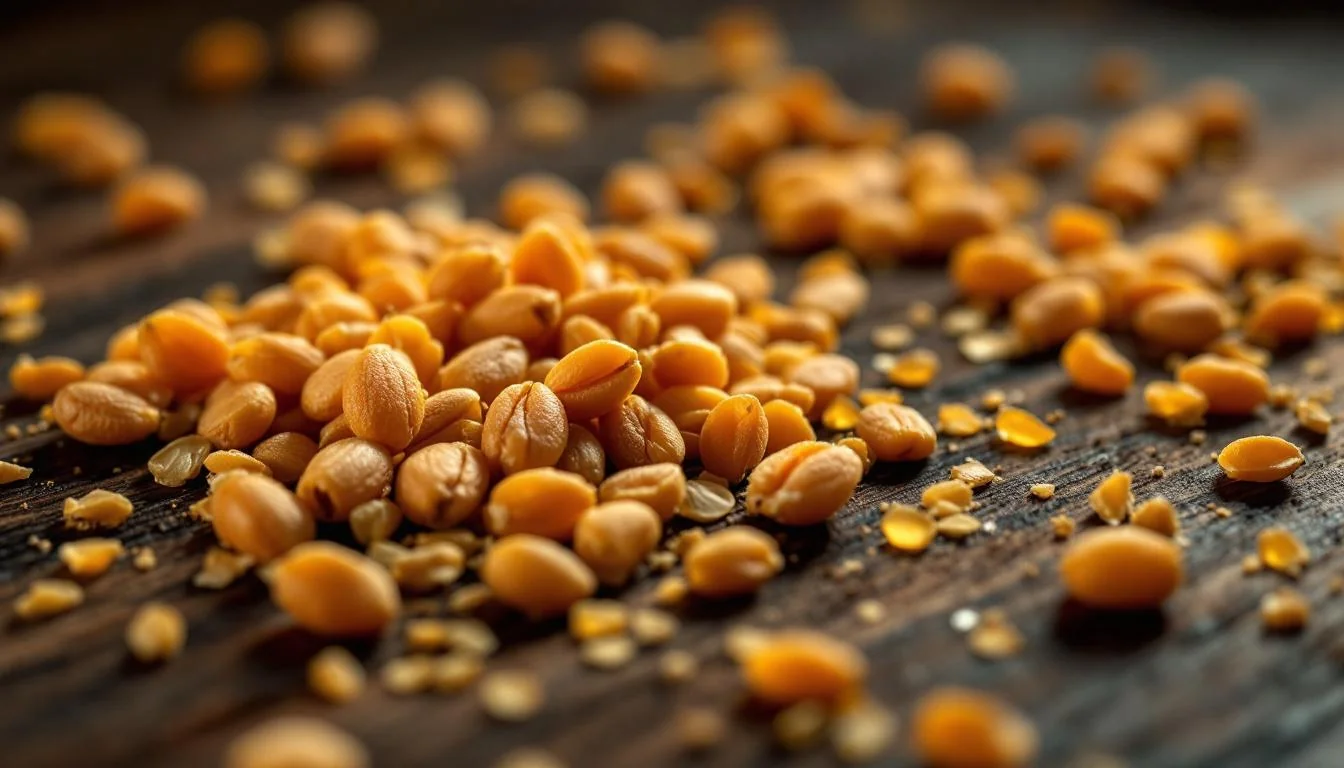
Munich malt gives Germany’s classic lagers their toasted-bread aroma, malty sweetness, and amber color.
Some malts are made to be a foundation. Others are made to tell a story.
Munich malt belongs to the second group. Along with sugar for the yeast, it carries the history of a region, the smell of 19th-century bakeries, and the amber of autumn afternoons in Bavaria. It is an unusual base malt, able to convert its own starches while also shaping much of a beer’s flavor.
IOrigins and History
Munich malt was born in Munich in the 1830s, as the Industrial Revolution was reshaping European brewing.
Before then, most Bavarian malt was dried over wood or charcoal. Temperatures were uneven, and smoke worked its way into every kernel. The beer tasted heavily smoked, not by choice but because the technology of the day allowed nothing else.
In 1836, Gabriel Sedlmayr II, heir to the Spaten brewery, returned to Munich from a long study tour of Britain and continental Europe. He brought back the technique of indirect kilning with hot air, which the British used to make smoke-free pale malt.
Sedlmayr did not simply copy it. He kilned at higher temperatures and for longer than British maltsters did for pale malt. The result was a new malt, free of smoke yet with the depth of flavor characteristic of Bavaria.
Sedlmayr did not coin the name “Munich malt.” It took hold gradually as brewers across Europe began calling the malt after the city where it was refined and popularized.
In 1841, Anton Dreher of Vienna, Sedlmayr’s companion on his brewery tours, developed Vienna malt along similar lines but kilned it at lower temperatures. Together, the two malts drove Europe’s lager revolution in the mid-19th century.
Munich malt became the backbone of Märzen, the beer brewed in March, lagered through the summer in naturally cold cellars, and served at the first Oktoberfest in 1810. That tradition is still intact.
IIHow Munich Malt Is Made
Munich malt starts with European two-row barley, varieties selected for moderate protein and thin husks.
Steeping takes about 48 hours and brings the grain to 44–46% moisture. Germination runs 4–5 days at 14–18 °C (57–64 °F), long enough for the enzymes to develop fully without using up too much starch.
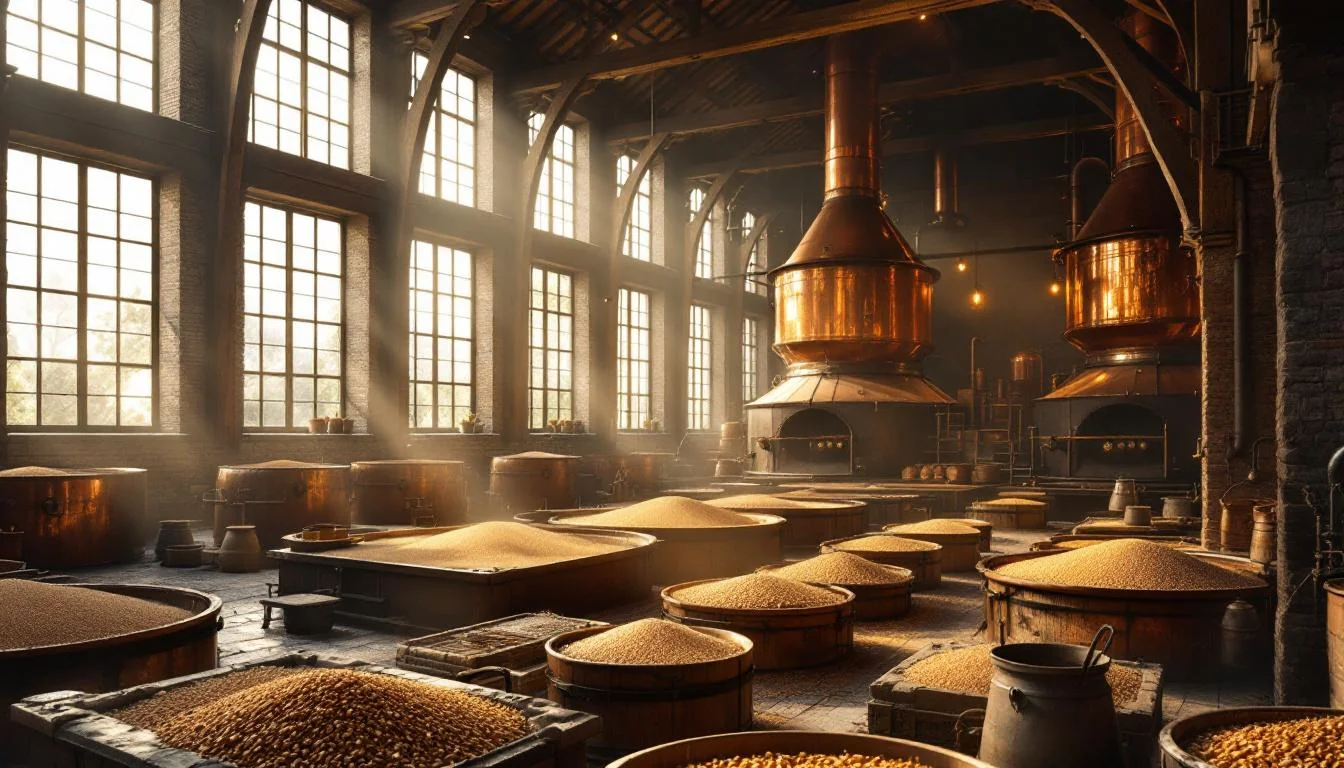
The difference comes in the kiln. Instead of the quick, low-temperature drying given to pale malt, Munich malt goes through a “curing” stage at higher heat, usually 100–115 °C (212–239 °F), while the grain still holds some moisture.
That combination of high heat and residual moisture drives a vigorous Maillard reaction. Sugars and amino acids in the grain react to form melanoidins, the compounds behind the malt’s color and flavor.
Kilning takes 24–48 hours in all. The finished kernels range from deep gold to amber, depending on whether the maltster is making Munich I or Munich II.
IIITechnical Specifications
Munich malt comes in two common versions. Munich I, or Munich Light, runs 12–20 EBC (5–8 Lovibond). Munich II, or Munich Dark, is deeper at 20–30 EBC (8–12 Lovibond). Some maltsters also offer special versions up to 35 EBC.
Extract is slightly lower than Pilsner malt’s, typically 80–82% (fine grind, dry basis), so the same weight of grain yields a little less sugar. The flavor more than justifies the trade.
Protein runs 10–12%, enough for foam and body without haze. The Kolbach index, a measure of protein modification, usually falls between 38 and 42%, a sign of well-modified malt.
Crucially, Munich malt keeps considerable enzyme activity. Diastatic power reaches about 70–80 °Lintner, enough to convert its own starch and help convert a small share of enzyme-free malt. That is why Munich malt is classed as a base malt, even though it plays a specialty role in many recipes.
IVFlavor and Color
Munich malt smells of golden toasted bread. Not white bread, but German dark bread with a crisp crust and a dense crumb. There is a little honey, some roasted chestnut, and a light caramel note in the background.
Malt sweetness is the unmistakable hallmark. It is not the sweetness of refined sugar but a deeper, warmer one, like toasted grain. The Germans have a word for it; in English, it is simply “malty.”
The melanoidins in Munich malt give the flavor depth. They shape the aroma and also the overall impression on the palate, which feels full and rounded.
In color, Munich malt brings deep gold to amber. A beer brewed with 100% Munich malt lands around 15–25 EBC, enough for a striking color without straying into the reddish browns of crystal malt.
Notably, Munich malt brings no bitterness and no burnt flavor. Despite the high kilning temperatures, the Maillard reaction is controlled to produce only pleasant aromatic compounds. That is what separates it from darker roasted malts.
VKey Beer Styles
Märzen and Oktoberfest beers were Munich malt’s first home. These lagers are built on Munich malt, sometimes up to 100% of the grist, which gives them their amber color and full malt flavor. Raise an Oktoberfest beer at the festival and it is Munich malt doing the talking.
Munich Dunkel, Bavaria’s dark lager, also rests on Munich malt. Don’t confuse it with Irish stout or English porter. A Munich Dunkel tastes of clean malt, with none of the burnt bitterness of roasted malt. Munich II is the usual choice for the style, sometimes with a small amount of Carafa for color.
Bock and Doppelbock, two of Germany’s strong beers, use Munich malt for a rich malt backbone that can stand up to their high alcohol. In a Doppelbock, Munich malt keeps the beer balanced even when the ABV climbs past 8%.
Outside Germany, Munich malt often appears as a specialty malt. Some IPA brewers use 5–10% Munich malt to add depth to the grain bill, and Scottish Ale and Brown Ale recipes call on it regularly.
VICompared With Similar Malts
Vienna malt is its closest relative. Both appeared in the same period, from the same circle of pioneers. But Vienna malt is kilned at a lower temperature, only about 90 °C (194 °F), so it is paler (6–9 EBC) and its malt character is more delicate. Vienna malt suggests butter cookies; Munich malt suggests toasted bread.
Next to Pilsner malt, Munich malt is the “upgraded” version, at least in flavor. Pilsner malt (3–4 EBC) is almost a blank canvas: it supplies sugar efficiently but leaves little flavor imprint. Munich malt gives up some efficiency in exchange for character.
Melanoidin Malt, sometimes called “super Munich,” pushes the Maillard reaction further. At 60–80 EBC, it gives a far more concentrated malt flavor. But it has lost its enzyme activity and can only be used as a specialty malt.
Belgian Aromatic Malt is another variation in the family. Though similar in color to Munich II, it smells sweeter, closer to honey and jam than to bread. That is the difference between the German tradition and the brewing philosophy of Belgium.
VIIHow to Recognize It in the Glass
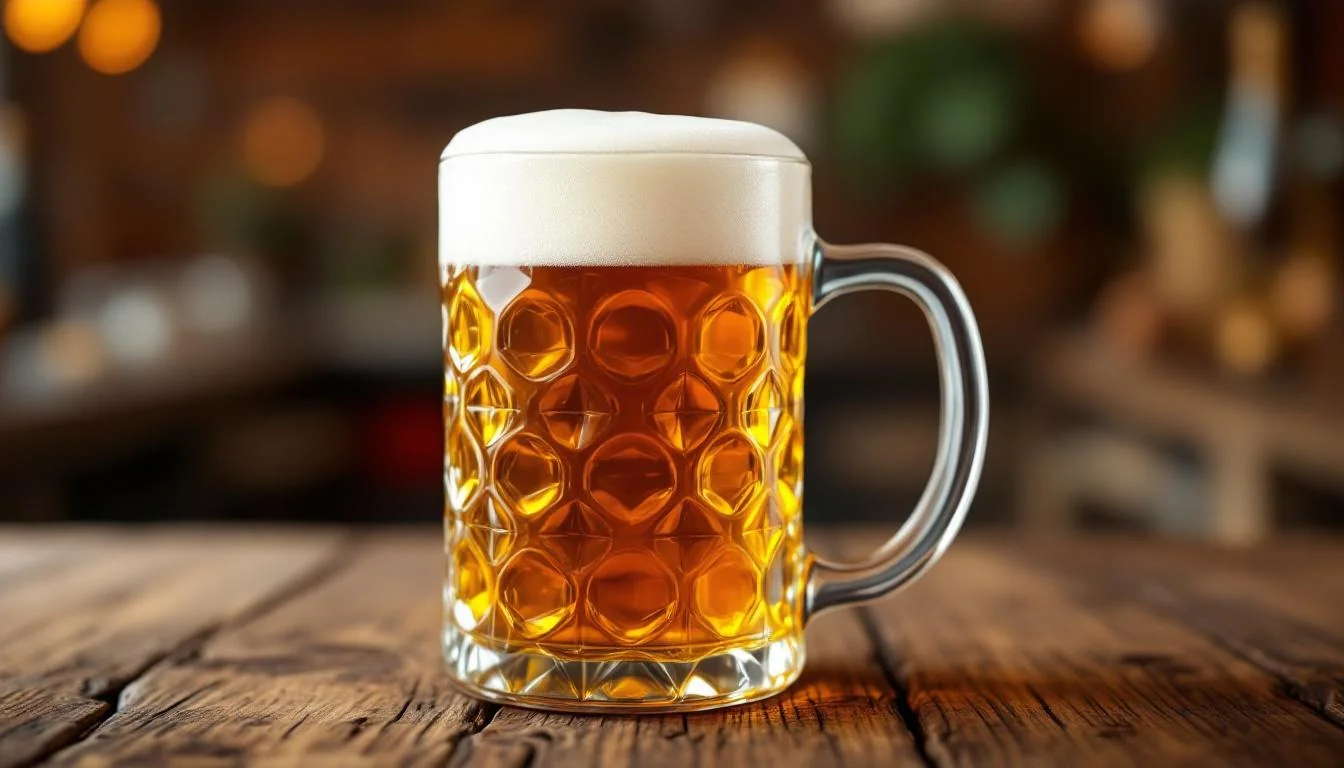
Before drinking, look at the color. If a Märzen or Dunkel glows amber to copper-brown in the glass, Munich malt is almost certainly in it.
Bring the glass to your nose. Toasted bread, roasted grain, a light touch of honey: that is Munich malt’s signature, and it is clearly different from the sweet caramel of crystal malt or the coffee notes of roasted malt.
On the first sip, let the beer spread across your tongue. Munich malt gives a clean “malty” impression: warm malt sweetness, never cloying, never burnt. The beer has a certain weight, as if it had real structure rather than being thin.
The finish is clean, a trait of German lager in general and of Munich malt in particular. There is no lingering, unpleasant aftertaste. The malt fades slowly and leaves a warmth on the palate.
Hold a Märzen on a crisp autumn day, or sip a Dunkel at the oak table of a traditional beer hall, and you are tasting a flavor that has come nearly two centuries, from Munich to your glass, without losing any of its character.
Mentioned in this article
-
Beer O L O G Y
Light Beer and the Hard Art of Simplicity -
Beer O L O G Y
Dark Beer Is Not One Style -
Beer O L O G Y
Strong Beer: When Alcohol Becomes an Art -
Beer O L O G Y
The World of Bitter Beer Begins with IPA -
Beer O L O G Y
Belgian Beer: Intangible Cultural Heritage of Humanity
Originally published in Vietnamese on Tạp Chí Beer.