Smoked Malt: Fire and Time in Every Kernel
Kilned over beechwood fires, smoked malt carries Bamberg’s centuries-old smoke into beer and gives Rauchbier its character.
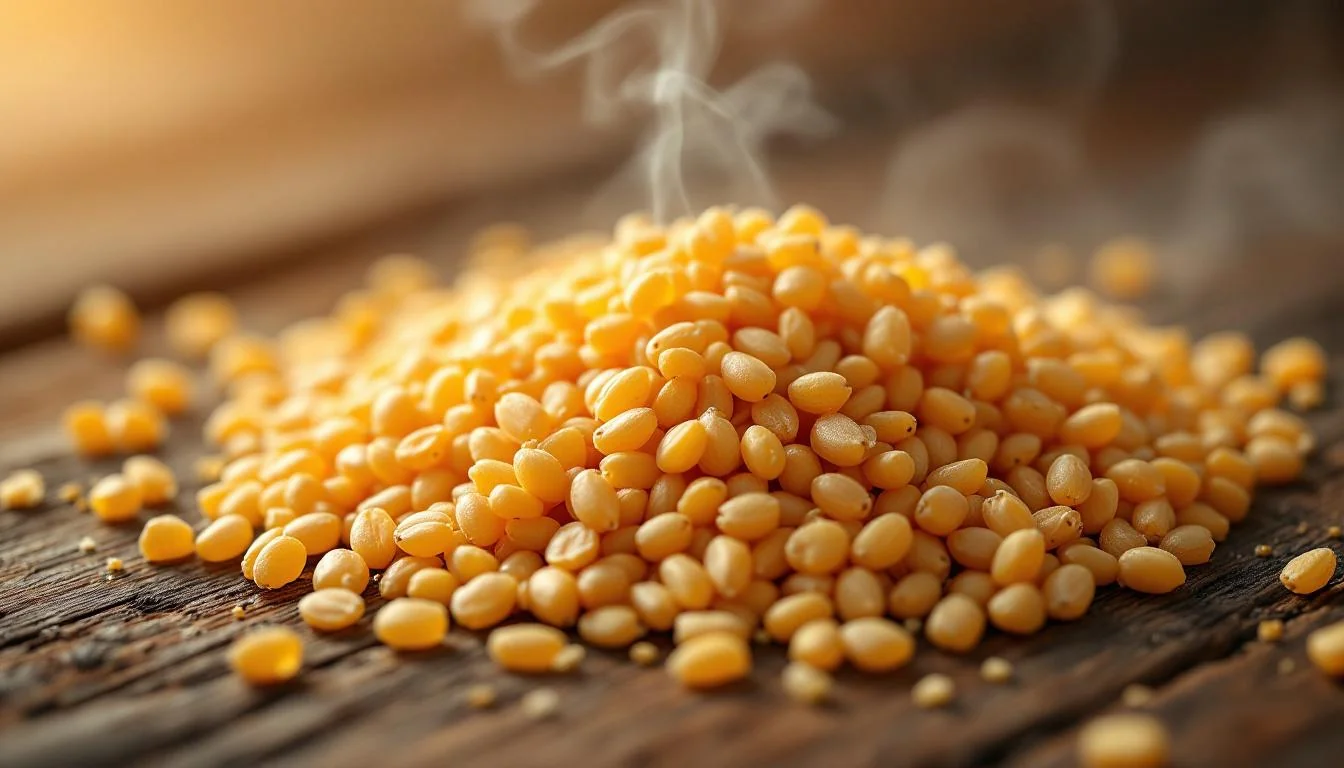
Some malts exist to tell a story, and smoked malt tells its own in smoke rather than words. The smoke threads through each kernel, seeps into the protein and starch, and resurfaces in the glass as a memory of kilns long gone.
Before modern kilns, all malt carried smoke; it was a fact of the age. As technology changed, the smoke faded from beer. Only Bamberg, a small town in Franconia, kept the fire burning, and smoked malt became its legacy.
IOrigins and History
Smoked malt began as a necessity, not a choice.
In the 16th century, all of Europe dried its malt over direct fire. Wood burned, smoke rose, and the grain absorbed it. Every beer of the day tasted of smoke, from English ale to German lager. Nobody thought it special. It was simply the only way.
In 1635, indirect kilns appeared in England. Coke replaced wood, and the smoke disappeared. By the 18th century most of Europe had switched to the new technology, and beer became “cleaner” and lighter. Bamberg, a town of 70,000 in Upper Franconia, Bavaria, refused to change.
Not out of conservatism. The town simply loved the flavor.
Schlenkerla, a brewery founded in 1405, still keeps the tradition, kilning its malt over beechwood from the surrounding forests as its forebears did 600 years ago. Weyermann Malting, founded in Bamberg in 1879, later became the world’s largest producer of smoked malt.
In 1992 the BJCP formally recognized Rauchbier as a distinct style. Smoked malt went from local specialty to an ingredient sought worldwide, and craft brewers from the United States to Japan began experimenting with it, giving an old flavor a place in modern recipes.
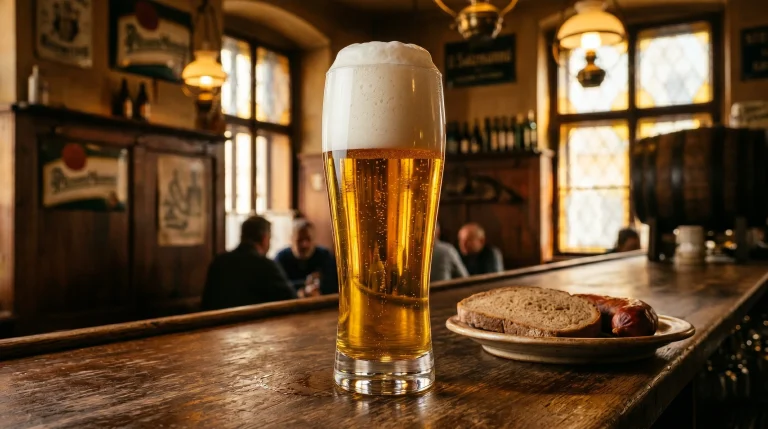
Bamberg is still the heartland, with nine breweries in the small town brewing Rauchbier. UNESCO lists its old town as a World Heritage Site, and smoked beer is inseparable from that heritage.
IIHow Smoked Malt Is Made
Smoked malt starts out like any other malt: steeping, germination, waiting. Only at the final step does it go its own way.
The barley is steeped for 24 to 48 hours, to about 44–46% moisture, then germinates for 4–6 days as enzymes develop and the starches become ready for conversion. So far, nothing is unusual.
Then the fire is lit.
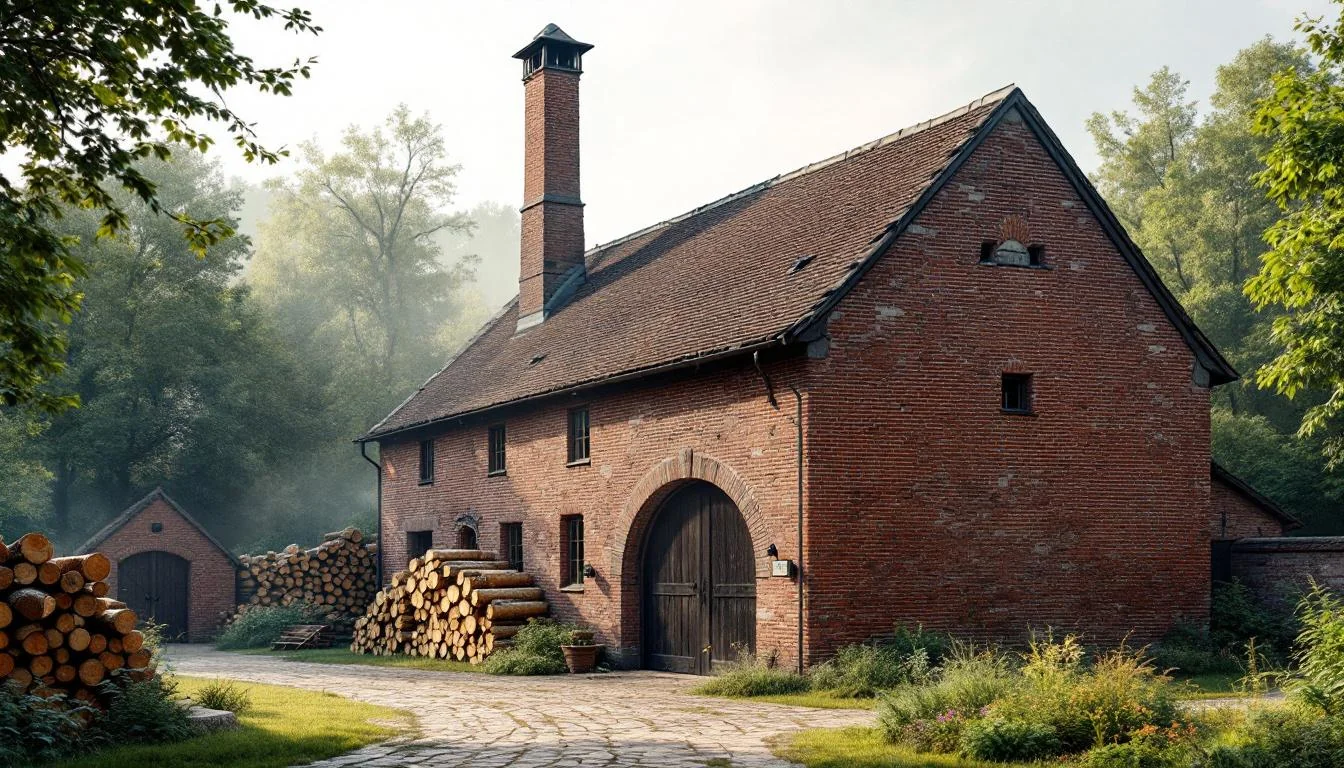
Weyermann burns beechwood from the Franconian forests in a separate furnace and pipes the smoke into the kiln, where the green malt waits. The temperature is held low in the first stage, around 55–60 °C (131–140 °F), so the smoke has time to work deep into each kernel.
The process takes 24–48 hours. The malt absorbs phenolic compounds from the smoke: guaiacol brings the smoky flavor, syringol a woody aroma, and 4-methylguaiacol a sense of warmth. The temperature then climbs gradually to 80–85 °C (176–185 °F) to finish the kilning.
The wood determines the malt’s character. Beechwood gives a subtle, balanced smoke. Alder, popular in the United States, is gentler. Cherry adds a fruity note. Scottish peat gives a pungent, sharp smoke that recalls Islay whisky.
IIITechnical Specifications
By the numbers, smoked malt is almost no different from ordinary Pilsner malt. What sets it apart is something no instrument can measure.
Color ranges from 2 to 6 EBC (1.5–3 Lovibond), pale enough to leave a beer’s color almost untouched. Extract is about 80–82%, standard for a high-quality base malt.
Protein falls between 10 and 11.5%, enough to contribute to haze and head retention. Moisture is under 5%. Diastatic power remains intact, so the malt can convert its own starches in the mash.
The one real difference is phenol content. Weyermann specifies 10–30 ppm of phenols in its Beechwood Smoked Malt. Briess, in the United States, puts its Cherrywood Smoked Malt lower, at about 5–15 ppm. Peated malt from Scotland can reach 50 ppm or more.
That number sets the intensity of the smoke. At 10 ppm it is a faint trace, at 30 ppm a strong presence, and at 50 ppm and above it overwhelms everything else. Brewers need to know the phenol level of each lot of malt to control the result.
In practice, smoked malt can be 100% of the grain bill in a traditional Rauchbier, or just 5–10% when a brewer wants a light layer of complexity. There is no fixed formula, only the balance each brewer finds.
IVFlavor and Color
Open a bottle of traditional Rauchbier and take a deep breath. It smells of a winter hearth, of smoked meat hanging in a storehouse, of beechwood burning through the night.
Smoked malt adds little color; the beer stays straw or amber depending on the other malts in the recipe. Its work is in aroma and flavor.
The first layer is pure wood smoke, not the acrid smoke of coal but the softer smoke of hardwood: warm, enveloping, like a campfire or a fireplace on a freezing night.
Beneath it is bacon. Not crisp fried bacon, but traditional smoked bacon, with melting fat, red meat, and mineral salt. That umami impression comes from phenolic compounds interacting with malt proteins.
Deeper still are leather, damp earth, and sometimes a faint metallic note. These come through when the share of smoked malt is high, or when peated malt replaces beechwood-smoked malt.
On the tongue, the beer opens with light malt sweetness, turns to smoke mid-palate, and ends in a long, smoky finish. Hop bitterness balances the natural saltiness of the phenols, and low to moderate carbonation keeps the smoke from scattering.
The smoke also shifts with temperature. Too cold and it is held back; too warm and it turns harsh. The balance point is 8–12 °C (46–54 °F), cool enough to refresh and warm enough to release the smoke.
VKey Beer Styles
Rauchbier is smoked malt’s home ground, but the smoke has traveled far beyond Bamberg.
Rauchbier (Bamberg Smoked Lager) is the original style, brewed with 100% smoked malt. Schlenkerla Märzen is the benchmark: deep amber, with a strong bacon aroma and sweet malt balanced against heavy smoke. Expect 5–6% ABV and 20–30 IBU. It belongs to the family of traditional lagers, with a personality entirely its own.
Smoked Porter and Smoked Stout pair roast with smoke, a natural match. Alaskan Smoked Porter, from the United States, is the classic example, made with malt smoked over local alder. The smoke weaves into chocolate and coffee and builds real complexity, a distinctive branch of the dark beer family.
Grätzer/Grodziskie is Poland’s smoked wheat beer, nearly extinct before its revival. It is light, bright, and highly carbonated, with delicate smoke, and is brewed from 100% oak-smoked wheat malt. At just 2.5–3.5% ABV, it is made for summer, and it takes a different route from traditional wheat beers.
Smoked Scotch Ale and Wee Heavy draw on Scotland’s tradition of peated malt in whisky, which some breweries have applied to strong ales. The smoke is sharper than beechwood smoke and comes with deep caramel and warming alcohol. These beers are uncommon, but they make an impression.
Smoked malt also turns up in small amounts in experimental styles: Smoked IPA, Smoked Saison, even Smoked Gose. There it adds an unexpected depth rather than taking over.
VICompared With Similar Malts
Among specialty malts, smoked malt stands alone: no other picks up a natural smoke character from kilning. A few comparisons are still worth making.
Beechwood Smoked Malt vs. Peated Malt: the difference is night and day. Beechwood gives gentle smoke, bacon, and warm wood. Peated malt gives a sharp smoke with medicinal, iodine, and sea notes. Beechwood suits lagers and porters; peated malt is for lovers of Islay whisky who want something extreme.
Smoked Malt vs. Rauchmalz: these are one and the same. Rauchmalz is simply the German name for smoked malt, though “Rauchmalz” on a label usually signals a German product in the traditional Bamberg style.
Smoked Malt vs. Melanoidin Malt: both add depth, in different directions. Melanoidin malt brings toasted bread and honey from the Maillard reaction; smoked malt brings smoke from phenols. The two can share a recipe for maximum complexity.
Smoked Malt vs. Liquid Smoke: some commercial breweries use artificial smoke flavoring instead of smoked malt, with entirely different results. Liquid smoke tastes one-dimensional and harsh. Smoked malt gives a living smoke that shifts with temperature and time. No shortcut replaces the tradition.
VIIHow to Recognize It in the Glass
Don’t drink right away. With smoked beer, the ritual begins before the glass touches your lips.
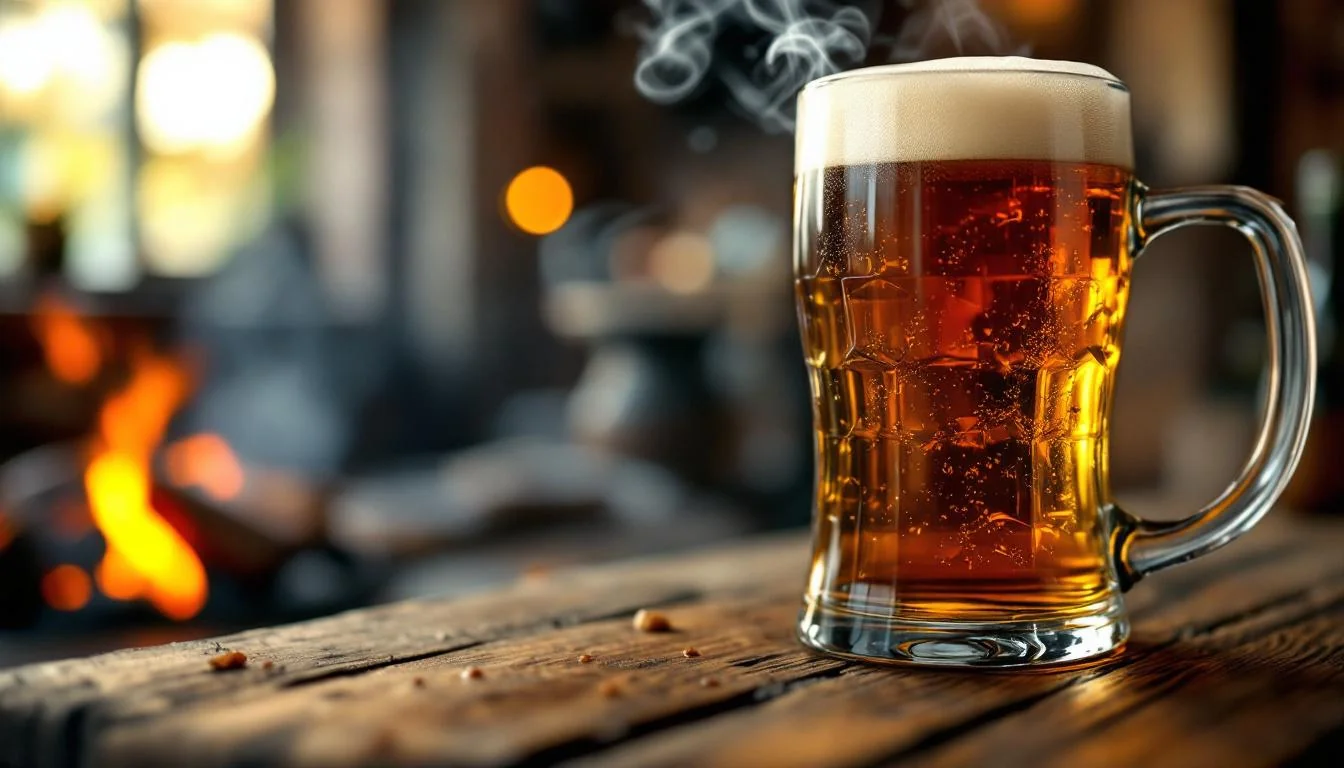
Raise the glass to your nose and inhale gently. Smoke comes first: not cigarette smoke or exhaust, but the smoke of a kitchen fire, of burning firewood, of winter afternoons in a wooden house. If you find bacon or ham, that is Beechwood Smoked Malt. Medicinal notes, iodine, or a whiff of distant sea mean peated malt.
On the first sip, let the beer spread across your tongue. The smoke appears mid-palate, not at the tip. Sweet malt comes first, then smoke, then hop bitterness. If the three layers stay distinct, the beer is well brewed.
Watch the temperature. As the beer warms in your hand, the smoke opens up and grows more complex, which is why Bamberg drinkers take their Rauchbier slowly, never the way they would down a summer Pilsner.
The finish is the final test. A good smoked beer leaves a long, warm finish, like sitting by the fire after dinner. If it is harsh, acrid, or gone too quickly, something went wrong in production.
Pair it with smoked cheese, Franconian sausage, or barbecue. Or keep it simple: a quiet evening and some patience.
In a world of uniform mass-market beer, smoked malt is a reminder that everything once tasted of fire. Sometimes the way forward is to look back.
Mentioned in this article
-
Beer O L O G Y
Light Beer and the Hard Art of Simplicity -
Beer O L O G Y
Dark Beer Is Not One Style -
Beer O L O G Y
Wheat Beer: The Flavor of the Grain -
Beer O L O G Y
Strong Beer: When Alcohol Becomes an Art
Originally published in Vietnamese on Tạp Chí Beer.