Vienna Malt: The Golden Backbone of Classic Lagers
Vienna Malt, a base malt dating to the 19th century, gives beer an amber hue and a light toasted-bread aroma. It shaped an entire school of Central European brewing.
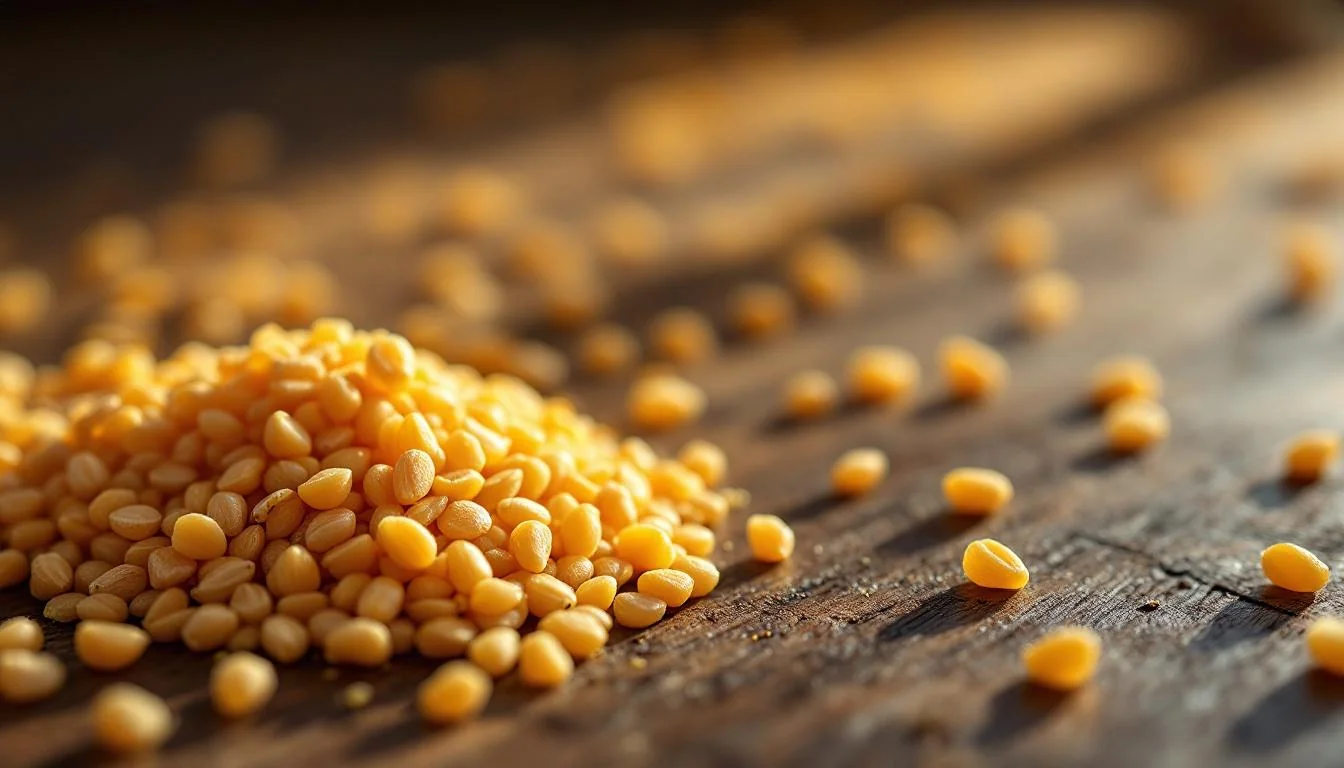
Some malts are made to stay in the background. Vienna Malt is not one of them.
It is a base malt, yes, but it will not sit still. In the Austrian capital in the 19th century, this malt defined a beer style on its own, and the name Vienna Lager is still with us. A warm amber-gold color, a faint aroma of toasted bread, a light sweetness like wildflower honey: it all starts with barley kilned hotter than usual, enough to bring out aroma but not enough to scorch.
IOrigins and History
In 1841, Vienna was the heart of the Austro-Hungarian Empire, and Anton Dreher faced a decision that would change the history of European beer.
Dreher was no ordinary brewer. He inherited the Schwechat brewery from his father, but instead of carrying on as before, he set out to learn. Trips to Britain and Bavaria in the 1830s opened a new world to him: lager, bottom fermentation, patience. He brought home to Vienna both the knowledge and prized strains of cold-fermenting yeast.
The real turning point, though, was kilning. Until then, most continental European malt was dried over direct fire, leaving it smoky, acrid, and dark brown. Dreher gained access to the indirect kilning methods used in Britain, where coke had replaced wood since the start of the century. He refined the process, setting the kiln temperature above that of Pilsner malt but below Munich malt, at about 90–100 °C (194–212 °F).
The result was Vienna Malt: an amber-gold color never seen before, an aroma more complex than English pale malt, and enough enzymes left to convert its own starch.
In October 1841, Dreher launched Vienna Lager at the Schwechat brewery. That same year, a few hundred kilometers to the north, Josef Groll brought Pilsner into the world in Plzeň. Two beers, two malts, two very different fates. Pilsner would conquer the world. Vienna Lager would all but vanish from its own hometown.
Not because it was bad, but because history spares no one. Two world wars ravaged Central Europe. The Austro-Hungarian Empire collapsed. The Schwechat brewery changed hands several times. Vienna Malt was still being made, but the beer style named for the city slipped into obscurity. It was brewers in Mexico, descendants of 19th-century Austrian and German immigrants, who kept it going for hundreds of years.
IIHow It’s Made
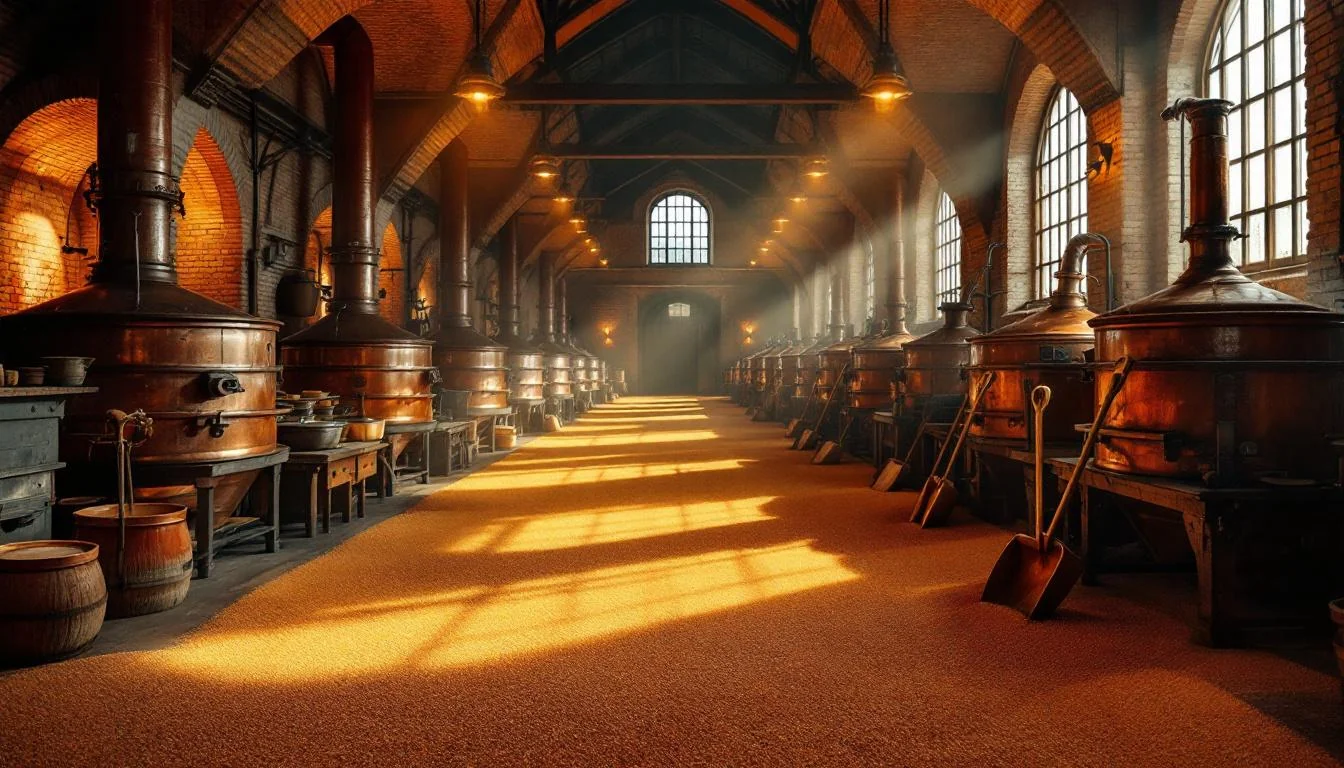
Vienna Malt starts like any other malt, with high-quality two-row barley.
Steeping, then germination. Nothing sets it apart yet. The barley spends about 4–5 days in the germination chamber, where rootlets emerge and enzymes are activated. Moisture is held at 44–46%.
The difference lies in the kilning. Pilsner malt is kilned at a low 80–85 °C (176–185 °F) to keep its color pale and its enzymes at full strength. Vienna Malt takes more heat, 90–100 °C (194–212 °F) in the final stage, and stays in the kiln longer, so Maillard reactions run more strongly.
The Maillard reaction, an interaction between amino acids and reducing sugars at high temperature, produces melanoidins. They are the source of the amber color, the toasted-bread aroma, and the layered sweetness. Yet the heat is not high enough to destroy the enzymes outright, and Vienna Malt keeps substantial diastatic power, enough to work as a true base malt.
After kilning, the grain is stripped of its rootlets, cleaned, and rested for a few weeks before bagging. Final moisture is under 4%. The finished kernel is hard and crisp, and it gives off a pleasant aroma when snapped in two.
IIITechnical Specs
Vienna Malt sits in the overlap: pale enough to serve as a base, dark enough to add character.
In color, Vienna Malt runs 6–9 EBC, or roughly 3–4 °Lovibond. That is its defining range: enough to give a clearly amber-gold beer when it is the only base malt, but short of the brown territory of Munich malt. Some maltsters, such as Weyermann, offer Vienna malt at 5.1–6.0 EBC, while Briess makes a version at 5.5–7.9 EBC.
Vienna Malt’s extract is about 80–82% (fine grind, dry basis), slightly below standard Pilsner malt (82–84%). That makes sense, since some of the starch has been turned into melanoidins in the kiln. In practice, a brewer needs about 2–3% more malt by weight to reach the same original gravity.
Diastatic power, the malt’s ability to convert starch, is the most important number for a base malt. Vienna Malt holds about 50–60 °Lintner (130–160 °WK on the European scale). That is enough to fully convert its own starch and carry a small share of enzyme-free adjuncts. If a recipe calls for a high proportion of adjuncts (more than 20%), add Pilsner malt or exogenous enzymes.
Protein typically runs 10–11.5%, enough for body and head retention without excessive haze. Modification is high, with a Kolbach index of about 38–45%, so a single-infusion mash works without a separate protein rest.
IVColor and Flavor
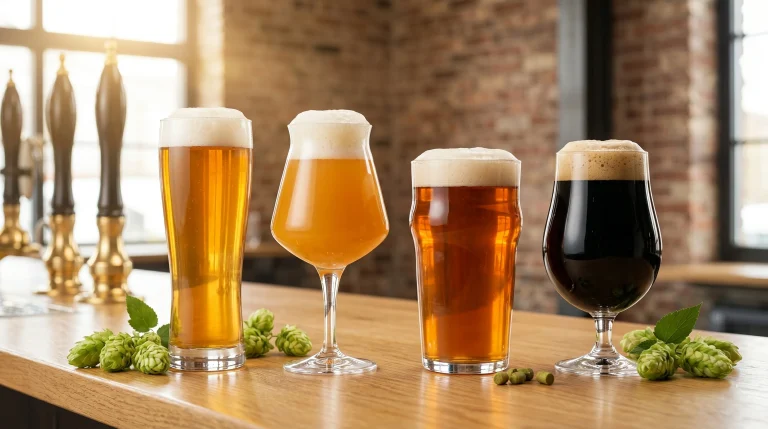
Hold up a beer brewed entirely from Vienna Malt, and the first thing you notice is the color.
Not the straw of Pilsner, not the copper-brown of Munich, but amber-gold: the color of honey with late-afternoon sun coming through it, of autumn leaves on the turn. The color comes from melanoidins, the compounds formed in the Maillard reaction, and they bring their own aroma and flavor as well.
Vienna Malt smells of toasted bread. Not burnt toast, not crackly crust, but the warm crumb of a loaf fresh from the oven. There is a touch of wildflower-honey sweetness, and passing notes of almond, biscuit, and toasted grain. It all comes together gently, never overpowering.
The sweetness is so understated that many drinkers do not notice it until they taste an all-Pils-malt Pilsner right afterward. Then the difference is plain: Vienna gives depth, roundness, and a light sweet base, like the accompaniment under a melody. It is not cloying like a beer built on crystal malt, and it does not taste of caramel. It is simply a warmth on the tongue.
The finish of a Vienna Malt beer is usually drier than people expect. Melanoidins are not sugars: they cannot be fermented, but they leave no residual sweetness either. Instead the finish shows a little biscuit, a little toast, and the clean feel of a well-made lager.
The body is medium-light to medium: not as thin as a mass-market Pilsner, not as full as a Doppelbock. There is enough to feel the beer as it goes down, but not enough to weigh on you after a few glasses.
VSignature Styles
Vienna Lager is, of course, the style most closely tied to this malt.
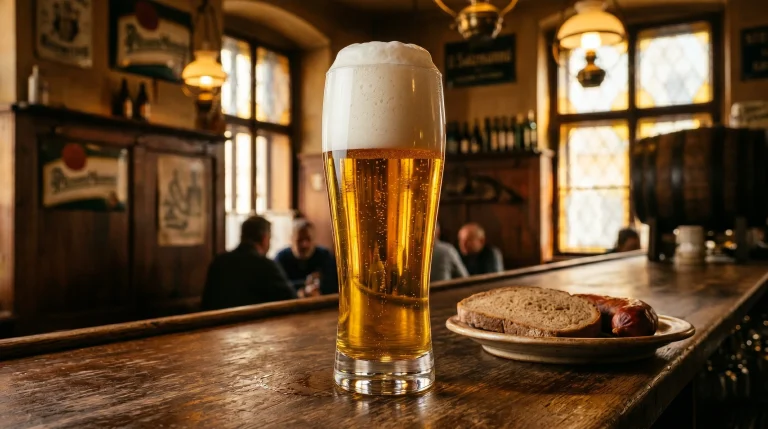
The irony is that Vienna Lager nearly died out in Vienna itself. It survived in Mexico, where 19th-century Austrian and German immigrants brought the recipes and the tradition with them. Negra Modelo and Dos Equis Amber, names familiar to beer drinkers around the world, both descend from the original Vienna Lager: amber color, gentle malt, a dry, clean finish. Vienna Malt can make up 80–100% of the grist in these recipes. For anyone exploring light beers and lagers, Vienna Lager is a natural place to start.
Märzen and Oktoberfest, two traditional German styles, also rely on Vienna Malt as a key ingredient. Classic recipes pair it with Munich malt in varying proportions, for a copper to deep amber color and a more complex malt character. Brewed in March (März) and lagered until autumn, when Oktoberfest begins, these beers became a fixture of German beer culture.
In today’s craft brewing, Vienna Malt turns up in unexpected places. Many IPAs and bitter beers use it as a base malt in place of standard pale malt, deepening the malt backbone without masking the hops. Using 10–30% Vienna in the grist is enough to make a difference.
Düsseldorf’s Altbier, American Amber / Red Lager, even some Scottish Ales can all benefit from Vienna Malt. It is versatile in the full sense: light enough not to dominate, distinctive enough to leave a mark. In strong beers such as Doppelbock and Eisbock, Vienna also appears as a supporting malt, adding complexity to a Munich base.
VICompared with Related Malts
Vienna Malt stands between its two siblings, Pilsner malt and Munich malt, as a natural bridge.
Pilsner malt, the palest of the three, is kilned at the lowest temperature, 80–85 °C (176–185 °F). Its color is 2–4 EBC. It has almost no distinctive malt aroma, only a clean grain flavor that leaves room for hops or yeast to lead. Its diastatic power is the highest, usually above 100 °Lintner. If Pilsner malt is a blank page, Vienna Malt is the first sketch.
Munich malt, the darkest of the three, is kilned hotter, at 100–110 °C (212–230 °F). Its color is 15–25 EBC. The bread aroma is stronger and closer to crust than crumb, and the sweetness is more pronounced, with a touch of caramel. Diastatic power is markedly lower (about 30–40 °Lintner), still enough to convert itself but worth watching when adjuncts are in the mix. Munich malt is an exclamation point; Vienna Malt is a comma.
English pale malt, the rival from across the Channel, overlaps with Vienna in color (5–8 EBC). Its flavor profile differs, though: more pronounced biscuit, sometimes a little nutty, less toasty than Vienna. It suits ales better than lagers. Its enzyme level is also slightly lower than Vienna’s, a result of traditional English kilning.
Some maltsters, such as Briess (USA) and Simpsons (UK), offer “Light Munich” or “Maris Otter Vienna,” hybrids that sit on the border between categories. Brewers should read the spec sheet closely rather than go by the name.
VIIHow to Spot It in the Glass
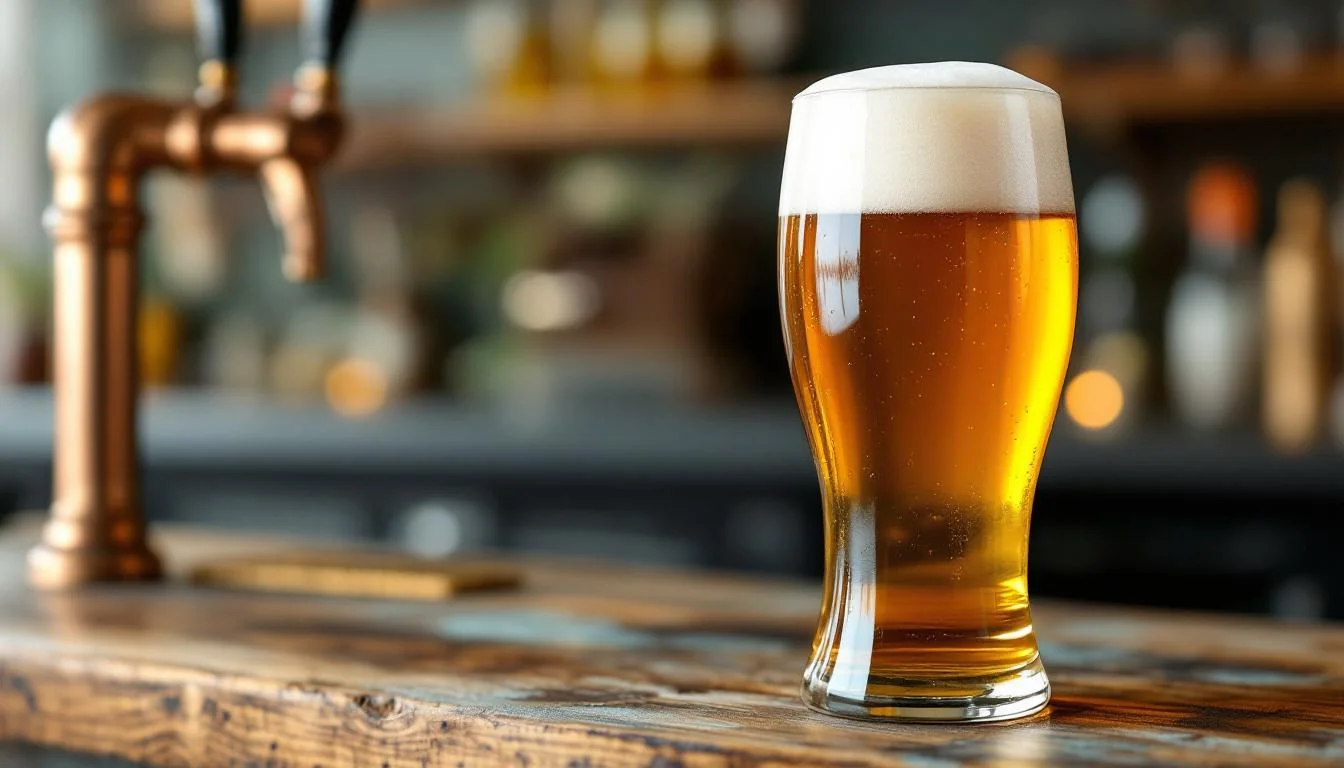
Pour the beer and look at the color first. If it is a warm amber-gold, not as pale as a Pilsner and not as brown as a Munich Dunkel, there is a good chance Vienna Malt is in the recipe.
Bring the glass to your nose and breathe in gently. Vienna Malt leaves an aroma of toasted bread: not charred crust, but warm crumb, with a honeyed sweetness and a passing hint of almond. If you can pick out these layers beneath the hops or the yeast esters, Vienna is quietly at work.
Take a sip and let it move slowly across the tongue. Vienna Malt’s sweetness is never sharp; it is gentle and round. The finish is usually drier than expected, with a biscuit aftertaste that lingers for a few seconds after you swallow.
The body is medium-light, neither thin nor thick: enough to tell you the beer has substance, not enough to stop you from a second or third glass.
Try a comparison: drink a Vienna Lager, then a Pilsner from the same brewery if you can. The difference in malt depth is obvious at once. Vienna Malt provides what brewers call a “malt backbone,” even at low intensity.
And if you are lucky enough to find a bottle of Negra Modelo or a well-made craft Vienna Lager, drink it slowly. That toasted-bread aroma has survived two world wars, crossed an ocean, and outlasted being forgotten in its own hometown. A hundred and eighty years — long enough to become history, short enough to still be here.
Mentioned in this article
-
Beer O L O G Y
Light Beer and the Hard Art of Simplicity -
Beer O L O G Y
The World of Bitter Beer Begins with IPA -
Beer O L O G Y
Strong Beer: When Alcohol Becomes an Art
Originally published in Vietnamese on Tạp Chí Beer.