Saaz: The Bohemian Hop That Defines Pilsner
Saaz, the noble hop of Bohemia, carries the clean herbal aroma and gentle bitterness that have shaped Pilsner for more than 700 years.
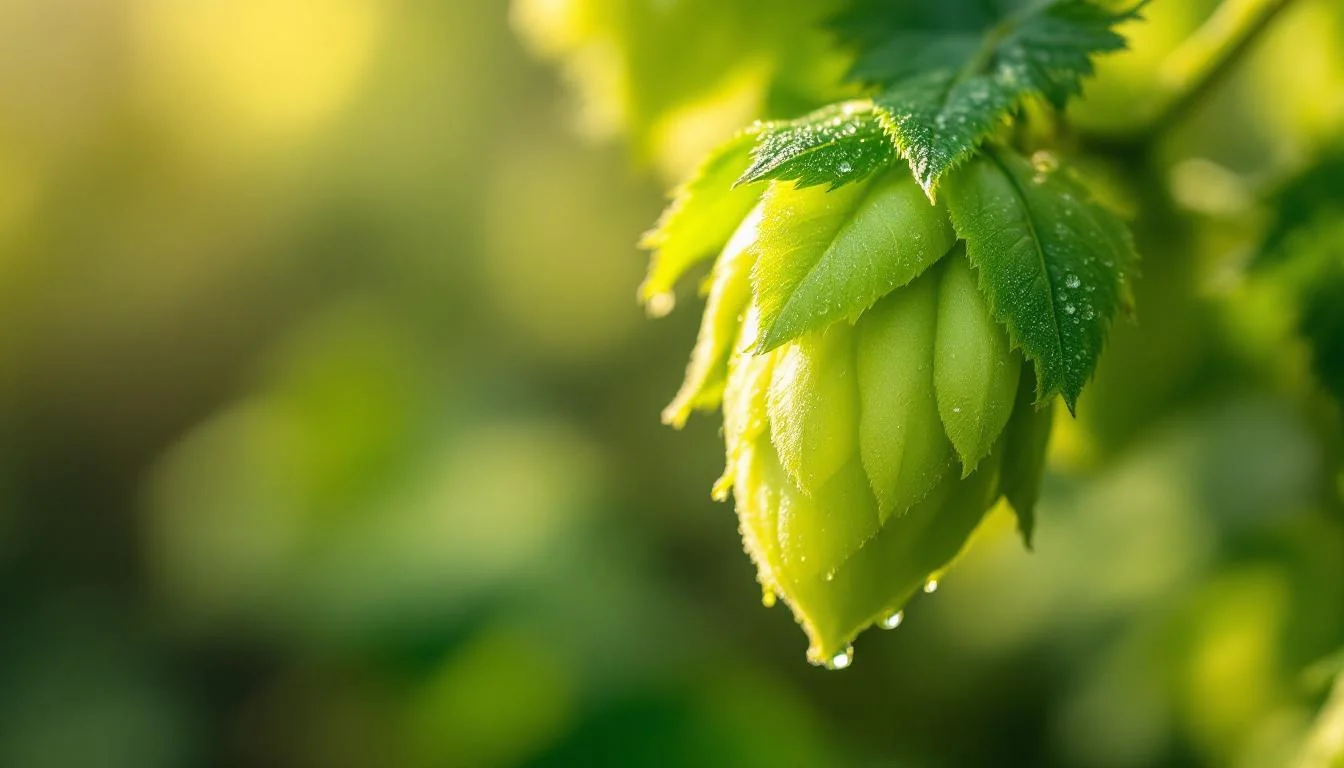
In 1842, in the small Bohemian town of Plzeň, a Bavarian brewer named Josef Groll did something no one had done before. He brought together pale malt, the town’s unusually soft water, and a hop grown not far away, in the countryside around Žatec. The result was a golden, brilliantly clear beer with a clean bitterness and a delicate herbal aroma. Pilsner Urquell was born, and with it the world came to know Saaz.
But the story of Saaz does not begin in 1842. It begins centuries earlier, when Bohemian farmers realized that their land, with its mild continental climate, mineral-rich red soil, and the winding Ohře River, could grow a hop no other place could match.
IOrigins and History
Saaz carries the German name of Žatec, a town in northwestern Bohemia, now part of the Czech Republic. It is among the oldest hop varieties still in cultivation anywhere, and one of the noble hops, alongside Germany’s Hallertau, Tettnang, and Spalt.
Historical records show hops growing around Žatec as early as 1004, when the king of Bohemia issued the first rules on hop cultivation and trade. By the 13th century the region had become the most important hop-growing center in Central Europe. In 1348, King Charles IV of Bohemia, later Holy Roman Emperor, made the export of Saaz hop cuttings from the kingdom punishable by death.
The decree was no whim: the Bohemians saw Saaz as a national asset. Like Pinot Noir, which is never quite itself outside Burgundy, Saaz reaches its peak only in Bohemian soil.
The traditional growing area follows the Ohře River valley, in the Žatec hop region, a protected geographic area. The soil is red Permian earth, rich in iron and trace minerals. A temperate continental climate, with cold winters and moderately warm summers, gives the bines ideal conditions to grow slowly and build up their oils gradually.
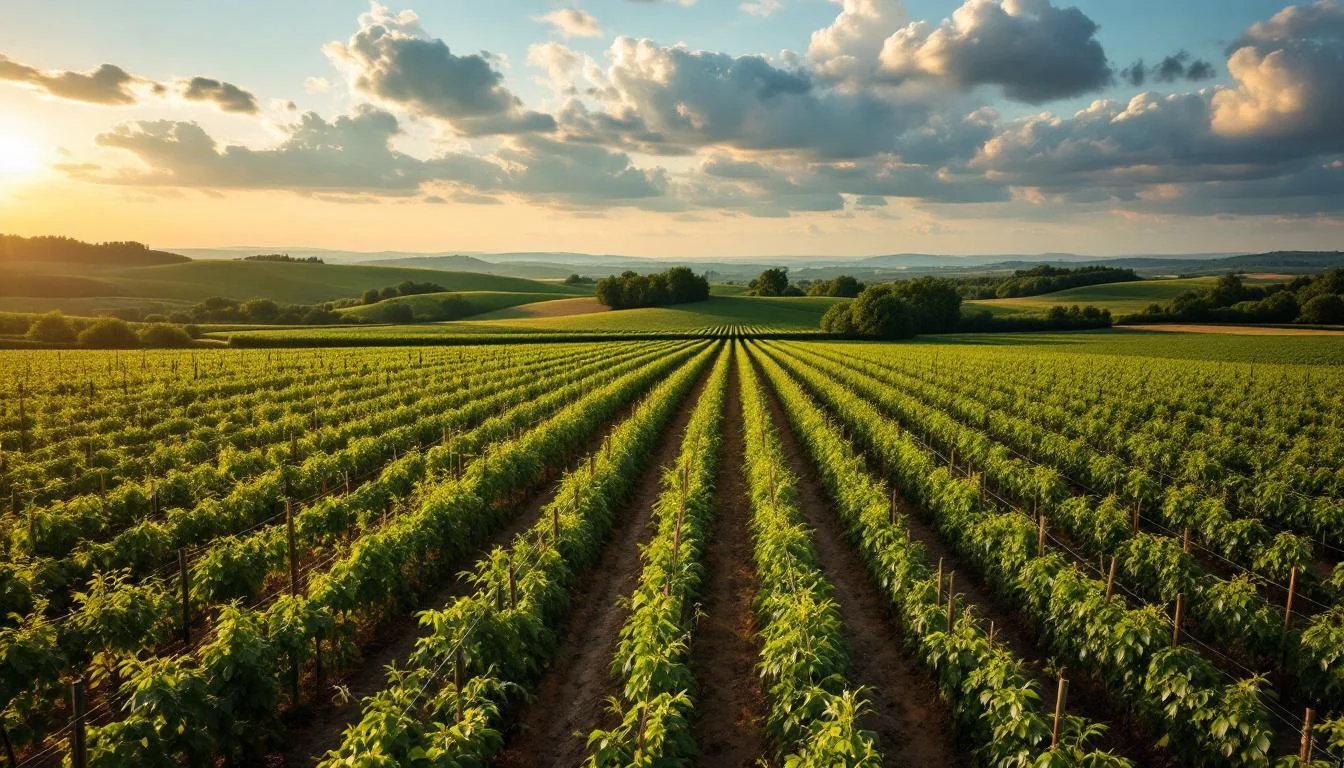
Saaz is a landrace. No one bred it in a laboratory; it evolved over centuries of cultivation and selection by local farmers. The result is a high degree of genetic purity, along with lower yields than modern varieties.
About 5,000 hectares in the Žatec region are still planted to Saaz today. In 2022 the European Commission formally recognized “Žatecký chmel” (Žatec hops) as a product with protected geographical status, putting it on the same footing as Champagne and Parmigiano-Reggiano.
IITechnical Profile
Saaz is a low-alpha hop, typically between 2.5% and 4.5% alpha acids, with an average of about 3.5%. Beta acids fall between 3% and 4.5%. Those numbers are modest next to modern varieties like Citra or Simcoe, and the modesty is what defines Saaz. It was never meant to batter the drinker with bitterness; it works by suggestion.
Total oil content runs from 0.4% to 0.8%, lower than in many varieties, but its composition is balanced and complex. Farnesene, an oil characteristic of the noble hops, accounts for roughly 12% to 18% of the total, more than in most other varieties. It is the compound behind the herbal aroma that marks Saaz.
Cohumulone makes up a fairly low share of Saaz’s alpha acids, about 23% to 26%. That matters, because low cohumulone means a soft, rounded bitterness without harshness. Saaz is usually harvested from late August into early September, as the first cold nights of autumn settle over Bohemia.
IIIAroma and Flavor
Saaz’s aroma is hard to describe. This is a subtle hop that never announces itself, and you have to lean in to catch it.
Gently squeeze a fresh Saaz cone and the first thing to rise is herbal, though not the Mediterranean herbs of basil or oregano. These are Central European herbs: hay, wild daisies, and something close to weak green tea. The usual descriptors are “herbal” and “grassy,” and neither quite covers it.
The second layer is floral, so faint it takes effort to notice. White flowers, small ones. Not heady rose or jasmine, but the tiny blooms of wild grasses, summer flowers half remembered.
The last layer, and the most characteristic of Saaz, is a light spiciness. The word people use is “spicy,” but this is not the heat of chili or ginger. It is white pepper, clove at a distance, and something that recalls wood and moss. Some people pick up a note close to bitter orange, very faint, like the scent left in a room long after the orange has been put away.
On the palate, Saaz gives a soft bitterness that is never sharp and never lingers unpleasantly, a gentle reminder that this is beer and not water. The finish is clean and dry, with a touch of minerality, like limestone.
IVBeer Styles That Use Saaz
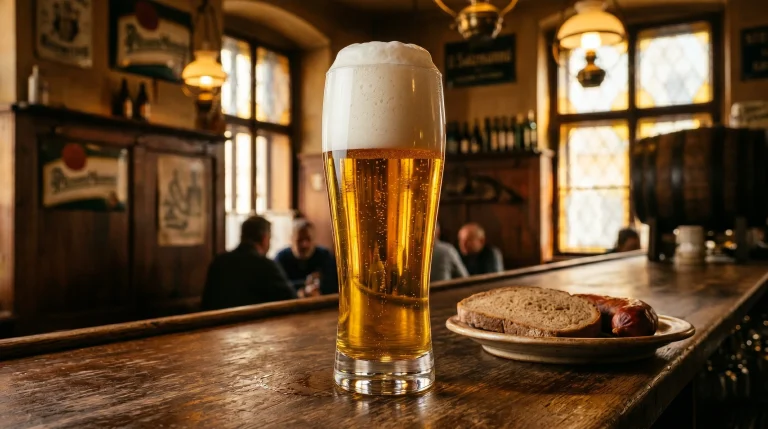
Saaz and Pilsner are inseparable. Czech Pilsner, also called Bohemian Pilsner, is defined by three things: Moravian malt, soft water, and Saaz hops. Without Saaz, Czech Pilsner simply does not exist.
In Czech Pilsner, Saaz handles both bittering and aroma. Traditional practice pairs triple decoction mashing with several Saaz additions, usually three: at the start of the boil, partway through, and at the end for aroma. Pilsner Urquell, Budějovický Budvar, and Staropramen all build their flavor on Saaz.
Beyond Czech Pilsner, Saaz is also a traditional choice for German Pilsner, though German brewers often turn to their own noble hops, such as Hallertau and Tettnang. Munich Helles, a pale, gentle lager, often takes Saaz for aroma as well.
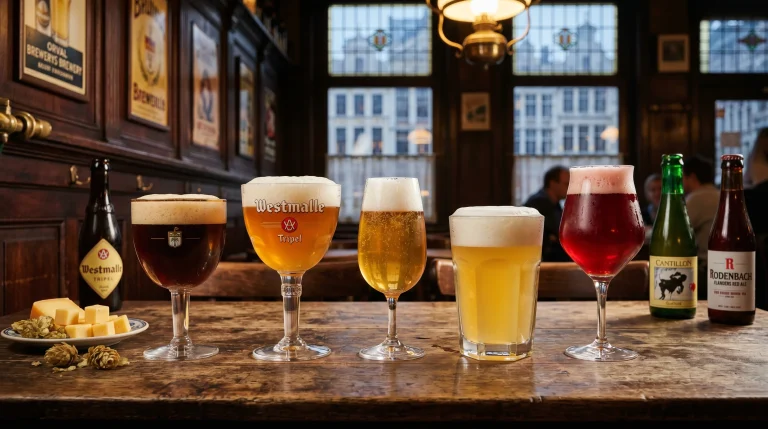
A number of traditional producers of Belgian beer use Saaz too, especially in Belgian Blonde Ale and Belgian Witbier. Its herbal note complements the orange peel and coriander seed common in Witbier.
Some modern craft brewers have even tried Saaz in IPAs, not for the main bittering but for an added layer of aroma, a reminder of European tradition amid the tropical fruit of American and Australian hops.
VSaaz and the Other Noble Hops
The noble hops are four varieties from continental Europe. Alongside Saaz are three from Germany: Hallertau Mittelfrüh, Tettnang, and Spalt. Each has its own personality, though they share some traits: low alpha acids, herbal aroma, and soft bitterness.
Compared with Hallertau Mittelfrüh, probably the closest of the three, Saaz is more distinctly herbal and has a stronger spicy note. Hallertau leans toward flowers and earth. If Saaz is hay drying in the sun, Hallertau is fresh grass in the early morning.
Tettnang, grown near Lake Constance where Germany, Austria, and Switzerland meet, is more floral than Saaz, with light notes of orange and lemon. Tettnang is the brighter of the two, Saaz the deeper. Spalt, from Franconia, falls somewhere in between: herbal like Saaz, with an added touch of wood and damp earth.
One thing to keep in mind: Saaz has been planted elsewhere, including the United States, New Zealand, and Belgium, but hops from those places are never quite the same as Bohemian Saaz. Terroir matters as much for hops as it does for grapes.
VIHow to Find Saaz in the Glass
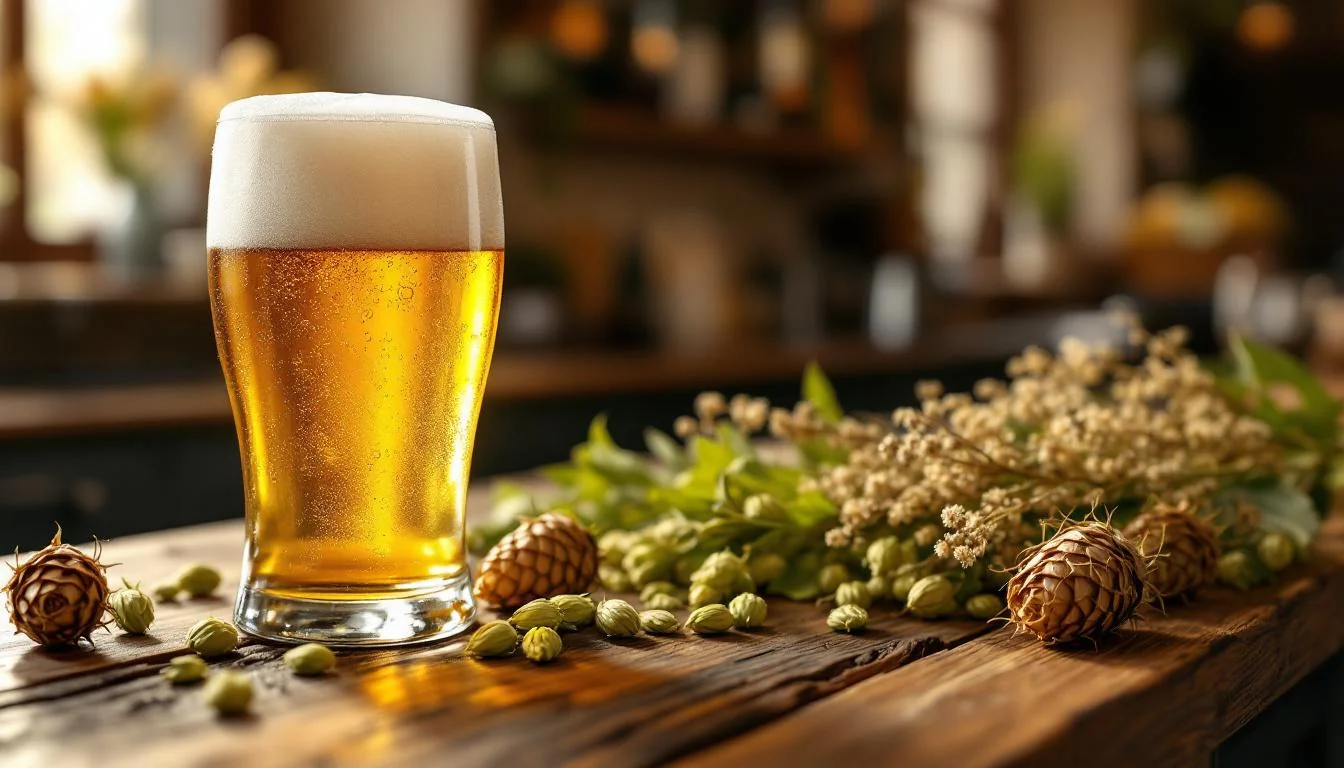
With a Czech Pilsner in hand, or any beer brewed with Saaz, start by raising the glass to your nose before you drink. Saaz does not leap out of the glass the way Citra or Mosaic does. You have to look for it.
The first impression is usually dried herbs, like opening an old book in a room hung with linen curtains. Then swirl the glass gently and let the beer warm a little. A faint floral note will surface.
As you drink, the bitterness arrives slowly and fades slowly; nothing about it is abrupt. Mid-palate there is a slight dryness, like sparkling mineral water. The finish is clean, with an herbal echo that lasts just long enough to make you want another sip.
Saaz is a hop to feel rather than analyze, the way you take in a late afternoon in a small European town after the sun has gone and the air begins to cool. Drink slowly. Bohemia has waited more than seven hundred years for you, and it is in no hurry.
Mentioned in this article
-
Beer O L O G Y
Light Beer and the Hard Art of Simplicity -
Beer O L O G Y
Belgian Beer: Intangible Cultural Heritage of Humanity -
Beer O L O G Y
The World of Bitter Beer Begins with IPA

Originally published in Vietnamese on Tạp Chí Beer.