Pilsner Malt: The Pure Foundation of Golden Beer
Pilsner malt, the palest base malt in the world, was born in mid-19th-century Bohemia and has set the standard for lager for nearly two centuries.
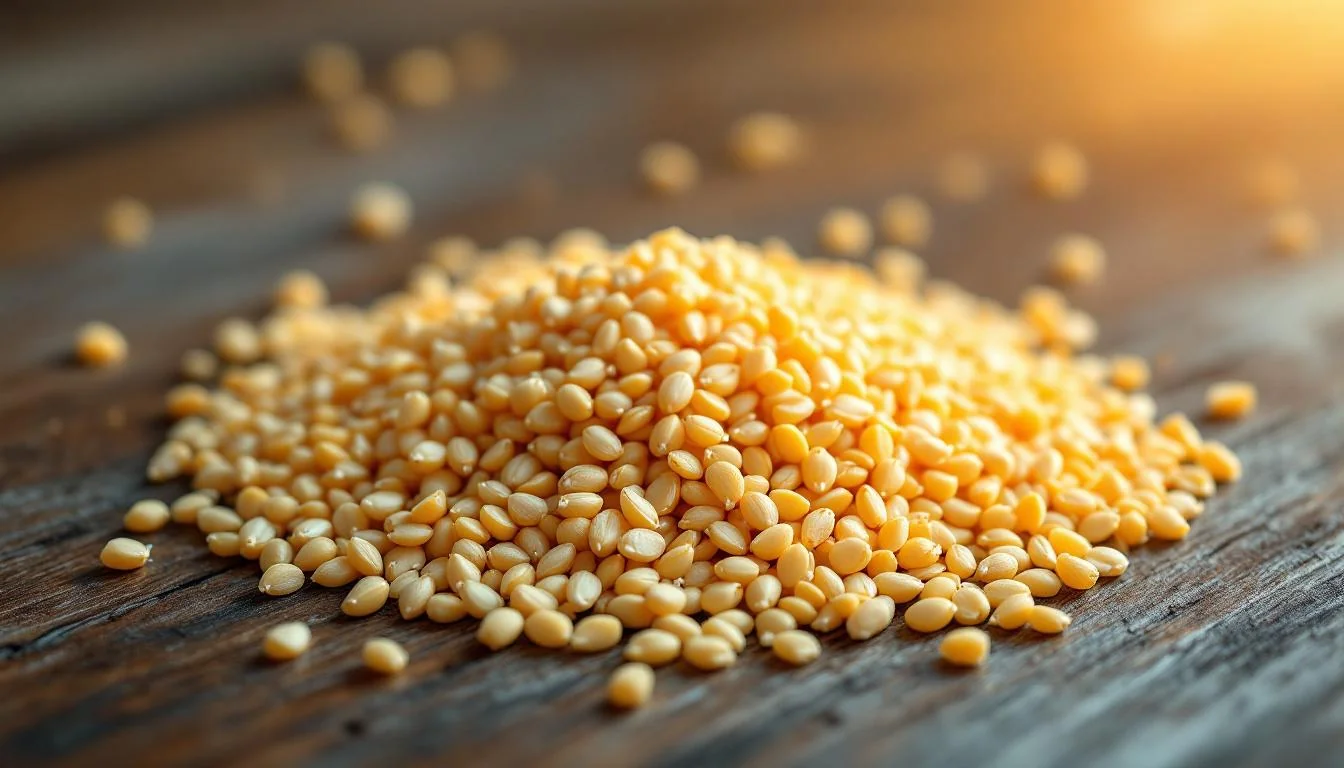
Some things earn their greatness through purity alone. Pilsner malt is one of them.
Born in Bohemia in the mid-19th century, this base malt changed how the world saw beer. Before it, most European beer was cloudy, dark, and heavy with smoke. Pilsner malt brought something no one had seen: crystal clarity, a shimmering straw-gold color, and a startlingly clean flavor. That revolution is still with us.
IOrigins and History
The story begins in Plzeň, a small town in Bohemia, now the Czech Republic. In 1842 the Měšťanský pivovar (Brewery of the Burghers) hired Josef Groll, a Bavarian brewmaster, to create a new beer. Groll brought Bavarian lagering with him, and in Plzeň he found what his homeland lacked: Moravian barley and the region’s exceptionally soft water.
Moravian barley of the day was low in protein and thin-husked, and kilned at low temperatures it yielded a malt paler than any seen before. With bottom-fermenting lager yeast and soft water almost free of minerals, Groll used it to create Pilsner Urquell, the first clear golden beer in history.
The timing could not have been better. By the mid-19th century the glass industry was booming, and clear glasses were replacing opaque ceramic mugs. For the first time, drinkers could see the color of their beer, and Pilsner Urquell, bright gold, became a sensation.
From Bohemia, the know-how for making Pilsner malt spread to Germany, especially Franconia and Bavaria. German maltsters such as Weyermann (founded in Bamberg in 1879) and Bestmalz refined the process and made German Pilsner malt the industry standard.
Today Pilsner malt is usually divided into two main types, Bohemian (Czech) and German. Both are pale, but they differ subtly in flavor, a mark of terroir and of separate malting traditions.
IIThe Malting Process
Pilsner malt demands patience and tight control at every stage.
It starts with high-quality two-row barley, often Moravian varieties or modern ones bred from them. The grain must carry 9.5% to 11.5% protein: enough to supply enzymes, not so much that it clouds the beer.
Steeping takes 40–48 hours and raises the grain’s moisture from about 12% to 43–46%. Germination follows, for 4–5 days at a controlled 14–18 °C (57–64 °F). This is when the amylase and protease enzymes are activated, ready to convert starch later on.
The most important difference comes at the kiln. Pilsner malt is kilned at low temperatures, starting at 50–60 °C (122–140 °F) and finishing no higher than 80–85 °C (176–185 °F). The process is long and gentle, preserving as much enzyme as possible and avoiding the Maillard reactions that create color.
The result is a pale straw-colored, enzyme-rich malt with a gentle aroma of fresh flour and honey.

IIITechnical Specifications
Pilsner malt is a base malt: it can fully convert its own starches and supplies most of the fermentable sugar in a recipe.
In color it is one of the palest malts there is. German Pilsner malt usually runs from 2.5 to 4 EBC, or 1.4–1.8 °Lovibond. Bohemian Pilsner malt can be a shade darker, at 3–4.5 EBC. Next to British pale ale malt (5–7 EBC), Pilsner malt is noticeably lighter.
Extract runs 80–82% on a dry basis, among the highest of any malt, which means starch converts to sugar very efficiently.
Protein typically sits at 10–11%, enough for strong diastatic power (often above 250 Windisch-Kolbach units) without causing clarity problems. The Kolbach index, the ratio of soluble to total protein, ranges from 38% to 42%, a sign of good modification during germination.
Pilsner malt can therefore make up 100% of the grist, with no other malt needed for conversion.
IVFlavor and Color
Pilsner malt doesn’t shout. It whispers.
Its signature aroma is fresh flour, just-baked white bread, and a light touch of honey. No caramel. No biscuit. No roast. Only grain, in its most elemental form.
In the finished beer, Pilsner malt lays down a light, gentle sweetness and a dry, clean finish. It is a blank canvas that lets the other ingredients do their work: hops, yeast, and water.
A beer brewed entirely from Pilsner malt runs from straw to gold, usually 4–8 EBC depending on the brewing process. It is the classic color of Pilsner, Helles, and many other pale lagers.
The two types differ subtly. German Pilsner malt tends to give a cleaner, almost neutral grain flavor. Bohemian Pilsner malt can be a little warmer, with light notes of honey and cracker, a legacy of the traditional Moravian barley varieties.
One thing to watch is DMS (dimethyl sulfide), a compound that smells of cooked corn. Pilsner malt carries more DMS precursor than malts kilned at higher temperatures. To keep that smell out of the beer, the boil should run at least 60–90 minutes with the lid off, so the DMS can escape.
VClassic Styles
Pilsner malt is the backbone of countless beer styles, above all in the pale lager family.
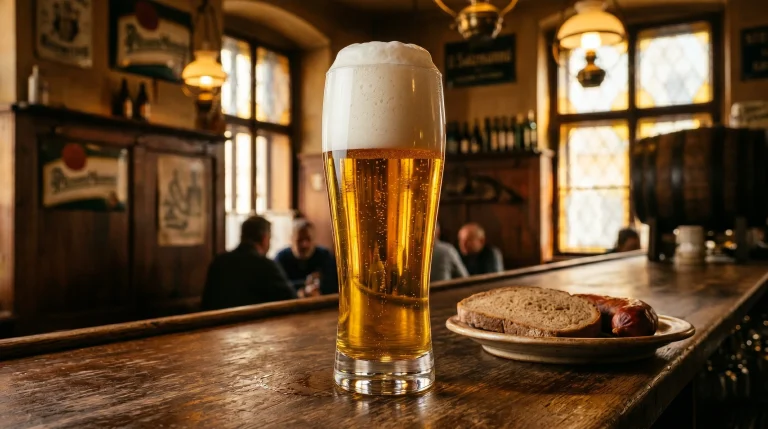
German Pilsner: the style born of this very malt. It is bright straw in color and light in body, with high bitterness from German hops such as Hallertauer or Tettnanger. Pilsner malt makes up 100% of the grist, letting the clean bitterness and herbal hop aroma stand out.
Czech Premium Pale Lager (Bohemian Pilsner): the original, from Plzeň. It is a little fuller than German Pilsner, with more pronounced malt balanced by Saaz hops. Traditional Bohemian Pilsner malt gives it its characteristic honey and bready notes.
Munich Helles: Pilsner’s cousin, born in Munich in 1894. Helles also builds on Pilsner malt but puts malt ahead of bitterness. The result is golden, lightly sweet, and remarkably easy to drink.
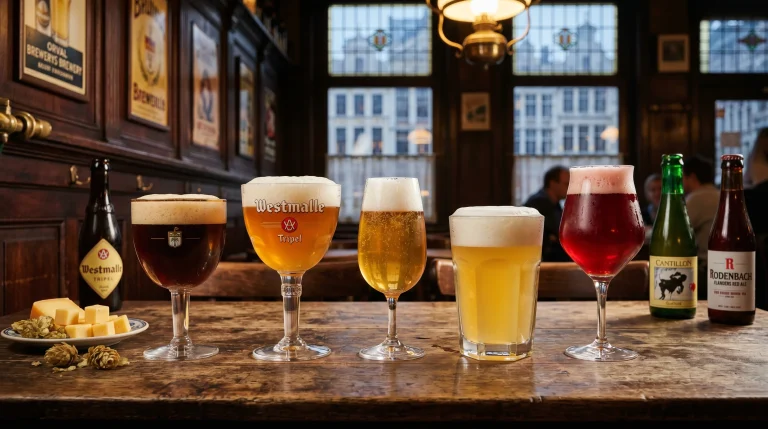
Belgian Blonde Ale and Belgian Tripel: perhaps unexpectedly, many Belgian beers are built on Pilsner malt too. In a tripel, Pilsner malt and candi sugar produce a light body with high alcohol and the style’s signature dry finish.
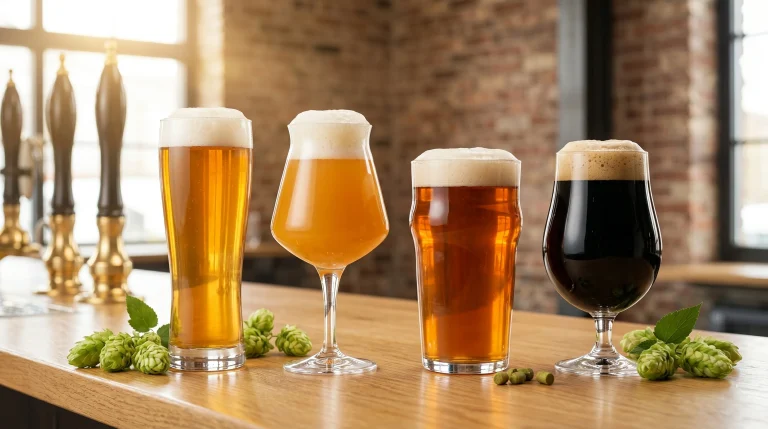
Pilsner malt also turns up in many modern IPA recipes, where brewers want a neutral malt base that lets the hops take center stage.
VICompared With Similar Malts
Among pale base malts, Pilsner malt has a few close relatives worth knowing.
Pale Ale Malt (British): kilned hotter, at about 90–95 °C (194–203 °F), for a deeper color (5–7 EBC) and a light biscuit note. It has less enzyme than Pilsner malt and is the foundation of British ales.
Vienna Malt: kilned a little hotter than Pilsner malt, at 85–90 °C (185–194 °F), for a color of 6–9 EBC. It has more pronounced toasted-bread and honey notes but still enough enzyme to convert itself. It goes into Vienna Lager and Märzen.
Munich Malt: kilned hotter still, at 100–105 °C (212–221 °F), for 15–25 EBC. It brings a rich malt flavor, notes of barley bread, and a little light caramel. With less enzyme, it usually needs Pilsner or pale malt alongside it.
Ranked from palest to darkest: Pilsner → pale ale → Vienna → Munich. Each step up means a hotter kiln, more Maillard reactions, less enzyme, and more complex flavor.
Pilsner malt stands at the starting line: the purest, the palest, and the most versatile.

VIIFinding It in the Glass
To get to know Pilsner malt, start with a classic Pilsner, Czech or German.
First, look at the color. Hold the glass up to the light. Pilsner malt gives a brilliant straw color without a trace of haze, glowing like thin honey. That is the legacy of low kilning temperatures: no melanoidins, no caramel, only the natural pigment of the grain.
Bring the glass to your nose. The aroma of Pilsner malt is faint: fresh flour, a little honey, perhaps a distant hint of hay. If you smell toast or caramel, it comes from another malt or from the brewing process.
Take a sip and let it run across your tongue. Pilsner malt gives a clean, light sweetness with almost no aftertaste. It stays in the background, leaving room for the bitterness of the hops and the crispness of lager yeast.
The finish should be dry and clean. No lingering sweetness. No “heavy” feeling on the palate. That is the sign of Pilsner malt used well: fully converted and thoroughly fermented.
Next time you hold a Pilsner, pause for a beat. Behind that clarity lie nearly two hundred years of history, from Josef Groll in Plzeň through the barley fields of Moravia to the malthouses of Bamberg. All of it goes into something so simple it seems invisible. Sometimes greatness lies in what you cannot see.
Mentioned in this article
-
Beer O L O G Y
Light Beer and the Hard Art of Simplicity -
Beer O L O G Y
Belgian Beer: Intangible Cultural Heritage of Humanity -
Beer O L O G Y
The World of Bitter Beer Begins with IPA
Originally published in Vietnamese on Tạp Chí Beer.