Perle: Bavaria’s Quiet Pearl
Perle is a German hop bred from Northern Brewer. Its light herbal aroma and clean bitterness have made it the backbone of many European lagers.
In the fall of 1978, at a small brewery on the outskirts of Munich, an old brewer was checking a batch of Helles that had just finished fermenting. He tasted it and nodded. The bitterness was gentle and left the malt in front. The aroma drifted by, a little floral and a little spicy, and was gone as if it had never been there. It was the first time the brewery had used a new hop variety, just officially released by the Hüll Hop Research Center. It was called Perle.
Forty years later, Perle is still there: in clean, crisp Pilsners, in summer batches of Kölsch, in millions of liters of beer exported around the world. It asks for no attention. It delivers balanced bitterness and a delicate aroma that nobody complains about and few drinkers know by name.
Perhaps that is the lot of hops like Perle. They are not bred to be stars. They are bred to sit in the background and hold the structure while the malt, the yeast, and the water stand out. Take them away, though, and the beer falls apart.
IOrigins and History
Perle came out of a systematic breeding program at Hüll, a small town in the heart of Bavaria’s Hallertau. Hüll is home to the German Hop Research Center (Hopfenforschungszentrum), which has developed and preserved hop varieties for the German brewing industry since 1926.
The story begins in the 1960s. German hop growing was up against pests and disease, low yields, and rising demand from breweries for more consistent varieties. Northern Brewer, an English hop bred in 1934, had proven its disease resistance, but its flavor was too strong and too “wild” for traditional German taste.
The researchers at Hüll decided to cross Northern Brewer with a native German hop, hoping to keep the English parent’s resistance while taming its flavor to suit Bavarian brewing. The work took more than a decade. Hundreds of crosses were trialed, evaluated, and discarded.
In 1978, selection number 108/67/1 was chosen and officially named Perle, German for “pearl.” The name is modest and accurate. A pearl does not sparkle like a diamond. Its luster is soft and understated, and it takes a practiced eye to see its worth.
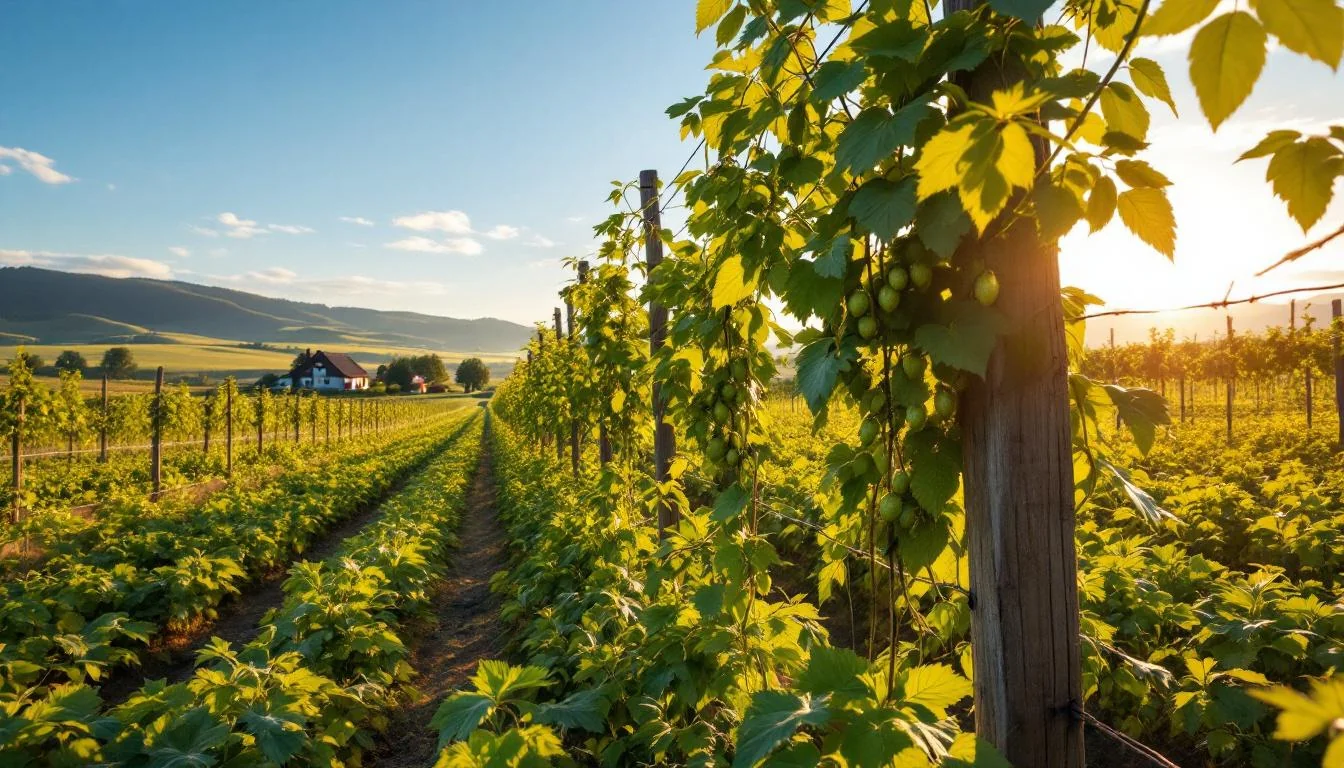
The Hallertau, where Perle was born and where most of it is still grown, covers about 178 km² in central Bavaria. It is the largest hop-growing region in the world, producing about 30% of the global hop crop. Gently rolling hills, sandy clay soil, and moderate rainfall make it ideal country for hops.
Once released, Perle was quickly taken up by Bavarian growers. It yielded more than the traditional varieties and resisted Verticillium wilt and downy mildew. Most important, it fit the Reinheitsgebot (German Beer Purity Law) in spirit as well as in law: clean flavor, nothing extraneous, nothing overcomplicated.
By the 1990s Perle had crossed Germany’s borders. American farmers began planting it in the Pacific Northwest, especially Oregon and Washington, where it adapted well to a climate much like Bavaria’s. The flavor shifted slightly there, a little more floral and a little less herbal.
IITechnical Profile
Perle is a dual-purpose hop, suited to both bittering and aroma. Its alpha acids range from 6% to 9.5%, depending on where it is grown and how the harvest goes. That is high enough for efficient bittering but not so high that it becomes hard to control.
Beta acids run 4% to 5%, which gives a balanced alpha-to-beta ratio. That matters as beer ages: beta acids oxidize more slowly than alpha acids, which helps keep the bitterness stable over time.
Total oil runs 0.7 to 1.3 ml/100 g, with myrcene at about 25–35%, humulene at about 28–33%, and very little farnesene, under 1%. The moderate myrcene explains why Perle’s aroma is more restrained than that of many modern American hops, which can exceed 50% myrcene.
Harvest in the Hallertau usually runs from late August to mid-September. Perle ripens about a week after Hallertauer Mittelfrueh, which lets growers spread out their picking. The cones are medium-sized and compact, and yellowish green when ripe.
IIIAroma and Flavor
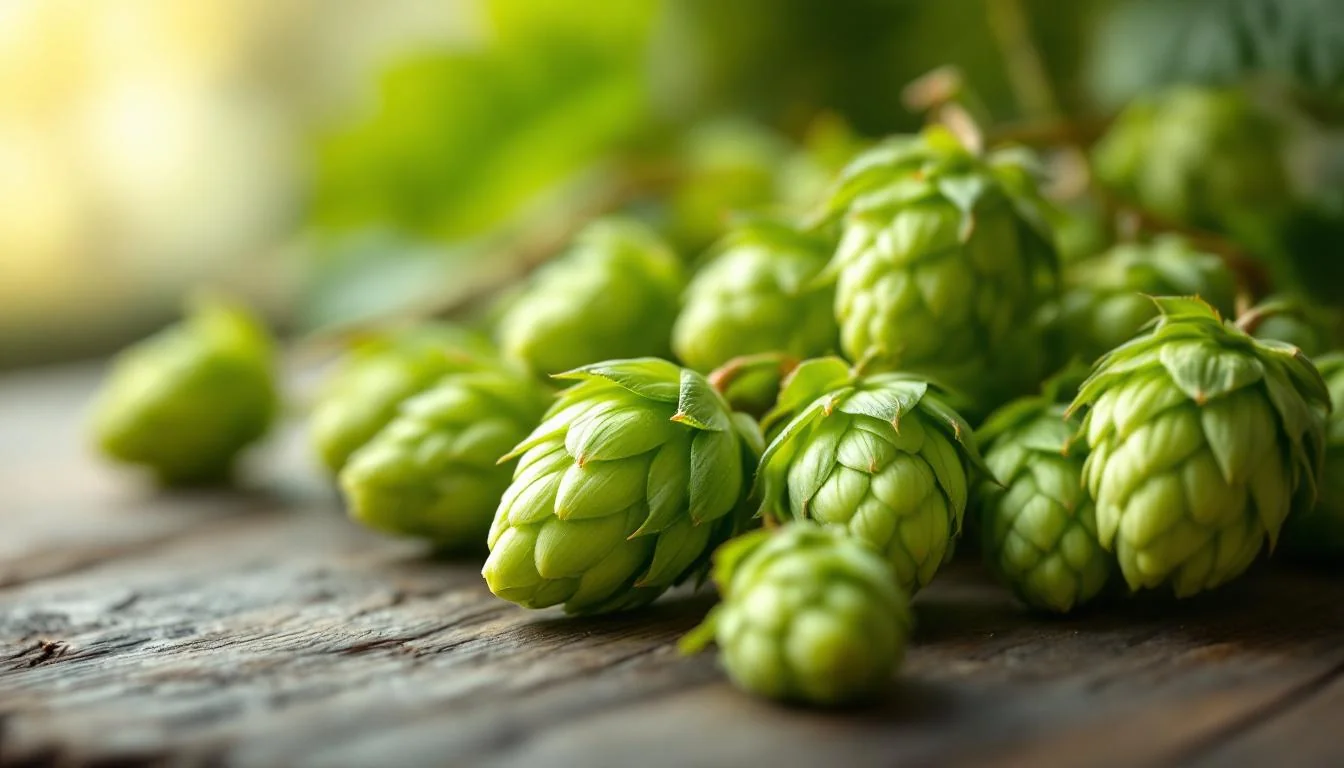
Open a freshly packed bag of Perle pellets and breathe in. The first thing you get is grass, not fresh-cut but sun-dried hay, warm and clean. Behind it sits something floral: small white flowers, perhaps chamomile or elderflower, faint but distinct.
Give it a few seconds and a second layer arrives, a light spice of mint, maybe thyme or oregano, with no heat. Then comes a bright, almost metallic note, like the smell of an old silver coin, a trait inherited from Northern Brewer.
In the boil, Perle releases a light fruitiness, a little underripe pear and green apple. Don’t expect the tropical-fruit punch of the newer American hops. Perle stays understated.
In finished beer, especially as a bittering hop, Perle gives a clean, tidy bitterness. It arrives quickly and doesn’t linger, and it leaves none of the metallic or peppery aftertaste of some high-alpha varieties. The word most often used for it is “smooth.” It never crowds the malt or the yeast.
Used for dry hopping or as a late addition, Perle pushes its herbal side forward. Some drinkers recognize a note familiar from vermouth, dried herbs with a clean bitterness, which is why Perle sometimes turns up in aperitif-style beers.
IVBeer Styles That Use Perle
German Pilsner is where Perle does most of its work. This pale lager style calls for a clear bitterness that doesn’t dominate and a delicate hop aroma that isn’t overly complex, and Perle provides both. Many German breweries, especially in Franconia, pair Perle with Hallertauer Mittelfrueh or Tettnang: Perle for bitterness, the noble hop for aroma.
Kölsch, the signature beer of Cologne, often has Perle in the recipe too. A Kölsch needs a fine balance between light malt and hops, with neither side taking over. Perle’s clean bitterness lets the gentle fruitiness of the ale yeast come through unmasked.
Some American-style wheat beers use Perle as well. A traditional Bavarian Weizen is usually lightly hopped, but an American Pale Wheat Beer needs some bitterness for balance. Perle’s light herbal character sits comfortably alongside the banana and clove esters from the yeast.
In the craft beer boom, Perle gets little mention because, by modern standards, it lacks “personality.” Some experienced brewmasters still use it as the base bittering hop in IPA: Perle lays down a clean base bitterness, and aroma hops such as Citra or Mosaic go in later. The result is a bitterness with depth that never turns muddy.
VHow Perle Compares
Next to Northern Brewer, its direct parent, Perle is noticeably softer. Northern Brewer has a sharp bitterness, sometimes described as “rustic” or “woody,” with distinct pine and mint. Perle keeps part of that character in a tamer form.
Hallertauer Mittelfrueh, Germany’s best-known noble hop, has a more complex aroma than Perle, with floral and spice notes stacked in layers. But Mittelfrueh has lower alpha acids (3–5.5%) and is harder to grow and prone to disease. Perle is the practical answer: nearly as refined, but hardier and more dependable.
Tettnang, another noble hop, from the Lake Constance (Bodensee) region, is closer to Perle in aroma than Mittelfrueh is. Both carry light herbal and floral notes. But Tettnang leans toward aroma, while Perle sits between bittering and aroma. Many recipes use both: Perle early in the boil, Tettnang at the end.
VIHow to Spot Perle in the Glass
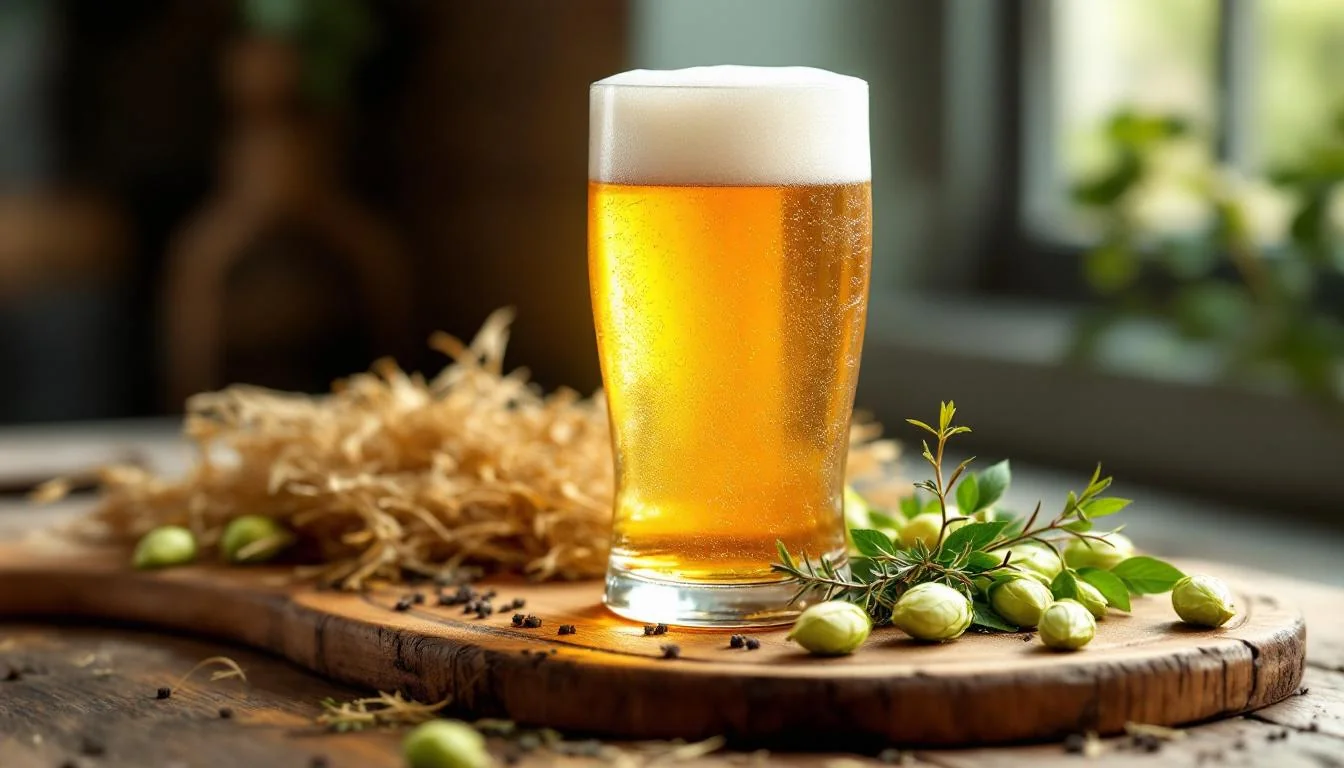
With a German Pilsner or a Kölsch that you suspect is hopped with Perle, start with your nose. Sniff gently just above the foam. Dried grass, not fresh-cut and not floral, may be the first sign. A faint herbal note of hay or thyme behind it strengthens the case.
On the first sip, focus on the bitterness. Perle’s bitterness lands mid-tongue, not on the tip as with some high-alpha varieties, and it stops short of the throat. It pulls back quickly instead, leaving a clean, dry feeling, like a sip of lightly sparkling mineral water.
The finish tells you the most. There is no lingering fruit and no metallic edge, only a light bitterness and a hint of herbs, and then it is gone, leaving you ready for the next sip.
Next time you drink a Pilsner late in the afternoon, don’t swallow right away. Hold the beer on your tongue for a second and look for that quiet: a bitterness that doesn’t demand attention, an aroma that isn’t trying to impress. That may be Perle, the Bavarian pearl, still at work after more than forty years.
Mentioned in this article
-
Beer O L O G Y
Light Beer and the Hard Art of Simplicity -
Beer O L O G Y
Wheat Beer: The Flavor of the Grain -
Beer O L O G Y
The World of Bitter Beer Begins with IPA
Originally published in Vietnamese on Tạp Chí Beer.