Pale Ale Malt: The Golden Base of English Brewing
Pale ale malt is the foundation of English beer. From Burton-on-Trent it spread around the world and shaped an entire brewing tradition.
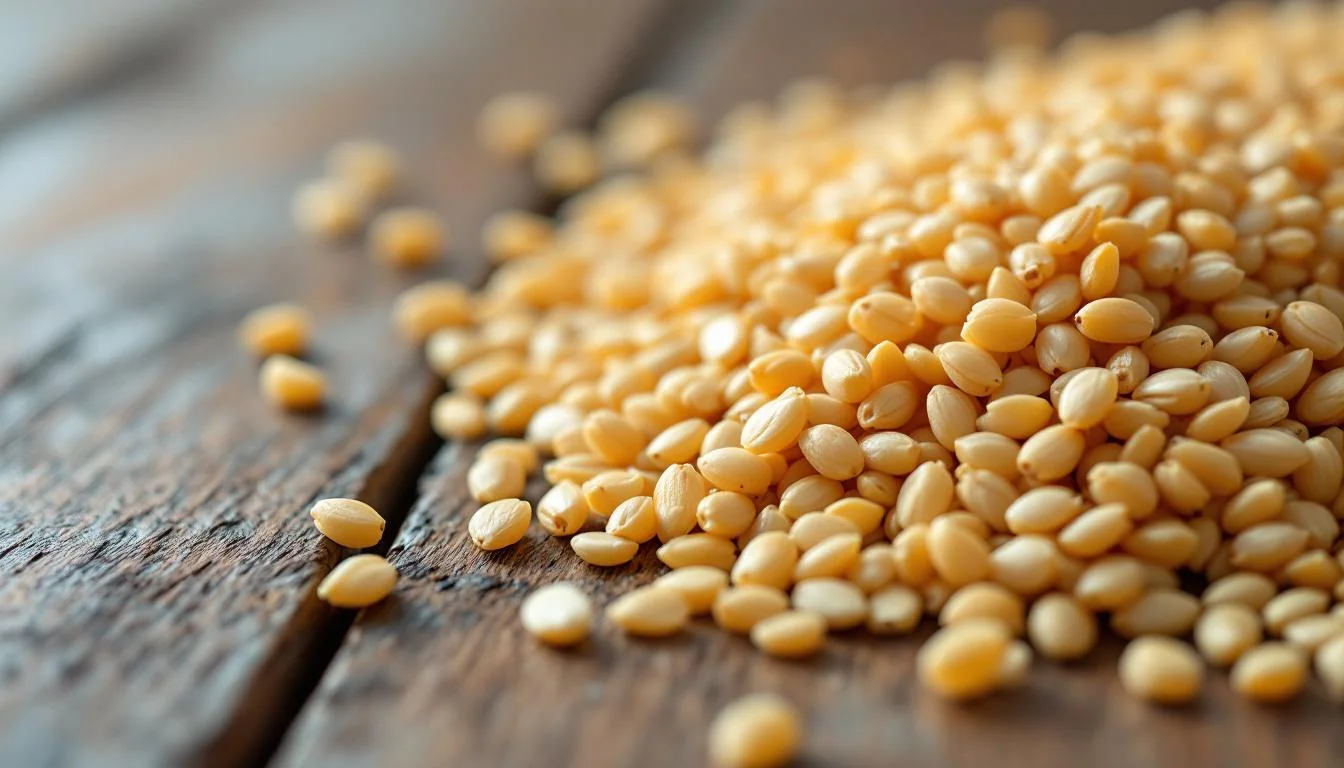
Some things have been around so long that nobody thinks to ask where they came from. Pale ale malt is one of them. It goes into most of the beer we drink. It is the base, the starting point, the yardstick against which every other malt is measured.
But “base” does not mean ordinary. Pale ale malt carries the history of English industry, a revolution in fuel, and a whole philosophy of the balanced pint: not too sweet, not too bitter, just enough for everything to come together.
IOrigins and History
Before the 18th century, English beer was brown and murky. Brewers did not want it that way; they simply had no alternative. Barley was dried over wood, straw, anything that would burn. Smoke seeped into the grain, and the heat could not be controlled. The result was dark, smoky malt of erratic quality.
Then came coke.
Around the 1640s, brewers in Derbyshire began experimenting with coke, a fuel that burned hotter and more evenly and, above all, without smoke. The barley kept its natural pale color, and for the first time the English saw beer the color of golden amber.
It took until the 19th century, in Burton-on-Trent, for pale ale malt to make its name.
Burton-on-Trent is a small town in Staffordshire on the River Trent. Its well water is unusually high in sulfate, a property scientists would later call “Burtonization.” Paired with lightly kilned pale ale malt, Burton water produced beer of unprecedented clarity, with a sharp hop character and a dry finish.
Bass Brewery, founded in 1777, was among the first to exploit that advantage. By the mid-19th century, pale ale from Burton-on-Trent was being shipped to India, Australia, and across the British Empire. Pale ale malt was no longer a local ingredient; it had become a global standard.
Today, major British maltsters such as Crisp Maltings, Muntons, and Simpsons carry on the tradition. They work with barley varieties like Maris Otter and Golden Promise, along with modern varieties bred for temperate climates. The essentials of the process, a gentle and tightly controlled kilning, have not changed.
IIHow It Is Made
Every malt starts as dry barley. Pale ale malt is no exception; the difference lies in the details.
First comes steeping. The barley soaks in water for about 40 to 48 hours, with air rests in between to let the grain “breathe.” Moisture rises from 12% to about 44–46%, and the grain begins to sprout.
Germination takes 4 to 5 days in temperature-controlled drums or on malting floors. Enzymes in the grain, notably alpha-amylase and beta-amylase, are activated, and the starch begins to break down. The acrospire emerges but does not grow beyond the length of the kernel.
Then comes kilning — the step that defines pale ale malt.
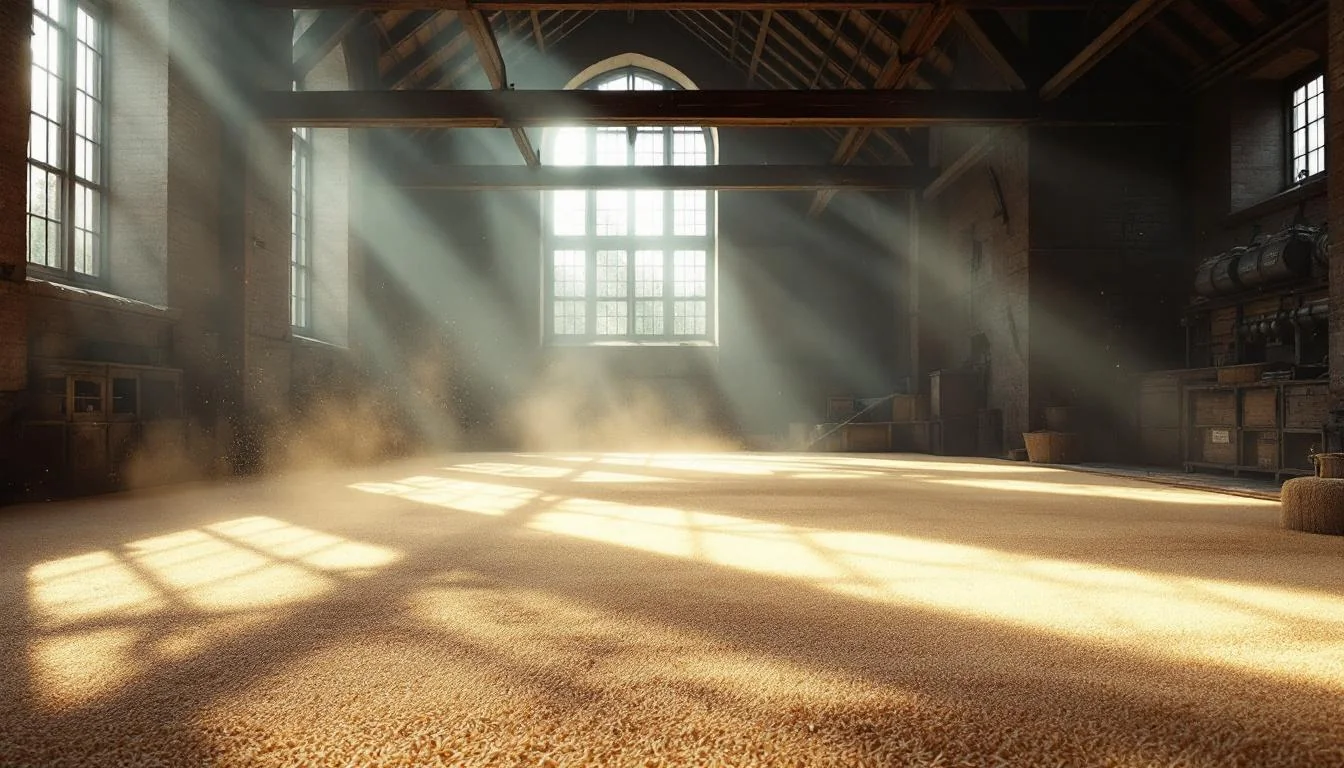
Lager malt is kilned at very low temperatures, below 80 °C (176 °F). Pale ale malt is finished a little hotter, at about 95–105 °C (203–221 °F) in the final stage, and for longer. That sets off a mild Maillard reaction, in which proteins and sugars react to form compounds with bready and biscuity aromas and a hint of honey.
After kilning, the malt is stripped of its rootlets, cleaned, and stored at under 5% moisture. The finished malt is a deeper gold than Pilsner malt but still sits firmly in the “pale” category.
IIITechnical Profile
Pale ale malt measures 5–7 EBC, or 2.5–3.5 degrees Lovibond: lighter than Munich malt and about 1–2 EBC darker than Pilsner malt. The gap looks small on paper, but it shows in the glass, where a pale ale has a warm amber glow that a Pilsner lacks.
Its extract runs about 80–82% by the Congress mash method. That means 1 kg of malt can yield about 300–310 points of original gravity (OG) per gallon of water. It is a high yield, enough for pale ale malt to serve as the only base malt in most recipes.
Protein content usually falls between 9.5% and 11.5%. That is enough to supply amino acids to the yeast and give the beer a stable head, but not so much that it causes haze. The Kolbach index, the ratio of soluble to total protein, typically reaches 38–45%, a sign of good modification during germination.
Its enzymes are strong enough to convert all of its own starch, with some to spare for a small share of adjuncts such as wheat flour or corn. Diastatic power is typically 50–70 degrees Lintner, lower than Pilsner malt but enough for most purposes.
IVThe Flavor and Color It Brings
If Pilsner malt is a blank white page, pale ale malt is ivory paper: it already has a tint, a story of its own.
Smell a handful of raw pale ale malt and the first thing you notice is baked bread. Not burnt, but bread just out of the oven, with a golden crust, slightly sweet and slightly nutty. That comes from the Maillard reaction during kilning. Melanoidins form in moderation, laying down a warm aroma without drowning out the other ingredients.
In finished beer, pale ale malt gives a light malt sweetness with nutty notes and a touch of honey. There is none of the obvious caramel of crystal malt, nor the roast of dark malts. It is the base and the balance point, the thing that lets hops and yeast take the lead.
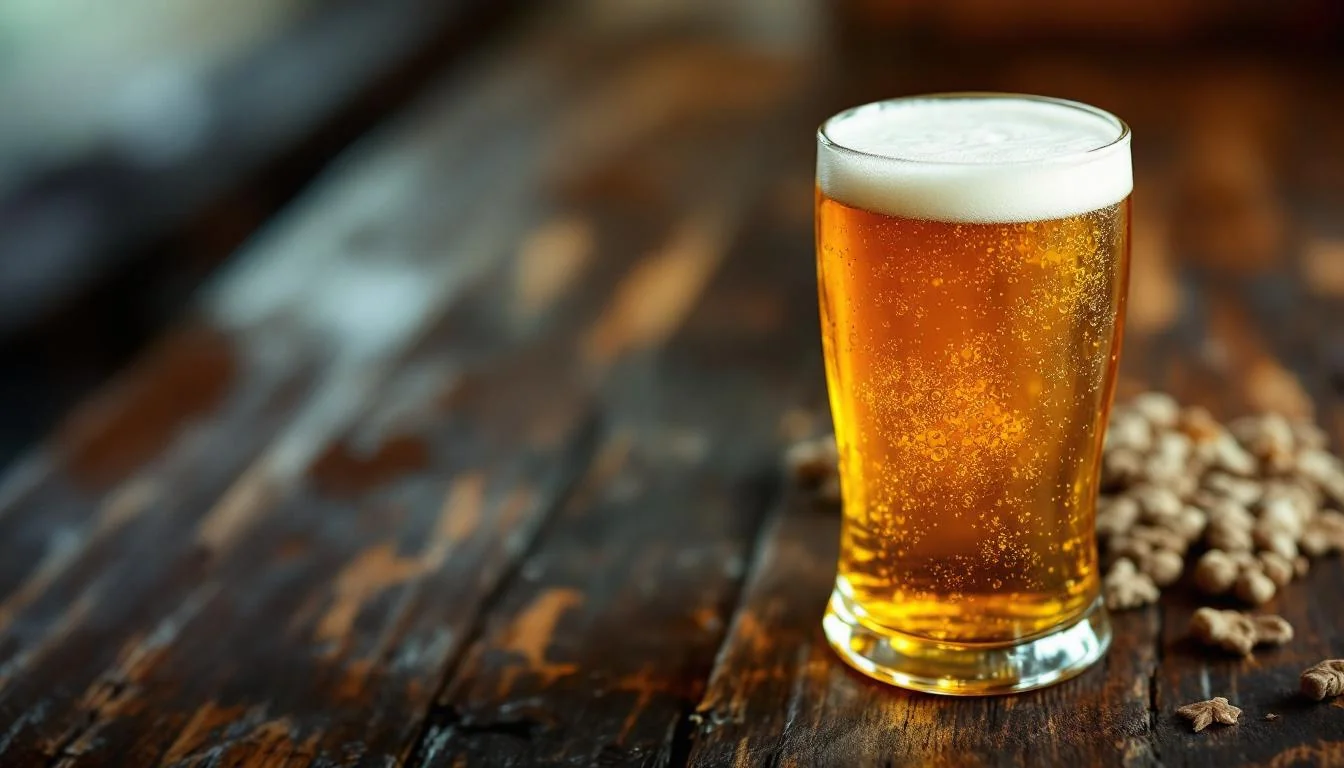
In color, pale ale malt yields beer from deep gold to light amber, depending on how much is used and what other malts go in with it. Brewed with 100% pale ale malt, a beer comes out gold with a copper glint, lighter than an amber ale but warmer than a German lager.
Body matters too. Pale ale malt gives a medium body, not as thin as Pilsner malt and not heavy either. That suits the English idea of beer: something to drink in quantity over a whole evening at the pub, not to sip in small mouthfuls.
VClassic Styles
Pale ale malt was made for English beer, which should surprise no one.
English Bitter, the classic session beer of the English pub, is built entirely on pale ale malt. From Ordinary Bitter at a modest 3.2–3.8% ABV to Best Bitter and Extra Special Bitter (ESB), all of them rely on it for a warm, slightly sweet malt backbone that balances English hops such as East Kent Goldings or Fuggle.
English Pale Ale, a cousin of Bitter, depends on pale ale malt just as much. This is the style that crossed the ocean and inspired American Pale Ale and later India Pale Ale (IPA). American versions usually use American two-row, but brewers who want to keep an English character in the recipe still reach for pale ale malt.
Traditional India Pale Ale, as opposed to a West Coast or a hazy New England IPA, was originally brewed entirely from pale ale malt. The malt’s high extract made it possible to brew to an OG of 1.060–1.075, enough alcohol to keep the beer sound on the long voyage from England to India.
Pale ale malt also turns up in many Stout and Porter recipes, not as the lead but as a base that lets the dark roasted malts stand out. Some craft brewers even use it in Belgian beers, especially Belgian Pale Ale and some versions of Belgian Saison, for a depth of malt that Pilsner malt cannot give.
VIHow It Compares with Other Base Malts
Among base malts, pale ale malt sits in the middle, neither very light nor very dark.
Compared with Pilsner malt, pale ale malt is about 2–3 EBC darker and more complex in flavor. Pilsner malt is kilned at lower temperatures, keeps more of its enzymes, and gives a “cleaner,” almost neutral profile. Pale ale malt has more personality, with bready and nutty notes that Pilsner malt lacks.
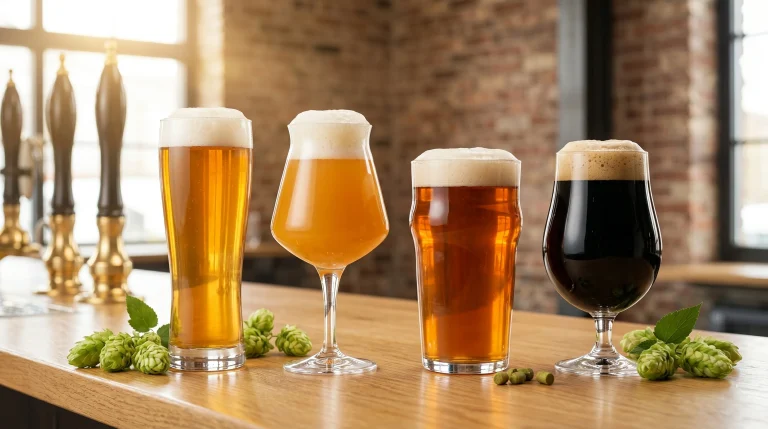
Next to Vienna malt, pale ale malt is lighter and less sweet. Vienna malt (6–9 EBC) starts to show distinct honey and butter-biscuit notes, while pale ale malt stays restrained. Munich malt is darker still (12–25 EBC), with caramel and dark toasted bread crust.
Against Maris Otter, a premium pale ale malt made from a heritage barley variety, standard pale ale malt tastes simpler. Maris Otter brings more depth, a hint of damp earth, and a longer finish, which is why many craft brewers willingly pay 20–30% more for it.
Compared with American two-row, pale ale malt has a fuller flavor. American two-row is usually kilned more lightly, leaving a “clean” malt base so the hops can take the spotlight. The difference reflects two brewing philosophies: America puts hops first, England puts balance first.
VIIFinding Pale Ale Malt in the Glass
To pick out pale ale malt in a beer, you have to slow down.
Start with the color. A warm golden amber — not the straw of a lager, not the reddish brown of an amber ale — suggests that pale ale malt may be the base. A faint copper glint against the light is the telltale sign.
Then smell. The aroma of pale ale malt is not as heady as that of caramel or chocolate malt. It is quieter: white bread fresh from the oven, roasted chestnuts, diluted honey. A warm aroma without cloying sweetness points to pale ale malt.
As you drink, pay attention to the body. Pale ale malt gives a moderate fullness, not watery but not thick either. Its gentle malt sweetness supports the hops without competing for attention.
Finally, notice the finish. Pale ale malt leaves it dry and clean, with a trace of grain that lingers. There is none of the burnt bitterness of roasted malt and none of the drawn-out sweetness of crystal malt.
Perhaps the most valuable thing about pale ale malt is its modesty. It sits underneath, keeps everything in balance, and never asks to be noticed. Like the most important things in life, it is usually noticed only in its absence.
Mentioned in this article
-
Beer O L O G Y
The World of Bitter Beer Begins with IPA -
Beer O L O G Y
Dark Beer Is Not One Style -
Beer O L O G Y
Belgian Beer: Intangible Cultural Heritage of Humanity
Originally published in Vietnamese on Tạp Chí Beer.