Magnum: The Quiet Backbone of Lager
Bred at Hüll in 1980, the German hop Magnum is valued for clean, neutral bitterness, the foundation of Pilsner and of many other beers that depend on balance.
In 1993 a small Bavarian brewery faced a choice: stay with an old hop variety whose supply was unreliable, or switch to Magnum, a new variety few people knew much about. It chose Magnum. Thirty years later, that choice has become the industry standard.
Magnum is not a hop for showing off. It has no tropical mango and no striking forest-pine aroma. It does one thing, clean bitterness, and then steps back. That restraint has made it one of the most widely used hops in the world.
IOrigins and History
Magnum was born at the Hop Research Center Hüll in Bavaria, Germany, the oldest hop research facility in the world, in operation since 1926. Scientists at Hüll completed the cross in 1980, but the variety was not officially registered and commercially released until 1993.
Magnum’s parents are Galena, a high-alpha American hop, and an unnamed German breeding line numbered 75/5/3. The goal of the program was clear: a high-alpha hop for bittering that kept the clean, neutral character typical of German hops.
Magnum arrived just as large-scale brewers were looking for more efficient options. Traditional varieties such as Hallertauer Mittelfrüh were prone to disease, low-yielding, and modest in alpha acids. Breweries wanted something more dependable, a hop that could deliver strong bitterness without large quantities of material.
The Hallertau, where Magnum was developed, is the largest hop-growing region in the world. About 2,400 hectares of farmland there are given over to hops, nearly a third of global hop production. The soils have deep clay layers, and the continental climate brings cold winters and warm summers, ideal conditions for hops to build strong roots and accumulate bitter acids.
After its release Magnum quickly spread beyond Germany. Breweries in the United States, China, and South America began importing it. By the 2000s it was also grown in Washington’s Yakima Valley, where a drier climate produces Magnum with slightly higher alpha acids than the German original.

Magnum has never been famous among everyday drinkers. Nobody orders a “Magnum IPA” or goes looking for its signature flavor. Among brewmasters, though, it is a household name, like salt in a kitchen: nobody talks about it, but without it everything tastes flat.
IITechnical Profile
Magnum is a high-alpha hop, at 10% to 14% depending on growing conditions and harvest year. German-grown Magnum usually sits at 11–13%, while American Magnum can reach 14%. Beta acids run 4.5–6%, a fairly balanced alpha-to-beta ratio that contributes to a smooth bitterness without harshness.
Total oil content is relatively low, only about 1.0–1.5 ml/100 g, made up mostly of humulene and myrcene in modest amounts. Because of that low oil content, Magnum gives little aroma in late hopping or dry hopping. It was designed to work early in the brewing process.
Magnum stores fairly well. After 6 months at room temperature it still retains about 75–80% of its original alpha acids, which matters to large breweries, where ingredients can sit in a warehouse for months before use.
In the Hallertau, Magnum is usually harvested from late August to mid-September. The variety has good resistance to verticillium wilt, the disease that devastated many traditional German hops in the 1970s and 1980s.
IIIAroma and Flavor
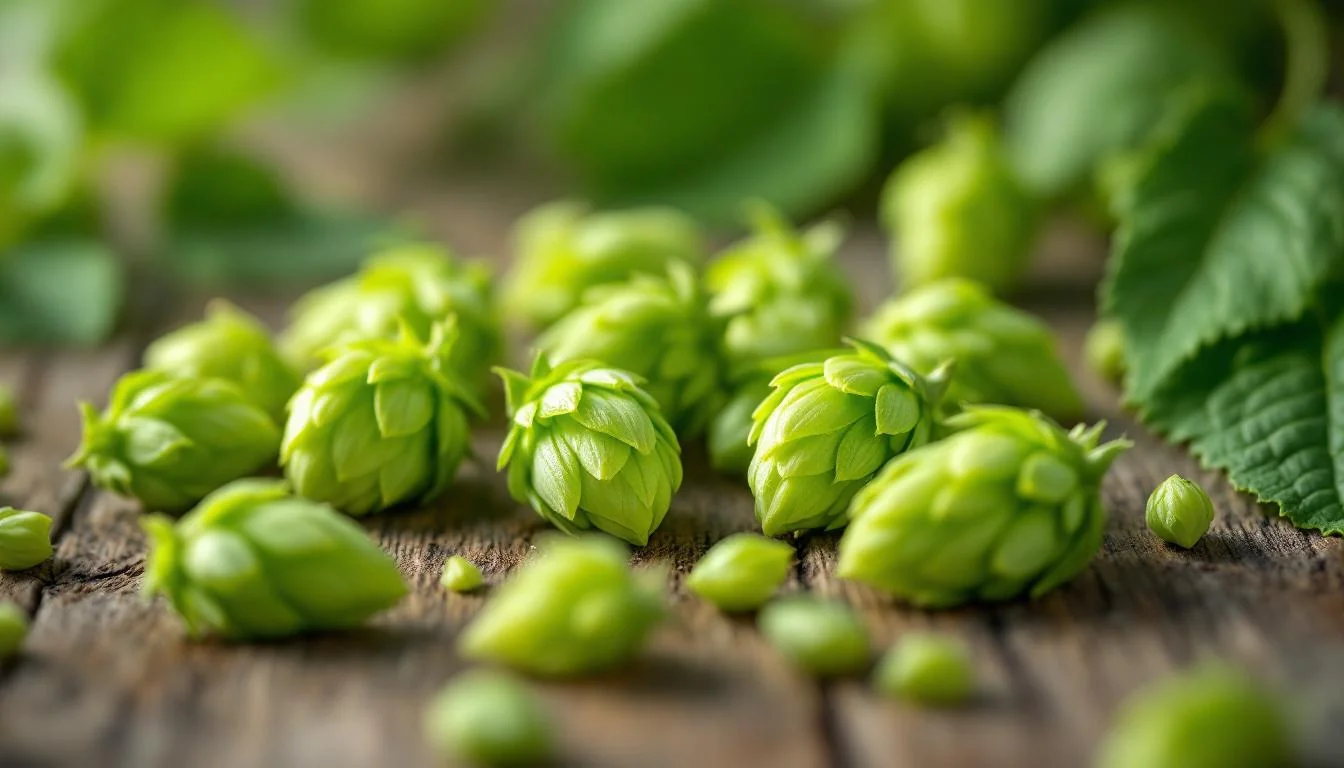
A handful of fresh Magnum smells lightly herbal, somewhere between hay and green leaves. There is no ripe fruit and no showy floral note, only something clean and nearly invisible.
Boiled in the wort, Magnum yields iso-alpha acids, the compounds that make beer bitter. Its bitterness is described as clean and neutral, meaning it leaves no lingering aftertaste and no harshness in the throat. Compared with other bittering hops such as Galena or Nugget, Magnum gives a softer bitterness that blends more easily into the beer as a whole.
There is a hint of spice in Magnum, faintly recalling white pepper or nutmeg. It is very subtle, showing up only on careful tasting, and the beer’s other ingredients often cover it. Some brewmasters pick it up and treat it as Magnum’s signature, the trait that sets it apart from other neutral bittering hops.
Once the beer has finished fermenting and settled, Magnum’s bitterness becomes understated. It does not stand apart as a feature of its own; it becomes part of the beer’s structure, unseen but holding everything in place.
Drinkers used to tropical American IPAs may find Magnum disappointingly “bland.” That is the point. Magnum is not trying to impress. It is trying to disappear, so that what remains is balance.
IVBeer Styles That Use Magnum
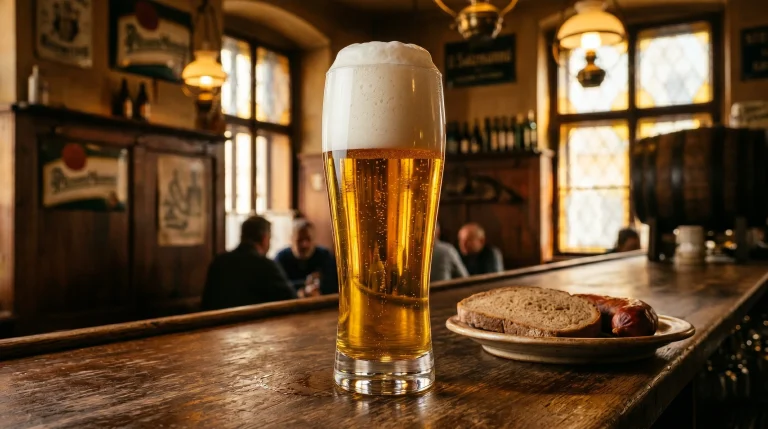
Magnum is a first choice for lighter beers, especially German Pilsner and Helles. These styles need moderate, clean bitterness to balance the gentle sweetness of the malt. A typical German Pilsner runs 25–45 IBU, and Magnum can get there without distorting the malt underneath.
Many large breweries use Magnum for their mass-market lagers. At millions of liters a year, consistency and predictability are essential, and Magnum lets a brewery hit the bitterness in its recipe precisely, with no surprises and no drift.
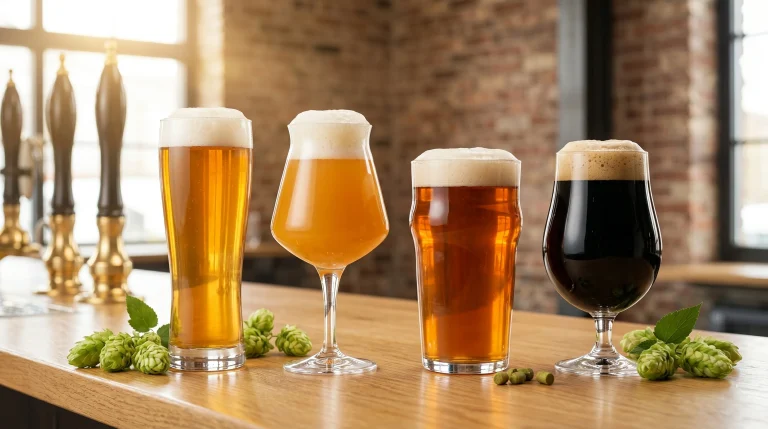
In craft brewing, Magnum often supplies the base bittering in more complex recipes. A brewmaster might add Magnum early to set the bitter foundation, then Citra or Mosaic at the end for aroma. The approach is common in West Coast IPA, a member of the bitter beer family that demands high bitterness but still needs room for aroma hops to come through.
Some dark beers, such as Schwarzbier and Baltic Porter, use Magnum too. In these styles roasted malt takes the lead, and the hops only need to stay in the background as a counterweight without competing for attention. Magnum fills that role well.
VHow Magnum Compares
Magnum and Galena
Galena is one of Magnum’s parents, so it is no surprise that the two share traits. Both are high-alpha bittering hops. Galena, however, tends to leave a longer bitter aftertaste and carries a touch of fruit (blackcurrant) that Magnum lacks. For purer bitterness, Magnum is the safer choice.
Magnum and Nugget
Nugget, released in the United States in 1983, has alpha acids similar to Magnum’s (11–14%). But Nugget has a more pronounced herbal character, which some describe as “slightly spicy.” In blind tastings, brewmasters tend to pick out Nugget more easily because it has more personality. Magnum is so neutral it is almost invisible.
Magnum and Taurus
Taurus was also developed at Hüll, with a goal similar to Magnum’s. Its alpha acids run a little higher (12–17%), but it is less popular, because some brewmasters find its bitterness slightly harsh, not as smooth as Magnum’s. Among German bittering hops, Magnum still holds the lead.
VIHow to Spot Magnum in the Glass
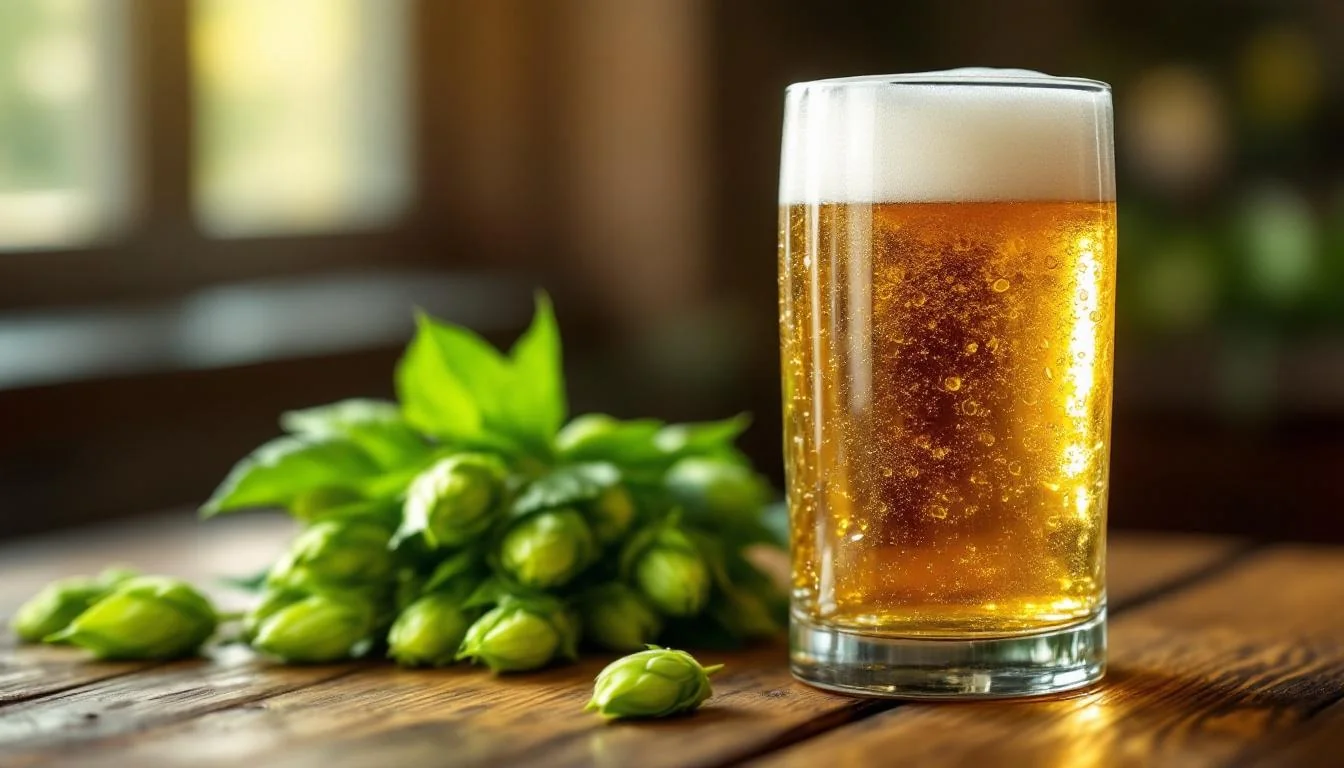
With a German Pilsner in hand, pay attention first to the middle of your tongue. Magnum’s bitterness does not attack right away. It arrives gently, a reminder that this is not sugar water. If it fades quickly and leaves no harshness or astringency in the throat, Magnum is probably at work.
Compare it with a heavily hopped American IPA, where the bitterness can come from several sources and linger. A beer bittered mainly with Magnum feels clean, like a glass of water after a heavy meal: bitter, but nothing hangs around.
Your nose will not help much. Magnum’s aroma is too modest and usually hides behind the malt or other aroma hops. But if a beer has moderate, balanced bitterness and no odd off-flavors, Magnum may be quietly doing its part.
Next time you drink a Helles or a Pilsner, spare a thought for what you cannot taste: hops like Magnum exist so that the beer can be itself, nothing more and nothing less.
Mentioned in this article
-
Beer O L O G Y
Light Beer and the Hard Art of Simplicity -
Beer O L O G Y
The World of Bitter Beer Begins with IPA -
Beer O L O G Y
Dark Beer Is Not One Style
Originally published in Vietnamese on Tạp Chí Beer.