Lactobacillus: The Bacterium Behind Sour Beer
Lactobacillus, the lactic acid bacterium behind the clean tartness of Berliner Weisse, Gose, and other sour beers: its history, its biology, and how to recognize it in the glass.
In 1857, in a laboratory in Paris, Louis Pasteur looked through a microscope and saw tiny organisms souring milk. He did not know that the same organism had been quietly at work in German beer for hundreds of years. Berlin brewers called it “something in the air.” They could not see it and had no name for it, but they knew it was there, in the clean sourness of every sip of summer Weisse.
Lactobacillus is not a yeast but a bacterium. In beer it was long dismissed as a spoiler before brewers recognized what it could do.
IFrom Spoiler to Souring Agent
The history of Lactobacillus in beer is a story of misunderstanding that lasted centuries.
Germans have drunk sour beer since the Middle Ages. Berliner Weisse appeared in Berlin in the 16th century, and Gose has been brewed in the town of Goslar, in Lower Saxony, since the early 17th century. Nobody knew why the beer turned sour. Brewers only knew that under certain conditions it took on a pleasant tartness.
Pasteur first described lactic acid bacteria in 1857, in his research on the fermentation of milk. The genus Lactobacillus was not formally classified until 1901, by the German microbiologist Martinus Beijerinck. He took the name from Latin, “lacto” for milk and “bacillus” for small rod, after the organism’s shape and the medium where it was first studied.
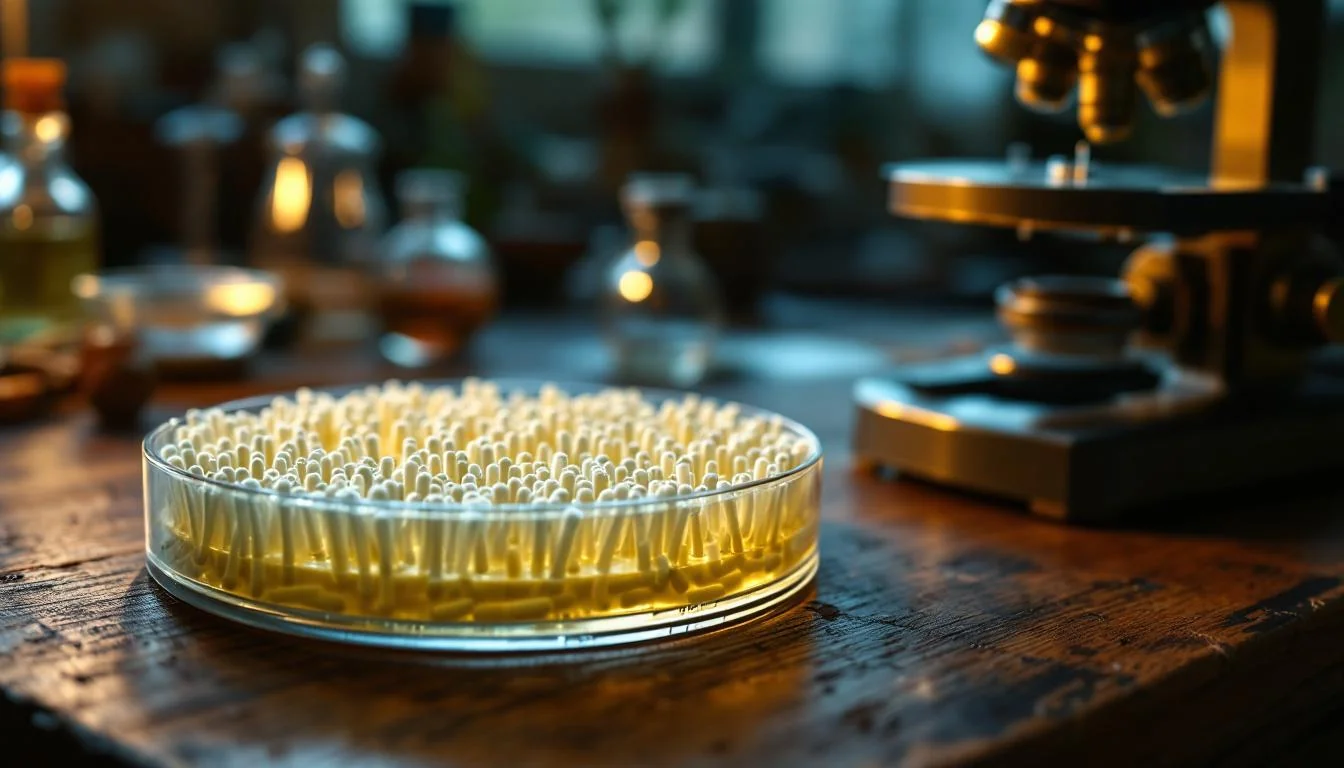
Through the 20th century, industrial brewing treated Lactobacillus as an enemy. It spoiled clear lagers and turned sweet malt into harsh acid, and breweries spent millions of dollars to eliminate it.
In Berlin and Leipzig, though, traditional brewers held on to what they knew: Lactobacillus, properly controlled, gives a clean sourness nothing else can replace. Napoleon once called Berliner Weisse “the Champagne of the North,” and Gose was protected as part of Saxony’s cultural heritage.
The craft beer revival of the 2000s changed everything. American brewers went to Germany to relearn how to use Lactobacillus, and the once-hunted bacterium became central to the modern sour beer movement.
IIBiology
Lactobacillus belongs to the phylum Firmicutes and the family Lactobacillaceae. It is a Gram-positive, rod-shaped, non-spore-forming bacterium and a facultative anaerobe: it can live with or without oxygen but does best where oxygen is scarce.
Brewers most often use two species, Lactobacillus delbrueckii and Lactobacillus brevis. L. delbrueckii works warmer, at 40–50 °C (104–122 °F), and produces acid fast, within 24–48 hours. L. brevis prefers about 30–35 °C (86–95 °F) and builds more complex flavor, but it needs more time.
The key difference: Lactobacillus does not ferment sugar into alcohol. It turns sugar into lactic acid, the acid that makes yogurt, kimchi, and pickles sour. This is lactic acid fermentation, entirely different from the alcoholic fermentation of Saccharomyces yeast.
Lactobacillus works best at pH 5.5–6.0. Below pH 3.5 the bacteria start to die, so the process limits itself: Lactobacillus stops once its surroundings turn too acidic.
IIIFlavor and Character
The sourness of Lactobacillus is nothing like that of vinegar or lemon.
Lactic acid feels soft and round. It coats the palate rather than piercing it like the acetic acid in vinegar. If lemon’s citric acid is a glaring white light, lactic acid is sunset: warm, gentle, and deep.
At moderate levels, Lactobacillus gives a clean tartness like Greek yogurt, with a trace of sweetness from malt sugars it has not fully converted. At higher levels the sourness turns sharp, like pickled mustard greens, enough to make the tip of the tongue curl.
On the nose, Lactobacillus makes none of the fruity esters or spicy phenols that yeast does. Instead it gives a light yogurt aroma, sometimes with a hint of sourdough bread. Some strains also produce diacetyl, a buttery-smelling compound, early on, though it usually disappears by the end of fermentation.
Hops and Lactobacillus make an awkward pair. The iso-alpha acids in hops inhibit the bacterium, so traditional sour beers use very few hops, or aged hops, to weaken that antibacterial effect.
IVClassic Styles
Lactobacillus drives traditional German sour beer and the modern sour ale movement alike.
Berliner Weisse
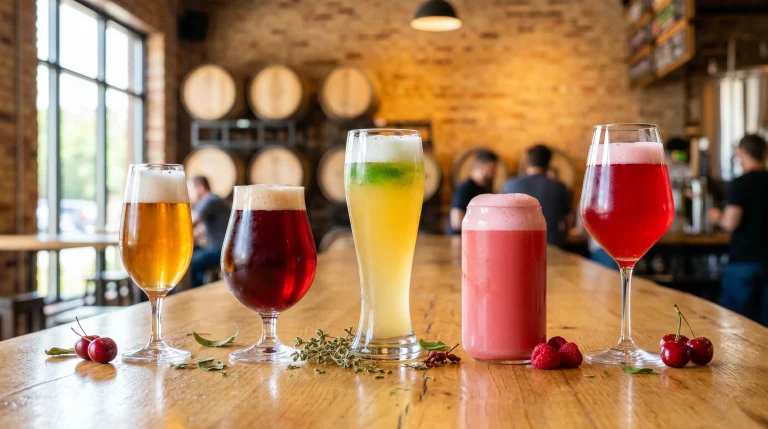
The lightest sour style, at just 2.8–3.8% ABV, and the most delicate. Traditional Berliner Weisse uses 50% wheat malt and a mixed fermentation of ale yeast and Lactobacillus. The sourness is sharp but light, the body as thin as spring water, and high carbonation keeps it refreshing. Berliners often add woodruff syrup (green) or raspberry syrup (red) to balance the acidity.
Gose
Gose is more complex than Berliner Weisse. Besides Lactobacillus, it uses salt and coriander. This wheat beer is at once sour, salty, and herbal, like a glass of salted limeade in summer. Gose nearly died out in the 1960s and was revived in 1986 by a single brewery in Leipzig.
Kettle Sour
A modern technique, common in craft breweries. Instead of a mixed fermentation lasting months, the brewer adds Lactobacillus to the wort in the kettle and holds it at 40–45 °C (104–113 °F) for 24–48 hours to build acidity, then boils it to sterilize it and ferments it normally with yeast. The result is a clean, controllable sour beer without the funk of Brett or wild yeast.
Flanders Red Ale and Flanders Oud Bruin
In Belgium, Lactobacillus plays a supporting but important role in these styles. Working alongside Brettanomyces and Pediococcus in oak barrels, it builds the base acidity beneath the layered sourness of Flanders ales.
VGeography and Terroir
Lactobacillus is everywhere: in the air, on human skin, in fermented food. In beer, though, it belongs to two regions of Germany.
Berlin and the surrounding state of Brandenburg are the home of Berliner Weisse. The continental climate, with its hot summers, favors lactic fermentation, and the region’s hard water, rich in calcium and carbonate, affects pH and fermentation speed. Old breweries such as Kindl and Schultheiss once made millions of liters of Weisse a year, before the style declined in the late 20th century.
Leipzig and Saxony are the cradle of Gose. The naturally salty water of the Gose River, which runs through the town of Goslar, shaped the style. Döllnitzer Ritterguts Gose, the only brewery to keep the recipe through the East German years, still uses local water and a Lactobacillus culture carried on for generations.
Lactobacillus is now used worldwide, yet many brewers still make the trip to Germany, not for the water or the malt but to understand an idea: sourness is not spoilage but a flavor in its own right.
VITasting for Lactobacillus
When you raise a glass of sour beer, look for these signs.
Nose: a light yogurt aroma, sometimes recalling sourdough or young kimchi. There should be no sharp vinegar, a sign of Acetobacter, a different bacterium, and no horse blanket or barnyard, which point to Brettanomyces.
Palate: lactic sourness wraps around the sides of the tongue, then spreads across the whole mouth. It does not stab the tip of the tongue like lemon or scrape the throat like vinegar. After the first sip the mouth waters, a natural response to acid and the reason sour beer whets the appetite.
Finish: beer soured with Lactobacillus alone finishes clean and tart, with no funky or earthy aftertaste. If those notes appear, other microbes have taken part.
In a beer world that keeps growing more complicated, Lactobacillus shows how far a simple process can go: one tiny bacterium, one chemical reaction, and centuries of brewers willing to wait.
Mentioned in this article
-
Beer O L O G Y
Sour Beer: From Lambic to Sour IPA -
Beer O L O G Y
Wheat Beer: The Flavor of the Grain -
Beer O L O G Y
Belgian Beer: Intangible Cultural Heritage of Humanity
Originally published in Vietnamese on Tạp Chí Beer.