Galaxy: The Passion Fruit Hop from the Southern Hemisphere
Galaxy is the Australian hop that smells of passion fruit, peach, and orange. A look at its Tasmanian origins, its technical profile, and how to pick it out in the glass.
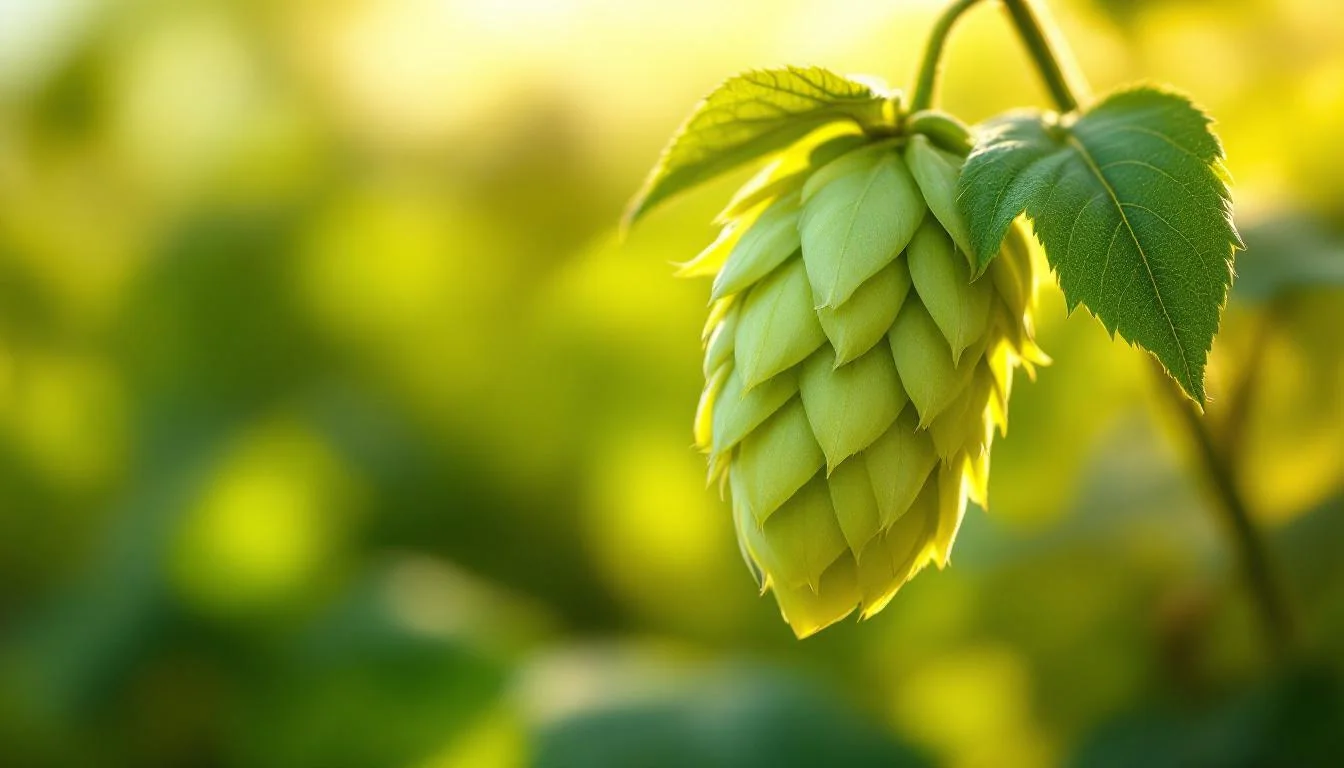
In 2009, a pale ale from a small Melbourne brewery turned up at the Great American Beer Festival. The tasters stopped. None of their usual words fit the smell rising from the glass. Not the grapefruit of American hops. Not the lemon of European ones. It was passion fruit, a tropical aroma no traditional hop had ever produced.
That beer was hopped with Galaxy. From then on, brewers around the world began to look south with new interest.
IOrigins and History
Galaxy came out of an Australian research program that ran for more than two decades. The story begins in 1994, when scientists at Hop Products Australia (HPA) crossed an aroma-rich German hop with a wild native Australian line numbered J78. The original goal was simple: a hop that could stand up to the harsh Australian climate and still carry enough aroma to compete internationally.
Selection took sixteen years. Hundreds of crosses were planted out, evaluated, and discarded. Only one line, coded J211, cleared every round of screening. In 2009, J211 was released commercially as Galaxy.
The name was deliberate. The Australians wanted a word big enough for their ambition: to bring their hops out of the shadow of America and Europe. “Galaxy” suggests something vast, distant, and different, and the flavor was indeed unlike anything the Northern Hemisphere had produced.
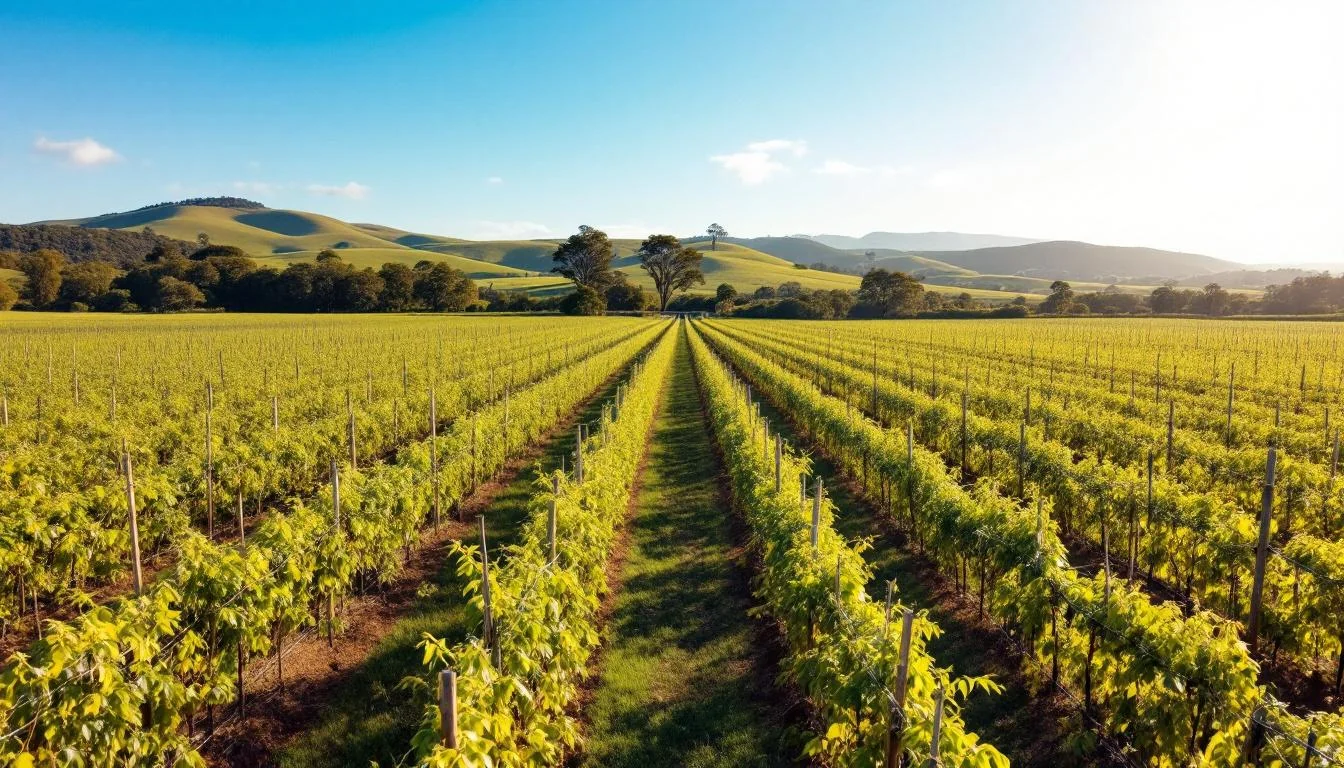
Galaxy is grown mainly in Tasmania, the small island off the southern coast of mainland Australia, where the climate is cooler and the rainfall steadier. The Derwent Valley and Bushy Park are the two key locations. Smaller plantings are in Victoria, around the town of Eurobin in the Alpine Valley. Galaxy covers about 400 hectares across Australia, small next to the hop regions of the Pacific Northwest, but enough to make it the country’s most important export hop.
Galaxy remains the exclusive property of HPA, and no hop farm outside Australia is allowed to grow it. That controlled scarcity is a commercial strategy, and it also keeps the hop unmistakably Australian.
IITechnical Profile
Galaxy is a dual-purpose hop, used for bitterness as well as aroma. Alpha acids range from 11% to 16%, averaging about 13.5%. That is high, enough to reach a target bitterness without a heavy charge of hops. Beta acids fall between 5% and 6.9% and add a softer secondary bitterness as the beer ferments.
The real point of interest is the oil. Total oil content runs from 3.0 to 5.0 ml per 100 g, well above most traditional European hops. Myrcene accounts for about 33–41% of it and drives the tropical fruit character. Farnesene, rarely found in American hops, can reach 3–6% and brings a light, layered floral note.
In Tasmania, Galaxy is harvested in March and April, autumn in the Southern Hemisphere. That is spring in the north, so Australian hops arrive just as American and European brewers are running low on fresh crop. The off-season calendar has become, without anyone planning it, a commercial advantage.
IIIAroma and Flavor
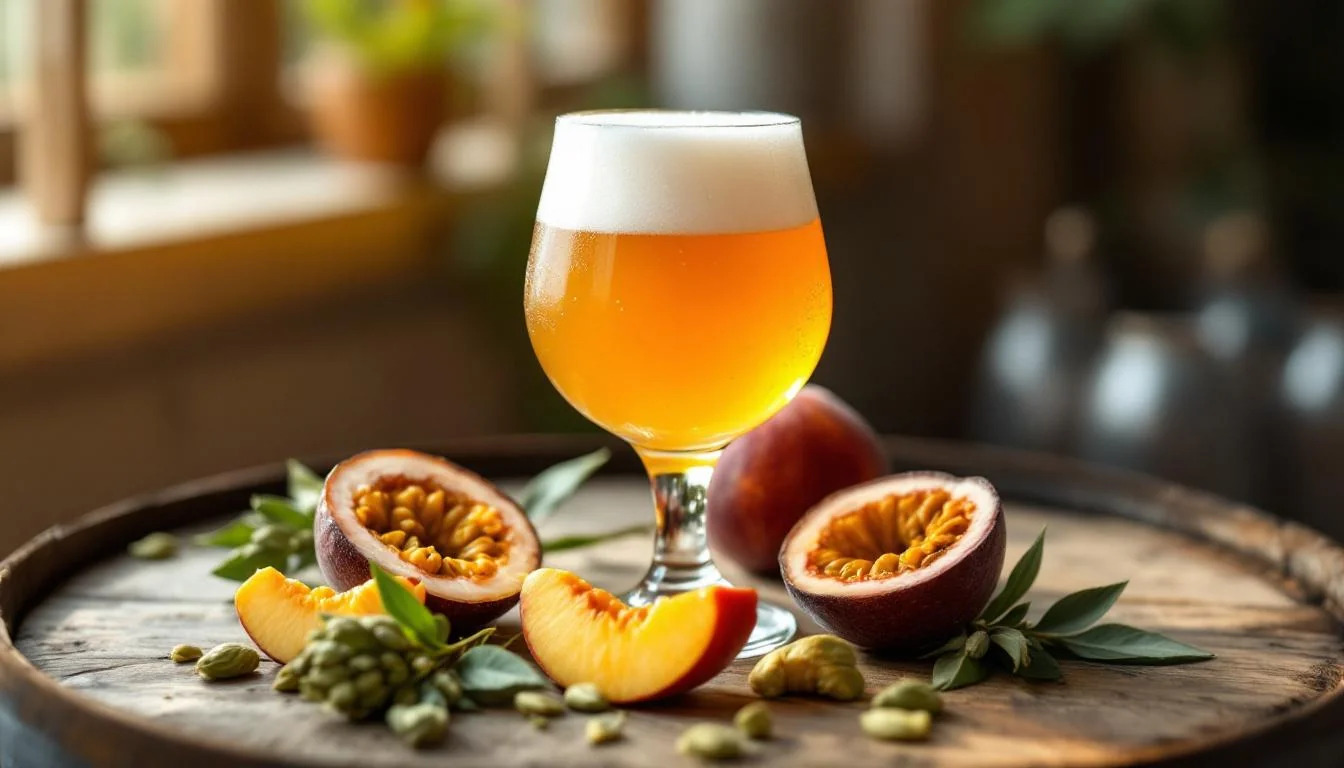
Hold a handful of Galaxy pellets to your nose. The first thing to reach you is passion fruit, not as a suggestion but head-on, as clear as if someone had just split one open in front of you. That layer comes from thiols, especially 4MMP, a compound also found in Sauvignon Blanc and in the fresh fruit itself.
Behind it comes peach: not soft and fully ripe, but just ripe enough, still a little firm and a little tart. Then orange, though not an American Valencia. This is mandarin, sweeter and less bitter, closer to a tangerine.
Give Galaxy a long boil in the wort and the fruit fades, leaving a clean bitterness with no harsh edge. Used in the whirlpool or as a dry hop, it releases its full range of aromas. Many brewers describe the result as a tropical cocktail, with pineapple, mango, and papaya slipping in somewhere behind.
One caution: at high doses Galaxy can overpower a beer. Some batches dry-hopped too heavily have been criticized as “soapy” or as smelling of cosmetics. Restraint, as usual, is the key.
IVBeer Styles That Use Galaxy
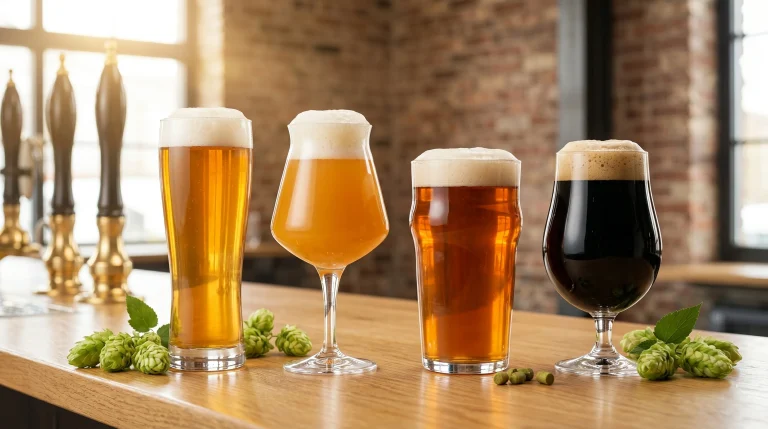
Galaxy gets its biggest stage in IPA. A traditional American IPA that takes Galaxy as a late addition or dry hop picks up a bright tropical aroma, clearly different from IPAs built on Citra or Mosaic. Where Galaxy really comes into its own, though, is the New England IPA, also called the Hazy IPA: cloudy, soft, and built around aroma rather than bitterness. The style’s high protein content helps hold on to hop oils, and Galaxy seems made for the job.
The Australian take on pale ale, sometimes called Australian Pale Ale or XPA, uses Galaxy almost by default. Stone & Wood Pacific Ale, one of the biggest-selling craft beers in Australia, built a brewery’s fortunes on this hop. XPA usually runs lighter than American Pale Ale, at around 4.2–5.0% ABV, but gives up nothing in aroma.
Galaxy also turns up in some American wheat beers, where the gentle sweetness of the wheat and the tropical fruit come close to a dessert beer without any added sugar or flavoring. A few breweries have even tried Galaxy in sour beers made in the Kettle Sour style, using the acidity to push its passion fruit further forward.
VHow It Compares with Similar Hops
Galaxy is often placed next to New Zealand’s Nelson Sauvin, two Southern Hemisphere hops with flavors like no others. Yet they differ more than they resemble each other. Nelson Sauvin has the character of white grapes, a faint sulfur note reminiscent of wine, and a slightly “funky” finish. Galaxy is purer: tropical fruit takes over, without Nelson’s odd edges.
Compared with Citra, the American hop most famous for fruit, Galaxy leans toward passion fruit and peach rather than grapefruit and orange. Citra’s bitterness is sharper, while Galaxy is softer on the finish. Many brewers combine the two for a wider spread of aromas.
Then there is Vic Secret, an Australian hop released after Galaxy from the same HPA program. Vic Secret leans more toward pineapple and herbs, with less passion fruit and a resinous note that Galaxy lacks. If Galaxy is a fruit cocktail, Vic Secret is that cocktail with a sprig of mint.
VIHow to Pick It Out in the Glass
With an IPA that lists Galaxy on the label, start with your nose before you drink. Lift the glass and breathe in slowly. If there is a real dose of Galaxy, passion fruit appears at once, with no searching required. It stands in the foreground and doesn’t hide.
On the first sip, pay attention to the middle of the tongue. The fruit comes before the bitterness: peach, citrus, perhaps a little mango if the brewer used plenty of hops in the whirlpool. Galaxy’s bitterness doesn’t arrive early the way Centennial’s or Columbus’s does. It waits at the end, gentler, without a hard kick.
The finish is where Galaxy is easiest to identify. A light sweetness, almost like thinned honey, lingers after you swallow. There is none of the metallic taste or harsh astringency that some high-alpha hops leave behind.
If an Australian beer on an ordinary afternoon suddenly brings back a tropical summer, even one you have never had, you have probably just met Galaxy. This hop introduces itself, in the plain language of ripe fruit.
Mentioned in this article
-
Beer O L O G Y
The World of Bitter Beer Begins with IPA -
Beer O L O G Y
Wheat Beer: The Flavor of the Grain -
Beer O L O G Y
Sour Beer: From Lambic to Sour IPA

Originally published in Vietnamese on Tạp Chí Beer.