Crystal 120: Deep Amber Malt for Contemplative Beers
Crystal 120 brings raisin, ripe plum, and burnt caramel to strong beers such as barleywine and old ale. It is a malt for beers meant to be sipped slowly.
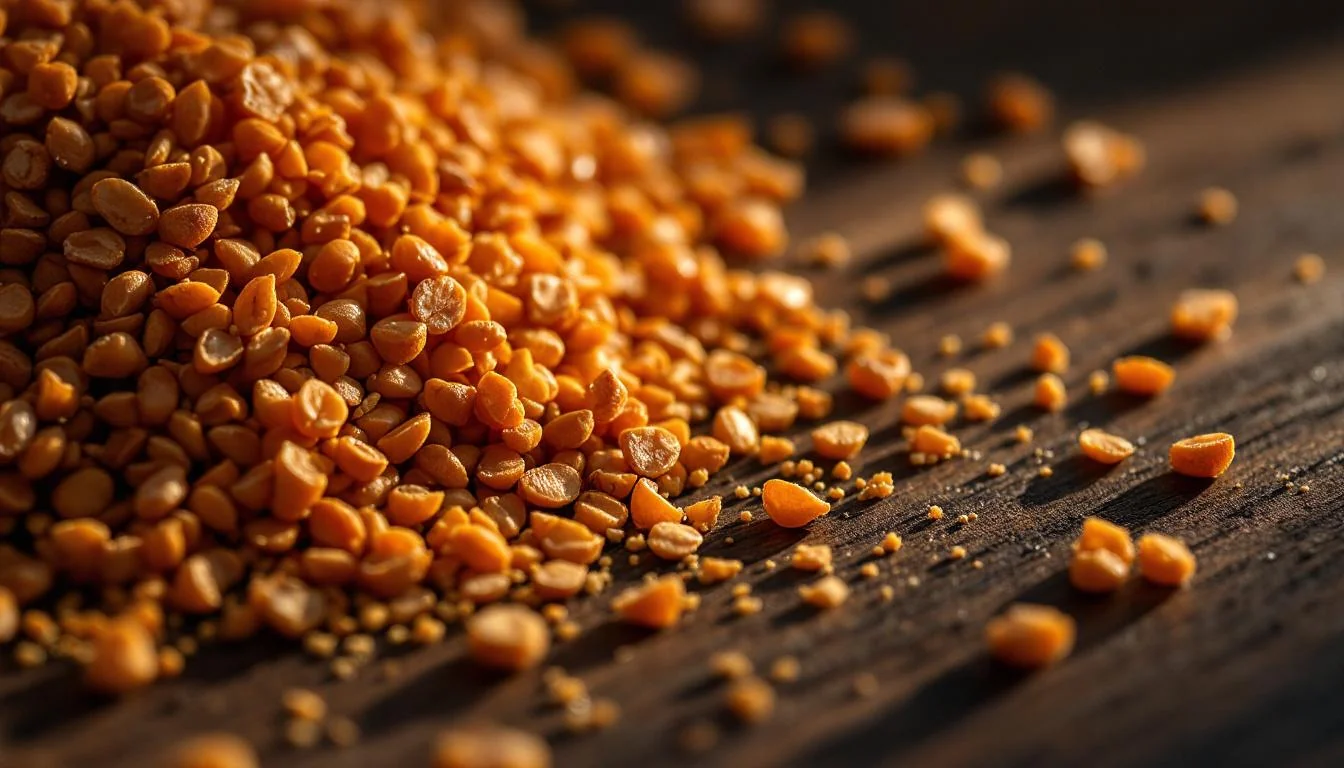
Some malts are made to sit in the background. Others are made to stand out. Crystal 120 is made for beers that unfold slowly.
It is one of the darkest crystal malts in brewing. Its deep amber recalls red wine resting in a dark cellar, and its flavors (raisin, ripe plum, burnt sugar) turn up only in beers that take time to understand. This is not a malt for quick drinking, or for hot, glaring afternoons.
IOrigins and History
Crystal malt was born in England in the mid-19th century, a period when malt kilning made major advances. Before then, brewers depended on sunlight and direct fire, which gave uneven batches of malt whose quality swung with the seasons.
The arrival of a new kind of drum roaster around Burton-on-Trent changed that. Maltsters found that if barley was steeped and germinated to a certain moisture level and then heated in a closed vessel, the starch inside would turn to sugar within the husk. The process is called “stewing,” and it is where crystal malt begins.
At 120 Lovibond (about 315 EBC), Crystal 120 is among the darkest crystal malts. It was developed for Victorian brewers who wanted layered sweetness and deep color in their strong ales, Burton ales, and, later, barleywines.
Long-established English maltsters such as Thomas Fawcett & Sons (founded in 1809 in Castleford, Yorkshire) and Crisp Malt (whose roots go back to 1870 in Great Ryburgh, Norfolk) refined the making of dark crystal over generations. Simpsons Malt, another well-known name, based in Berwick-upon-Tweed, did much to standardize crystal malt’s color grades.
Crystal 120 has not always gone by a number. In early English usage it was simply “dark crystal” or “extra dark crystal.” The Lovibond numbering caught on only when the malt trade expanded to the United States and needed a common language across continents.
IIHow It Is Made
Like most English malts, Crystal 120 starts as two-row barley. The grain is steeped in water to wake it up, then germinated for about 4–5 days. From here the process parts ways with base malt.
Instead of being dried right away, the green malt goes into a sealed kiln at about 65–68 °C (149–154 °F) for several hours. This is the stewing stage: enzymes in the grain are at their most active, converting starch to sugar. At this point each kernel is like a tiny batch of wort inside its husk.
The temperature is then raised gradually to 120–150 °C (248–302 °F), and the sugars inside begin to caramelize. For Crystal 120, this stage runs longer and hotter than for pale crystal malts, producing complex Maillard compounds. Those compounds are the source of its raisin and ripe-plum flavors.
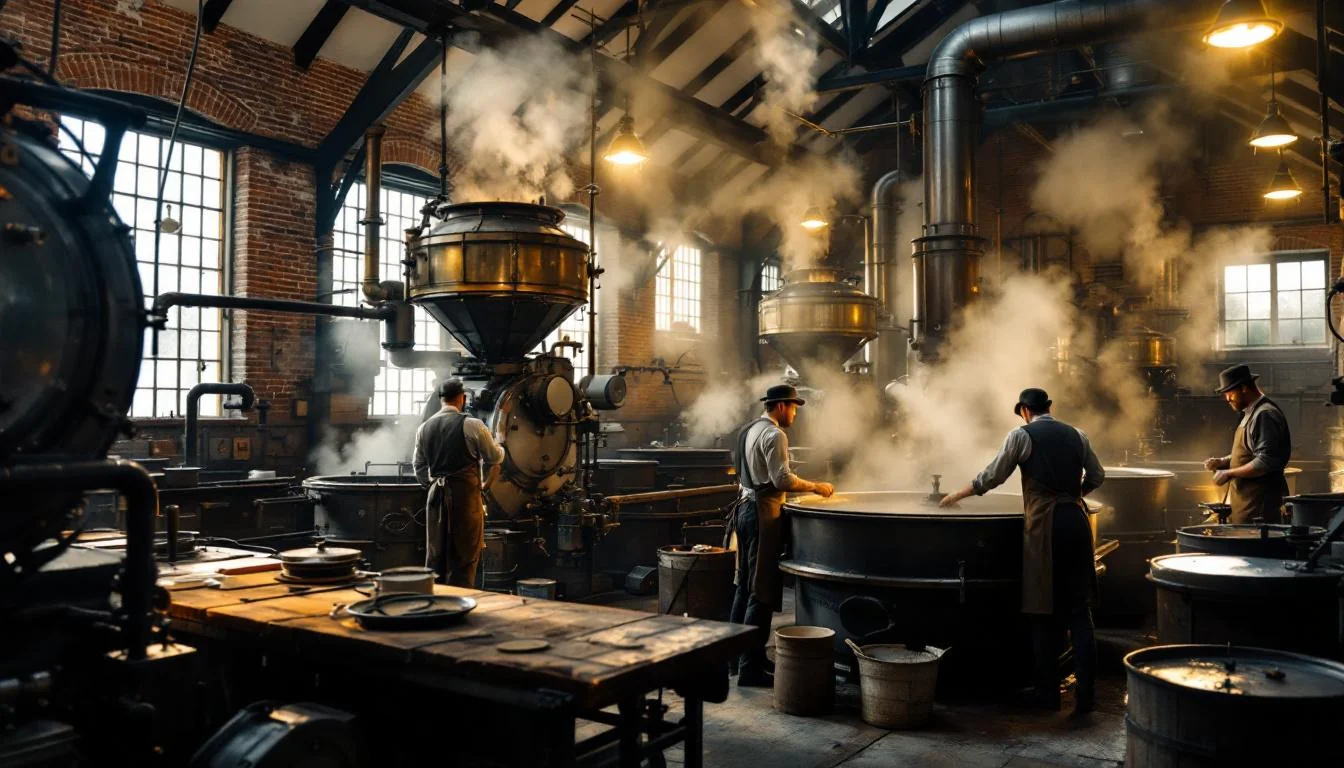
The result is a kernel with a glassy core that shatters when you bite it, colored evenly from the center out. That is the mark of properly made crystal malt.
IIITechnical Specifications
Crystal 120 measures about 110–130 Lovibond, or 290–340 EBC. That puts it in the deep amber to reddish-brown range, considerably darker than Crystal 60 or 80, though not as dark as chocolate malt.
Its extract is lower than that of base malt, around 74–76% (fine grind, dry basis), so it adds little to the beer’s final alcohol. That was never its job.
Most of the sugar in Crystal 120 is unfermentable, mainly dextrins and other long-chain sugars that yeast cannot break down. That is why it leaves residual sweetness and a fuller body.
Protein is moderate, about 10–12%, and moisture after kilning is under 5%. Diastatic power, the malt’s ability to convert starch on its own, is close to zero. That is normal for crystal malt, since the high-temperature kilning has already destroyed the enzymes.
Brewers typically use Crystal 120 at 3–10% of the grist. Too much makes the beer cloying and gives it an unwanted scorched taste.
IVFlavor and Color
If Crystal 60 tastes of clean, sweet caramel and Crystal 80 of rich toffee, Crystal 120 is darker and quieter: burnt sugar.
Raisin comes first, the dark, slightly sticky raisin of an English Christmas pudding. Then ripe plum, not fresh but sun-dried, its sweetness and light tartness concentrated.
The caramel in Crystal 120 is no longer the golden caramel of candy. It has been taken past the scorch point and carries the light bitterness of sugar broken down by heat. Some describe it as burnt sugar or dark molasses.
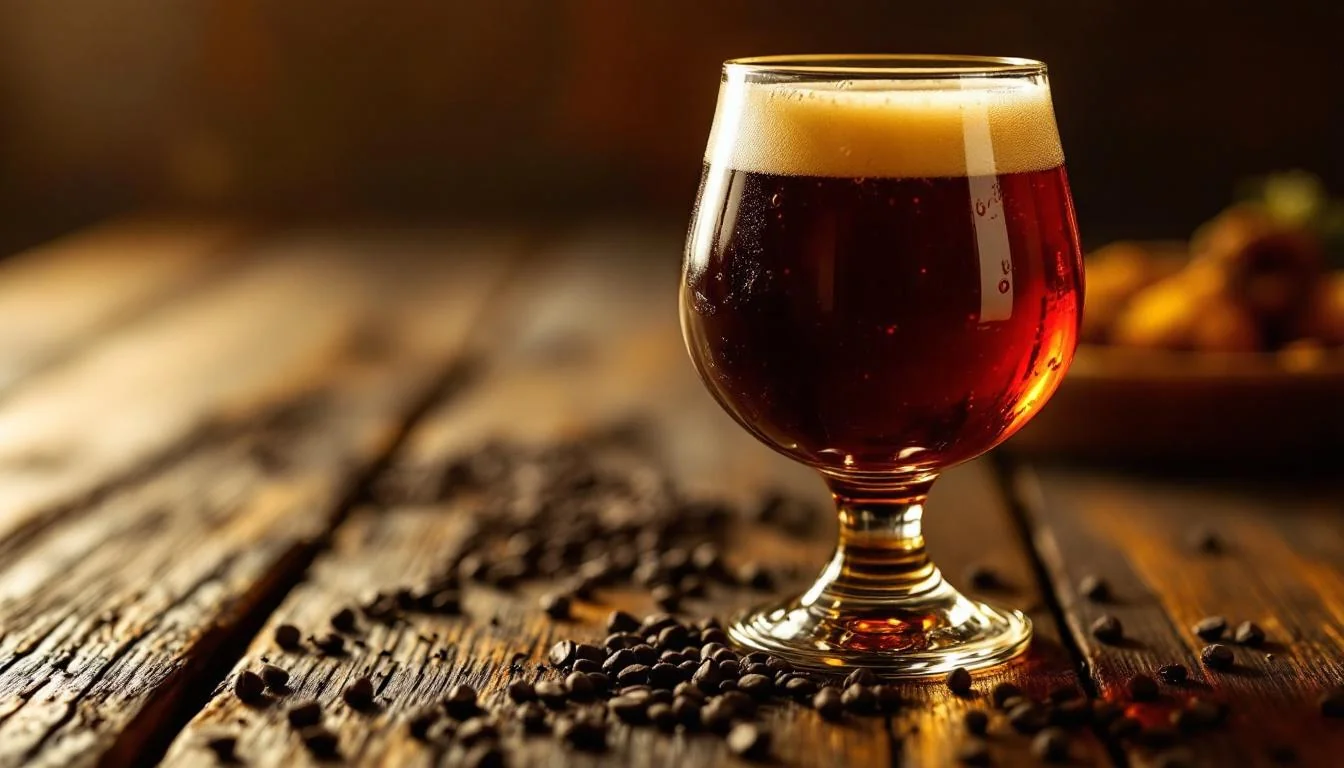
In the glass, Crystal 120 gives beer a deep amber to reddish-brown color. At 5–7% of the grist, it can push a pale ale clearly into amber. At higher rates, the beer turns a polished mahogany brown.
One trait not everyone notices is that Crystal 120 leaves a slightly dry finish. The sweetness arrives first, but the light bitterness of burnt sugar balances it at the end of the sip. That is why it suits strong beers, which need sweetness to offset high alcohol but cannot be so sweet that they become hard to drink.
The mouthfeel it adds is thick and slightly syrupy, with the unfermentable dextrins lifting the body considerably.
VTypical Styles
Crystal 120 belongs in beers that need depth and complexity.
It shows itself most fully in Barleywine. This strong beer, at 8–12% ABV, needs a layered malt base to stand up to high alcohol and bitter hops. Crystal 120 supplies raisin and ripe plum, flavors that recall sherry or port and suit a beer whose name means “wine from barley.”
Old Ale, barleywine’s quieter sibling, uses it too. A traditional English style, old ale is often aged for a long time and rich in malt sweetness. Crystal 120 adds a layer of raisin and burnt caramel, deepening beers designed to spend years in the cellar.
Doppelbock, Germany’s strong beer, sometimes uses Crystal 120 as well, though not traditionally. Some American craft brewers add dark crystal to their recipes for a deeper raisin character than standard melanoidin malt gives.
Some examples of Belgian Dark Strong Ale and Quadrupel may also use Crystal 120 as a minor ingredient, though traditional Belgian brewers generally prefer candi sugar. Used well, it adds dried fruit without overwhelming the esters of Belgian yeast.
VIHow It Compares with Other Crystal Malts
Among crystal malts, Crystal 120 sits at the dark end alongside Crystal 150 and Crystal 160. What separates them is the degree of caramelization and the flavors that come with it.
Crystal 120 is twice as dark as Crystal 60 and far more complex in flavor. Crystal 60 gives clean, sweet, honey-like caramel; Crystal 120 gives burnt sugar and dried fruit. One cannot stand in for the other in a recipe.
Crystal 80 sits between them, with toffee, butterscotch, and a light touch of raisin, balancing Crystal 60’s clean sweetness against Crystal 120’s darker dried fruit.
Compared with Belgium’s Special B, another dark crystal, Crystal 120 has less of the jammy ripe-plum character. Special B tends to be sweeter, almost syrupy, while Crystal 120 keeps a dry finish. For English-style raisin, choose Crystal 120. For Belgian-style ripe plum, choose Special B.
Another option is Weyermann’s CaraMunich III, in a similar color range. CaraMunich III, however, has more Munich malt character, with notes of toast and hazelnut, while English Crystal 120 is purer in its burnt caramel and dried fruit.
VIIHow to Recognize It in the Glass
With a barleywine or an old ale in hand, look at the color first. If the beer is deep amber and shows red highlights when you turn the glass in the light, Crystal 120 may well be in the grist.
The first aroma is usually dark caramel, lightly scorched rather than sweet. Raisin or dried plum on the nose points to a dark crystal like Crystal 120.
When you drink, notice the initial sweetness. Crystal 120 brings a wave of sweetness at mid-palate, followed by a slightly dry, faintly bitter finish. That is the burnt sugar, the signature of the darkest crystal malts.
Body is another clue. Crystal 120 leaves a thick, slightly syrupy mouthfeel. If a barleywine feels thin despite its strength, the brewer may have left out the dark crystal.
Finally, let the beer warm in your hand. Crystal 120 shows its flavors most clearly at cellar temperature, about 12–14 °C (54–57 °F). Served too cold, the raisin and ripe plum stay hidden.
Beers made with Crystal 120 are not for drinking in a hurry. They ask for time, for the beer to open up and for the drinker to slow down, much as the malt itself reaches its deep sweetness only through slow caramelization.
Mentioned in this article
-
Beer O L O G Y
Strong Beer: When Alcohol Becomes an Art -
Beer O L O G Y
Dark Beer Is Not One Style -
Beer O L O G Y
Belgian Beer: Intangible Cultural Heritage of Humanity
Originally published in Vietnamese on Tạp Chí Beer.