WLP830 German Lager Yeast: Bavaria’s Quiet Workhorse
WLP830 is a lager strain from Freising, Bavaria, and for more than a century it has given Pilsner, Helles, and Märzen their clean, balanced character.
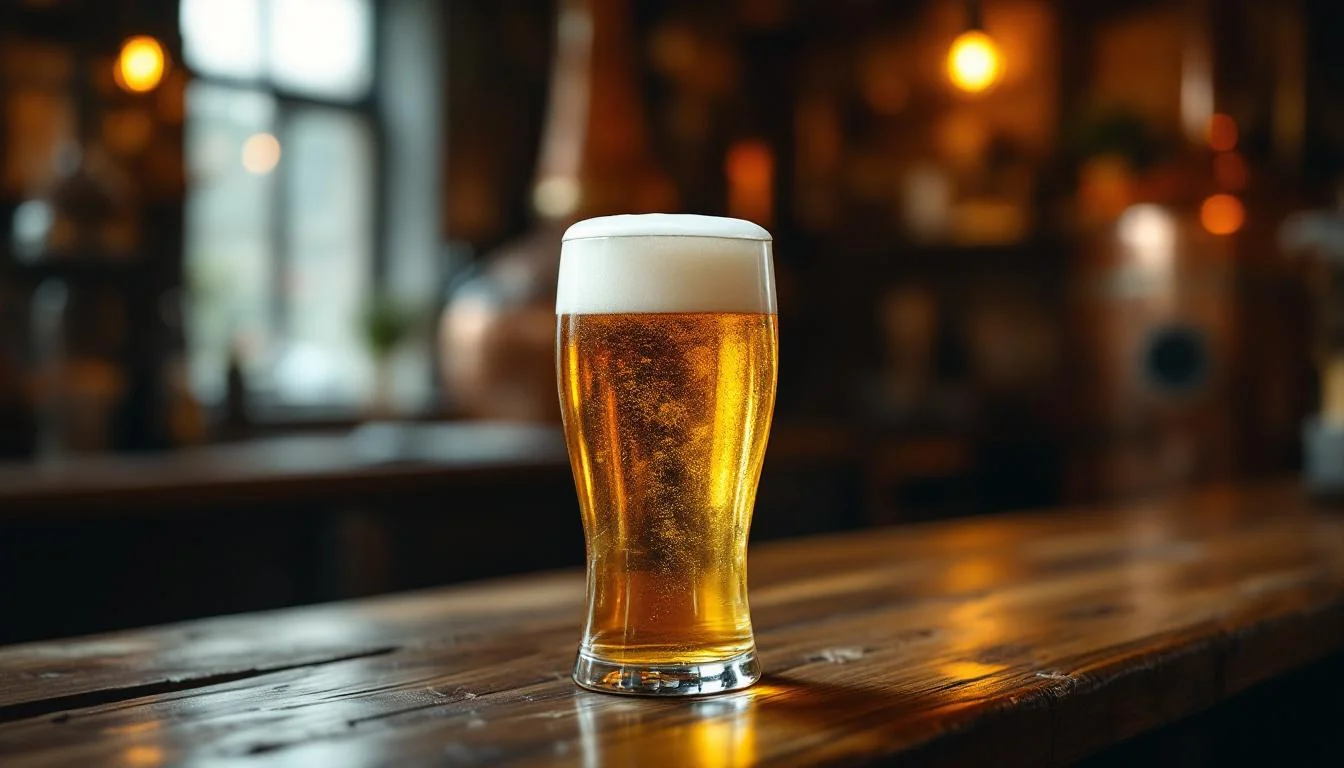
One part of a lager rarely gets a thought. It is not the hops, and it is not the malt. It is the silence.
The silence of the yeast. It works slowly and patiently at near-freezing temperatures, and it leaves no trace except crystal clarity and a flavor so clean that drinkers forget a living organism made it.
IWhen Yeast Became an Art
In 1883, in the Carlsberg laboratory in Copenhagen, Emil Christian Hansen became the first to isolate a pure strain of brewer’s yeast. The story of WLP830 does not begin in Denmark, though. It begins in a small town thirty kilometers north of Munich, home to the oldest working brewery in the world.
Weihenstephan. Even the name sounds monastic.
The strain White Labs would later catalog as WLP830 is believed to trace back to Weihenstephan’s own cold cellars, where Benedictine monks brewed beer as early as 1040. They did not know what yeast was. They only knew that beer stored through the winter in icy caves came out clearer and cleaner, and would keep until summer.
Bavarians called this process lagern, meaning “to store.” That is where the word “lager” comes from.
IIHistory and Origins
Understanding WLP830 means going back to the 19th century, the golden age of microbiology and the period when brewing turned from a craft into an industry.
Before Hansen, yeast was a mystery. Brewers called it “Godisgood,” because no one could explain why sweet wort turned into alcohol on its own. They carried yeast over from batch to batch and prayed the next one would not turn sour.
In 1883, Hansen showed that infections and off-flavors in beer came from impure yeast. He isolated the strain Saccharomyces carlsbergensis, later renamed Saccharomyces pastorianus, and brewing changed for good.
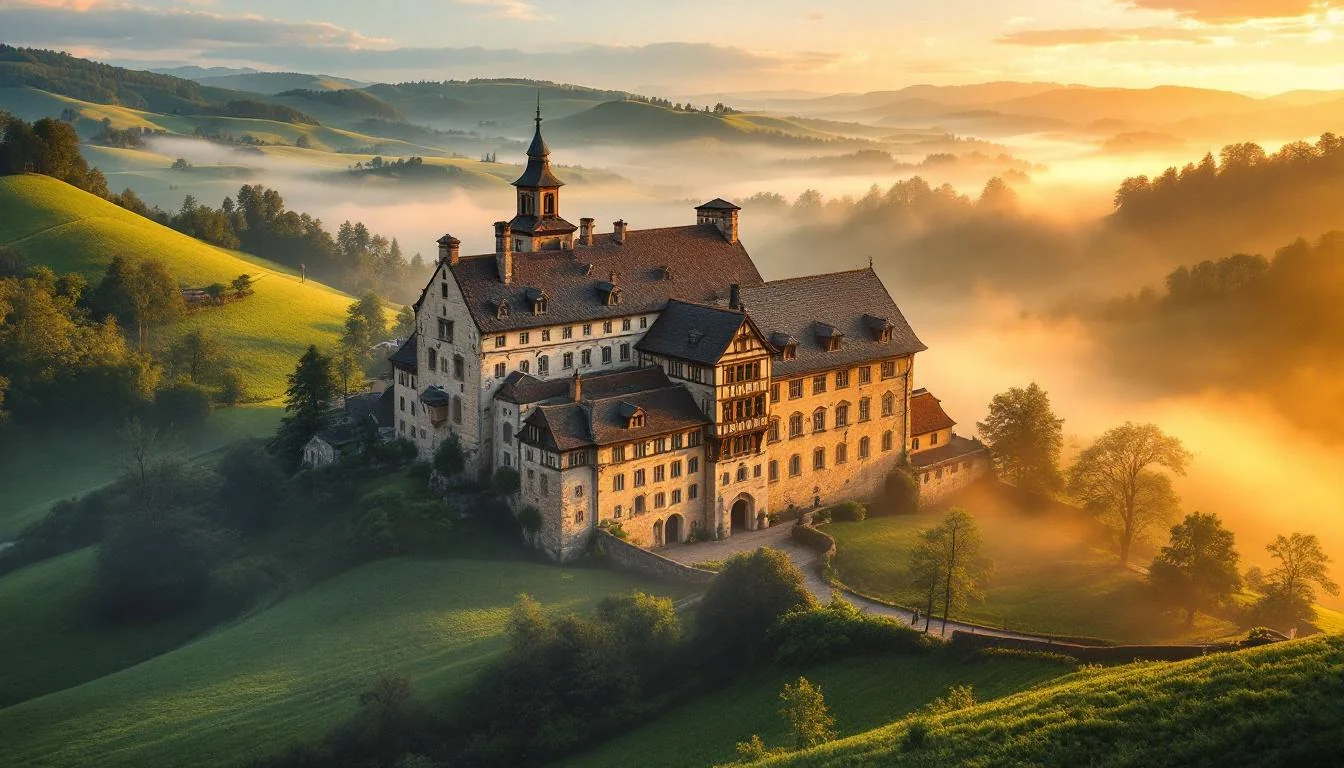
Weihenstephan in Freising, birthplace of the 34/70 lager strain, the ancestor of WLP830
Carlsberg shared the method with the rest of the world free of charge. German breweries, already known for lager, were quick to take it up and develop strains of their own, suited to local conditions.
Weihenstephan, with nearly a thousand years of history, became the center of German brewing-yeast research. Its strain 34/70, the direct ancestor of WLP830, is regarded as the “standard lager strain” used by most commercial breweries in Germany.
White Labs, founded in San Diego in 1995, collected the strain and keeps it under the code WLP830. The company named it simply “German Lager” and needed no fancier words.
Wyeast sells the same strain as 2124, and Fermentis offers it in dry form as SafLager W-34/70. All of them lead back to one place: Freising, Bavaria.
IIIBiological Characteristics
WLP830 is a strain of Saccharomyces pastorianus, a natural hybrid of S. cerevisiae (ale yeast) and S. eubayanus (a wild yeast from Patagonia, in South America). The hybridization took place roughly 500–600 years ago, perhaps when wild yeast carried by transatlantic trade happened to meet European ale yeast in cold beer cellars.
The ideal fermentation temperature for WLP830 is 10–13 °C (50–55 °F), well below the 18–22 °C (64–72 °F) that ale yeast prefers. At these temperatures fermentation is slow, usually 2–3 weeks against 3–5 days for an ale, but in exchange the yeast produces almost no esters or phenols.
Flocculation is rated “medium to high.” When fermentation is finished, the yeast clumps into a thick layer at the bottom of the tank, leaving the beer clear without heavy filtration. Attenuation runs 73–77%, meaning the yeast converts most of the sugar into alcohol while leaving the beer enough body.
WLP830 also tolerates fairly high alcohol, up to 9% ABV, and can ferment under the high pressure of industrial tanks without stress.
IVFlavor and Character
If ale yeast is the opera singer, always chasing attention with high notes of fruity esters and spicy phenols, WLP830 is the double bass player in the orchestra. It never takes the front of the stage, but without it the whole piece would lose its depth.
The most distinctive flavor of WLP830 is the lack of one. It sounds like a paradox, but it is exactly what lager brewers look for: a neutral base that lets malt and hops come forward.
At the right temperature, WLP830 gives a very clean profile, with almost no esters (banana, apple) or phenols (clove, smoke). If anything shows, it is a little sulfur during primary fermentation, and that disappears completely after a few weeks of lagering.
What WLP830 brings is balance. Pilsner malt comes through with a gentle bready sweetness. Saaz or Hallertau hops give off a subtle herbal aroma without being masked. The bitterness is dry and clean-cut.
Fermented warmer, above 15 °C (59 °F), WLP830 begins to produce some esters, usually green apple, or a stronger sulfur note. This is not a flaw but a trait some German breweries deliberately exploit to give their beer a house “signature.”
VClassic Styles
WLP830 is the backbone of most traditional German pale lager styles. Each of them is a lesson in restraint.
German Pilsner
Dry, bitter, and brilliantly clear. German Pilsner requires the yeast to vanish completely so that Saaz or Hallertau Mittelfrüh hops can take the spotlight, and WLP830 does exactly that. The finished beer is straw-colored, with a thick white head and a long bitter finish that never turns harsh.
Munich Helles
Where Pilsner leans toward hops, Helles leans toward malt. WLP830 lets the soft, bready sweetness of German Pilsner malt come through, neither too sweet nor too dry. This is the beer Munich drinks every day, and its balance depends on the yeast.
Märzen/Oktoberfest
The beer of autumn: amber, with a light caramel malt flavor and just enough bitterness for balance. WLP830 has to ferment cleanly so that esters do not “muddy” the aromas of Vienna and Munich malt.
Schwarzbier
Lager in its dark beer form. Black as coffee but light in body, with a gentle roast. WLP830 keeps it from feeling heavy: dark, yet still clean.
VIGeography and Terroir
Bavaria is where WLP830 was born, and the reason it exists at all.
The region lies at an elevation of 500 meters and has long, cold winters. Before refrigeration, it was one of the few places in Europe where lager could be brewed and aged naturally. Breweries dug cellars deep into the ground, packed them with ice from lakes in the Alps, and let the beer rest through the winter.
Lager yeast, a cold-loving organism, evolved under these conditions. It adapted to working at temperatures where ale yeast goes dormant, and to settling at the bottom of the cask instead of being skimmed off with the foam.
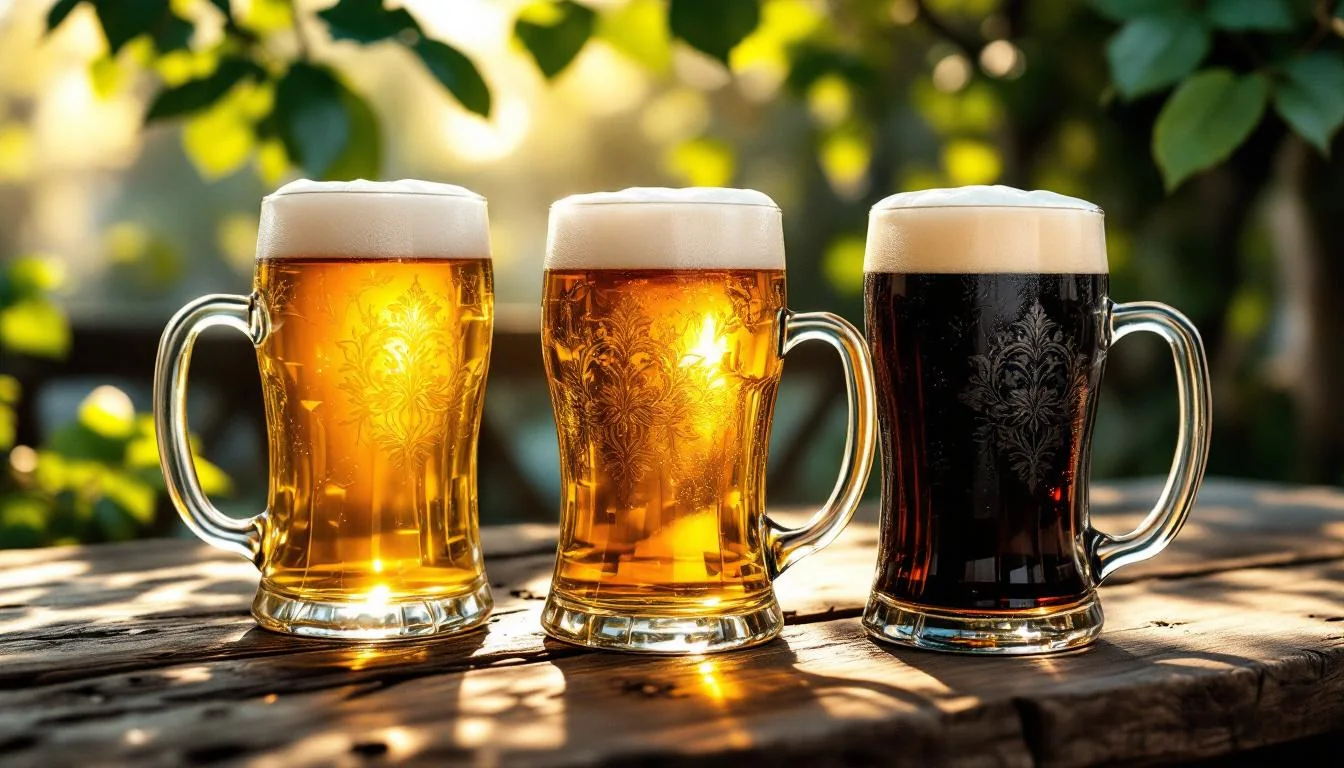
Helles, Märzen, and Schwarzbier: three different beers from a single yeast strain
Bavarian water is relatively soft, especially in Munich and Freising. Soft water brings out malt flavor without creating harsh bitterness, which makes it ideal for Helles and Munich Dunkel. Pilsen, in the Czech Republic, has even softer water, which is why Pilsner was born there.
Today WLP830 is used all over the world, from craft breweries in the United States to homebrew shops in Vietnam. Yet every batch fermented at 10 °C (50 °F) recreates the conditions of Bavarian beer cellars three hundred years ago.
VIIHow to Recognize It in the Glass
With a German lager in hand, don’t look for complexity. Look for what is missing.
No banana from ale yeast. No spice from Belgian yeast. No tropical fruit from kveik. Only malt, hops, and water, the three ingredients set down by the Reinheitsgebot (German Beer Purity Law) in 1516.
A light sulfur smell, like a match just blown out, signals a young WLP830 beer that has not been lagered long enough. Green apple or butter (diacetyl) means the beer needs more time to rest so the yeast can “clean up.”
A good lager is one you finish without remembering what you drank, only the refreshment and the wish for another glass.
That vanishing act is the whole of WLP830’s work.
Next time you raise a Pilsner or a Helles, spare a second for the tiny organisms that worked for weeks in the dark at near-freezing temperatures, all so you could drink a beer as clear as an Alpine spring.
Mentioned in this article
-
Beer O L O G Y
Light Beer and the Hard Art of Simplicity -
Beer O L O G Y
Dark Beer Is Not One Style
Originally published in Vietnamese on Tạp Chí Beer.