WLP300 Hefeweizen Yeast: The Strain Behind Bavarian Wheat Beer
WLP300 produces the ripe banana and clove that define authentic Hefeweizen, the traditional wheat beer of Bavaria in Germany.

Some yeast strains live for centuries without a name. They survive in monasteries, in family breweries, in the sediment at the bottom of oak barrels. Then one day someone looks more closely, and a name appears.
WLP300 is one of those strains. It was discovered rather than invented, a belated recognition of the organism that had quietly given German wheat beer its most distinctive flavor for centuries.
IOrigins and History
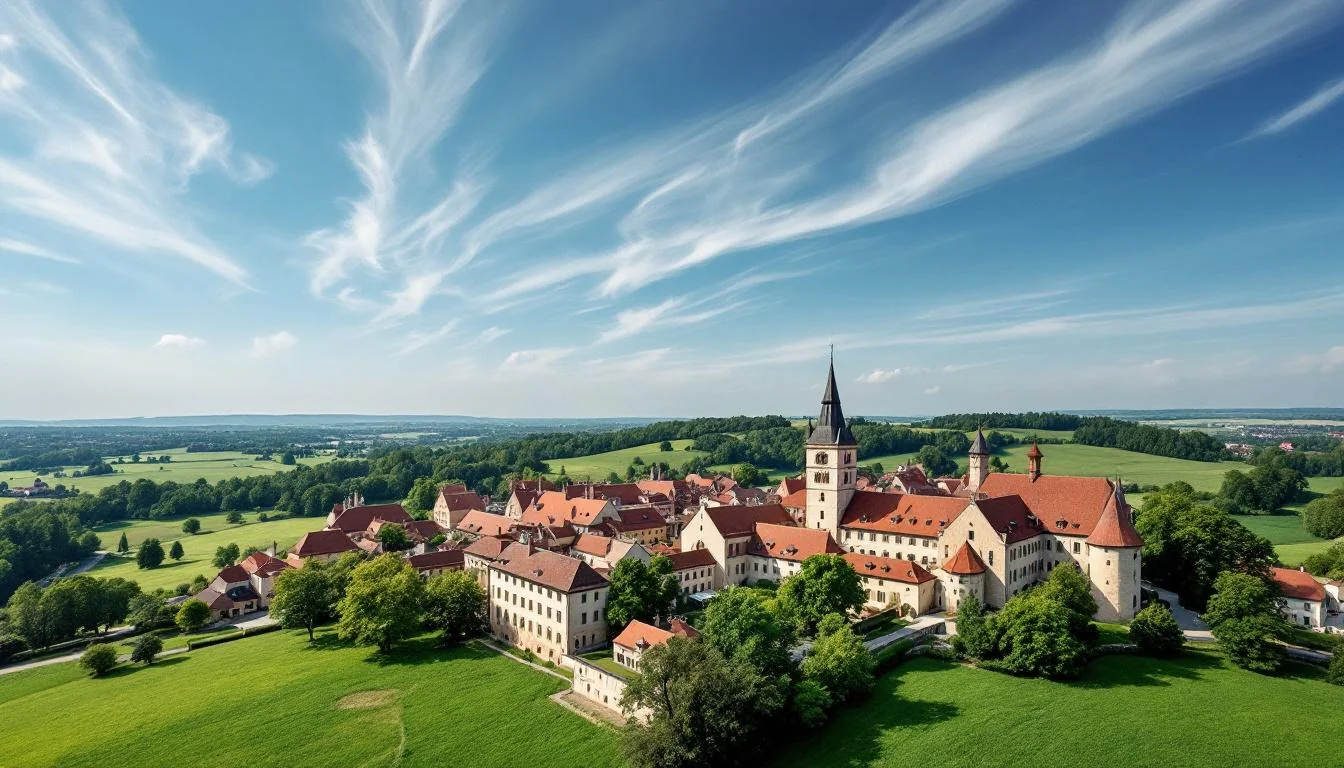
The story of WLP300 is inseparable from Weihenstephan, the Benedictine monastery on the Nährberg hill, about 30 km north of Munich. It is recognized as the world’s oldest working brewery, officially licensed to brew since 1040.
The yeast at Weihenstephan is older still. The monks had been brewing since the 8th century, and their yeast passed from generation to generation. No one knows its exact origin. It may have arrived on fruit skins, drifted in on the Bavarian air, or come from some old wooden cask.
In the 19th century, after Louis Pasteur showed the role microorganisms play in fermentation, scientists began isolating and studying brewing yeast systematically. The Weihenstephan brewing research institute, now part of the Technical University of Munich, became one of Europe’s leading centers of yeast research.
The strain behind Bavaria’s classic Hefeweizen was isolated and preserved there. It carried an internal number in the institute’s collection, and generations of students and researchers used it in experiments and in production.
In 1995 White Labs, a yeast laboratory in San Diego, California, began commercializing traditional European strains. Its founder, Chris White, obtained the strain from Weihenstephan and gave it the trade name WLP300. Since then it has become a staple for homebrewers and craft breweries around the world.
WLP300 is not a “version” of that yeast, nor a “copy.” It is the original Weihenstephan strain, propagated and distributed under strict quality control, so every vial carries nearly a thousand years of Bavarian brewing.
IIBiological Traits
WLP300 is an ale strain of Saccharomyces cerevisiae and ferments from the top. Lager yeast sinks to the bottom of the tank; WLP300 instead forms a thick layer on the surface of the fermenting wort, which makes the yeast easy to skim off and reuse in traditional brewing.
Its optimal fermentation range is 18–24 °C (64–75 °F), much wider than lager yeast allows, and the exact temperature has a marked effect on flavor. At the cool end, 18–20 °C (64–68 °F), the yeast produces more esters and a pronounced banana aroma. At the warm end, 22–24 °C (72–75 °F), phenols take over, bringing clove and a light spiciness.
Attenuation runs 72–76%, a moderate figure that leaves some residual sugar behind, giving the finished beer a light sweetness and a full body. Flocculation is low, so the yeast stays in suspension longer and gives Hefeweizen its characteristic haze. That suspended yeast also contributes to the beer’s flavor and mouthfeel.
Alcohol tolerance is around 10% ABV, enough for most traditional wheat beer styles but not suited to strong beers.
IIIFlavor and Character
If one word describes WLP300, it is “expressive.” The strain does not quietly turn sugar into alcohol. It leaves a bold imprint that can nearly overwhelm every other ingredient in the recipe.
Ripe banana, from the ester isoamyl acetate, is the first and clearest note. Not green banana or grilled banana, but soft, sweet, fully ripe fruit that recalls the banana candy of childhood. The ester forms when yeast metabolizes sugar with few free amino acids available, and it is especially noticeable at low fermentation temperatures.
Alongside the banana runs clove, from 4-vinyl guaiacol, a characteristic phenol. The spice is warm and slightly sharp, like the one in gingerbread or winter mulled wine. This phenol increases at higher fermentation temperatures or with a high proportion of wheat malt.
Beyond those two notes, WLP300 adds secondary layers: light vanilla, orange peel, bubblegum, and sometimes a rubbery note when fermentation runs too hot. What homebrewers call the “banana-clove balance” depends on temperature, pitch rate, and the amount of dissolved oxygen at the start.
One trait is mentioned less often: WLP300 produces very little sulfur and no significant diacetyl. The beer comes out clean, free of off-flavors, and ready to drink as soon as primary fermentation ends, with no need for long conditioning.
IVClassic Styles
WLP300 is the classic yeast for Hefeweizen, the traditional wheat beer of Bavaria. Under the expanded version of the Reinheitsgebot (the German Beer Purity Law of 1516), Hefeweizen contains at least 50% wheat malt, usually 60–70%. Together, WLP300 and wheat produce an unmistakable flavor.
Hefeweizen
The original style. Pale straw to amber in color, and very cloudy from yeast and wheat protein. Alcohol usually runs 4.5–5.5% ABV. There is no noticeable hop aroma; all of the character comes from yeast and malt. Traditionally, the beer is poured along with the yeast sediment from the bottom of the bottle.
Dunkelweizen
The dark version of Hefeweizen. Munich malt and roasted wheat malt bring a reddish-brown color and notes of caramel and toast. WLP300 still delivers banana and clove, now joined by more complex malt notes.
Weizenbock
The strong beer of the German wheat family, at 6.5–9% ABV. The fruit from WLP300 is amplified: beyond banana there is plum, raisin, and sometimes even chocolate. The beer is usually lagered for a few weeks to let the flavors meld.
Kristallweizen
Hefeweizen filtered clear. It loses the signature haze, but the yeast-driven flavor remains. The style is less common, yet it shows that the yeast’s influence reaches beyond what stays suspended in the beer.
VGeography and Terroir
WLP300 was born in Bavaria, and the region’s whole ecosystem shaped it.
The region lies at an average of 500 meters above sea level and has a continental climate, with cold winters and mild summers. Average summer temperatures run 15–20 °C (59–68 °F), in line with the optimal fermentation range for Hefeweizen yeast. Before refrigeration, these conditions allowed breweries to produce only ale.

Bavarian water is moderately hard and rich in minerals from the Alps. Its low sulfate and moderate chloride soften the beer and favor malt over hops, a good fit for Hefeweizen, a style with no need for bitterness.
Bavarian wheat, especially winter wheat, is high in protein, which gives the beer a natural haze and a thick, lasting head. Local wheat, local water, and a native yeast strain combine into a terroir of their own, one that is hard to reproduce fully anywhere else.
Today WLP300 is used worldwide, from craft breweries in the United States to homebrewers in Vietnam. The core flavor stays the same, but small differences in water, malt, and fermentation conditions create variations of their own. That too is part of the story: the yeast carries its heritage with it and adapts to new ground.
VIHow to Recognize It in the Glass
With a glass of Hefeweizen in hand, don’t drink right away. Bring it to your nose first.
Banana arrives first: sweet, ripe, and clear. In a beer properly brewed with WLP300, that aroma can’t be confused with anything else. Breathe in more deeply and clove emerges as a second layer, gently spicy and warm.
On the first sip, the mouthfeel is soft, thanks to wheat protein and suspended yeast. There is a light sweetness from the malt and no real hop bitterness. High carbonation keeps it bright, almost fizzing on the tongue.
As you swallow, banana and clove return in the finish and linger for a few seconds. Some bottles also carry a light yeasty note, slightly bready and slightly earthy, especially if you pour in the sediment from the bottom of the bottle.
Every glass of Hefeweizen reaches back nearly a thousand years, and WLP300 carries the memory of the Weihenstephan monastery, of brewers whose names were never recorded, and of Bavaria across the generations.
Slow down and listen. The yeast is telling its story.
Mentioned in this article
-
Beer O L O G Y
Wheat Beer: The Flavor of the Grain -
Beer O L O G Y
Strong Beer: When Alcohol Becomes an Art

Originally published in Vietnamese on Tạp Chí Beer.