Wheat Malt: The Grain That Brings a Soft Haze to the Glass
German wheat malt gives Hefeweizen, Witbier, and other wheat beers their soft body, lasting white head, and fresh-grain flavor.
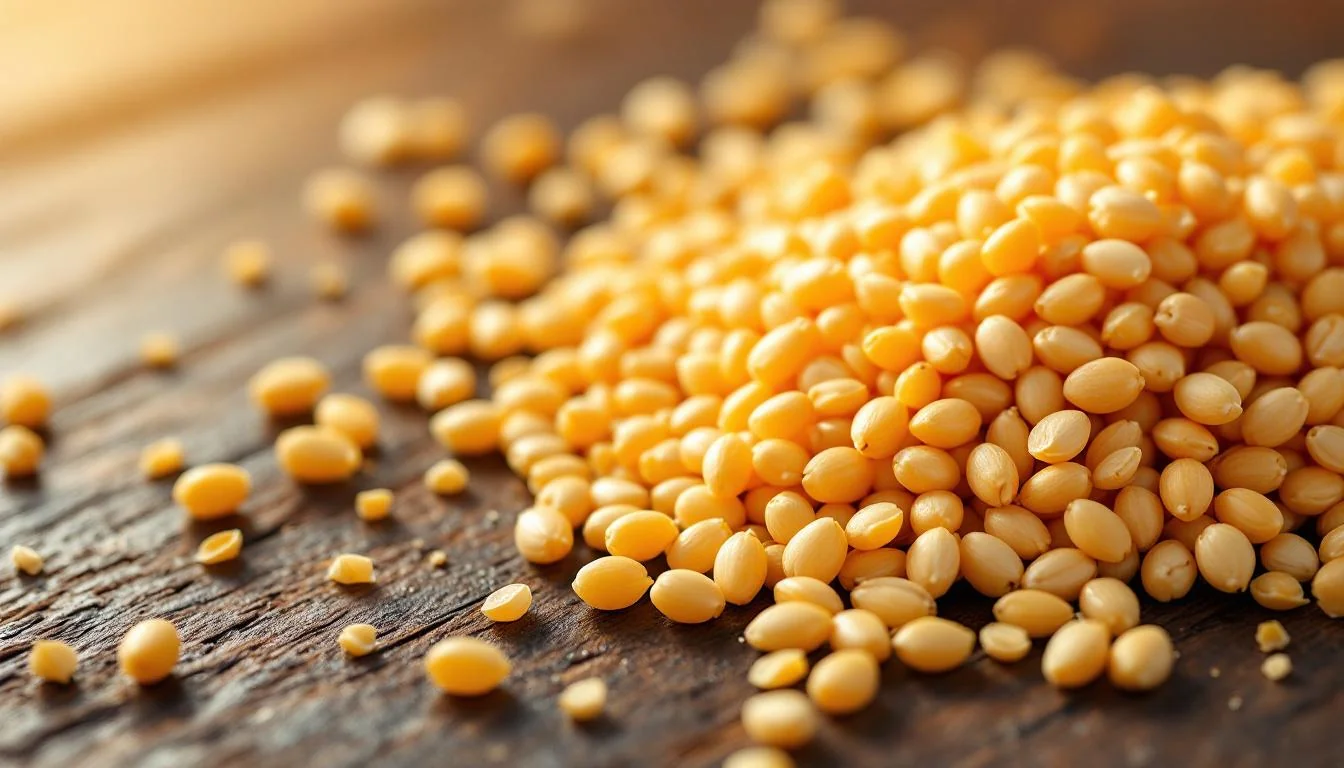
Some malts are there to form a beer’s backbone. Others are there for color or a particular flavor. Wheat malt is there for softness. It doesn’t dominate. It supports, rounding everything out and taking the edges off.
When you sip a Hefeweizen on a summer afternoon, much of that creamy feel on the tongue comes from wheat malt. So does the bright white head that stands firm at the rim and is in no hurry to fade. This malt doesn’t try to impress. It quietly does its job.
IOrigins and History
People have been growing wheat for more than 10,000 years. In the history of beer, though, it was once shut out.
In 1516, Bavaria adopted the Reinheitsgebot (German Beer Purity Law), which allowed only barley, water, and hops in beer. Wheat was left off the list, and not because of its quality. The reasons were economic and political. Wheat was too precious as the grain for bread, the people’s staple food, and brewing with it was a luxury the law did not permit.
The Bavarian nobility, however, did not follow its own law. From 1520 the Degenberg family of the Bohemian Forest held a monopoly on brewing wheat beer. When the family line died out in 1602, the right passed to Duke Maximilian I of Bavaria, and Weissbier, “white beer,” as wheat beer was called, became a huge source of revenue for the ruling house.
By the 19th century wheat beer had nearly vanished, pushed aside by lager. In the 1960s, the Schneider brewery in Kelheim, Bavaria, set out to revive the tradition. Georg Schneider VI was determined not to let Weissbier die, and he succeeded.
Today wheat malt is made all over Germany. Major maltsters such as Weyermann in Bamberg, Bestmalz in Heidelberg, and Ireks in Kulmbach each make their own wheat malts. Bavaria is still the center, but the wheat itself may be grown far from it, from the plains of Thuringia to the fields of Brandenburg.
German wheat malt differs from wheat malt made elsewhere. European winter wheat varieties, a long germination, and gentle kilning give it its own character, the work of centuries of tradition and of modern science.
IIHow It Is Made
Unlike barley, wheat has no husk, and that changes everything about how it is malted.
The grain is steeped at about 12–15 °C (54–59 °F) for 40–50 hours, alternating periods under water with air rests. The kernels need to reach a moisture content of about 43–46%, higher than for typical barley. Wheat absorbs water faster because it has no protective husk.
Germination takes 4–5 days at about 14–18 °C (57–64 °F). Enzymes develop inside the kernel, especially the ones that break down protein, a crucial step because wheat contains more protein than barley. Rootlets emerge and lengthen, and germination is stopped when they reach about 3/4 of the kernel’s length.
Wheat malt needs gentle kilning. The temperature rises slowly, starting around 50 °C (122 °F) and finishing at 80–85 °C (176–185 °F), over 18–24 hours. The goal is to keep the color pale and the enzymes intact. Kilning also helps remove the rootlets, which are unwanted in the finished malt.
After kilning, the malt is cooled and the rootlets are stripped off in a deculming machine. The result is pale yellow wheat malt with a light aroma of grain and honey.
IIITechnical Specifications
German wheat malt is very pale, at 3–5 EBC, or 1.5–2.5 Lovibond. That makes it one of the lightest malts there is, only slightly darker than Pilsner malt.
Extract comes in at about 82–85% on a dry basis, higher than most standard base malts. The reason is the missing husk, which adds nothing to extract yet accounts for roughly 10–13% of the weight of a barley kernel. No husk means more starch for the same mass.
Protein runs 11–14%, well above the 9–11% of Pilsner malt. That protein is the source of wheat beer’s lasting head and its soft body. It can also cloud the beer, which is no flaw at all in traditional wheat beer styles.
Diastatic power is fairly high, around 280–350 WK (Windisch-Kolbach units). Wheat malt can convert its own starch and still has enzymes to spare for other malts or unmalted grains. In practice, many recipes use it to supply enzymes for adjuncts.
Finished wheat malt usually holds under 5% moisture. Friability, a measure of how crumbly the kernel is, runs above 80%, a sign of thorough modification.
IVFlavor and Color
Wheat malt does not create complex or dramatic flavors. Its contribution is subtler.
The main aroma is fresh grain: newly milled wheat, flour, sometimes white bread just out of the oven. There is no caramel and no roast, only clean grain.
With a German wheat beer yeast, especially a Weizen strain such as Wyeast 3068 or Fermentis WB-06, wheat malt becomes part of something more complex. These yeasts produce distinctive esters and phenols: banana, clove, sometimes bubblegum or vanilla. That is the yeast’s doing. Wheat malt supplies the base that lets those flavors show.
Wheat malt yields beers that range from pale yellow to straw. Clarity depends on the style and on brewing technique. A Hefeweizen is usually hazy with suspended protein and yeast, while an American Pale Wheat Beer can be clearer if it is filtered.
The most important thing wheat malt brings is mouthfeel. Its high protein creates a soft, almost creamy body. This is not the weight of Munich or crystal malt but a smoothness that slides lightly across the tongue.
The head benefits as well. Wheat protein makes foam thicker, longer-lasting, and finer. A properly poured Hefeweizen carries a snow-white head that stands like whipped cream, fades slowly, and leaves Belgian lace on the glass.
VKey Beer Styles
Wheat malt is indispensable to the whole family of wheat beers.
Hefeweizen, the unfiltered German wheat beer, is the style that defines the category. Tradition calls for at least 50% wheat malt in the grist, and many breweries use as much as 60–70%. Weihenstephaner Hefeweissbier, Schneider Weisse Original, and Paulaner Hefe-Weißbier are all built on that base: soft-bodied beers with creamy heads and the banana-and-clove character that comes from the yeast.
Kristallweizen, the filtered version of Hefeweizen, uses a similar share of wheat malt. The difference is filtration, not ingredients.
Dunkelweizen, the dark wheat beer, combines wheat malt with darker malts such as Munich or Carafa. The result is copper-brown, with more complex flavor and light notes of caramel and chocolate, while keeping the gentle body that wheat provides.
Weizenbock, the strong version of wheat beer, pushes alcohol to 7–9% ABV. Schneider’s Aventinus is the classic example. Wheat malt still plays the lead, building a full body to balance the higher alcohol.
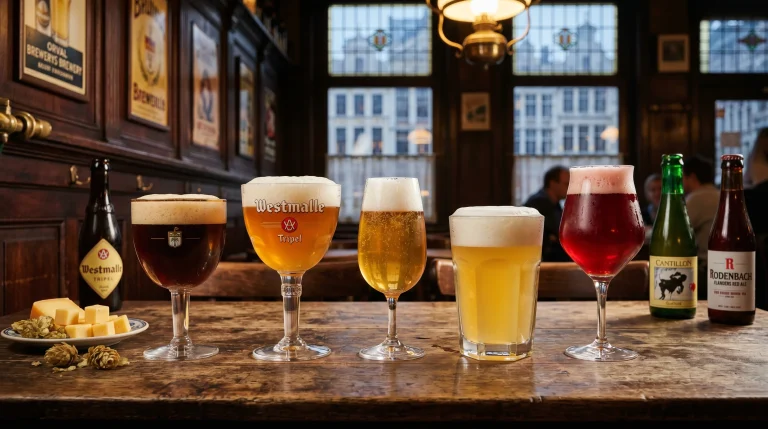
Beyond Germany, Belgian beer contributes Witbier, a style brewed with both malted and unmalted wheat, plus orange peel and coriander seed. Hoegaarden and St. Bernardus Wit are well-known examples. Here wheat malt typically makes up about 30–50% of the grist.
American wheat ales and the wheat beers of the craft movement also rely on wheat malt, but usually pair it with an American ale yeast, which does not produce the German banana and clove. The beer comes out cleaner and lets the wheat speak for itself.
VIHow It Compares With Related Malts
Standard wheat malt has several relatives among malts made from wheat.
Pale wheat malt and standard wheat malt are essentially the same thing. This is the most common version: light in color, neutral in flavor, and right for most wheat beer recipes.
Dark wheat malt is kilned at higher temperatures to reach 15–20 EBC. It brings stronger biscuit and bread-crust notes and suits Dunkelweizen or other beers that need more depth.
Carawheat, a caramelized wheat malt, comes in at around 110–140 EBC. It is a specialty malt, used in small amounts to add caramel and toffee notes.
Compared with torrified wheat and flaked wheat, both unmalted, wheat malt has the advantage of carrying its own enzymes, so it can convert itself. Torrified and flaked wheat need enzymes from another base malt to do that. They do give similar body and head, though, at lower cost.
Next to barley-based Pilsner malt or pale malt, wheat malt has more protein, which gives a softer body and a longer-lasting head. It is also harder to lauter, because it lacks the husk that forms a natural filter bed for the wort. Many brewers add rice hulls alongside wheat malt to improve runoff.
VIIHow to Recognize It in the Glass
Picking out wheat malt takes attention to small details.
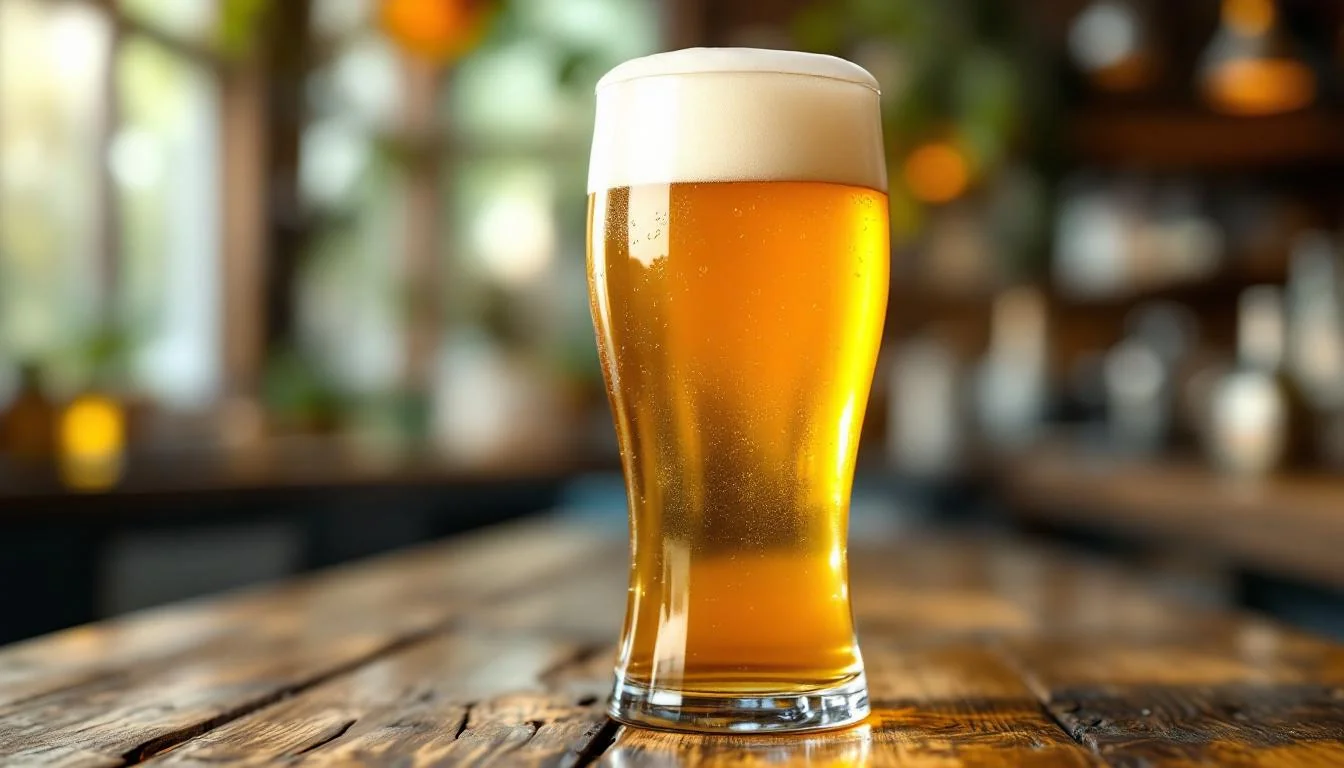
Start with the head. A beer with a high share of wheat malt has thick, fine, lasting foam. Instead of collapsing after a few seconds, it holds, settles slowly, and leaves white rings on the glass. A thin head that fades quickly suggests wheat malt is not a significant part of the recipe.
Next, the mouthfeel. Take a sip and let it run across your tongue. A beer made with wheat malt feels soft, nearly creamy, never harsh or coarse. It is smooth and gentle rather than heavy like a beer built on richer malts.
The third sign is a grainy aroma. Lift the glass and sniff gently. Beneath the banana, clove, or hops lies a base of fresh grain: wheat, flour, white bread. It never takes over. It is simply there.
Last comes haze. In Hefeweizen and Witbier, cloudiness is normal, the result of protein and yeast. An American wheat beer may be clearer, but both carry the character of wheat.
The next time you hold a Hefeweizen on a summer afternoon, stop for a moment. Look at the white head. Feel the softness on your tongue. Think of the wheat fields of Bavaria, the centuries of brewers and maltsters, and the long road from a wheat kernel to the glass in your hand.
That is how to appreciate a glass of beer.
Mentioned in this article
-
Beer O L O G Y
Wheat Beer: The Flavor of the Grain -
Beer O L O G Y
Belgian Beer: Intangible Cultural Heritage of Humanity

Originally published in Vietnamese on Tạp Chí Beer.