Roasted Barley: The Unmalted Grain That Defines Irish Stout
Roasted barley is barley roasted black without ever being malted. It gives Irish stout its color and its dry, bitter coffee flavor.
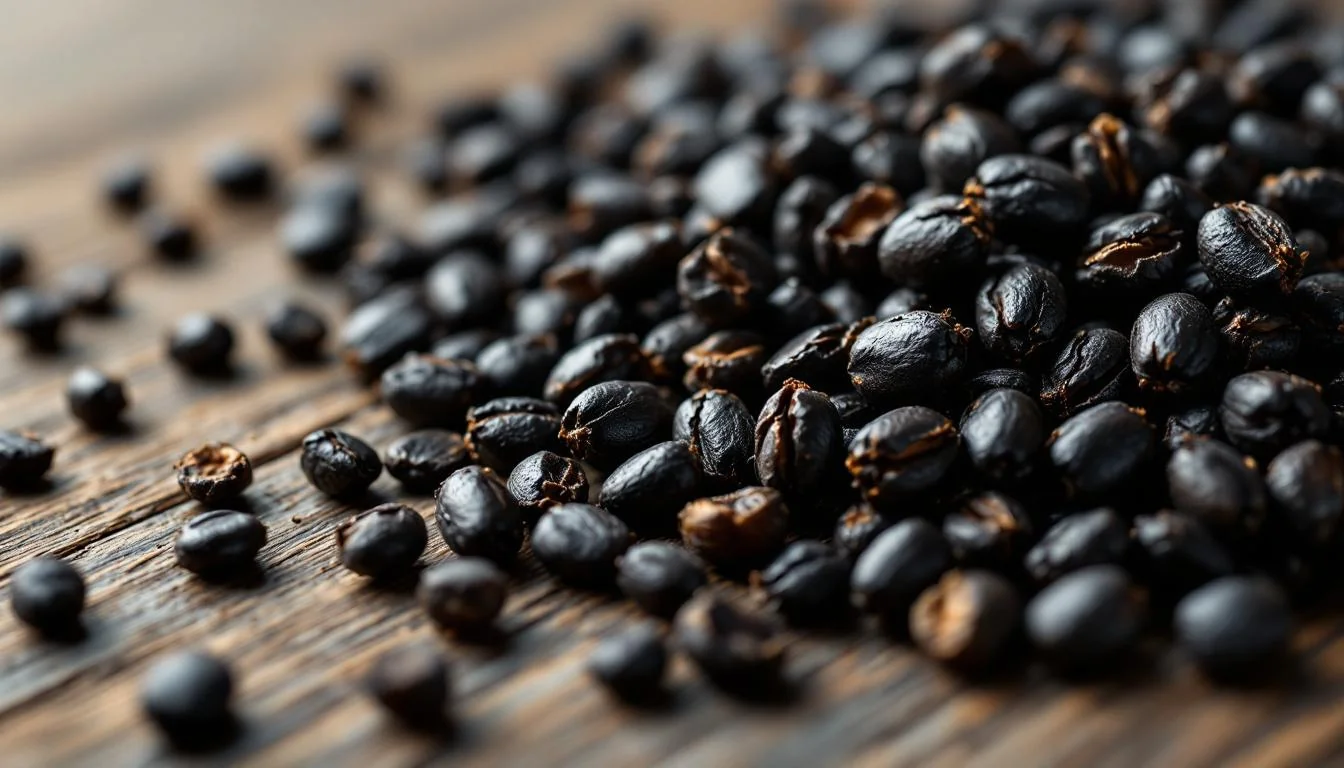
Roasted barley never goes through malting. The grain is never sprouted, only roasted black, yet it has shaped the beer of an entire country.
Arthur Guinness, looking for a way around the malt tax in the 18th century, stumbled on the recipe that built an empire. Technically, roasted barley is not malt at all but raw barley, roasted until charred black. That plain grain gave rise to Irish Dry Stout: dry, bitter, and impossible to confuse with any other dark beer in the world.
IOrigins and History
The story starts with a law. In 1785, Britain heavily taxed malt, meaning sprouted grain. Irish brewers, long used to improvising through hard times, found a way out: they roasted unmalted barley directly.
Dublin became the center of this small revolution. Guinness’s St. James’s Gate brewery, founded in 1759, gradually changed its recipe, and by the mid-19th century roasted barley went into every batch of Guinness. The reason was flavor, not cost: neither chocolate malt nor black malt could reproduce it.
The Irish call it “dry stout character”: a dryness that grips the back of the throat, a finish of unsweetened espresso, and a dense, velvety, creamy head. It all comes from barley roasted black, with no enzymes and no fermentable sugar.
English Porter relies on brown or chocolate malt; Irish stout has stayed with roasted barley. The difference goes beyond tax. It is what makes the style Irish. Drink Guinness, Murphy’s, or Beamish, Ireland’s three biggest stout breweries, and you taste the same principle: barley roasted as it is, never sprouted.
Irish maltsters such as Minch Malt in Athy, County Kildare, still make it the traditional way, roasting at up to 230 °C (446 °F) for 2–3 hours. Nothing has changed in over two centuries, because nothing needed to.
IIHow It’s Made
Roasted barley skips every step of ordinary malting: no steeping, no germination, no slow kilning. Only fire.
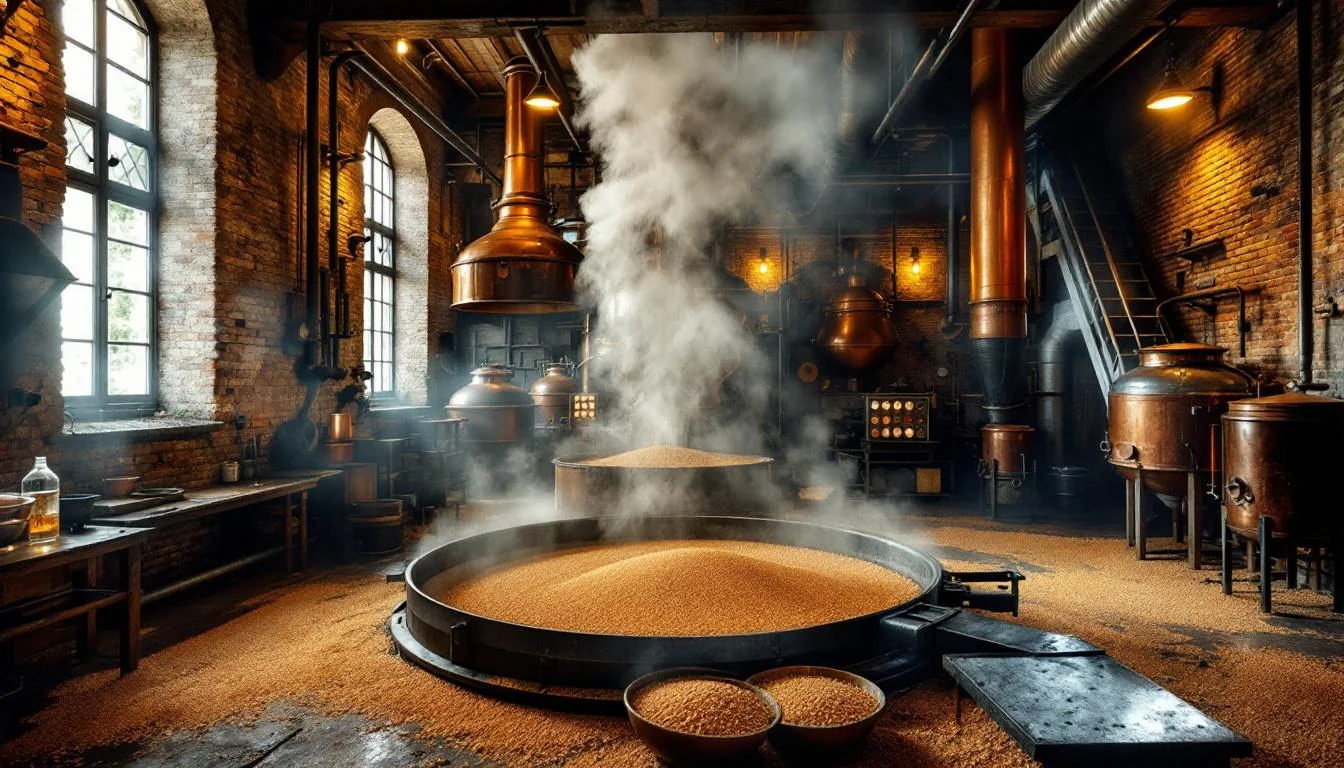
Raw barley is cleaned of impurities and fed straight into an industrial roasting drum. The heat starts around 180 °C (356 °F) and climbs to 220–230 °C (428–446 °F) over 2–3 hours. This is roasting, entirely different from the gentle kilning of base malt.
The Maillard reaction runs hard. At high heat, sugars and amino acids in the grain react to form hundreds of new flavor compounds. Melanoidins give the jet-black color; pyrazines bring the smell of roasted coffee.
Because it never sprouts, roasted barley has no enzymes. Its starch stays intact, never converted to sugar, so the grain cannot saccharify on its own in the mash. That is also the source of its dryness: no residual sugar, no sweetness.
After roasting, the grain is cooled fast with cold air to halt the reactions. The finished kernels are glossy coal black, smell strongly of coffee, and have lightly scorched husks.
IIITechnical Profile
Roasted barley is a specialty grain with an extremely high color rating: 1,000 to 1,400 EBC, or 375–525 Lovibond, the darkest of all brewing grains. Just 3–5% of a recipe turns a whole batch black.
Its extract is well below that of ordinary malt, typically 60–70% against 80% for pale malt. Without malting, the starch has never been modified into a form that extracts easily.
Protein runs 9–12%, depending on the barley. Little of it dissolves in the wort, but it adds body and, above all, head retention. That is why Irish stout always wears a thick, creamy, lasting head.
Moisture after roasting is very low, usually under 3%, so the grain keeps well without molding or spoiling. Its aromatics fade over time, though, and producers advise using it within 6 months of roasting.
One important trait: roasted barley lowers wort pH noticeably, by about 0.1–0.2 units for every 5% of the grist. That affects the mash and has to be factored into the recipe.
IVFlavor and Color
Roasted barley tastes different from every other roasted malt. It is dry, very dry, like unsweetened espresso.
Coffee leads, and not the sweet, milky kind: black coffee from a dark roast, close to burnt. Behind it comes unsweetened cocoa. Some tasters also find ash, charcoal, and toast burnt at the edges.
Its bitterness is not hop bitterness. It is drier and sharper, and it settles at the back of the throat rather than spreading across the palate. The term is “acrid bitterness,” a slightly sour, astringent bite typical of high-heat Maillard reactions.
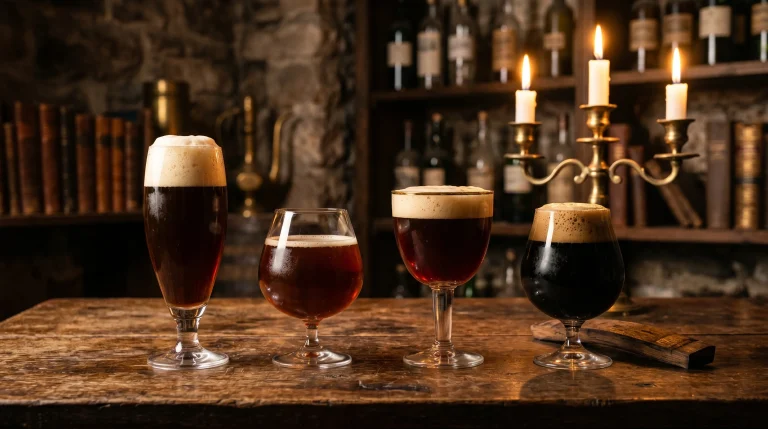
In the glass it turns beer jet black, with ruby highlights against the light. Where black malt can look grayish, roasted barley always keeps some warmth in its black, like embers not quite out.
It has neither the chocolate sweetness of chocolate malt nor the caramel of crystal malt. It is simply bitter and dry, which is why Irish Dry Stout has “dry” in its name.
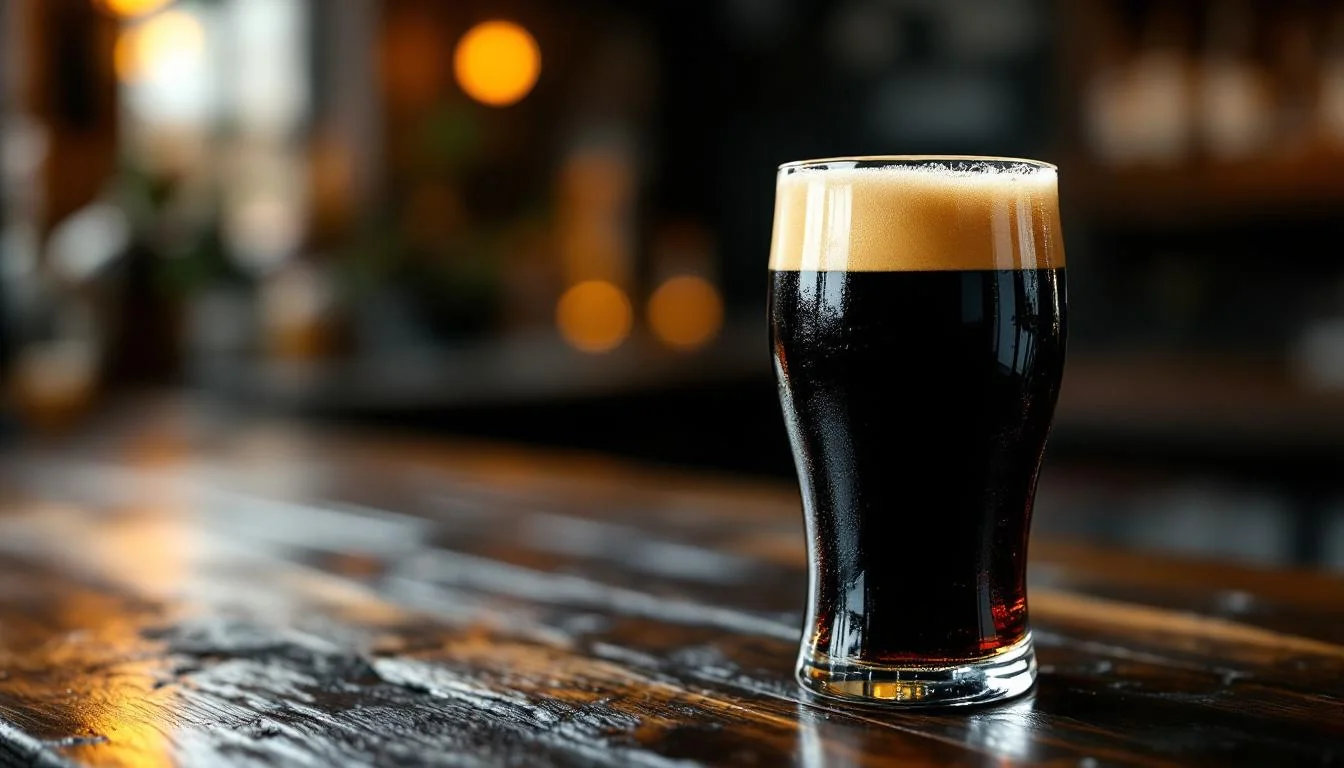
The head shows it too: roasted barley builds a dense, light brown to tan foam that clings long to the glass. The lace a pint of Guinness leaves behind is roasted barley’s mark.
VClassic Styles
Irish Dry Stout is roasted barley’s home ground, and nothing replaces it there. Guinness, Murphy’s Irish Stout, and Beamish all build their flavor on it, usually at 7–10% of the grist: enough for black color and dry bitterness without masking other notes.
Irish dry stout is the “lightest” stout: just 4–4.5% ABV, light to medium body, low carbonation. Roasted barley suits it because it brings strong flavor without extra alcohol or weight.
Oatmeal Stout often uses it too, at a lower 3–5%. The oats already give a silky body, so roasted barley only adds color and depth of flavor. The result is a more balanced stout, just as black but softer than Irish dry stout.
American Stout, the American take on the style, sometimes blends roasted barley with chocolate malt and black patent malt for a complexity no single grain can give. To keep the characteristic dry finish, though, roasted barley still has to be the largest share of the roasted grains.
Foreign / Export Stout, the stronger export version of Irish stout at 6–8% ABV, uses more roasted barley to balance the alcohol. Guinness Foreign Extra Stout, sold in Africa and Asia, is the classic example, with fierce bitterness and a dense black color.
VICompared with Other Dark Malts
Roasted barley is often mistaken for black patent or chocolate malt. All three are black and bitter; the difference lies in their origins.
Black patent malt is malted first, then roasted black. It has enzymes, though heat has deactivated them, and sugars, though they have caramelized. Its bitterness is smoother and less harsh than roasted barley’s, and its color is a cool, grayish black where roasted barley gives a warm black with red highlights.
Chocolate malt is roasted cooler, at about 200–220 °C (392–428 °F) against 230 °C (446 °F) for roasted barley. The result is bittersweet chocolate, not a clinging dryness. Traditional English porter uses it for exactly that reason: its brewers wanted sweetness, not dryness.
Weyermann’s Carafa, from Germany, is a modern dehusked alternative: the husk comes off before roasting, which cuts much of the astringency and harsh bitterness. Carafa Special gives black color without roasted barley’s dryness, the choice for brewers who want the color without a strong bitterness.
Roasted wheat has no husk, unlike barley, so its bitterness is much gentler. Some brewers swap part of the roasted barley for roasted wheat to soften a stout’s harshness.
VIISpotting It in the Glass
As you raise the glass, look first at the head. Stout made with roasted barley has light brown to tan foam, as thick as whipped cream. A pure white head suggests Carafa or black patent in place of traditional roasted barley.
Breathe in deeply. Dark-roast coffee, unsweetened, sometimes slightly burnt: that is roasted barley. Sweet chocolate or caramel on the nose suggests the recipe leans more on chocolate or crystal malt.
On the first sip, note the bitterness and dryness. Roasted barley puts a sharp bitterness at the back of the throat, unlike the broad bitterness of hops, and the finish is dry with no sweet aftertaste. Chocolate sweetness at the end points to chocolate malt or lactose.
A tip: taste again once the beer warms a little. Nearer room temperature, roasted barley’s coffee and ash notes come forward. That is why the Irish drink stout at cellar temperature, about 10–12 °C (50–54 °F), not lager-cold.
Slow down. A proper Irish stout built on roasted barley is not for rushing. It carries two centuries of history, from the malt tax of 1785 to a Dublin bar tonight.
Mentioned in this article
-
Beer O L O G Y
Dark Beer Is Not One Style -
Beer O L O G Y
Strong Beer: When Alcohol Becomes an Art
Originally published in Vietnamese on Tạp Chí Beer.