Hallertau Mittelfrüh: The Hop That Defined German Lager
Hallertau Mittelfrüh is the noble hop that has shaped the flavor of German lager for centuries, with a quiet herbal aroma and a soft, clean bitterness.
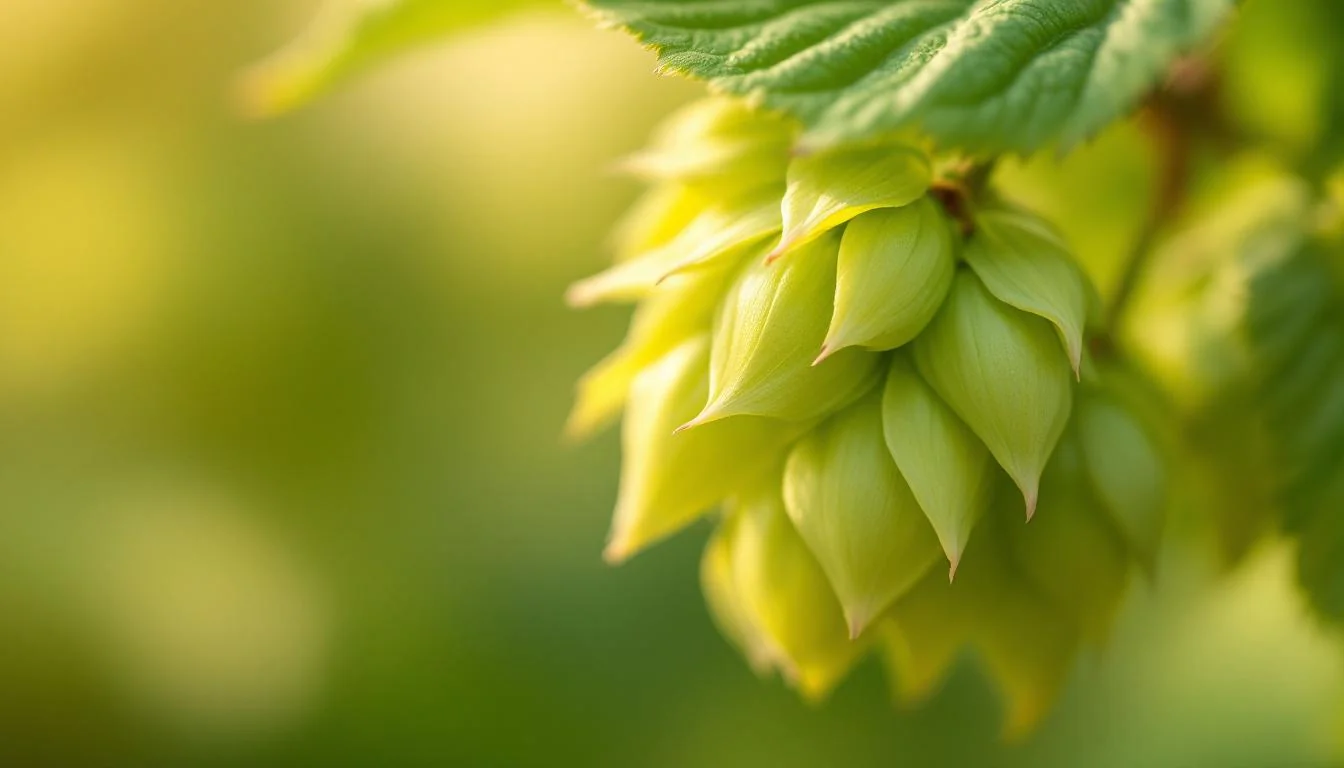
The fall of 1972 was a grim season in the Hallertau. Verticillium wilt moved through the hop fields like an epidemic, destroying more than 80% of the acreage planted to Mittelfrüh. Bavarian farmers watched the work of generations wither in a few weeks. Many families quit hop farming. Replacement varieties went into the ground. But Mittelfrüh did not disappear.
Forty years later, the surviving gardens are still tended like heirlooms. Output is a small fraction of what it was before the epidemic, yet traditional lager brewers keep coming back. They know that no other hop fully replaces Mittelfrüh’s aroma, the aroma that shaped what drinkers around the world think of as German beer.
This is a hop with more than a thousand years of history, one that has outlasted wars, epidemics, and changes in taste.
IOrigins and History
Hallertau Mittelfrüh did not come out of a modern laboratory. It is a landrace, a native variety shaped over centuries by the conditions where it grew. The name “Mittelfrüh” means “mid-early” in German and describes when it ripens relative to other varieties in the region.
The Hallertau lies in central Bavaria, between Munich and Regensburg. It is the largest hop-growing region in the world, with hop cultivation recorded there since 736. The Ilm, Paar, and Abens rivers water the area and create a microclimate of high humidity and mild temperatures.
Mittelfrüh appears in trade records from the 19th century, but its real origins go back much further. Botanists believe it was domesticated from wild hops growing along the region’s riverbanks, through natural and human selection over many generations. There is no “breeder” in the modern sense. Mittelfrüh is the work of a whole community of Bavarian farmers.
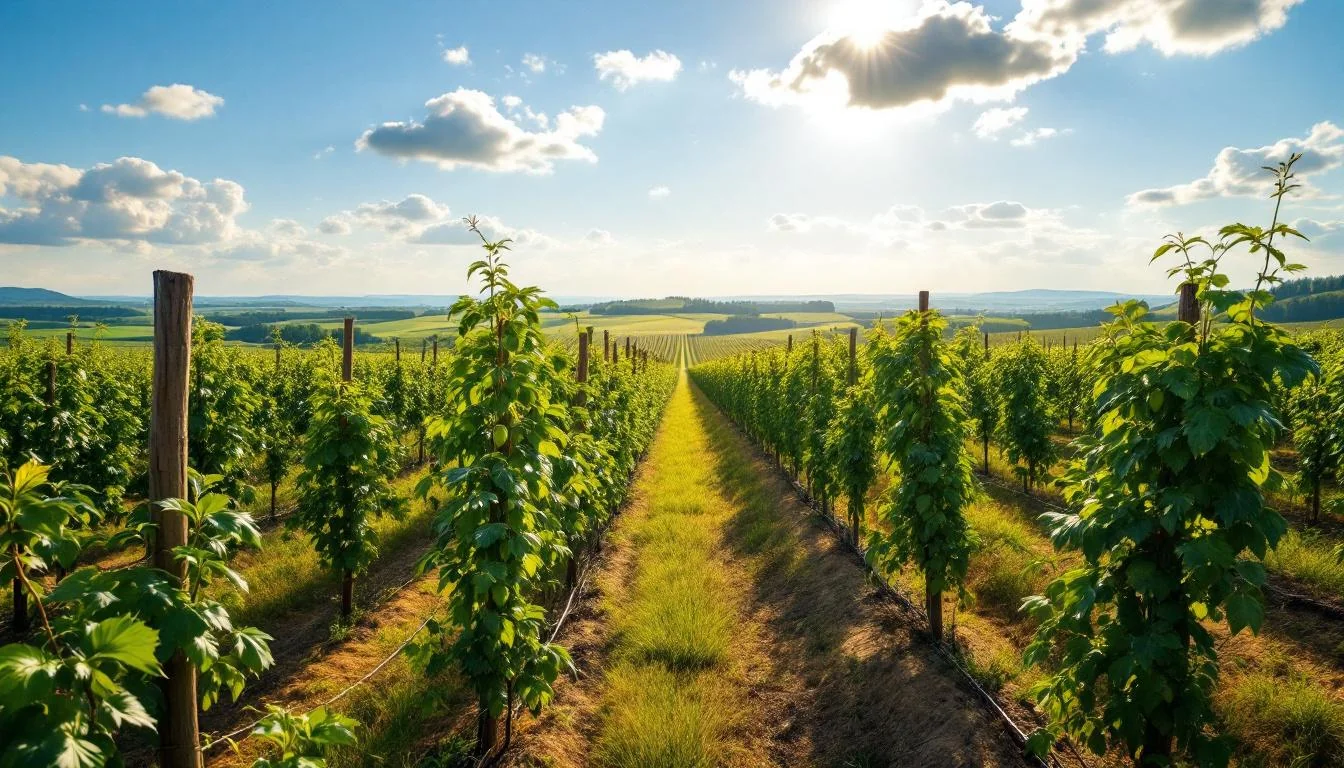
Mittelfrüh’s heyday ran from the late 19th century to the middle of the 20th, when German breweries were winning markets around the world with Pilsner, Helles, and Märzen. It became the benchmark aroma hop for lager, and brewmasters from Bohemia to America sought out genuine Hallertau hops.
The verticillium wilt disaster of the 1970s and 1980s changed everything. The fungus attacks the plant’s vascular system and kills it slowly, and there is no cure. Mittelfrüh plantings shrank from thousands of hectares to a few hundred. German research institutes had to develop resistant varieties such as Hallertauer Tradition, Hersbrucker, and Perle to take its place.
Today Mittelfrüh accounts for only about 3–4% of Germany’s hop production, and it costs more than twice as much as its substitutes. Traditional brewers such as Augustiner and Spaten, along with many small breweries, still use it. They believe, and many drinkers agree, that no other hop reproduces its flavor exactly.
IITechnical Profile
Mittelfrüh is one of the noble hops, the traditional European varieties valued for refined aroma rather than strong bitterness. Alpha acids range from 3% to 5.5%, far below modern varieties. Beta acids run from 3% to 5%, for an alpha-to-beta ratio close to 1:1, a typical noble hop trait.
Total oil content is about 0.7% to 1.3% of dry weight. The oil is roughly 40–50% humulene, 20–25% myrcene, and 10–15% caryophyllene. The high share of humulene is what gives the hop its herbal character. Farnesene makes up about 3–5%, less than in Saaz but enough to add complexity to the aroma.
In the Hallertau, the Mittelfrüh harvest usually runs from late August to mid-September. Timing matters. Pick too early and the aroma has not fully developed; pick too late and some of the oil has evaporated. Experienced growers judge the moment by the smell and color of the lupulin, alongside chemical analysis.
IIIAroma and Flavor
Rub a pinch of fresh Mittelfrüh between your palms and the first thing to rise is hay. Not fresh-cut grass, but an autumn meadow, the grass gone yellow and drying in the sun. Then comes a light floral note that recalls wild chamomile and elderflower.
The second layer is quieter. A little spice, not the punch of black pepper but something gentler, closer to bay leaf or a light touch of thyme. Some people also find green tea, or the smell of fresh leaves crushed in the hand.
In finished beer, Mittelfrüh blends with the malt into a balanced whole. The hops do not “jump” out of the glass the way American varieties do. The aroma arrives quietly: lift the glass and there is a faint herbal scent. On the swallow, a clean bitterness appears and fades, leaving a dry finish with hints of grass and flowers.
Mittelfrüh’s bitterness is different in kind from that of high-alpha hops. It is a “soft” bitterness, the quality German brewmasters call “edel,” or noble. It does not cling to the back of the throat or leave any astringency. It comes and goes politely and clears the way for the next sip.
What sets Mittelfrüh apart is not any single note but the way the notes fit together. Nothing dominates, and nothing is missing. Modern breeders are still trying to reproduce that balance in new varieties.
IVBeer Styles That Use Hallertau Mittelfrüh
Munich Helles is Mittelfrüh’s natural stage. This pale lager style was born at the Spaten brewery in 1894 as Bavaria’s answer to the success of Bohemian Pilsner. With a soft malt profile and moderate bitterness (18–25 IBU), Helles lets the hop’s herbal aroma come through in full. A well-made Helles hopped with Mittelfrüh finishes dry and clean, with hints of grass and flowers as you breathe out.
German Pilsner is the second most common home for it. Compared with a Bohemian Pilsner made with Saaz, the German version with Mittelfrüh tends to be a little more bitter and drier on the finish. Breweries such as Bitburger, Warsteiner, and Krombacher have traditionally used Mittelfrüh or other Hallertau varieties for their crisp bitterness. Because Mittelfrüh is expensive, though, many large breweries have switched to substitutes such as Hallertauer Tradition.
Märzen and Oktoberfestbier are the seasonal styles where Mittelfrüh earns its place. Here the hops play a supporting role; caramel and bready malt are the stars. Mittelfrüh supplies the balance that keeps a rich malt profile from turning cloying, and its clean bitterness and light touch of herbs refresh the palate between sips.
Doppelbock and Germany’s other strong beers often use Mittelfrüh too. At 7–12% ABV, these beers carry a great deal of malt. With its low alpha acids and delicate aroma, Mittelfrüh suits them well: bitter enough to balance, never enough to bury the malt’s complexity.
VHow It Compares with Other Noble Hops
In flavor, Saaz is Mittelfrüh’s closest relative. Both are high in humulene and distinctly herbal. Saaz leans more toward spice, though, with a light peppery note that Mittelfrüh lacks, and its higher farnesene gives a more obvious floral aroma. In a Pilsner, Saaz feels “sharper,” Mittelfrüh “rounder.”
Tettnanger, from the Lake Constance (Bodensee) area near the Swiss border, shares much with Mittelfrüh but leans more herbal and less floral. Some brewmasters describe it as “greener,” closer to fresh leaves than to hay. Tettnanger also has more myrcene, which can make the bitterness a little harsh if the hop is used carelessly.
Spalter, from the Spalt region about 60 km from the Hallertau, has the profile closest to Mittelfrüh. The two come from neighboring areas and grew up in similar climates. The main difference is terroir: Spalt’s soils give a more pronounced earthy note, while the Hallertau gives a cleaner aroma. In practice, many drinkers struggle to tell them apart when both are used in the same recipe.
VIRecognizing It in the Glass
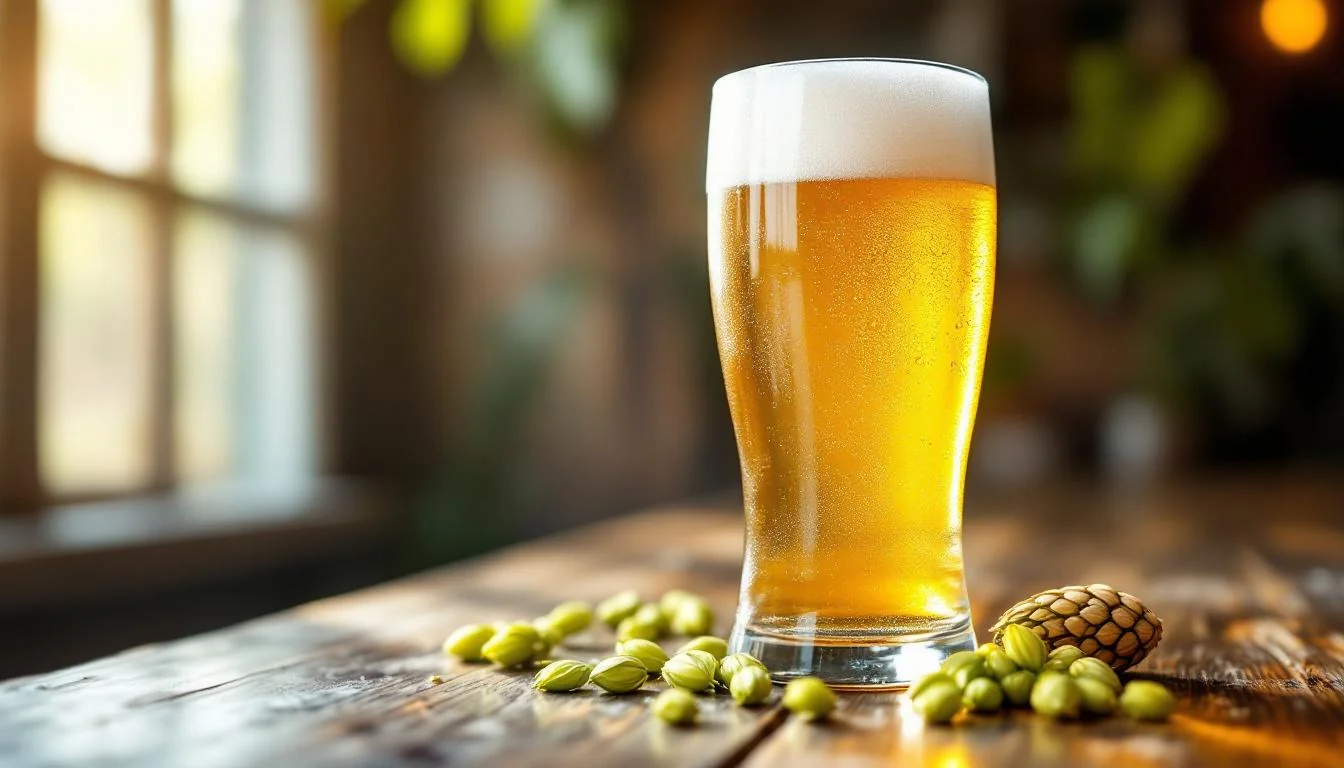
With a Helles or Pilsner made with genuine Mittelfrüh, start by smelling it. Bring the glass to your nose before you drink. If the hops are fresh and of good quality, you will pick up soft hay, perhaps with a faint floral note behind it. Don’t look for lemon, grapefruit, or tropical fruit. Mittelfrüh has none of them.
On the first sip, notice how the bitterness arrives. Mittelfrüh does not “hit” the palate. The bitterness comes slowly and gently, then spreads evenly across the tongue. If it “bites” or gathers at the back of the throat, you may be tasting a different hop, or hops that have lost their freshness.
The finish is where Mittelfrüh shows most clearly. After you swallow, wait a few seconds. A good beer made with Mittelfrüh finishes dry and clean, with a very faint herbal echo. No metallic taste, no stickiness, no leftover sweetness. Your palate is ready for the next sip, which is exactly what these beers were designed to do.
Mittelfrüh has lasted more than a thousand years not because it outperforms other hops, but because it belongs: to the Bavarian climate, to the local water, and to the tastes of the farmers and craftsmen who have looked after it for generations. Sometimes an ingredient’s worth lies in what it whispers rather than what it shouts.
Mentioned in this article
-
Beer O L O G Y
Light Beer and the Hard Art of Simplicity -
Beer O L O G Y
Strong Beer: When Alcohol Becomes an Art
Originally published in Vietnamese on Tạp Chí Beer.