Fuggle: The Hop That Defined English Ale
Fuggle, a classic English hop since 1875, smells of damp earth, wood, and herbs, and it has anchored English ale for more than a century.
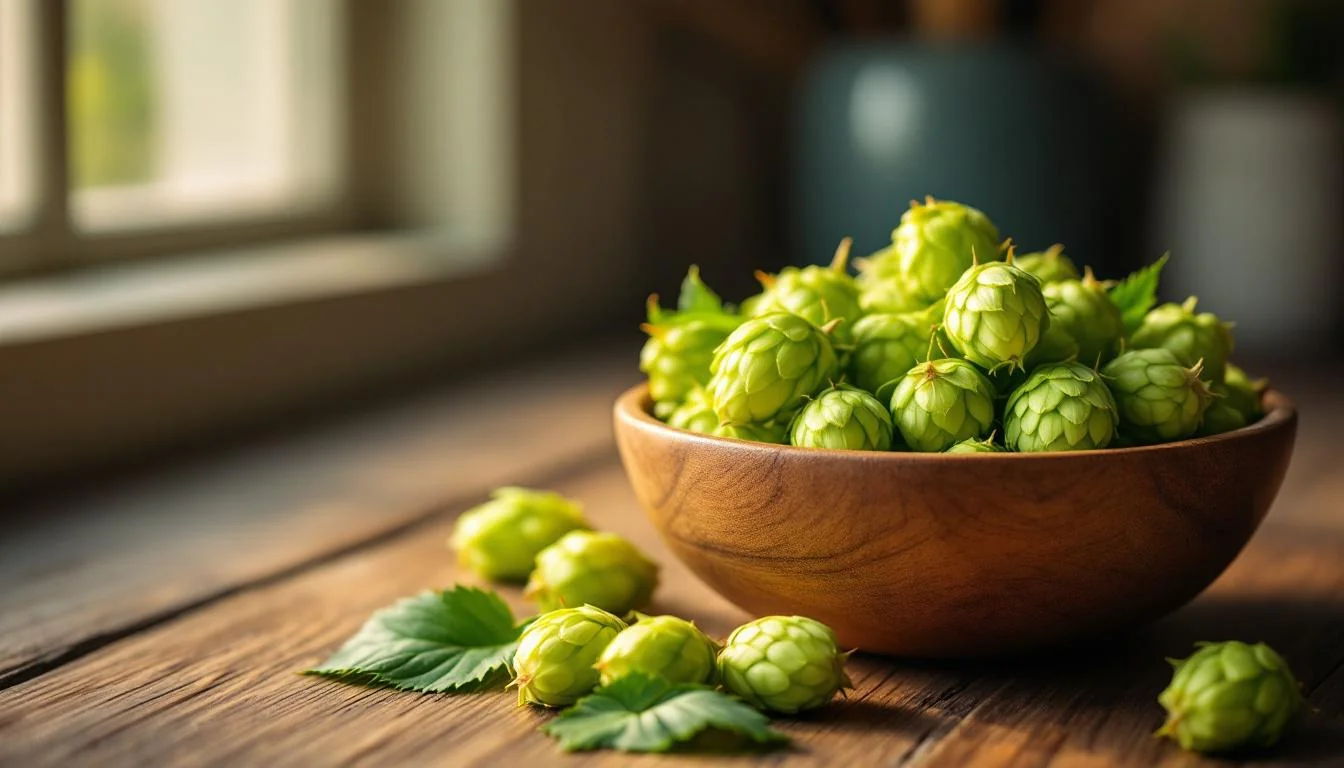
In 1949, a farmer in Kent stood in a dying hop field. Downy mildew had swept through the English countryside and, in a few short seasons, wiped out nearly all the land planted to Fuggle. He looked at the withered bines and thought of his father and his grandfather: three generations of his family had grown this hop. Fuggle was their history.
Seventy-five years later, Fuggle is still here. There is far less of it than there once was, but it is still here. Raise a glass of English Bitter, Extra Special Bitter, or a traditional English Porter and its flavor runs through every sip: quiet and unassuming, but indispensable.
IOrigins and History
Fuggle appeared in 1861 in Horsmonden, a small village in Kent, in the southeast of England. It was discovered by Richard Fuggle, a local farmer. As the story goes, he came across a wild hop plant growing in his garden, probably a natural cross between the local English varieties of the day. He propagated it, grew it on trial, and saw its potential.
In 1875 Fuggle was released commercially. It spread across Kent and England’s other traditional hop-growing counties, such as Herefordshire and Worcestershire. By the end of the 19th century it covered nearly 78% of England’s hop acreage, a striking figure for a plant found by chance in a garden.
Fuggle succeeded through balance. It is neither too bitter nor too aromatic. It offers just enough to serve as the foundation of English ale, and just enough to let brewers build more complex recipes without the hop taking over. It plays a supporting role and never asks to be the star.
Then came disease. From the 1920s to the 1940s, downy mildew (Verticillium wilt) struck English hop gardens. Fuggle, with its sensitive roots, suffered the heaviest losses. Yields fell sharply, and many growers switched to more resistant varieties such as Goldings or to new crosses.

Today Fuggle accounts for only about 9–10% of England’s hop acreage, but its legacy reaches far beyond that figure. It is a parent of a long line of well-known hops, among them Willamette in the United States, Styrian Goldings in Slovenia, and many others. Drink a craft beer brewed with Willamette and you are tasting a direct descendant of the wild plant Richard Fuggle found in 1861.
Kent remains Fuggle’s main home. Fields around Paddock Wood, Maidstone, and East Peckham still grow it, not for high yields but for tradition, because some things cannot be measured in tonnage.
IITechnical Profile
Fuggle is a low-alpha hop, with alpha acids between 4% and 5.5% and beta acids similarly modest at around 2% to 3%. It is not a hop for heavy bittering. Its job is aroma, background, and depth.
Essential oil content is moderate, about 0.7% to 1.2% of dry weight. The oil is mostly humulene (up to 25–30%), myrcene (about 25–30%), and farnesene (4–5%). The high share of humulene accounts for Fuggle’s herbal, woody character, a world away from the myrcene-rich American hops with their citrus aromas.
In England, Fuggle is usually harvested in early September, as autumn begins. It is rated a medium-late variety, needing about 200–210 days from planting to harvest. Kent’s mild climate, with summers that are never too hot and steady rainfall, suits its growing needs.
One important technical drawback: Fuggle stores poorly. After 6 months at ambient temperature, it loses about 60–70% of its alpha acids. Breweries have to use it fresh or keep it carefully frozen, which is part of why many have moved to modern varieties that store better.
IIIAroma and Flavor
Smell a handful of fresh Fuggle and the first thing you notice is damp earth after rain. That earthiness is its defining trait, like standing in a forest early on an autumn morning. Not dry, barren dirt, but living soil, the kind that feeds plants.
Next comes wood. Not the heavy oak of whisky, but softer wood, like willow twigs or hazel stems, with a little warmth and an old-fashioned feel. In English ale, this woody note sits quietly in the background.
The third layer is herbal. Not distinct rosemary or thyme, but a hazier mix: a little mint, some dried wildflowers and grass, something like a bunch of lavender left to wilt in a sitting room. It recalls an English garden where plants grow side by side in no particular order.
In beer, Fuggle gives a light, rounded bitterness that never turns harsh, the kind that invites another sip rather than a wince. The finish is short to medium and ends slightly dry, like the feeling after a cup of unsweetened black tea.
Fuggle also has a note that English brewers call “grassy.” Not freshly cut grass, but dry grass, or more precisely, grass left in the sun until it turns yellow. It is the smell of summer ending, of the Kent fields in late August.
IVBeer Styles That Use Fuggle
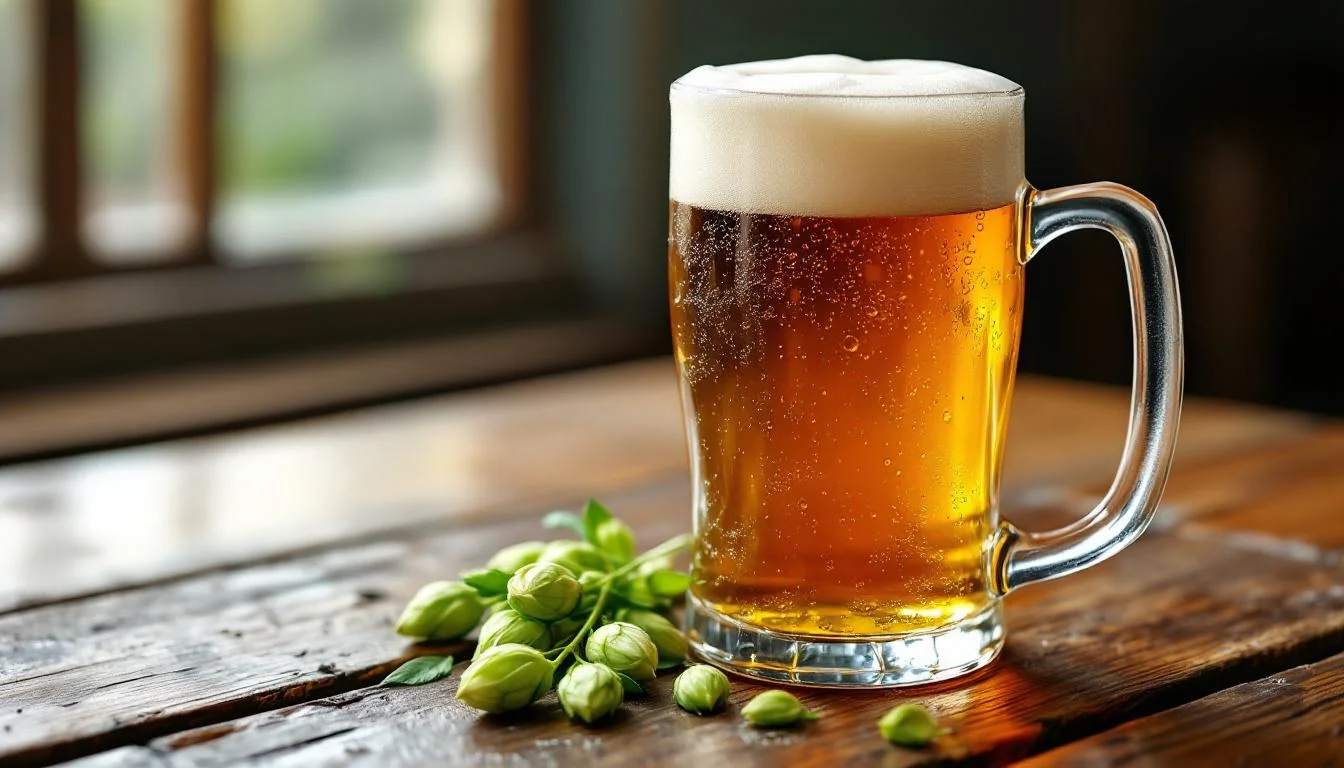
Fuggle is at the heart of English Bitter, and no history of the bitter family can leave it out. The style is amber, moderate in strength (3.5–4.5% ABV), and balanced in bitterness, and it is built on Fuggle: the hop’s earthy, herbal notes meet light caramel malt in a session beer made for long evenings at the pub.
Extra Special Bitter (ESB) is the stronger version: higher in alcohol (4.8–5.8% ABV), richer in malt, and more generously hopped with Fuggle, both in the boil and in dry hopping. The result has more depth and a more pronounced hop aroma while keeping the traditional English balance.
Among dark beers, Fuggle appears in English Porter and Stout. Its earthiness complements the chocolate and coffee of roasted malt, building a whole that is complex yet coherent. Many brewers consider it a better choice for porter than other aroma hops because it doesn’t compete with the malt; it simply provides a backdrop.
English Mild Ale, a style slowly fading from view, also relies on Fuggle. At 3–3.8% ABV and gentle in flavor, mild needs a hop that won’t take over. Fuggle does exactly that: present but never overbearing.
Today some craft breweries in the United States and Europe use Fuggle in traditional English IPA recipes. Not the modern West Coast IPA with its burst of citrus, but English IPA in the 19th-century manner, built around bitter and herbal hops.
VHow It Compares to Similar Hops
East Kent Goldings is Fuggle’s closest counterpart among English hops. Both carry herbal and earthy notes, but Goldings adds floral and honey tones that Fuggle lacks. Goldings is more refined, more “aristocratic,” while Fuggle is rustic and closer to the soil. If Goldings is Earl Grey in the drawing room, Fuggle is a mug of black tea at the pub.
Willamette, an American hop bred from Fuggle in 1976, keeps many of its parent’s traits but has lighter floral and fruity notes. Its alpha acids run slightly higher (4–6%), and it stores better. Many American breweries turn to Willamette when they want an English character with a steadier supply.
Despite its name, Styrian Goldings (or Savinjski Golding) from Slovenia is actually a descendant of Fuggle, not of Goldings. It was brought from England to Slovenia in the early 20th century and developed into a variety of its own. Its earthiness is lighter than Fuggle’s, with an added spicy note typical of its growing region. European breweries looking to replace English Fuggle often choose it.
VIHow to Recognize It in the Glass
With a glass of English Bitter or ESB, start by smelling from a distance. Fuggle doesn’t leap out the way Cascade or Citra does. It drifts in quietly, a passing trace of damp earth, and then it’s gone.
Bring the glass closer. Now the wood and herbs come through, like standing in a hay barn. Nothing harsh, nothing sharp, just a warm, familiar backdrop.
On the first sip, notice the bitterness. Fuggle doesn’t attack the tongue. It spreads slowly from the middle of the tongue to the sides, round and without sharp edges, nothing like the resinous bitterness of American hops.
The finish is where Fuggle shows itself most clearly. After you swallow, wait a few seconds. A light dryness appears, with a lingering herbal note. It doesn’t last long, just enough to register before it fades and invites the next sip.
Fuggle rewards patience. It is not a hop that makes a strong first impression, but drink slowly, pay attention, and it becomes clear why the English have stayed with it for nearly 150 years. Some things don’t need to be loud to be remembered.
Mentioned in this article
-
Beer O L O G Y
The World of Bitter Beer Begins with IPA -
Beer O L O G Y
Dark Beer Is Not One Style
Originally published in Vietnamese on Tạp Chí Beer.