Chinook: Pine Resin and Grapefruit from the Yakima Valley
Released in 1985, Chinook is an American hop known for its pine-resin aroma laced with ripe grapefruit. It remains the backbone of American IPA and many classic hop-forward beers.
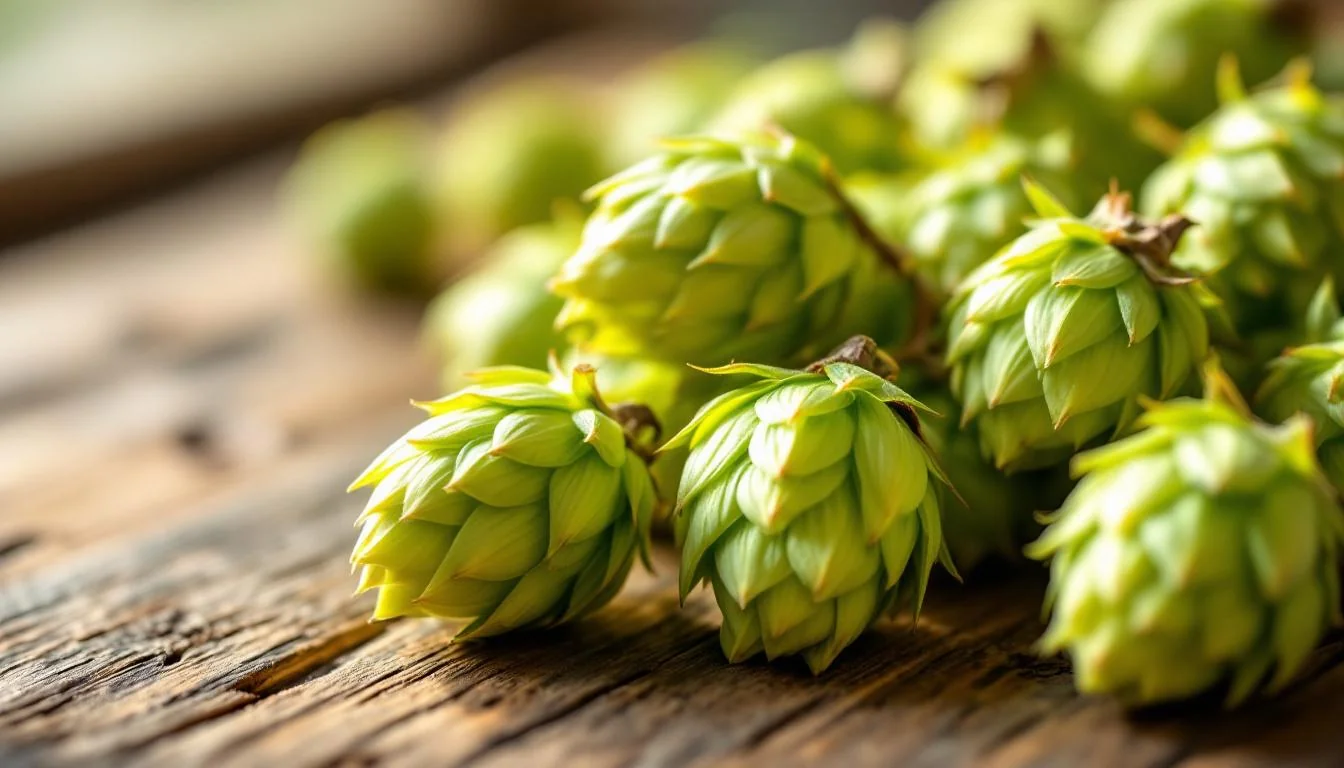
In 1991, at a small pub in Portland, Oregon, a young brewer opened a box of hops just in from the Yakima Valley. The smell of pine resin filled the room, nothing like the soft floral notes of the European hops he was used to. It was Chinook, a variety only six years old, and it was quietly changing the way Americans thought about beer.
Three decades later, Chinook is still here. It never had the buzz of Citra or Mosaic, the generation that came after it, but it never went away either. It became a backbone hop, the one many brewers reach for when they need firm bitterness and an aroma with real depth.
IOrigins and History
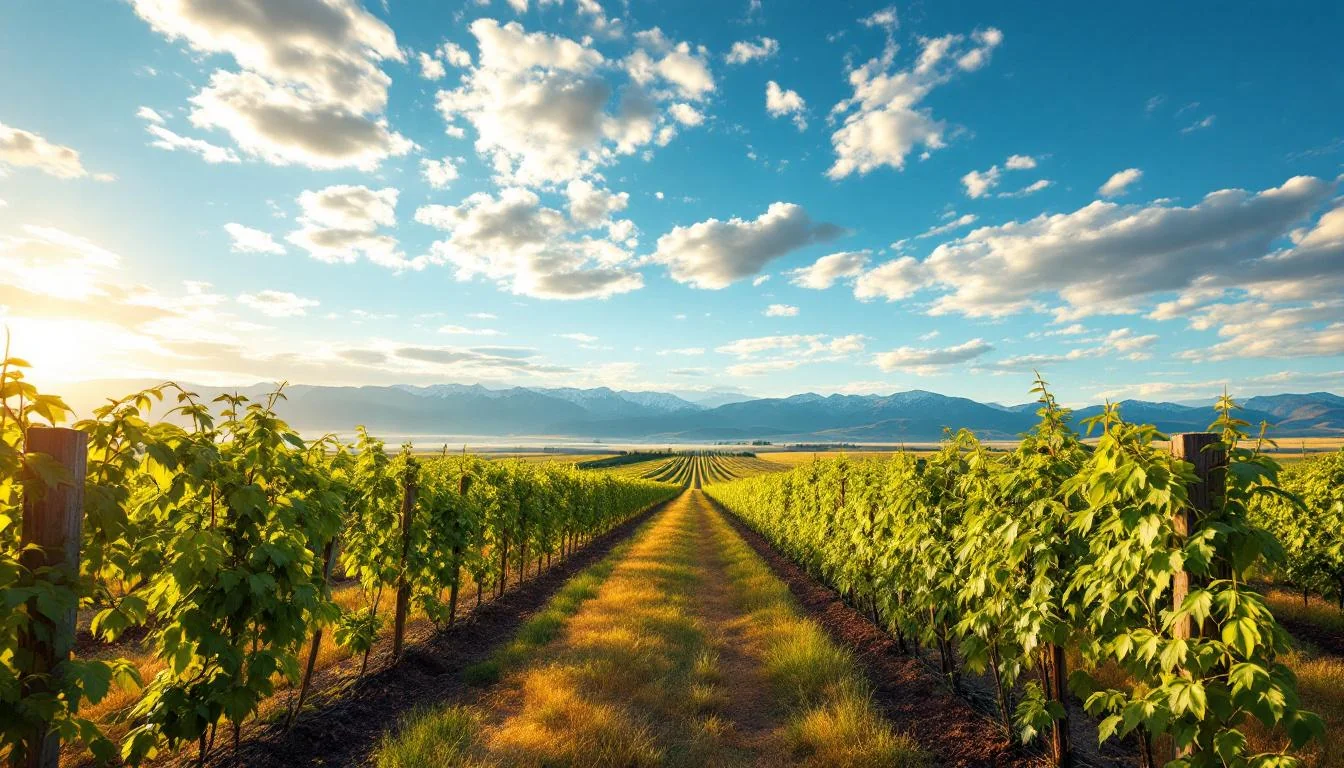
Chinook came out of the USDA research station in Prosser, Washington, in 1985. Prosser sits in the heart of the Yakima Valley, the largest hop-growing region in the United States, where a semi-arid climate and volcanic soil give the plant ideal conditions.
Behind the variety stood Dr. S.T. Kenny and a research team at USDA-ARS. They bred Chinook by crossing Petham Golding, an English hop, with a USDA male line designated 63012M. The goal was clear: a high-alpha hop with good disease resistance, suited to farming conditions in the Pacific Northwest.
The name comes from the Chinook, a Native American people who lived along the Columbia River, in the borderland between Washington and Oregon. It is also the name of the warm wind that comes down off the Rocky Mountains, melting the snow and announcing spring. Both meanings tie the hop to the land it came from.
On release, Chinook was positioned as a bittering hop. High alpha acids, a reasonable price, and stable yields were exactly what large industrial breweries looked for. The craft beer wave of the 1990s changed that view. Brewers began using Chinook late in the process, as a late addition and in the dry hop, and found a complex aroma behind its “just for bitterness” reputation.
Sierra Nevada, one of the pioneers of American craft beer, worked Chinook into the recipe for its Torpedo Extra IPA. Deschutes Brewery used it in Fresh Squeezed IPA. Beers like these moved Chinook out of its supporting role and made it one of the most popular hops of the American IPA movement.
IITechnical Profile
Chinook belongs to the high-alpha group. Alpha acids range from 12 to 14 percent, and some harvests reach 15 percent, depending on the year. Beta acids fall between 3 and 4 percent, for an alpha-to-beta ratio of about 3.5:1, typical of a bittering hop.
Total oil content runs from 1.5 to 2.5 ml per 100 grams of dried hops. Myrcene dominates the oil at 35 to 45 percent, which explains the characteristic resin and herbal aroma. Humulene comes second at 18 to 25 percent and contributes woody, earthy notes. Caryophyllene accounts for about 9 to 11 percent.
In the Yakima Valley, Chinook is usually harvested between late August and mid-September, the busiest weeks of the year in the hop yards. Bines six to seven meters tall are cut down and fed into machines that strip off the cones. Chinook yields fairly well, about 1,500 to 2,000 pounds per acre, lower than some commercial varieties but consistent from year to year.
IIIAroma and Flavor
Break open a fresh Chinook cone between two fingers. The first thing to reach your nose is pine resin, the smell of a conifer forest after rain, of freshly cut wood. It is not the soft pine of a scented candle but the real thing, sharp and deep.
Behind the resin comes grapefruit. Not the sweet kind, but fruit that is just ripe, its white pith still slightly bitter. Some call this note grapefruit pith, the light, drying bitterness that lingers after you eat the fruit. It is what sets Chinook apart from more purely citrusy hops such as Citra or Amarillo.
Pay close attention and an herbal layer shows up underneath: a little musk, a little dried thyme. Veteran brewers often describe Chinook as “dank,” a heavy, slightly damp smell that recalls dense forest and wild undergrowth. Not everyone likes it, but those who do tend to love it.
On the palate, Chinook gives a bitterness that is clean but persistent. It is not harsh like some very high-alpha hops, nor does it flare up and vanish. It settles at the back of the tongue, slightly drying, and drags a resinous finish behind it. This is a bitterness that builds: faint on the first sip, fully present by the second half of the glass.
IVBeer Styles That Use Chinook
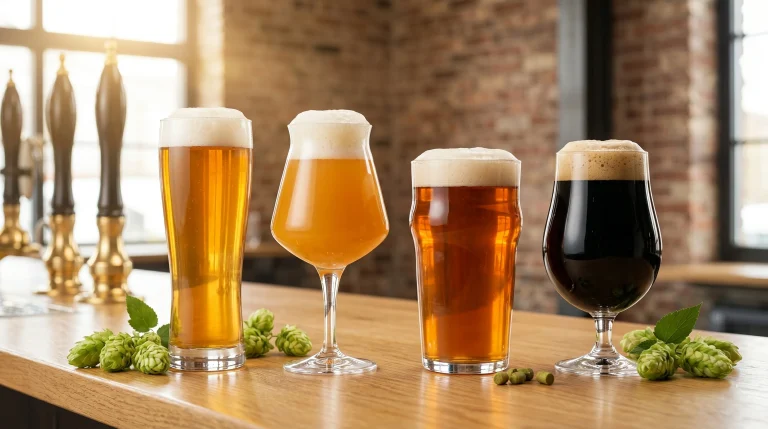
Chinook was made for American IPA. Its high alpha content lets brewers hit their target IBUs with fewer hops, saving money without giving up intensity. Its pine and grapefruit became a signature of West Coast IPA: clear golden beers, plainly bitter, with hop aroma in command from start to finish.
Chinook is also common in Double IPA and Imperial IPA. At higher strengths, its lasting bitterness holds its own against a large malt bill instead of getting lost in it. Many brewers use Chinook as the foundation, then layer fruitier hops such as Simcoe or Centennial on top in the dry hop.
American Pale Ale is another option. At more moderate hopping rates, Chinook keeps malt and hops in balance without dominating. Many classic Pacific Northwest pale ales carry its imprint: moderate bitterness, a hint of pine, and a dry finish.
Some brewers experiment with Chinook in American Barleywine and Imperial Stout. There it plays a different role, no longer the star but the one tying the other flavors together. Its pine resin meets dark caramel and the chocolate of roasted malt, with results that are hard to predict. Not every brewer can pull it off, but when it works, it stays with you.
VHow Chinook Compares with Similar Hops
Chinook is often grouped with Centennial and Columbus, the classic trio of American “C” hops. All three are high in alpha acids and distinctly American in character, but they differ in the details.
Centennial is gentler. Where Chinook is pine resin and bitter grapefruit, Centennial leans toward flowers and orange. It is called “Super Cascade” because it resembles Cascade, only stronger. Its bitterness is also softer and less lingering. In a recipe, Centennial usually takes second place, adding depth without overpowering the rest.
Columbus (also known as Tomahawk or Zeus, the trio sold together as CTZ) goes the other way and is even bolder than Chinook. Its alpha acids can reach 17 percent or more. The aroma leans heavily toward earth and dark herbs, with less fruit. Many brewers use Columbus for base bitterness because it is more “neutral” and leaves a fainter aromatic fingerprint.
Simcoe is a kindred spirit, though it arrived nearly two decades later. Both share pine resin and stone fruit, but Simcoe adds a layer of berries and melon that Chinook lacks. Many modern IPA recipes pair Chinook with Simcoe to get both profiles in one glass.
VIHow to Recognize Chinook in the Glass
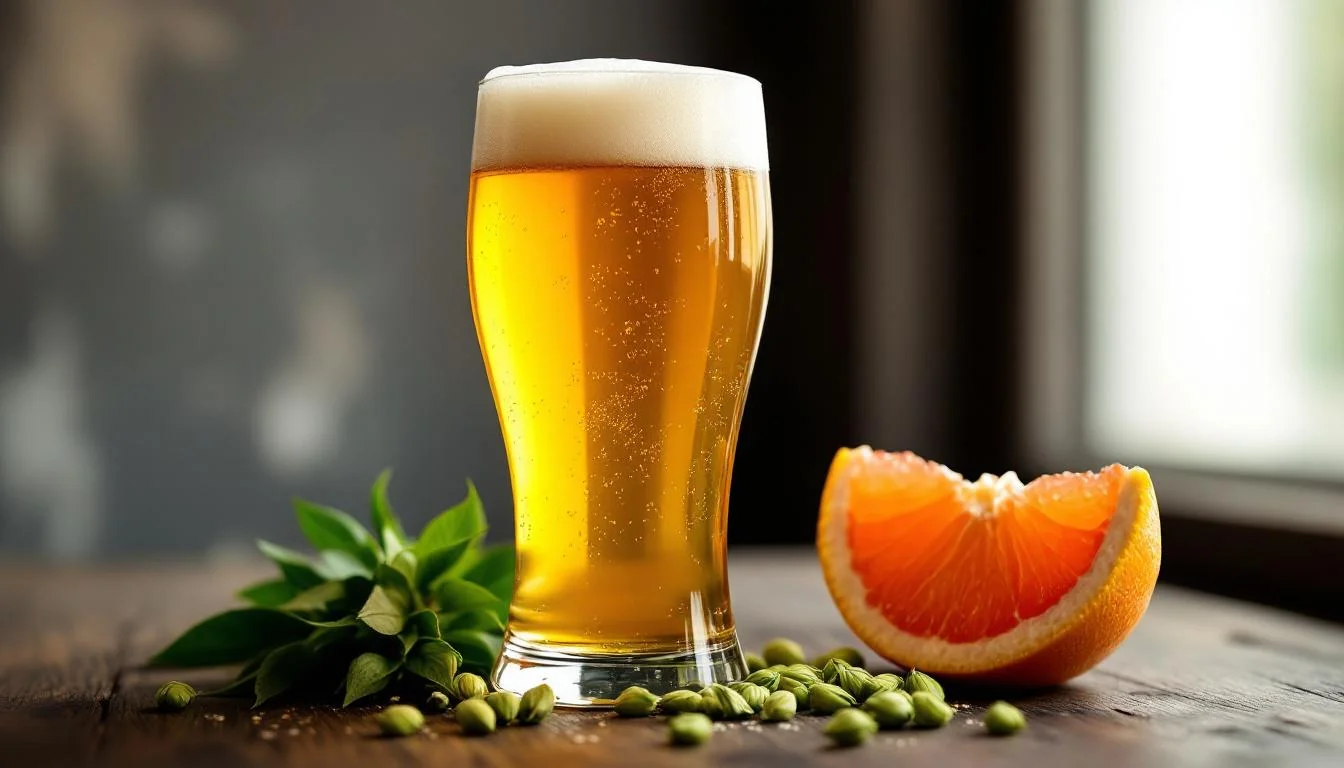
To tell whether a West Coast IPA has Chinook in it, start with your nose. Lift the glass and inhale gently. A clear note of pine resin, not soft pine but sharp and a little dank, is the first clue. Chinook is not subtle about it.
Then taste, and watch the bitterness, which with Chinook builds gradually. The first sip barely shows it, the second brings it forward, and by the third it lingers unmistakably at the back of the tongue. This is bitterness with a spine, and it does not fade as fast as it does with some newer hops.
The finish is where Chinook leaves its final mark. Swallow and wait a few seconds. If a slightly bitter grapefruit note, like the white pith, comes through with a trace of pine, that is Chinook saying goodbye. It is not the tropical-fruit finish of Citra or the floral finish of Cascade. This one tastes of the forest.
Chinook has been around since 1985. It is no longer new, no longer fashionable. Yet it is still there, in the IPAs people finish and then want to order again. That may be the true measure of a hop: not the noise at launch, but a steady presence three decades later.
Next time a glass smells of a Northwest pine forest, drink a little more slowly. It may be Chinook, and with it the story of the Yakima Valley, of the people who bred it, and of its long road from bittering hop to essential part of American beer culture.
Mentioned in this article
-
Beer O L O G Y
The World of Bitter Beer Begins with IPA -
Beer O L O G Y
Strong Beer: When Alcohol Becomes an Art
Originally published in Vietnamese on Tạp Chí Beer.