Cascade: The Grapefruit Hop Behind America’s Craft Beer Revolution
Cascade is the hop whose grapefruit aroma defined American craft beer. A look at its history, its technical profile, and how to pick out the Yakima Valley classic in the glass.
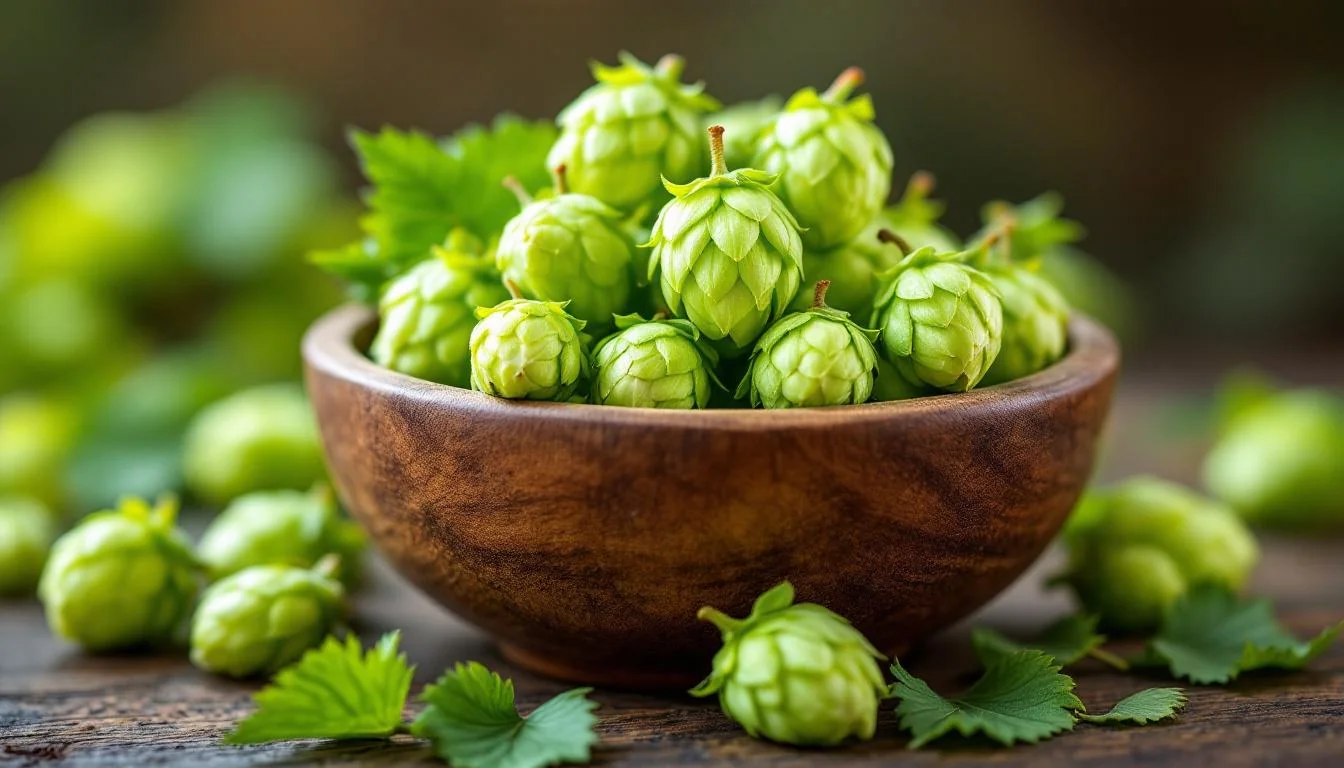
In 1975, a small bottle of beer was capped at Anchor Brewing Company in San Francisco. Fritz Maytag, the man who had saved the brewery from bankruptcy, had decided to try a new hop. No one expected that bottle of Liberty Ale to change the course of American beer. The hop inside it was Cascade.
Before Cascade, American beer meant pale, light lager with little character. The big breweries followed mass taste, and hops had a purely technical job: just enough bitterness, no signature of their own. Cascade broke those rules. Fresh grapefruit with floral and spicy notes was something American beer had never had. Drinkers were starting to look for something different, and Cascade gave them exactly that.
Forty years later, Cascade was still the most widely planted hop in the United States, not because it was the strongest or the most distinctive, but because it opened the door to craft beer as we know it today.
IOrigins and History
Cascade is not a natural variety. It was created in the laboratory, through more than a decade of breeding.
The research program began in 1956 at Oregon State University under Dr. Stanley Nelson Brooks. The original goal was fairly simple: a hop with better disease resistance, especially against powdery mildew, the scourge of hop growers along the Pacific coast.
Cascade is a cross between Fuggle, the classic English hop, and Serebrianker, a Russian variety. It was an unexpected pairing. Fuggle brought the earthy, floral base familiar from English beer. The little-known Serebrianker contributed disease resistance and the ability to adapt to the climate of the American Northwest.
In 1968, the new hop was selected and named Cascade, after the Cascade Range, which runs from British Columbia in Canada down to Northern California. The range is the defining feature of the Pacific Northwest, where the hop would thrive.
Cascade was officially released and registered in 1972, and the market was lukewarm. The big brewers (Budweiser, Miller, Coors) had no use for a hop with a strong aroma. They wanted hops that were mildly bitter and neutral, nothing that would bother the mass-market palate.
Cascade nearly died young.
Fritz Maytag saved it. In 1975 he made Cascade the lead hop in Liberty Ale, a choice that ran directly against the trend. Liberty Ale had a big hop aroma, clear bitterness, and, most important, a character of its own. The beer became a landmark and is regarded as the first prototype of the American IPA.
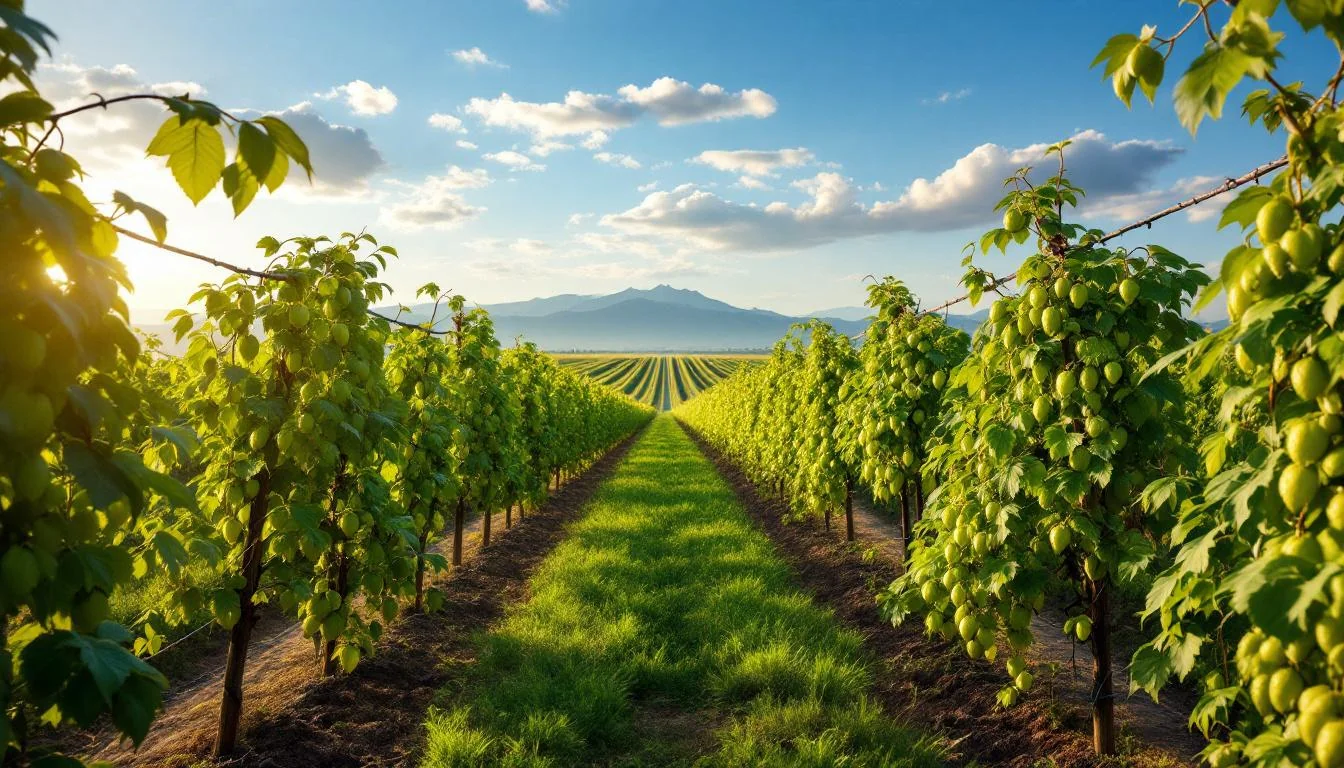
Cascade is grown mainly in the Yakima Valley of Washington State. The valley sits on the dry side of the Cascades, with a semi-arid climate of hot summers, cool nights, and little rain. Mineral-rich alluvial soil and irrigation from the Yakima River make it ideal hop country. More than 75% of American hops come from this region.
Today Cascade is no longer grown only in the United States. It is planted in New Zealand, Argentina, and parts of Europe. Yakima Valley Cascade is still the reference point, with the fullest and most balanced aroma profile.
IITechnical Profile
Cascade is a dual-purpose hop, used for both bitterness and aroma. Alpha acids range from 4.5% to 7%, averaging about 5.5%. That is low to moderate by modern standards, but enough for a soft bitterness without harshness.
Beta acids run from 4.8% to 7% and add a gentle, lingering bitterness to the finish. An alpha-to-beta ratio close to 1:1, which is unusual, gives Cascade a rounder, more balanced feel than many other hops.
Total oil content ranges from 0.8 to 1.5 ml/100 g. The main components are myrcene (45–60%), humulene (10–16%), and caryophyllene (3–6%). Cascade is also high in linalool, the compound behind its light floral aroma, while geraniol and citronellol contribute its citrus character.
Cohumulone, which affects the quality of bitterness, makes up about 33–40% of total alpha acids. That is on the high side, though not enough to make the bitterness coarse. Cascade’s bitterness stays smooth and pleasant.
In the Yakima Valley, Cascade is usually harvested from late August to early September, when oil content peaks and before the weather turns cold.
IIIAroma and Flavor
If Cascade had to be described in a single word, the word would be grapefruit.
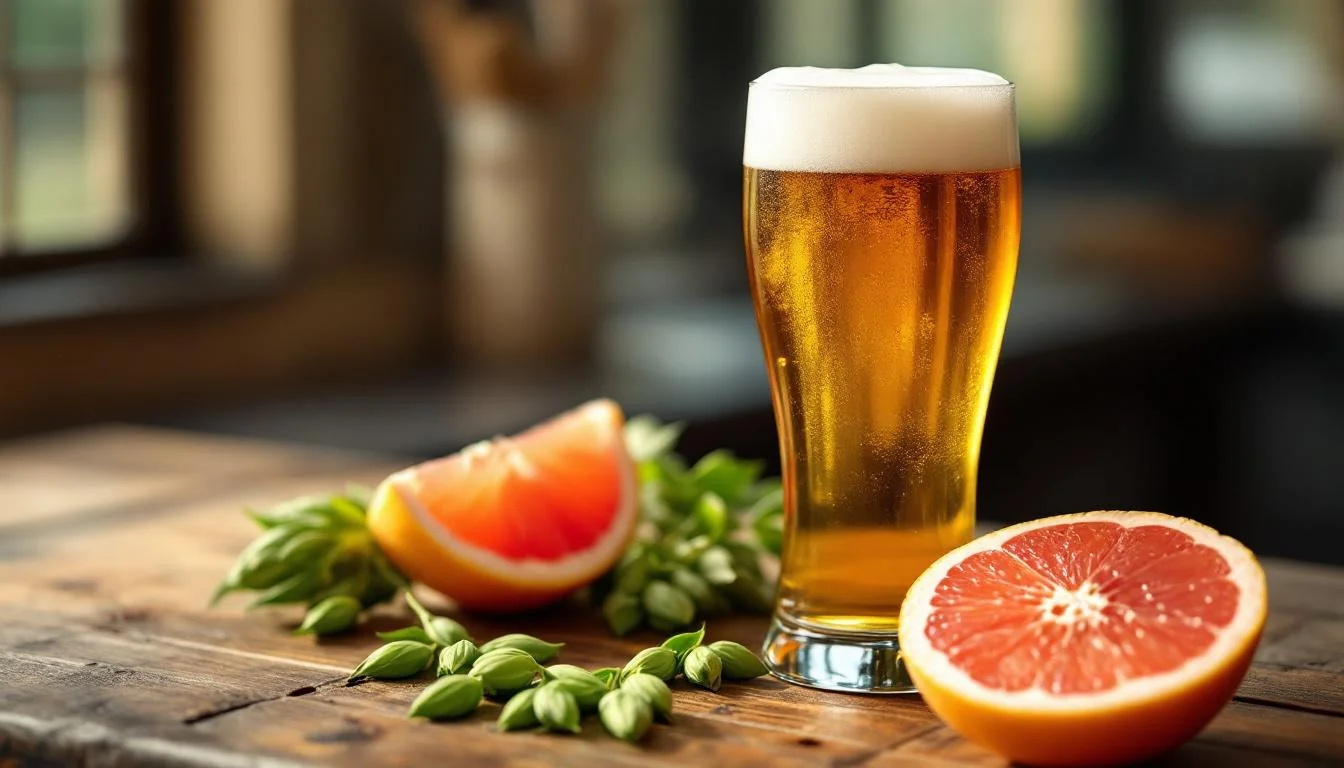
Not sweet pomelo, but grapefruit: the pink-fleshed kind, tart, with a slight bitterness at the peel. Peel one and the oils spray out in a fresh burst that goes straight to your nose. Cascade gives you that sensation.
There is more to Cascade than grapefruit, though. Smell more carefully and you will find several layers of aroma.
The first layer is citrus: grapefruit, lemon, and a little orange. It is the first thing to rise when you lift the glass, fresh, bright, and clear.
The second layer is floral. Not heady rose or jasmine, but small white flowers: orange blossom, pomelo blossom, wild chamomile. This note is lighter and appears once the first citrus has settled.
The third layer is spice: a little black pepper, a little pine. This is Fuggle’s legacy, the English hop in Cascade’s bloodline. The spice is not strong, but it adds depth and keeps Cascade’s aroma from turning one-note.
On the palate, Cascade is softer than its aroma. The bitterness is moderate, never harsh. A little pine resin lingers at the back of the throat. The finish carries a note of green tea, which few people notice but which is clear once you look for it.
Cascade doesn’t “punch you in the face” the way Simcoe or Citra can. It is subtler, and it rewards another sniff and another sip as each layer comes forward.
IVBeer Styles That Use Cascade
No hop is more central to American Pale Ale and American IPA than Cascade.
American Pale Ale
American Pale Ale, the style that launched the American craft beer revolution, could hardly exist without Cascade. Sierra Nevada Pale Ale, first brewed in 1980, uses Cascade as its lead hop and became the benchmark for the whole style. Cascade’s grapefruit balances a light caramel malt, giving a beer that is easy to drink and full of character.
American IPA
In American IPA, Cascade rarely works alone. It is paired with Centennial, Chinook, or Columbus for a more complex hop blend. Cascade lays the foundation with light floral and citrus notes, while the others add depth and bitterness. Many brewers call this the “C-hop combo,” the classic pairing of varieties whose names begin with C.
American Blonde Ale and American Pale Wheat Beer
Cascade also appears in lighter styles such as blonde ale and American wheat beer. Here it is used in small amounts, just enough to add a little floral and citrus aroma without covering the malt. It is a gentle approach, well suited to people just getting to know craft beer.
Session IPA
Session IPA, a lower-alcohol IPA under 5% ABV, is ideal territory for Cascade. The hop’s moderate alpha acids give measured bitterness and keep the beer refreshing enough for several rounds. Its bright citrus aroma makes up for the style’s light body.
VHow It Compares with Similar Hops
Cascade belongs to the “C-hops,” American varieties whose names begin with C, developed through research programs in Oregon and Washington. The three most prominent are Cascade, Centennial, and Chinook.
Cascade and Centennial
Centennial is often called “Super Cascade,” and with reason. Its alpha acids are higher (9.5–11.5%, against Cascade’s 5.5%), so its bitterness is noticeably stronger. In aroma, Centennial keeps the citrus but leans toward lemon and orange rather than grapefruit. Cascade is the more delicate of the two, Centennial the more forceful. Brewers often use them together: Cascade for late hopping and dry hopping, Centennial for bittering.
Cascade and Chinook
Chinook stands further apart. Its alpha acids are very high (12–14%), and its bitterness is fierce. Its aroma leans toward pine and spice more than citrus. If Cascade is fresh grapefruit, Chinook is a pine forest after rain. Chinook suits a full-bodied West Coast IPA, while Cascade belongs in more balanced styles.
Cascade and Amarillo
Amarillo is not a C-hop, but it is often compared with Cascade because both lean toward citrus. Amarillo tilts toward orange and mango, sweeter and more tropical. Cascade holds its own with tart grapefruit, less sweetness, and a more pronounced floral note.
VIHow to Spot Cascade in the Glass
With an American Pale Ale or IPA in hand, a few signs will tell you whether Cascade is in it.
First, bring the glass to your nose. If you smell grapefruit, tart and slightly bitter like the peel, Cascade is very likely in the recipe. That aroma rises first and is easy to recognize.
Next, look for the flowers. Cascade always carries a light white-flower note behind the citrus. If a beer shows only tropical fruit and no florals, it may be Citra or Mosaic rather than Cascade.
When you drink, pay attention to the bitterness. Cascade’s is soft, never harsh, and doesn’t linger too long. If the bitterness hits hard at the back of the tongue and hangs on, you are tasting a different hop, perhaps Chinook or Columbus.
Cascade’s finish has a light touch of resin and, if you pay attention, a hint of green tea. That is the subtlest clue of all.
Cascade does not make a big first impression. It asks you to slow down: smell again, take another sip, and let the flavors open up.
That may be why Cascade is still here after nearly fifty years. It doesn’t shout. It waits for you to listen.
Mentioned in this article
-
Beer O L O G Y
The World of Bitter Beer Begins with IPA -
Beer O L O G Y
Wheat Beer: The Flavor of the Grain
Originally published in Vietnamese on Tạp Chí Beer.