Amarillo: Texas Sunshine in a Glass
Amarillo, a proprietary hop from Washington State, smells of citrus and ripe peach, and it changed how the beer world thinks about American IPA.
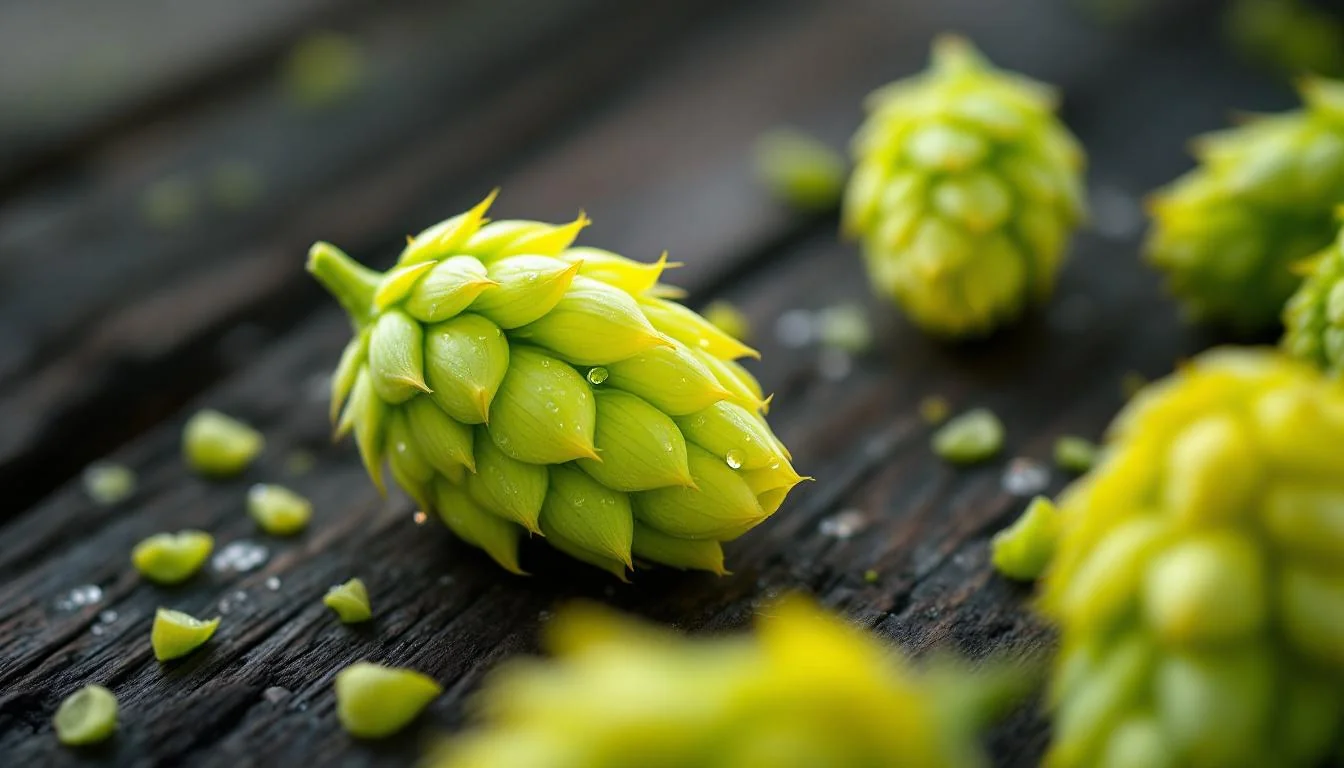
In 1997, a hop grower named Virgil Gamache stood in his field in Toppenish, Washington, looking at a plant he didn’t recognize. It resembled no variety he had ever grown. Its cones smelled different: not of pine, not of grass, but of orange, fresh and ripe, as if someone had just peeled one in the middle of the field. He named it Amarillo, Spanish for “yellow,” the color of the Texas sun and of ripe citrus.
Twenty-five years on, Amarillo has become one of the most sought-after hops in the world, yet you can’t buy it from anyone but Virgil Gamache Farms. It is a proprietary variety, a rarity in an industry where nearly everything is shared, crossbred, and propagated.
IOrigins and History
Amarillo began as an accident, or perhaps a stroke of luck. Virgil Gamache, the third generation of a hop-growing family in the Yakima Valley, found a hop plant that had come up on its own in his hop yard in the mid-1990s. It came out of no breeding program. It appeared spontaneously, perhaps from a seed carried on the wind, perhaps from a chance mutation.
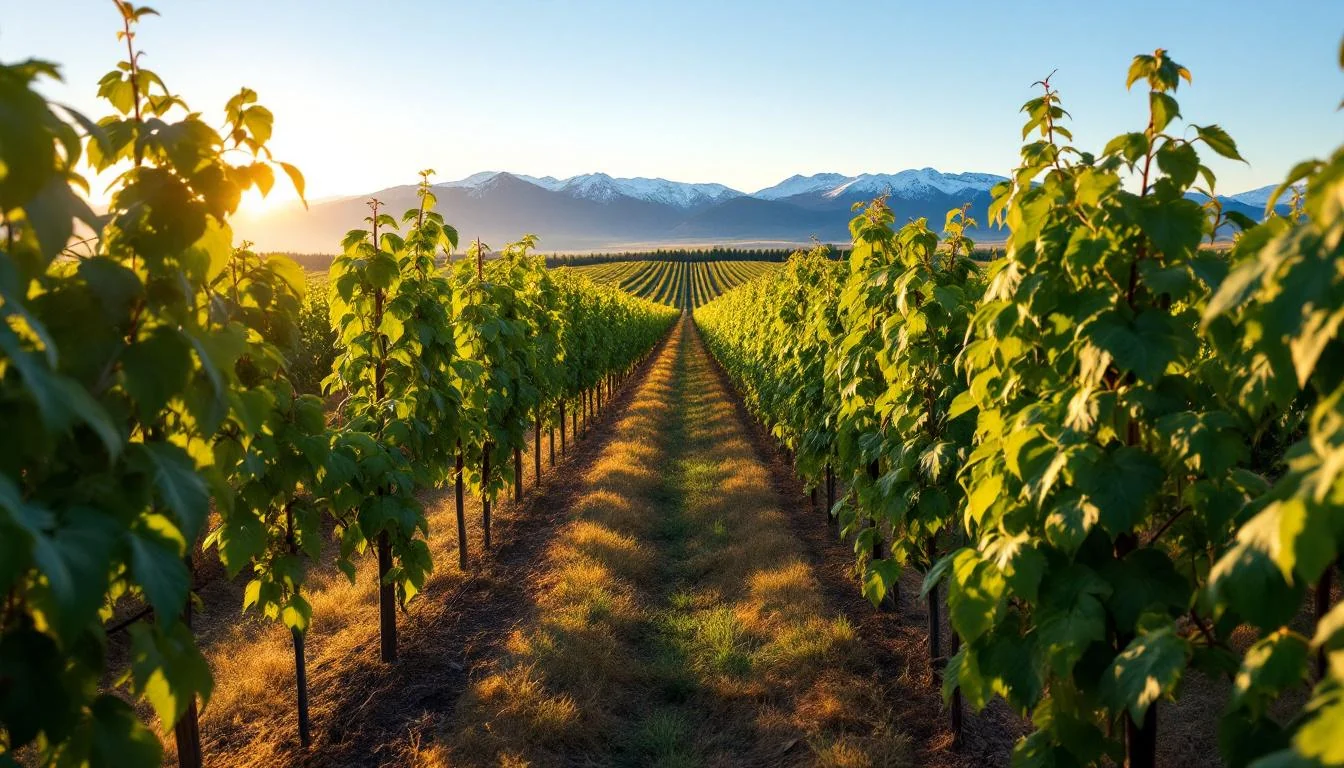
The Yakima Valley, in the heart of Washington State, supplies about 75% of the hops grown in the United States. Conditions there suit the plant: hot, dry summers, cool nights, mineral-rich volcanic soil, and irrigation from the Yakima River. Latitude matters most of all. At about 46 degrees north, hop plants get enough light to grow at their best.
Gamache was in no hurry. He spent years testing the new variety, growing trial plots, and evaluating its quality. In 2000 he registered the Amarillo trademark and chose to keep it as a proprietary hop. It was a bold call. Most public hop varieties are developed by universities, and anyone can grow them. Amarillo is grown only at Virgil Gamache Farms Inc.
The decision created a controlled scarcity. Breweries had to order directly from the farm, and not everyone received an allocation. It was a business strategy and a way of protecting quality at the same time: every lot of Amarillo can be traced back to a single piece of land.
In 2005, Amarillo began appearing in American craft breweries. Stone Brewing, Dogfish Head, and Bell’s Brewery were the first to use it in their IPAs. The result was a new wave of beers with fresh, fruity aromas, a clean break from the harsh, bitter IPAs of tradition.
IITechnical Profile
Amarillo’s alpha acids range from 8% to 11%, which places it in the balanced middle ground between aroma hops and bittering hops. Beta acids run from 6% to 7% and help give a softer bitterness when the beer is stored for a long time.
The most notable feature is the oil. Amarillo’s total oil content typically reaches 1.5–1.9 ml/100 g, fairly high compared with many traditional varieties. Myrcene accounts for about 68–70% of the total oil, which explains the dense fruity aroma. Humulene and caryophyllene are low, so Amarillo has little in the way of spice or pine-wood character.
Harvest usually runs from late August into early September, when the cones reach peak ripeness. The plants grow vigorously and yield reliably, but they need careful tending to keep their distinctive aroma profile.
IIIAroma and Flavor
Open a bag of fresh Amarillo and the first thing to reach your nose is orange. Not factory-made orange juice, but freshly zested peel, its oils spraying out, bright and lively. Next comes a layer of ripe peach, softly sweet and never sharp. Then pink grapefruit, lemon, and a touch of ripe mango.
This is why Amarillo is called the archetypal citrus hop. Stopping there would sell it short. Beneath the citrus lies a floral layer, orange blossom and jasmine, as faint as a suggestion. Some tasters also pick up apricot, or a hint of nectarine.
In the brewhouse, Amarillo shows two different faces depending on when it goes in. Added early, as a first wort hop or at the start of the boil, it gives a clean bitterness without harshness, with a trace of fruit left over. Added at the end of the boil or as a dry hop, it pushes orange-citrus and peach to the front, especially when the beer is cold and fresh.
What sets Amarillo apart from other citrus hops is balance. It is not as tart as Citra, not as sharp as Simcoe, not as piny as Centennial. It brings a natural sweetness, not sugar but the sense of sweetness that ripe fruit gives, and that makes the beer easier to drink.
IVBeer Styles That Use Amarillo
Amarillo was made for American IPA; on that point there is little argument. Its orange and peach suit a style built around hop aroma, while its moderate alpha acids keep the bitterness from overwhelming the beer. Many breweries pair it with Citra or Mosaic to build IPAs with layered aromas.
Pale ale is another natural home for Amarillo. With less alcohol than an IPA, a pale ale lets the hops come through without being flattened by the malt backbone. A single-hop Amarillo pale ale is a good way to learn exactly what this variety does.
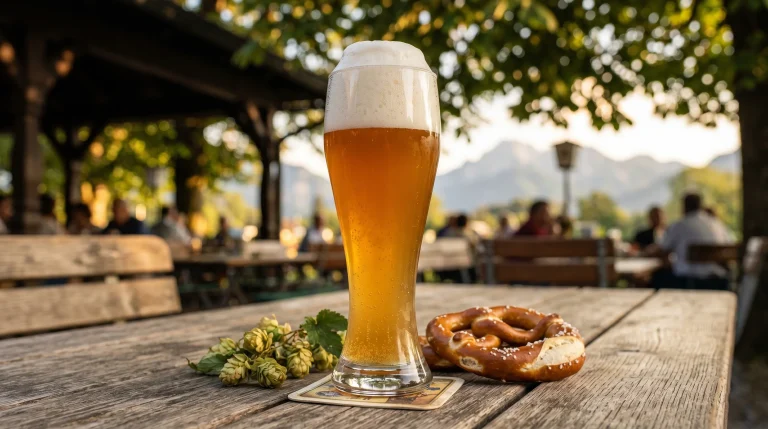
More surprisingly, Amarillo also works well in American-style wheat beer. The softness of wheat malt and Amarillo’s peach and orange make for a summer beer that is easy to drink, fragrant, and refreshing. Some breweries have even tried Amarillo in Witbier, in place of the traditional Curaçao orange peel.
Lately, the Hazy IPA trend has given Amarillo new prominence. The creamy texture of a hazy IPA holds on to hop oils longer, so the citrus and peach taste denser and linger. In New England IPAs, Amarillo is often used as a dry hop in large quantities, sometimes as much as 3–4 pounds per barrel.
VHow It Compares with Similar Hops
Amarillo is often compared with Citra. Both are American hops with citrus and tropical fruit character, but the difference is clear. Citra leans further into the tropics: passion fruit, guava, and cantaloupe. Amarillo is more traditional: orange, peach, and grapefruit. If Citra is a beach party, Amarillo is a summer morning in an orchard.
Centennial is Amarillo’s closest cousin. Both are built on citrus, but Centennial adds the pine and resin typical of hops in the Cascade lineage. Centennial also has higher alpha acids, which make it better suited to bittering. Amarillo, meanwhile, is preferred for late hopping and dry hopping.
Cascade: The Forerunner
Cascade, released in 1972, is the hop that opened the way for the American craft beer revolution. Its grapefruit and floral aroma defined American Pale Ale for decades. Compared with Cascade, Amarillo is sweeter and less tart, with more depth in its peach and apricot notes. Cascade is the classic; Amarillo is the evolution.
VIHow to Recognize It in the Glass
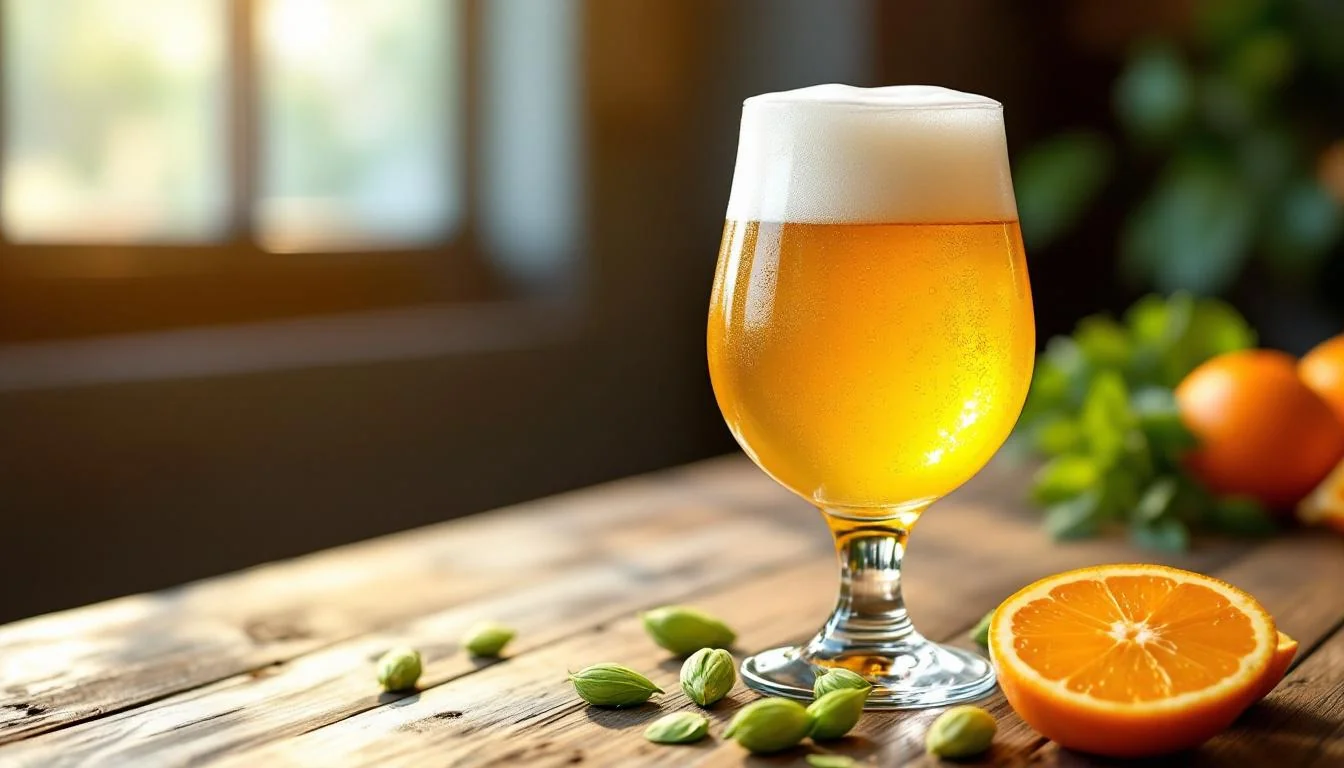
When you pick up an IPA made with Amarillo, start with your nose. Lift the glass and breathe in gently. If it is Amarillo, you will recognize fresh orange right away: not sour orange, but sweet, ripe orange. There may be a little peach or apricot hiding behind it.
When you sip, pay attention to the tip of your tongue. Amarillo often brings a light sweetness from its fruit aromas before the bitterness arrives mid-tongue. That bitterness is not harsh. It is soft, rounded, and pleasant.
The finish is where Amarillo comes into its own. After you swallow, orange and peach linger, not on the tongue but in the nasal passages as you breathe out. This is what tasters call retronasal aroma. A good Amarillo IPA leaves a long finish that draws you back for another sip.
The next time you see Amarillo on a label, give the beer a few more seconds. Don’t rush to drink it. Let the glass warm a little, to about 10–12 °C (50–54 °F), and the aroma will rise more clearly. Then, as you drink, notice whether it seems as if someone has just peeled an orange beside you.
Some good things come from accidents: an unfamiliar hop plant in the middle of a field, a farmer patient enough to wait, and, twenty-five years later, Amarillo, a drop of Texas sunshine in a glass of beer.
Mentioned in this article
-
Beer O L O G Y
The World of Bitter Beer Begins with IPA -
Beer O L O G Y
Wheat Beer: The Flavor of the Grain
Originally published in Vietnamese on Tạp Chí Beer.