Aecht Schlenkerla Rauchbier Urbock: 600 Years through the Smoke
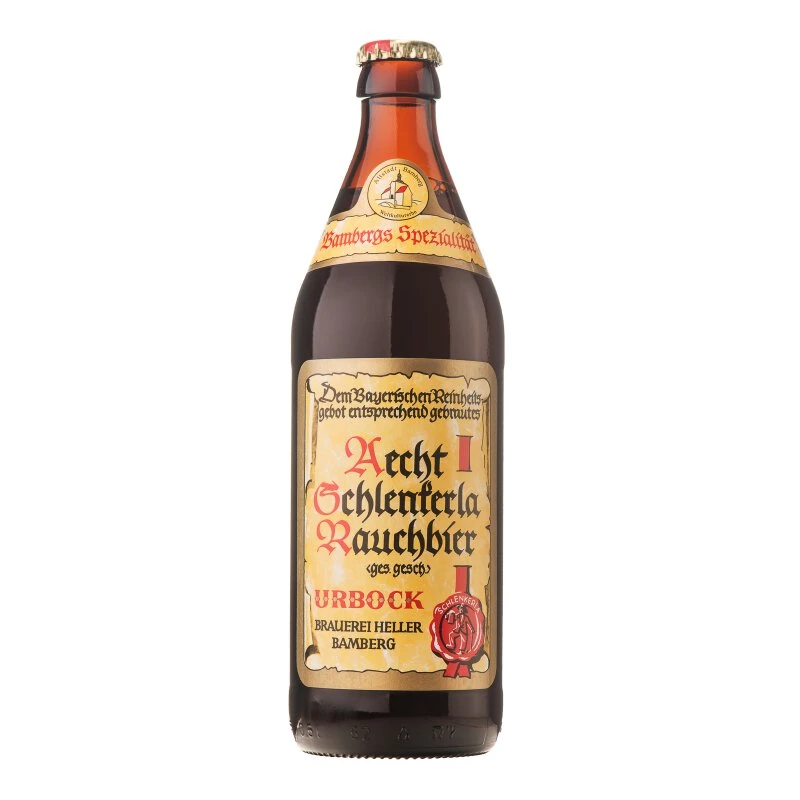
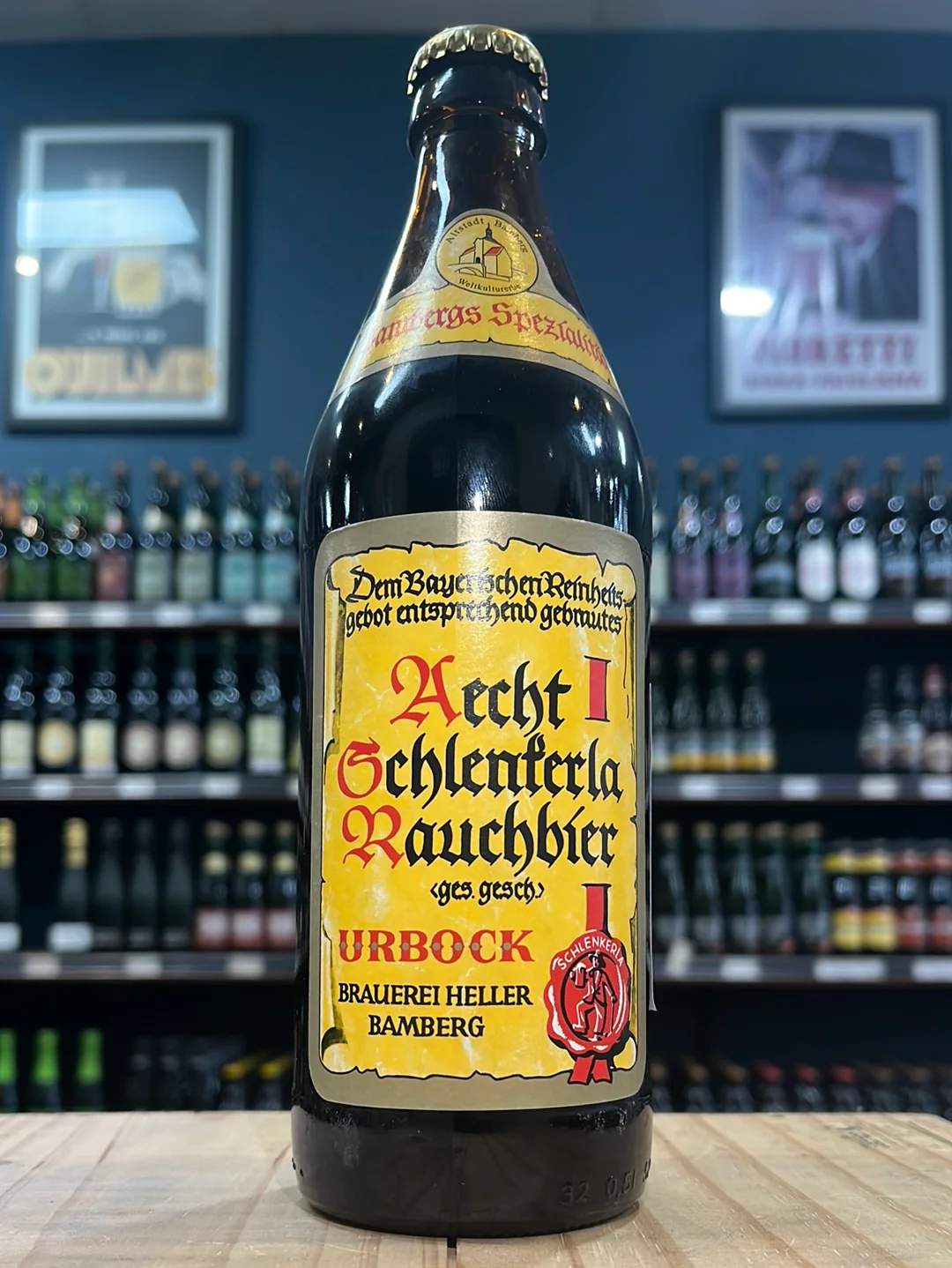
Aecht Schlenkerla Rauchbier Urbock, the famous smoked beer from Bamberg, Germany, is full-flavored, with a deep, lingering finish and a story that goes back 600 years.

Picture an old tavern in the center of Bamberg, its stone walls darkened by time, candlelight flickering. In your hand is a glass of deep reddish-brown beer, a fine white head rising gently to the rim. One sip, and you seem to have stumbled into a winter campfire in an oak forest: the fire blazing, the smoke pungent, the flavor filling every corner of the mouth. It is not your imagination. This is Aecht Schlenkerla Rauchbier Urbock, one of the oddest, most distinctive, and most uncompromising beers in Germany.
IA History Rooted in Smoke
Schlenkerla is an institution in Bamberg, a city on UNESCO’s World Heritage list. Heller-Bräu Trum KG, the brewery behind the Schlenkerla beers, is tied to a house first mentioned in written records in 1405, more than 600 years ago. Through all those centuries Schlenkerla has kept to traditional brewing methods, above all smoking over beechwood, a practice very few brewers still maintain.
The Urbock, a strong, intense version of the Rauchbier, first appeared in the late 19th century as a special autumn beer, released every October, in the season of Oktoberfest and the traditional harvest. It was the product of long refinement: the brewery wanted a beer with deeper smoke, higher alcohol, and more evident maturity than an ordinary Märzen. Urbock was made for the cold months, when drinkers want a glass that is warmer, stronger, and deeper.

The defining feature of Urbock is its dense smoke. This is not the light whiff of a roadside barbecue but the aroma of beech logs burned slowly, soaked deep into every grain of malt. Schlenkerla is one of the few breweries that still smoke their own malt on site instead of buying it from an industrial supplier.
The result cannot be imitated. In the glass, the layers unfold one after another: first the smoke, strong, deep, dry, and woody; then the malt, gently sweet, like malted bread charred at the edges; finally a light note of dried fruit that slips past and fades. The smoke is never harsh. It stays warm and calm.
IIHow It Is Made
Its ingredients set Urbock apart, and so does a slow, painstaking, hands-on process. The malt is smoked over beechwood for 24 hours straight, then goes into the brewhouse for a double decoction mash, which draws out as much caramel and body as possible.
After fermentation with krausening, the beer is lagered in old stone cellars for 8 to 12 weeks, unfiltered and unfined. That long maturation under traditional conditions gives Urbock its thick body, deep flavor, and smooth, lingering finish.
For hops, Schlenkerla uses traditional German Hallertauer, a variety with a light herbal aroma. It stays out of the spotlight, quietly balancing the beer with just enough bitterness to support the smoked malt.
IIITasting: An Acquired Taste
Urbock is rarely love at first sip, but once you understand it, it becomes a hard habit to break. The beer is reddish brown with copper highlights, softly hazy, under a thick, creamy white head like mousse, an old-fashioned look that draws you in.
On the palate, the three layers are distinct: smoke, malt, and hops. The remarkable part is that they do not stand apart but intertwine and melt together into one complex whole. The finish is neither as dry as many strong Bock beers nor too sweet. It sits in between, round enough to linger and light enough never to cloy.
One beer lover once described Urbock as “sitting by the fireplace under a wool blanket, listening to slow, melancholy autumn music,” and it is hard to put it better.
IVFood Pairings
A glass of Urbock goes well with food that has depth: richly flavored grilled meats, smoked sausages, crisp-skinned roast pork knuckle, or aged cheddar or Camembert. It is a beer made for winter cooking, when everything calls for a little inner warmth.
Take your time. Pour slowly into a becker or tumbler glass so the smoke rises and reaches the nose before the beer reaches your lips. And keep it at 8–10 °C (46–50 °F), where both aroma and flavor open up fully.

VAwards & Recognition
Urbock proves that a beer does not have to chase trends to succeed. While much of modern craft brewing revolves around fruity IPAs and unusual sours, Urbock has kept its own character and won a long list of awards, from Europe to the United States.
The inclusion of Bamberg Rauchbier in Slow Food’s “Ark of Taste” carries particular weight, recognizing Rauchbier as part of human culture, a living heritage worth protecting rather than a mere consumer product.
VIConclusion
Urbock is a reminder that beer can be art, story, and memory, as well as something to quench a thirst. A glass of Aecht Schlenkerla Rauchbier Urbock is a toast to 600 years of history, to a city’s pride, and to a brewing technique that is slowly fading away.
If you are ready to step outside the usual and let a little smoke into your head, try a sip of Urbock. It may well be the start of something new for your palate.
Ready to open up to a sip of smoke from Bamberg?
Mentioned in this article

Originally published in Vietnamese on Tạp Chí Beer.
More Rauchbier
About this style


This beer is in the library of the BeerLens app. Scan the label to identify it, then keep your own tasting notes.