Simcoe: The Smell of Pine in an Orange Grove
Simcoe is an American hop whose signature pine aroma comes wrapped in orange and grapefruit. Bred in Washington’s Yakima Valley, it is the backbone of countless classic IPAs.
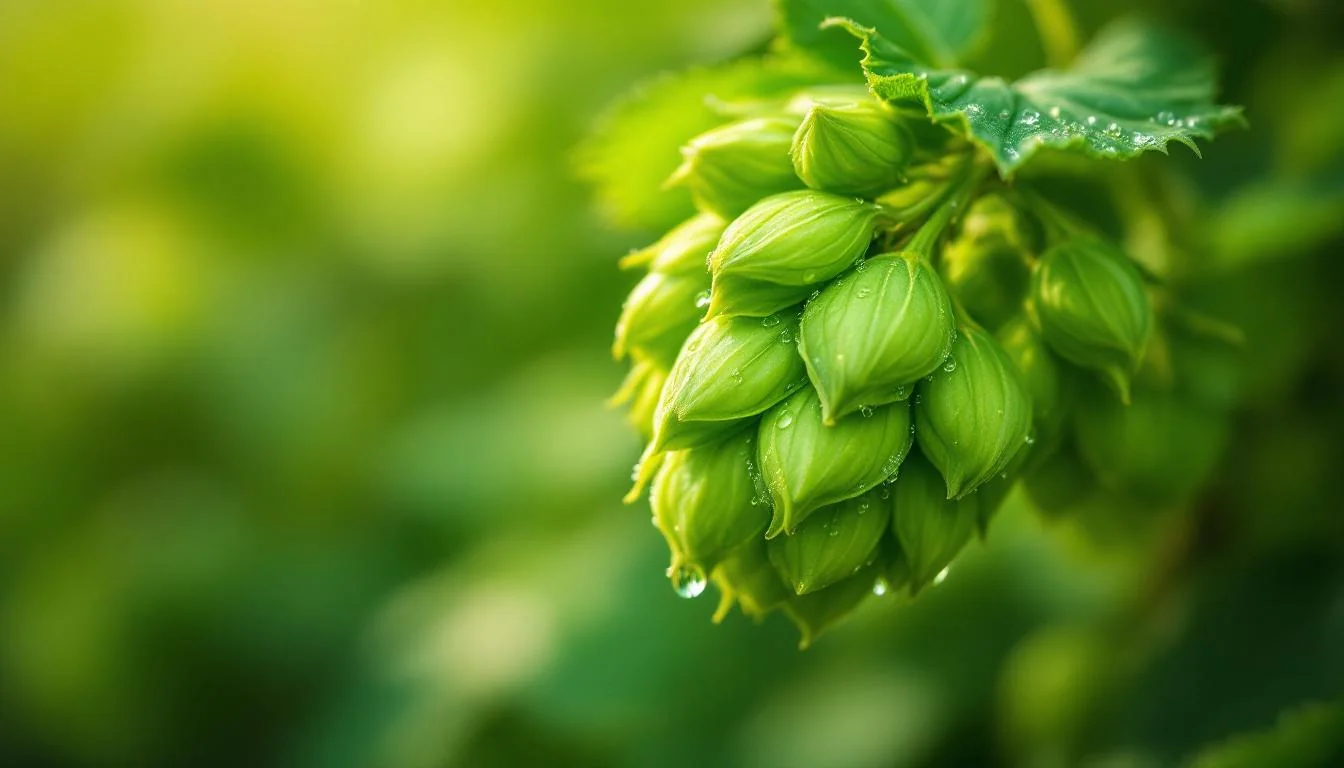
Some IPAs stop you short. Not because the bitterness is harsh, but because of a strange smell, as if you were standing in a pine forest and someone had just split an orange in half beside you. Tree resin mingles with citrus peel, wild and fresh at once. For many drinkers, that is their first meeting with Simcoe.
Simcoe is not as loud as Citra, nor as fashionable as Mosaic. For two decades, though, it has turned up quietly in some of America’s best-loved IPA recipes: Russian River’s Pliny the Elder, Bell’s Two Hearted Ale. Both beers have long since reached cult status, and neither would be the same without Simcoe.
IOrigins and History
Simcoe came out of the breeding program at Yakima Chief Ranches, one of the largest hop companies in the Pacific Northwest. Work began in 1988, when researchers bred an experimental line under the code YCR 14. Selection and evaluation went on for more than a decade.
In 2000 the variety was registered and officially released under the name Simcoe, after Lake Simcoe in Ontario, Canada. It is a curious name for a hop born in Washington, but it calls up clear blue water amid endless pine forest, which is exactly what you smell in the glass.
Simcoe’s pedigree is a closely held secret of Yakima Chief Ranches, unlike the many varieties whose parentage is public. All that is known is that it is a “dual-purpose” hop, used for both bittering and aroma.
The Yakima Valley, where most Simcoe is grown, lies in central Washington and supplies about 75% of the hops produced in the United States. A semi-arid climate, long summer days, and fertile alluvial soil from the Yakima River give hops close to ideal growing conditions.
In the early years, Simcoe was used mainly by veteran brewmasters. Vinnie Cilurzo of Russian River was among the pioneers, writing it into the recipe for Pliny the Elder in 2000. That Double IPA has since been voted, again and again, one of the best beers in the world.
By the mid-2000s, as American craft beer boomed, Simcoe had become one of the most sought-after hops. Demand far outstripped supply, and many small breweries had to join a waiting list or sign long-term contracts to secure their share.
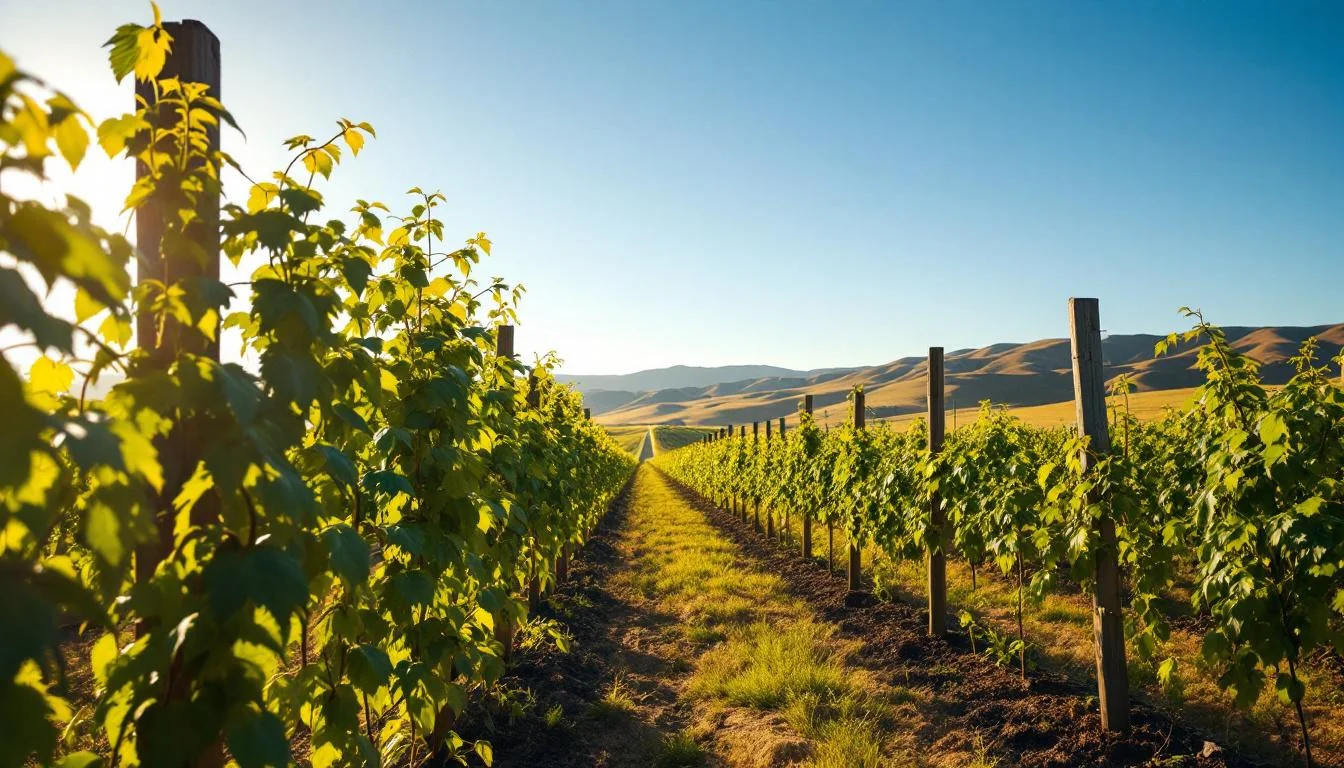
Simcoe is still a proprietary variety, and only farms in the Yakima Chief Ranches network may grow it. That keeps quality in check, but it also makes Simcoe pricier than public varieties.
IITechnical Profile
Simcoe is a high-alpha hop, with alpha acids ranging from 12% to 14%. That puts it among the efficient bittering varieties, on a par with Columbus or Chinook. Beta acids are lower, usually 4% to 5%, an alpha-to-beta ratio well suited to a hop that does double duty for bittering and aroma.
What really sets Simcoe apart is its essential oil. Total oil content runs from 2 to 2.5 ml per 100 grams, high among commercial hops. Myrcene accounts for about 60–65% of it and lays down Simcoe’s herbal, resinous base, while moderate levels of humulene and caryophyllene add woody and spicy depth.
In the Yakima Valley, Simcoe is usually harvested from late August to mid-September. The timing is carefully calculated: too early and the oils fall short, too late and the alpha acids begin to break down. The cones are picked at about 75% moisture, then dried to 8–10% before packing.
Simcoe stores only moderately well. After six months at room temperature it loses about 35–40% of its alpha acids, so pellets are best kept frozen to preserve their character.
IIIAroma and Flavor
Open a bag of Simcoe pellets and the first thing to reach your nose is pine. Not the synthetic pine of floor cleaner, but fresh pine sap, as if you had just snapped a twig from a young tree. Resinous, oily, a little sticky.
Citrus comes right behind it: ripe navel orange, a freshly twisted grapefruit peel, a touch of lemon in the background. This is not the sweet citrus of carton juice. It has depth, with the bitterness of the peel and its pure oil.
A third layer brings more complex notes: a fleeting hint of passion fruit, a soft touch of red berries. Sometimes, in high-quality lots, there is also the smell of damp earth after rain, earthy but fresh.
In beer, Simcoe behaves differently depending on when it goes in. Early in the boil, the aroma is driven off and only a clean bitterness with no harsh edge remains. Late in the boil or in the whirlpool, pine and citrus burst out. As a dry hop, every layer comes through at once and the aroma feels complete.
Simcoe’s bitterness is generally described as “clean,” leaving none of the metallic or astringent aftertaste of some other high-alpha hops. It arrives quickly, peaks in the middle of the tongue, then fades toward the throat. The finish lingers with a little pine resin and dried orange peel.
One trait is contested: some people pick up “cat pee” in Simcoe. It comes from a naturally occurring sulfur compound present at very low concentrations. For most drinkers it sinks into the overall aroma as a faint funky note; for some it stands out unpleasantly. That is why Simcoe is usually blended with other hops rather than used alone.
IVBeer Styles That Use Simcoe
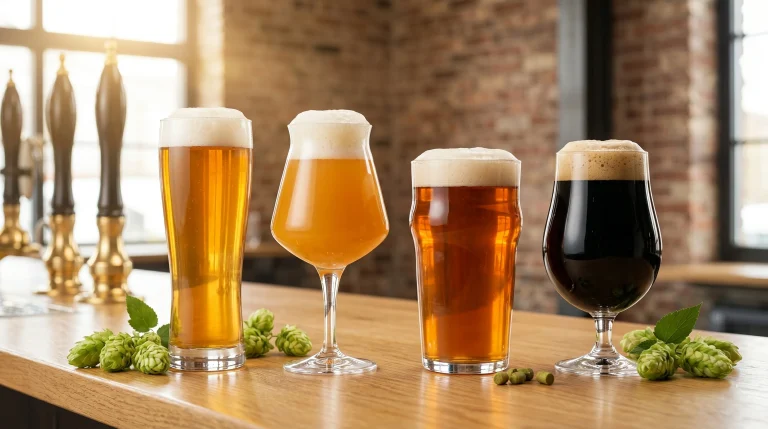
Simcoe is a backbone hop for American IPA and Double IPA. Its high alpha acids deliver serious bitterness without huge quantities of hops, and its pine and citrus add depth to recipes that need a complex aroma. Pliny the Elder, regarded as the benchmark Double IPA, uses Simcoe as one of its lead hops, alongside Columbus and Centennial.
West Coast IPA, the signature IPA of America’s West Coast, is almost unthinkable without Simcoe. Its resin and pine define the “West Coast character” people talk about: dry, bitter, piney, citrusy. Breweries such as Stone Brewing, Firestone Walker, and Lagunitas all make IPAs with Simcoe in the recipe.
Pale Ale is another good fit. In a beer with less alcohol and bitterness, Simcoe goes in mainly as a late addition and a dry hop, to draw out its aroma without overwhelming the palate with bitterness.
Some brewers have experimented with Simcoe in Imperial Stouts and Porters. It sounds odd, but its pine and resin pair surprisingly well with the coffee and chocolate of dark roasted malt. Founders Brewing once released an Imperial Stout dry-hopped with Simcoe, and the beer community responded warmly.
VHow Simcoe Compares with Similar Hops
Simcoe vs. Citra
Both are modern American hops with big fruit. But Citra leans tropical, toward mango, passion fruit, and guava, while Simcoe has a more pronounced base of pine and resin. Citra is the more playful of the two, Simcoe the more serious. Blended, they give a profile that is tropical on top with resinous depth underneath.
Simcoe vs. Columbus (CTZ)
Columbus also shows pine and citrus, but coarser and danker. If Simcoe is a pine forest in the early morning, Columbus is a pine forest after a storm: heavier, earthier, with a hint of garlic and onion in the background. Columbus is suited to bittering, while Simcoe is more versatile across all three roles.
Simcoe vs. Amarillo
Amarillo brings a strong orange aroma; it is close to the archetypal “orange hop.” Simcoe has citrus as well, but balanced by pine and berry. Amarillo is the brighter hop and Simcoe the deeper one, so in an IPA recipe Amarillo is usually there to lift the aroma and Simcoe to give it depth.
VIHow to Pick Out Simcoe in the Glass
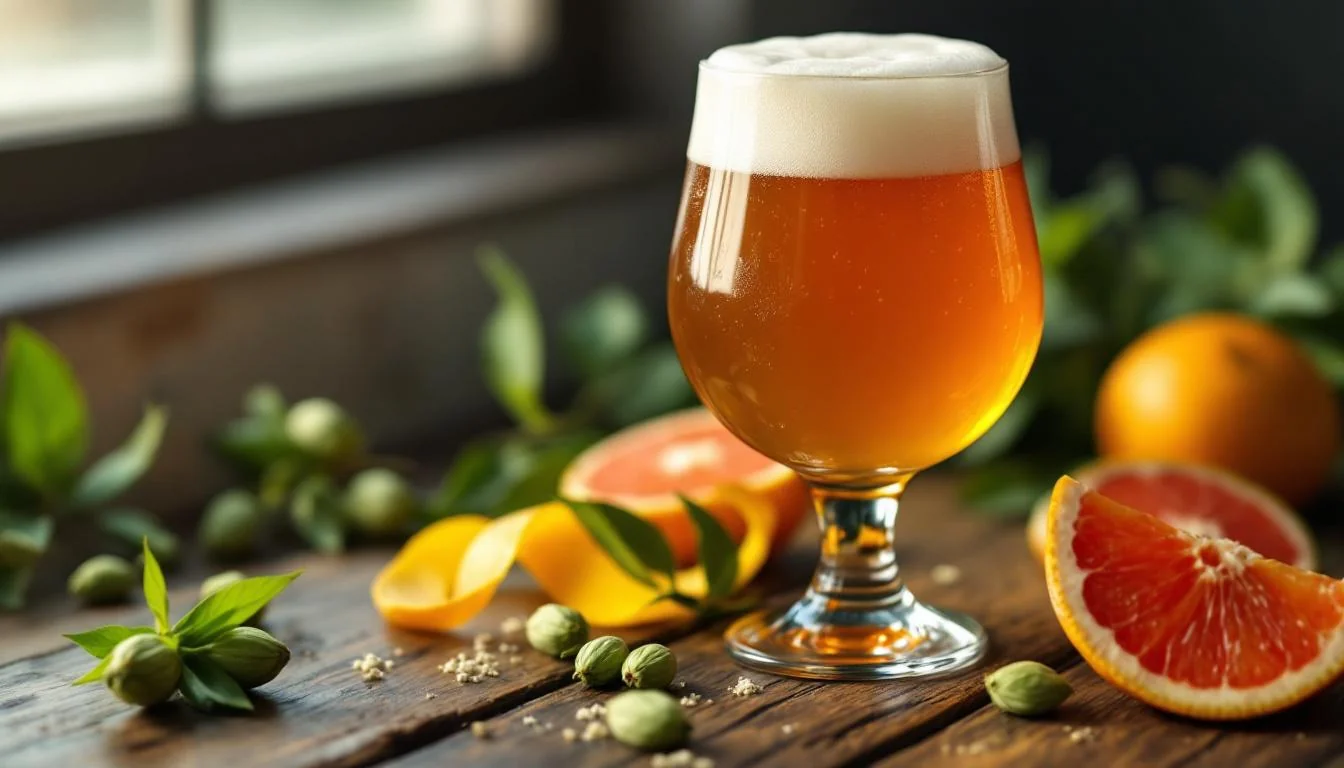
Given an IPA billed as hopped with Simcoe, bring the glass to your nose before you drink. Take a slow breath and look for pine: not dry pine, but fresh pine, slightly oily, a little sticky. If it is there, that is the first sign.
Next, look for the layer of citrus behind it. Orange and grapefruit usually come through more clearly than lemon. If there is citrus but no pine, Simcoe may be playing only a supporting role, or another hop may be overpowering it.
As the beer goes down, notice the bitterness in the middle of the tongue. Simcoe’s arrives fast, peaks clearly, then retreats, without the long, nagging linger of some other hops. The finish should carry a touch of resin, like chewing a young pine needle.
If the beer is heavily dry-hopped with Simcoe, a hard-to-describe “funky” note may appear. That is part of the hop’s character, not a flaw: a bit of wildness in an otherwise very civilized glass of beer.
Drink slowly and let the beer warm in your hand. Simcoe’s aroma shifts with temperature: cold, the citrus stands out; warmer, the pine and resin speak up. A good Simcoe IPA takes you from the orange grove into the pine forest, then back out to a clean finish.
Between sips, it can dawn on you that a single hop carries a whole story: the land it came from, the breeders who spent twelve patient years developing it, and the brewmasters who trusted it with their recipes. Simcoe is not the loudest hop, but it is one worth listening to.
Mentioned in this article
-
Beer O L O G Y
The World of Bitter Beer Begins with IPA
Originally published in Vietnamese on Tạp Chí Beer.