Munich Water: The Soft Water Behind Bavaria’s Amber Lagers
Munich draws soft water from the Alps, the foundation of the malt-forward amber lagers that have dominated the beer world for 500 years.
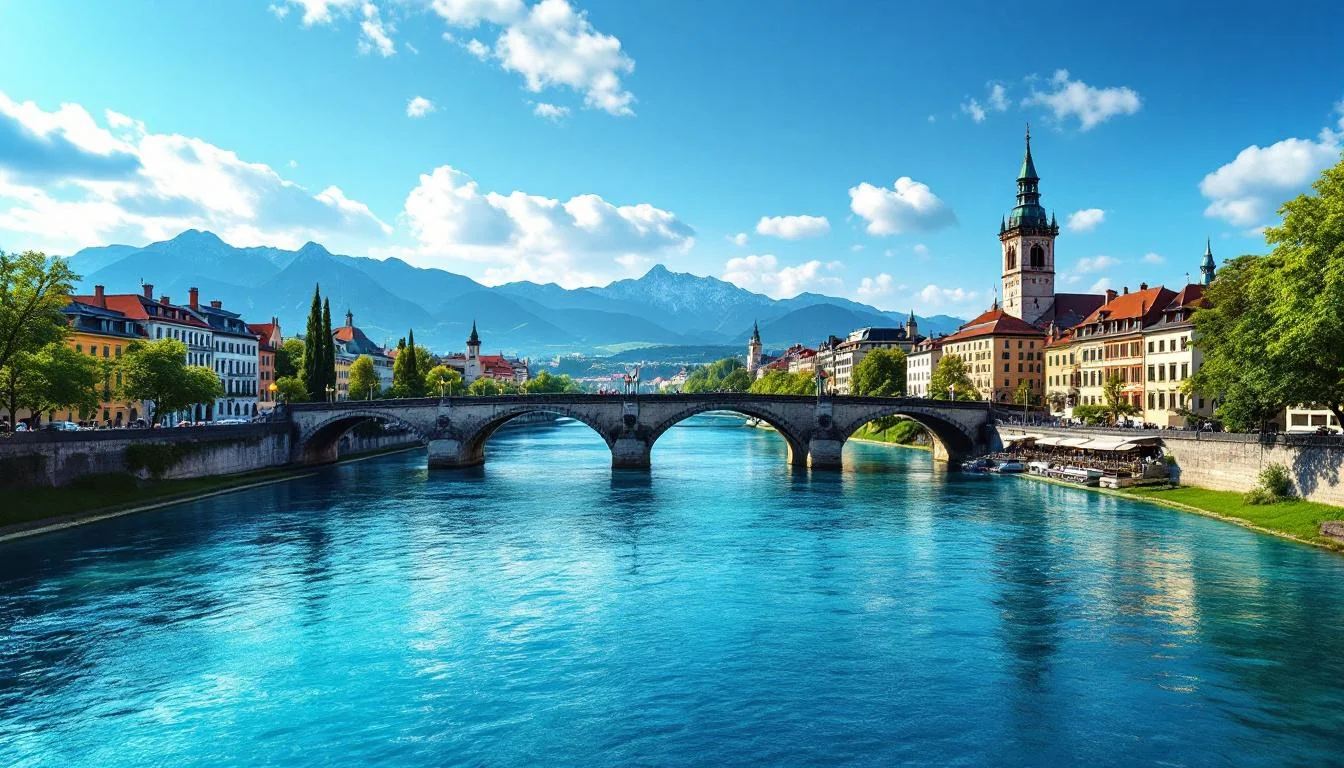
Say “German beer” and most people think of Munich. Fewer know that before the famous breweries, before even the Reinheitsgebot (German Beer Purity Law), there was the water. It runs down from the Alps through layers of limestone and glacial gravel and picks up a distinctive mineral profile: soft, balanced, and seemingly made for brewing lager.
Munich is Bavaria’s beer capital, a city where water became heritage. Burton-on-Trent has hard, sulfate-rich water and Pilsen extremely soft water; Munich sits between the two, soft enough to put the malt first and mineral enough to give it depth. That balance produced the amber lager the world calls “Munich style.”
IGeography and History
Munich sits on the Bavarian plateau, about 100 km north of the Alps. The Isar River runs through the city, but brewing water doesn’t come from it. It comes from deeper down, from aquifers formed over thousands of years as glacial ice melted.
During the Pleistocene, Alpine glaciers left behind thick beds of gravel and sand. Rain and snowmelt seep through these layers, filtering naturally and picking up a moderate load of minerals. The result is groundwater of low to moderate hardness, much softer than London’s or Dublin’s but not as soft as Pilsen’s.
Brewing in Munich goes back to the 13th century, when Benedictine monasteries set up the first breweries. Weihenstephan, about 35 km from Munich, is recognized as the oldest working brewery in the world. But it was in Munich that lager brewing was refined.
In 1516, Duke Wilhelm IV issued the Reinheitsgebot in Ingolstadt, Bavaria. The law allowed beer to be made only from water, malt, and hops. Yeast went unmentioned because no one yet understood microorganisms. Note that water came first: the Bavarians knew their water was special.
In the 19th century Munich became a center of brewing science. Gabriel Sedlmayr II of the Spaten Brewery pioneered the use of the thermometer and refrigeration. He was also the first to grasp how well Munich water suited Munich malt, which is kilned at higher temperatures for an amber color and a toasted-bread flavor.
It is no accident that Munich lager is so different from Pilsner. Pilsen’s water is nearly free of minerals, which showcases Saaz hops and gives a crisp bitterness. Munich’s water is soft but carries enough carbonate to buffer pH, letting the malt come through without excess acidity.
IIThe Mineral Profile
Munich water is soft to moderately soft, with a total hardness of about 100–150 ppm (parts per million). Next to Burton-on-Trent, which can reach 1,200 ppm, Munich sits at the gentle end of the spectrum.
Calcium runs 75–80 mg/L. That is enough to support enzyme activity during the mash and to help the yeast flocculate (settle out) well after fermentation, but not so much that it leaves the obvious mineral taste of hard-water regions.
Magnesium is low, around 15–20 mg/L, an ideal level: enough to keep the yeast healthy without an unpleasant bitterness. Too much magnesium can taste metallic, something Munich beer avoids entirely.
Sulfate is where it gets interesting. Munich water carries only about 10–20 mg/L, against 600–800 mg/L in Burton. As a result, hops in a Munich lager never read as dry and sharp as in an English Pale Ale; the bitterness folds softly into the malt instead.
Chloride sits at 2–5 mg/L, next to nothing. Chloride tends to heighten the perception of fullness and sweetness, so this low level keeps Munich lager from turning heavy, malt-forward as it is.
Bicarbonate, or alkalinity, is the real key to Munich water, at 150–200 mg/L. That level buffers mash pH when darker malts such as Munich or Vienna malt are used. Pair water as soft as Pilsen’s with dark malt and the pH falls too low, leaving a harsh sourness. Munich water solves the problem on its own.
IIIHow the Water Shapes Flavor
Munich water makes a neutral but warm canvas. It doesn’t push the hops forward the way high-sulfate water does, and it doesn’t mute the malt the way very soft water can. It lets the malt speak.
Munich malt is kilned at higher temperatures than Pilsner malt, which drives the Maillard reaction, the same browning that happens when you toast bread. The result is bready, bread-crust flavor and sometimes a light touch of caramel. With its moderate bicarbonate, Munich water holds mash pH around 5.2–5.4, where enzymes work best at converting starch into fermentable sugar.
The sweetness of a Munich lager isn’t sugary. It is malt sweetness, from unfermentable dextrins and the melanoidins formed by heat. Soft, low-chloride water keeps that sweetness from being buried under an overly full mouthfeel.
The hops in a Munich lager are usually Hallertauer Mittelfrüh or Tettnanger, German noble hops with herbal, floral, and lightly spicy notes. With low-sulfate water, their bitterness comes out rounded rather than sharp. The hops register as a backdrop, not the lead.
Clarity comes back to the water too. Calcium at 75–80 mg/L helps the lager yeast (Saccharomyces pastorianus) drop out well once fermentation is finished. Add several weeks of lagering, and the beer turns crystal clear without heavy filtration.
The finish is one of the clearest markers of a Munich lager. There is no lingering IPA-style bitterness and no metallic or sulfur notes, only a clean feel and a light malt aftertaste that slowly fades. That is the work of mineral-balanced water, healthy lager yeast, and patient lagering.
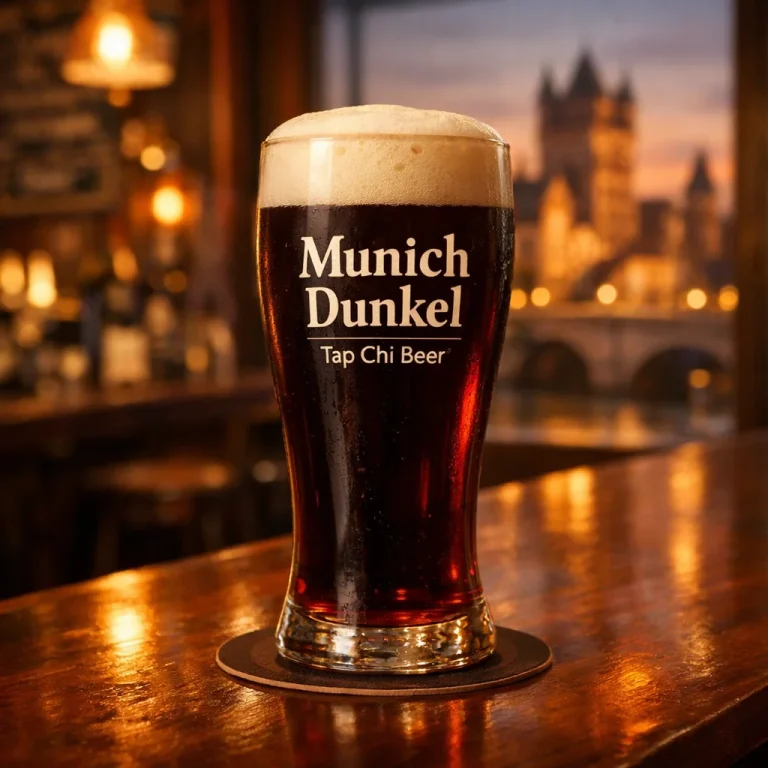
Carbonation in Munich lager is usually moderate, around 2.3–2.5 volumes of CO2. Soft water dissolves CO2 well and keeps the foam fine and lasting. A properly made Munich Dunkel pours with a creamy white head about two fingers thick that clings to the glass as you drink.
IVThe Styles Munich Water Made
Munich Helles is the most familiar expression of this water. First brewed at the Spaten Brewery in 1894, Helles was Munich’s answer to the success of Bohemian Pilsner. Rather than copy it, Munich’s brewers made something different. Helles is paler than traditional Munich lager but stays malt-forward, with a light bready sweetness, just enough hops for balance, and a spotlessly clean finish. Munich’s soft water lets Pilsner malt and Munich malt work together without minerals overshadowing them.
Munich Dunkel is the older style, predating Helles. Dunkel means “dark” in German, and the beer runs from amber-brown to dark brown. This is where Munich water shows its real strength: its bicarbonate buffers the mash pH when large amounts of Munich malt go in. The flavor carries notes of chocolate, dark bread, and sometimes a little dried fruit. Dunkel is a comfort beer, warming, easy to drink, and quietly deep.
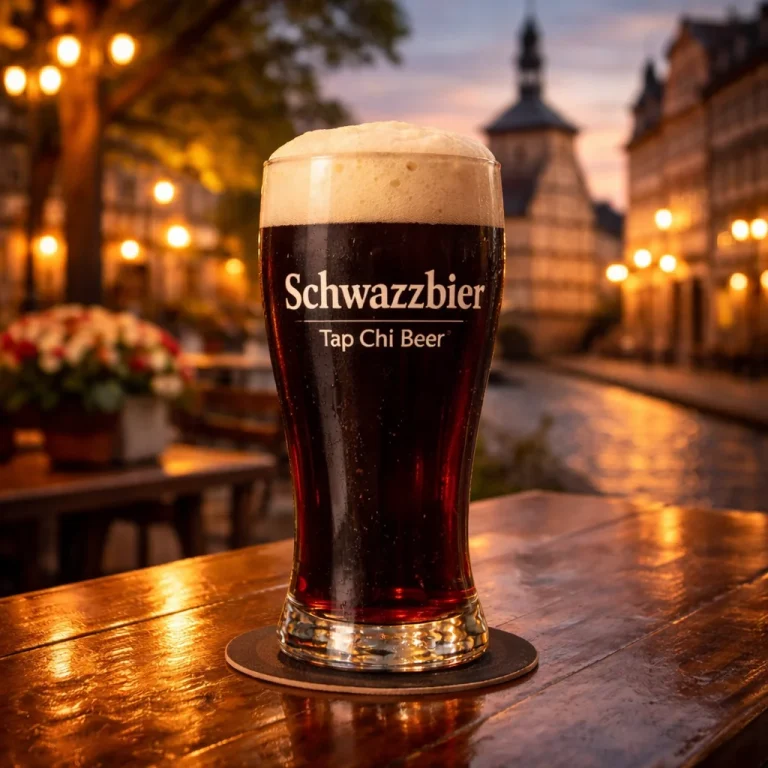
Schwarzbier is sometimes associated with Munich, though it more properly belongs to Thuringia and Saxony. Munich breweries do brew it with local water. It is a “black beer” but not a stout: still a lager, still light and clean. Munich water helps keep acidity in check when roasted malt goes into the mash.
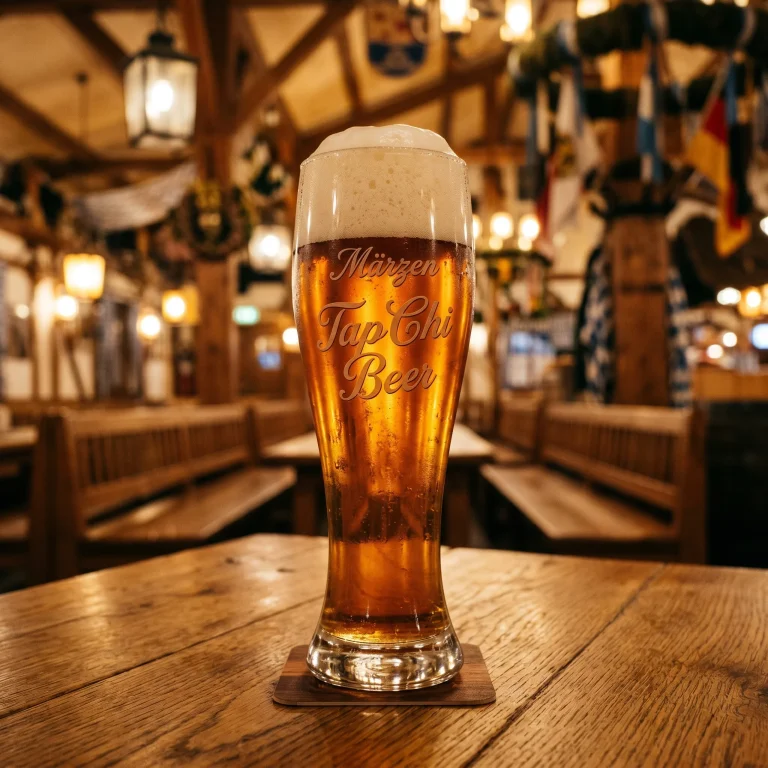
Märzen, or Oktoberfest beer, is Munich’s beer of autumn. Traditionally it was brewed in March (März) and lagered through the summer in cold caves before being served at Oktoberfest. It runs amber to copper, with rich malt and notes of caramel and toasted bread, and it is a little stronger than Helles (5.5–6% ABV). Munich water, with its moderate bicarbonate, is the foundation of the style.
Bock and its variants, Doppelbock and Maibock among them, are also bound up with Bavaria. Doppelbock in particular was developed by the Paulaner friars as “liquid bread” for Lent. With an OG that can reach 1.080 and intensely rich malt, Doppelbock needs water with enough bicarbonate to control pH when the mash holds a large share of specialty malt.
Bavarian Weissbier, or wheat beer, is brewed with Munich water as well, though Weihenstephan in Freising is its traditional center. Soft water keeps the Weissbier from picking up too much acidity from the wheat malt and lets the weizen yeast’s banana esters and clove phenols stand out.
VThe Historic Breweries
Spaten-Franziskaner-Bräu is one of Munich’s “Big Six,” the six breweries allowed to pour at Oktoberfest. Spaten dates to 1397, and it was here that Gabriel Sedlmayr II transformed lager brewing in the 19th century. Sedlmayr shared his knowledge with Anton Dreher of Vienna, and together they shaped European lager. Spaten Oktoberfest and Spaten Premium Lager remain benchmarks for Munich-style lager.
Paulaner began in 1634 as a monastery brewery run by friars of the Paulaner order. They created Salvator, the first Doppelbock and the origin of the “-ator” suffix found in the names of so many others. Today Paulaner Helles and Paulaner Weissbier still show the character of Munich water: clean, balanced, and malt-forward.
Augustiner-Bräu, founded in 1328, is the oldest brewery still operating in Munich. At Oktoberfest it still serves beer from wooden casks (Hirschen), a tradition that has all but disappeared. Augustiner Edelstoff, an Export-style lager, is one of the beers Munich locals love most.
Hofbräu München was founded in 1589 by Duke Wilhelm V, originally to supply the Bavarian court. The Hofbräuhaus, its enormous beer hall in the center of Munich, draws visitors from around the world. Hofbräu Original is a textbook Munich Helles: clean, malt-forward, and dangerously easy to drink.
Weihenstephaner in Freising lies outside Munich but draws on the same aquifer system. Recognized as the world’s oldest brewery (since 1040), it remains linked to the Technical University of Munich and is a major training ground for brewers. Weihenstephaner Hefeweissbier is often considered the benchmark for its style.
VILessons for Today’s Craft Brewers
A Munich water profile can be rebuilt by starting with RO (reverse osmosis) or distilled water and adding minerals. Aim for about 75 ppm calcium, 15–20 ppm magnesium, 10–20 ppm sulfate, under 10 ppm chloride, and 150–200 ppm bicarbonate.
Baking soda (sodium bicarbonate) is the simplest way to raise bicarbonate, but use it with care: it also adds sodium, which can taste salty in excess. Calcium carbonate (chalk) is another option, though it dissolves poorly in water. Some brewers use slaked lime (calcium hydroxide) to raise both calcium and alkalinity.
When brewing a Munich-style lager, let the water work with the malt, not against it. If your source water is high in sulfate, the beer will lean hoppy whether you want it to or not. If the water is very soft and you use a lot of Munich malt, mash pH can drop too low.
If bicarbonate runs too high, acid malt or lactic acid can help bring the pH into line. The target mash pH is 5.2–5.4. Many brewers today use a pH meter and adjust batch by batch, but start from an accurate Munich water profile and the adjustments will be minimal.
Water, of course, is only part of the equation. A Munich lager also needs good Munich malt, noble hops, healthy lager yeast, and patient lagering. Without the right water, though, none of the rest can show at its best.
Water is beer’s terroir. Just as Burgundy’s soil gives a Pinot Noir that cannot be copied, Munich’s water shaped a style of beer the whole world has tried to learn from. Minerals can be adjusted. The centuries of history soaked into every drop that runs down from the Alps cannot be rebuilt.
Mentioned in this article

Originally published in Vietnamese on Tạp Chí Beer.