Czech Pils WLP800: The Quiet Yeast of Bohemia
WLP800 is a lager yeast of Czech origin. It gives Bohemian Pilsner, the style that shaped lager around the world, its brilliant clarity and full, rounded malt character.

Some beers go down without a second thought. Pilsner is one of them. A golden glass, a fine white head, a clean, gentle bitterness: it is so familiar it has become invisible. Behind that clarity, though, is a yeast strain kept alive for nearly two centuries, from the cold limestone cellars of Bohemia to a modern laboratory in San Diego.
WLP800 is not a yeast for brewers in a hurry. It wants low temperatures, a long schedule, and patience. In return it gives the beer something few strains can: silence. No showy fruit esters, no sharp, spicy phenols. Only the malt, the hops, and the water are allowed to speak.
IFrom the Stone Cellars of Plzeň
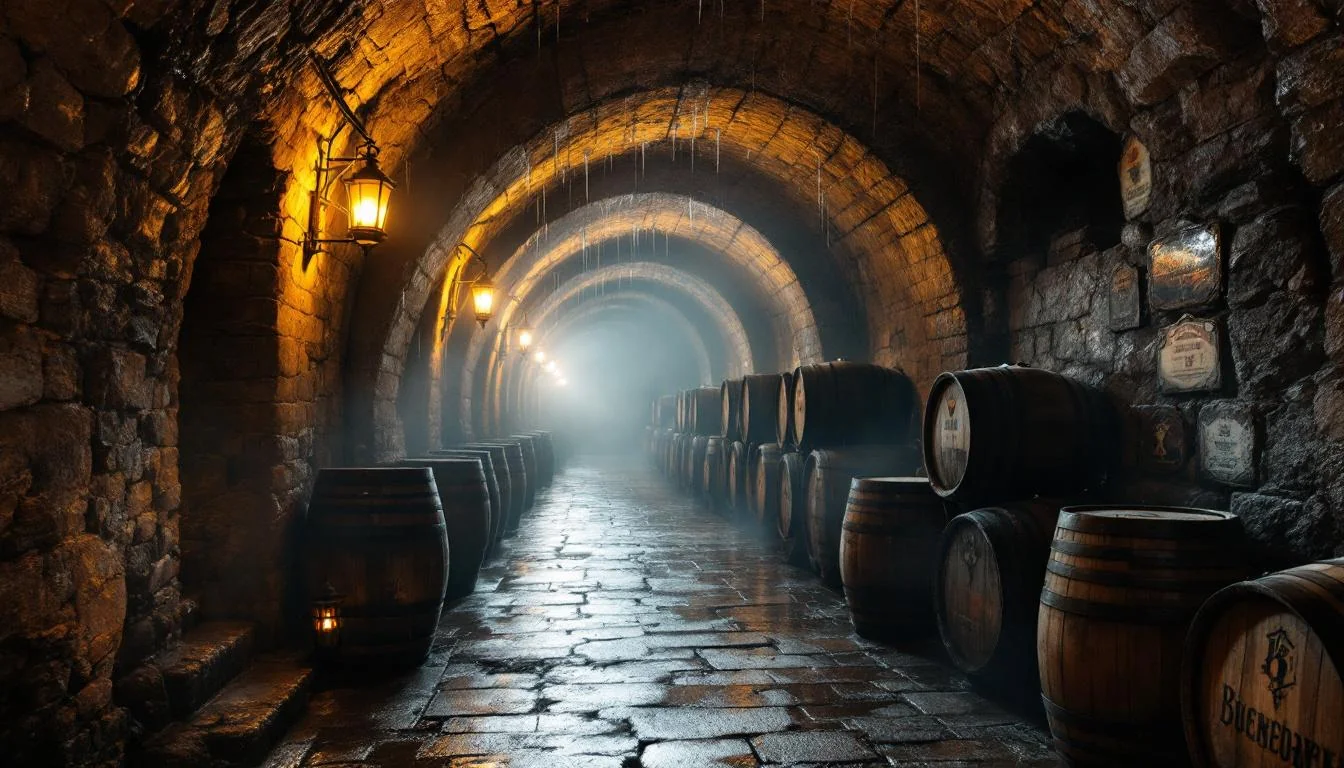
In 1842 the Bohemian city of Plzeň (Pilsen), then part of the Austrian Empire, saw a brewing revolution. Josef Groll, a Bavarian brewmaster, had been hired to create a new beer for the Bürgerliches Brauhaus, a newly founded citizens’ brewery. He arrived with Bavarian cold-fermentation techniques and paired them with pale Moravian malt, gently aromatic Saaz hops, and the region’s characteristically soft water.
Yet the most important thing Groll brought was yeast. His Saccharomyces pastorianus strain had been cultivated and selected over many generations in Bavarian breweries. Taken to Bohemia and fermented in natural limestone cellars that held 7–13 °C (45–55 °F) all year, it produced a beer no one had tasted before: crystal clear, honey gold, with a full, rounded malt flavor and a clean, delicate bitterness.
That beer was Pilsner Urquell, and brewing has not been the same since.
White Labs isolated WLP800 from this same traditional lineage. Chris White, who founded the company, collected yeast samples from Czech breweries on research trips in the early 1990s. The aim was clear: to preserve an authentic strain that could reproduce the character of the original Bohemian Pilsner, and to make it available to homebrewers and craft brewers alike.
Many commercial lager strains have been “domesticated” to ferment fast and clean at warmer temperatures. WLP800 has kept its “classic” temperament: slow and fussy, but it repays the effort.
IIThe Biology of Patience
WLP800 belongs to Saccharomyces pastorianus, a natural hybrid of S. cerevisiae (ale yeast) and S. eubayanus, a wild yeast from Patagonia identified in 2011. The cross happened roughly 500–600 years ago in Bavarian beer cellars, where the cold allowed S. eubayanus to adapt and merge with the local brewing yeast.
Its ideal fermentation range is 10–13 °C (50–55 °F), well below the 18–22 °C (64–72 °F) of a typical ale yeast. At that temperature fermentation is slow: usually 2–3 weeks of primary fermentation, then another 4–8 weeks of lagering at 0–4 °C (32–39 °F). All told, a batch made with WLP800 can take 2–3 months from brew day to drinkable beer.
Flocculation is medium. The yeast doesn’t clump and drop out too quickly, so it keeps working through lagering, but it settles well enough to clear the beer naturally without much filtration. Attenuation reaches 70–77%: the yeast eats most of the fermentable sugar, leaving a beer of medium body and moderate sweetness.
One trait to know: WLP800 produces a lot of sulfur early in fermentation. A faint rotten-egg smell can worry newcomers, but it is normal. The sulfur dissipates completely during lagering, one more reason not to rush this strain.
IIIThe Flavor of Restraint
Ale yeasts announce themselves. WLP800 is restrained and precise, and it knows when to stay quiet.
Its defining trait is a full, rounded, almost “soft” malt profile. German lager strains lean dry and crisp; WLP800 leaves a light cushion of malt that makes the body feel fuller even at the same final gravity (FG). That is what separates German Pilsner from Czech/Bohemian Pilsner.
At proper fermentation temperatures, ester production is very low. There is no banana, apple, or pear, the aromas ale yeasts often bring. Instead WLP800 lays down a neutral backdrop for the malt and hops. With European Pilsner malt, the aroma leans toward fresh bread, crackers, and a light touch of honey. With Saaz hops, the familiar spicy, herbal, floral character comes through without esters muddying it.
Some tasters pick up a subtle diacetyl presence while the beer is still young: a light butteriness, almost like cream. At low levels this is not a flaw but a trait of the strain. A long enough lagering period, at least 4 weeks near 0 °C (32 °F), lets the yeast clean it up. The diacetyl rest, raising the temperature to 15–18 °C (59–64 °F) for 2–3 days once primary fermentation ends, is important and should not be skipped.
Beer fermented with WLP800 usually finishes soft, with a little residual malt sweetness before the hop bitterness arrives. It is the exact opposite of a German Pils, where bitterness leads and the finish is dry.
IVThe Styles It Was Made For
WLP800 was made for Bohemian Pilsner, called Czech Premium Pale Lager in the current BJCP guidelines. This is the original pale lager, the source of nearly every mass-market golden beer in the world, though the original has far more depth and complexity than the simplified versions the mass market turned out.
Czech Pale Lager (Světlý Ležák), at 4.0–5.5% ABV, is where WLP800 is most at home. Bohemian Pilsner malt, Saaz hops (or similar noble hops), and the yeast’s soft character settle into a balanced whole. Pilsner Urquell, Budvar (Budějovický Budvar, not the American Budweiser), and Staropramen are the classic examples.
Czech Amber Lager (Polotmavý Ležák) also suits WLP800. A small amount of Munich or Vienna malt gives the beer an amber color and light caramel notes, while the yeast keeps the profile clean. The style is little known outside the Czech Republic but worth trying.
Some adventurous brewers use WLP800 for Vienna Lager or Munich Dunkel. The result is not “authentic” in the historical sense, since both styles are tied to Bavarian yeast, but it makes an interesting interpretation: a softer, less dry malt profile than you get from WLP830 (German Lager) or WLP833 (German Bock).
WLP800 is a poor fit for styles that need a very dry finish, such as Helles or Dortmunder Export, or for styles built on strong malt character, such as Bock. The strain has its own personality, and forcing it into another mold only yields average beer.
VWhy Bohemia
It is no accident that pilsner was born in Plzeň. Bohemia lies at the heart of Europe, ringed by mountain ranges that create a distinctive microclimate. Its long, cold winters provided natural conditions for lagering, and before refrigeration, that was decisive.
Plzeň’s water is extremely soft, low in minerals, particularly calcium and sulfate. Soft water brings out hops gently rather than sharply and lets the malt show its natural sweetness. By contrast, the hard water of Burton-on-Trent, in England, produces IPAs with a harsh bitterness, and the high-sulfate water of Dortmund, in Germany, gives beers that are bitter, dry, and mineral.
Saaz hops grow in the Žatec region (Saaz in German), about 80 km from Plzeň, a terroir that cannot be replicated. This noble hop is low in alpha acids (3–5%) but finely aromatic: hay, chamomile, a light spice. With WLP800, Saaz is not crowded out by yeast esters and comes through clearly on its own.
Moravian Pilsner malt, from neighboring Moravia, is the palest of Europe’s base malts and gives the beer its characteristic straw color. Kilned at low temperatures, it keeps strong enzymes and a clean, fresh-bread aroma.
In this setting, WLP800 carries Bohemia’s terroir into the glass intact, adding nothing and taking nothing away.
VIHow to Spot WLP800 in the Glass
With a glass of authentic Bohemian Pilsner in hand, or a properly made homebrew fermented with WLP800, look for these signs.
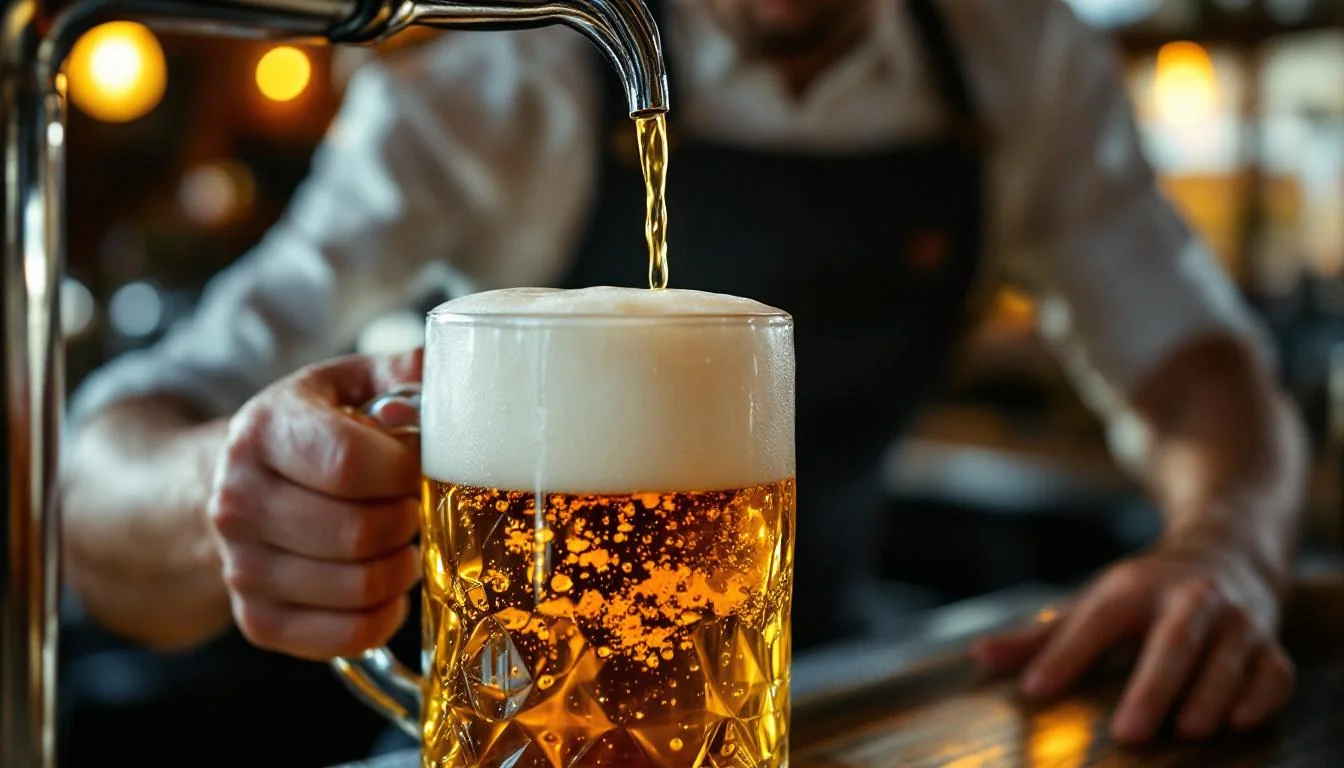
First, look. The beer should be clear, nearly brilliant, straw to deep gold in color. The head is white and thick and clings to the glass. A good yeast settles well; if the beer is cloudy, it may not have been lagered long enough, or the temperature may have been unstable.
Then smell. The Pilsner malt is lightly sweet, like bread fresh from the oven. Saaz hops (or an equivalent) add a faint note of hay and flowers. No fruity esters. No spicy phenols. Green apple (acetaldehyde) or roasted corn (DMS) means the beer was not lagered long enough or something went wrong in the brewing. A touch of sulfur is acceptable in a young beer.
Finally, drink. High carbonation keeps it lively on the tongue. The body is medium, not thin like an American Lager, not heavy like a Märzen. Malt leads, lightly sweet, then hop bitterness gradually emerges in the midpalate. The finish is soft and long, malt and hops woven together rather than competing. The aftertaste is clean and calls for the next sip.
This is not a beer to drink in a hurry. It is made by people willing to wait, and it rewards drinkers who slow down.
Mentioned in this article
-
Beer O L O G Y
Light Beer and the Hard Art of Simplicity
Originally published in Vietnamese on Tạp Chí Beer.