Westvleteren 12: The Reign of a Trappist King
Westvleteren 12, known to many as the “king of beers,” is a deep brown Belgian Quadrupel with a complex aroma and a hefty 10.2% ABV.

Anyone who has set foot in Vleteren remembers the countryside, where woodland opens onto broad green fields. Vleteren is also home to the Abbey of Saint Sixtus, a house of quiet and devoted work. Behind those old walls, a great secret has been kept for decades: Westvleteren 12.
IOrigins in Belgium
Few beers are as sought after, or as wrapped in mystery, as Westvleteren 12, brewed at the Abbey of St. Sixtus in Westvleteren, Belgium. To see what sets it apart, it helps to go back to the events that shaped it.
It Began in an Abbey

The Abbey of St. Sixtus, where Westvleteren 12 is made, dates from the 19th century. It was founded in 1831, and within a few years the monks there had taken up brewing. Beer became part of their daily life: it brought in the income that kept the abbey going, and it was distributed to the community around them.
The 12 Arrives
Westvleteren 12 made its official debut in the 1940s, after a long period of research and trial brewing. From the start, it was never meant as a commercial product. The goal was to sustain the abbey and help the community, which is why buying it at the abbey comes with so many rules and limits.
An Unusual Arrangement
Unlike other breweries, St. Sixtus does no marketing or advertising. Westvleteren 12 is sold only at the abbey and at a café nearby, and this has built anticipation and an air of mystery around it. Buyers usually have to order ahead and come to the abbey to collect, and each purchase is capped. The arrangement has raised the value of Westvleteren 12 and made it part of Belgium’s cultural heritage.
IIIn the Glass

Say “Westvleteren 12” and most people picture a deep brown beer, glowing dimly in the late-afternoon sun. Caramel, chocolate, and raisin, a strength of 10.2% ABV, and the build of a Belgian Quadrupel (Quad) add up to a beer that is hard to forget.
IIIBehind the Scarcity
Most commercial beers chase profit; Westvleteren 12 does not. Small volumes, along with the decision to sell only at the abbey and the café nearby, have raised the value of each bottle and the anticipation around it. Whoever holds a bottle of Westvleteren 12 holds a piece of history.
IVA Sale to Remember
Among serious beer drinkers, the story of a man who paid more than $1,000 for a single bottle of Westvleteren 12 has passed into legend. It shows how rare the beer is, and how strong its pull. What makes it precious is the flavor, and also the scarcity: it is sold only in a few special places, and many people wait months for a chance to taste it.
VThe “Westvleteren XII Brick” Release
To raise money for repairs, the abbey decided, for the first time in its history, to sell a limited amount of Westvleteren 12 on the international market, in a special box called the “Westvleteren XII Brick.” Each box held 6 bottles of Westvleteren 12 and 2 signature glasses.
The release caught the attention of beer lovers around the world. Beer shops and distributors in the United States, Europe, and several other countries took part, and hundreds of people lined up early in the hope of getting one of the limited boxes. Some American stores sold out in a matter of minutes.
The Community Responds

The media and the beer community followed the sale closely. Some people bought the box for about $85–$100, then offered it online for many times that price. The abbey spoke out against the resale markups, stressing that the beer had been sold to support the abbey, not to make anyone a profit.
Despite the controversy, the sale raised the money the abbey needed for its renovation and spread the reputation of Westvleteren 12 around the world. It also showed what the beer community can do when it rallies behind a good cause.
VIHow to Serve It
Westvleteren 12 is known for a complex flavor, and it rewards drinkers who bring some respect and knowledge to the glass, along with a sense of the culture and history behind it. A few suggestions for getting the most out of it:
- Choose the right glass:
Trappist beers like Westvleteren 12 are usually served in a chalice or goblet, whose wide mouth helps the head develop and holds in the flavor. If you own an authentic Westvleteren glass, use it. - Mind the temperature:
To pick up the full range of flavors, serve it at around 12–14 °C (54–57 °F). Colder than that, and the complexity fades. - Pour with care:
Pour from a little height into the center of the glass, then bring the bottle closer as the glass fills, so a head forms on top. That head keeps the flavor in. - Pair it with food:
Westvleteren 12 works well with hard cheeses, stews, and even some dark chocolate. Each pairing brings out more in both the beer and the food. - Take your time:
Give each sip its moment. Notice how the flavors build on one another, and think about the long history behind the beer.
One last point, and perhaps the most important: drink Westvleteren 12 responsibly. At this strength, one or two glasses are enough to appreciate what makes it special.
VIIAwards and Ratings
Although it rarely enters competitions, Westvleteren 12 has been ranked the top beer in the world many times on major rating sites such as RateBeer and BeerAdvocate. Those rankings back up its quality and its standing as the “king of beers.”
VIIIIn the End

Each bottle of Westvleteren 12 carries the devotion of the Trappist monks and the long history of an abbey, a nation, and a rich beer culture.
Originally published in Vietnamese on Tạp Chí Beer.
More Belgian Quadrupel (Quad)
About this style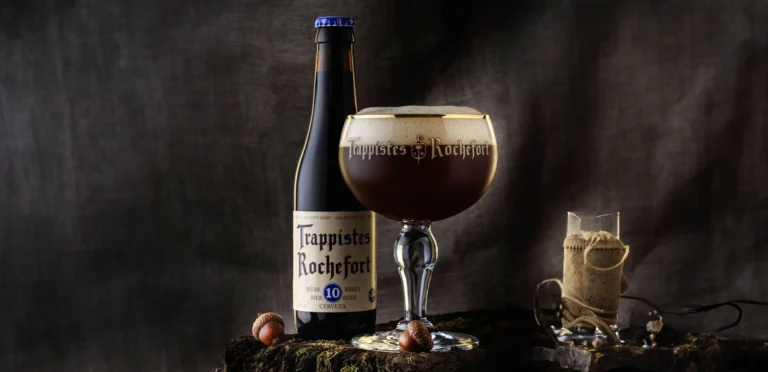
Belgian Quadrupel (Quad)
Trappistes Rochefort 10: Belgian Trappist Tradition, Dark and Strong

Belgian Quadrupel (Quad)
La Trappe Quadrupel: Trappist Brewing from the Heart of the Netherlands

Belgian Quadrupel (Quad)
St. Bernardus Abt 12: A Belgian Classic with More Than 70 Years of History
This beer is in the library of the BeerLens app. Scan the label to identify it, then keep your own tasting notes.