Skol: How a Scottish Lager Won Over Brazil
Skol was born in Alloa, Scotland, in 1959 and reached Brazil under license in 1967, where it grew into one of the country’s biggest beer brands.

Skol was born in Scotland, but it was in Brazil that it became a central part of the drinking culture. An unusual history, an approachable character, and a friendly image made it a beer that brings Brazilians together, and one that reflects the country’s style and its zest for life.
ISkol’s History and Its Place in Brazilian Culture
Skol began in Alloa, a small town on the north bank of the Forth estuary in Scotland. From 1927 the Arrol brewery there made a lager called Graham’s Golden Lager. The brewery later passed to Ind Coope, which in 1959 relaunched the beer as Graham’s Skol Lager, soon shortened to Skol. The name borrows skål, the Nordic toast, to give the lager a Scandinavian air.
In 1964 Allied Breweries, the group Ind Coope had just helped create, joined Labatt of Canada, Pripps of Sweden, and Unibra of Belgium to form Skol International, so that brewers in many countries could make and sell one beer under a shared name. Brazil took up the license in 1967. There the Skol name was first tied to Cervejaria Rio Claro, the maker of Caracu and the first company to brew Skol in the country. Brahma later bought the rights to the Skol name in Brazil, then merged with Antarctica to form Ambev, which brews and sells Skol there today.
In the 1990s Skol rose to become Brazil’s best-selling beer, and it has been a fixture of everyday life there ever since. For all its tangled origins, it has come to stand for Brazilian prosperity and inventiveness, and for a country that likes to invite everyone to the party.
IIWhat Defines Skol
Skol, a popular European Pale Lager in Brazil, is known for a clear set of traits:
- Bright Yellow, Clean Foam: Skol has the bright yellow color typical of the style, which looks fresh before the first sip. The foam stays clean and settles into a fine head that adds to the beer’s appeal.
- Refreshing Flavor: Skol is usually described as light, clean, and easy to drink, which suits Brazil’s tropical weather, when people want a cold beer against the heat.
- Moderate Strength: Skol usually has a moderate alcohol content, so it keeps spirits up without hitting too hard.
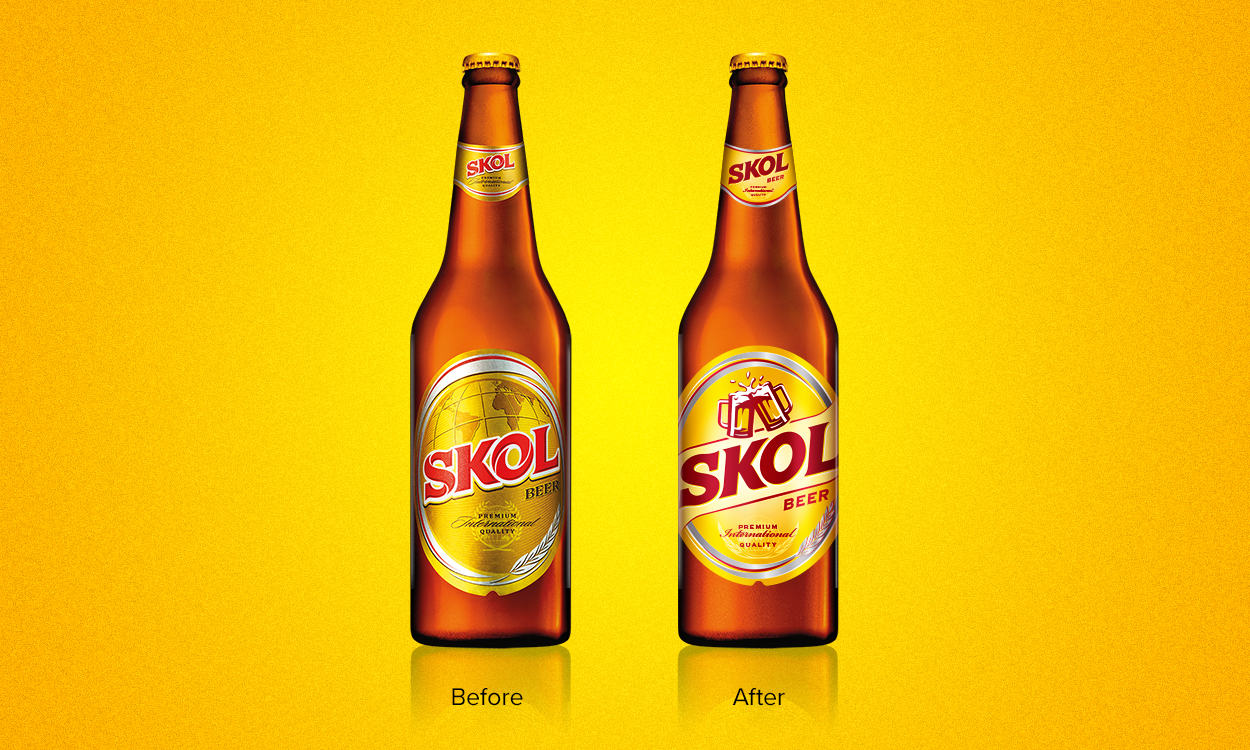
- Packaging and Branding: Skol’s packaging has a look of its own: the familiar yellow and red, with “Skol” in capital letters, makes the beer easy to pick out in the market.
- Food Pairing: Skol is a regular at outdoor parties, alongside casual fare such as grilled ribs, fish in lime sauce, and seafood. Its lightness makes it an easy fit for get-togethers with friends and family celebrations.
IIISkol Abroad: From Alloa to the World
Skol’s spread across borders accounts for much of its success in the global beer market. A few points stand out.
Going International
From 1964, Skol was built as an international brand. Rather than brewing in one place and exporting, Skol International licensed brewers in each country to make and sell the beer under the same name. By 1967 Skol was brewed at 20 breweries in 14 countries. Today Carlsberg, which bought Allied’s brewing business, holds the rights to Skol across most of the world except Africa and South America; in Africa the license belongs to Unibra, and in Brazil to Ambev.
A Local Brewer in Every Country
The Skol sold in Africa, Asia, or Europe is not Brazilian beer shipped abroad. Each market has its own licensed brewer, and the alcohol content varies from one country to the next.
On the International Stage
Skol turns up regularly at international sporting and cultural events, from motor racing to major concerts and festivals, which keeps the brand visible and underlines its global reach.
An International Skol Community
Skol has built an international community of beer drinkers, who trade experiences and opinions about the beer on social media and at special events.
That spread has carried a name born in Scotland to much of the world, even though a different company brews what is in the bottle in each country. It is a genuine feat in the beer business, and an example of very different cultures sharing one beer.
IVFinal Thoughts
In many countries, Skol has come to mean friendship and good company, a beer for raising a glass together.
Originally published in Vietnamese on Tạp Chí Beer.
More European Pale Lager
About this style
European Pale Lager
Harbin Lager: The Story of a Century-Old Chinese Lager

European Pale Lager
Yanjing Beer: The Easy Appeal of a Chinese Classic
European Pale Lager
Efes Pilsener: A Golden Lager from Sunny, Windswept Anatolia

European Pale Lager
Stiegl Goldbräu: Salzburg in a Glass
This beer is in the library of the BeerLens app. Scan the label to identify it, then keep your own tasting notes.