Samuel Smith’s Oatmeal Stout: A Classic of English Brewing
A traditional Oatmeal Stout of coffee, chocolate, and silky oats, shaped by more than 260 years of Yorkshire craft brewing.

Picture a cold winter afternoon in an old Yorkshire pub. On the table sits a glass of glossy, near-black beer under a fine, velvety head, smelling of roasted coffee with a faint trace of chocolate. What the glass holds is a slice of time, a chapter in the history of English craft brewing. Samuel Smith’s Oatmeal Stout is still made the traditional way, and every sip draws on a story that runs back more than two centuries.
IA History of Samuel Smith Old Brewery
Founded in Tadcaster in 1758, Samuel Smith Old Brewery is one of the oldest working breweries in England. Its age is only part of its value; the rest lies in how closely it still follows the original craft methods. The clearest sign is fermentation in Yorkshire Square vessels made of slate from Wales, a demanding system that gives the beer a more consistent, cleaner, and deeper flavor.
The brewing water comes from an old well, 85 feet deep and dug the same year the brewery was founded, which ties the beer directly to Yorkshire ground. Shire horses still pull drays of beer around the town, the past still at work in the present. That is why Samuel Smith’s is better described as a “living piece of history” than as a brand.

IIOatmeal Stout: Tasting Notes
Stouts are not all alike, and this one makes the point well. Raise the glass and the beer shows deep brown turning to jet black, clear yet velvet-dark. A thick, cloudlike ivory head sits on top. At the first sip the oats lay a silky texture across the tongue, followed by deep coffee, lightly bitter chocolate, and a faint caramel sweetness.
No flavor crowds out another; each one props up the next. The oats bring that smoothness and also fill out the body without making it heavy. Bitterness is moderate and gentle, never harsh, a quiet note from the hops. The finish lingers and keeps opening up, and it pulls you back for another sip.
IIIHow to Serve Oatmeal Stout
Getting the most out of Samuel Smith’s takes the right glass, the right temperature, and the right frame of mind. Serve it in a classic pint glass or a nonic pint, whose flared lip helps hold the head and gather the aroma. The ideal range is 10–13 °C (50–55 °F), cool enough to keep the beer’s structure and warm enough to open up its layers of aroma.

To pour, tilt the glass to 45° and go slowly, so a head of 2–3 cm builds evenly. Set it down on an old wooden table, put on some quiet music, and sit by candlelight: as the beer goes down it moves from soft sweetness to a mild bitterness, from forceful to calm. It pairs well with meat grilled over glowing charcoal, rye bread, a sharp blue cheese, or even a handmade oatmeal cookie, and each pairing has a few surprises of its own.
IVA Benchmark for Modern Oatmeal Stout
Before Samuel Smith brought oatmeal stout back into the spotlight in the late 20th century, the style had been all but forgotten. By holding to classic methods, the brewery revived an old style, one that now sits comfortably between past and present.
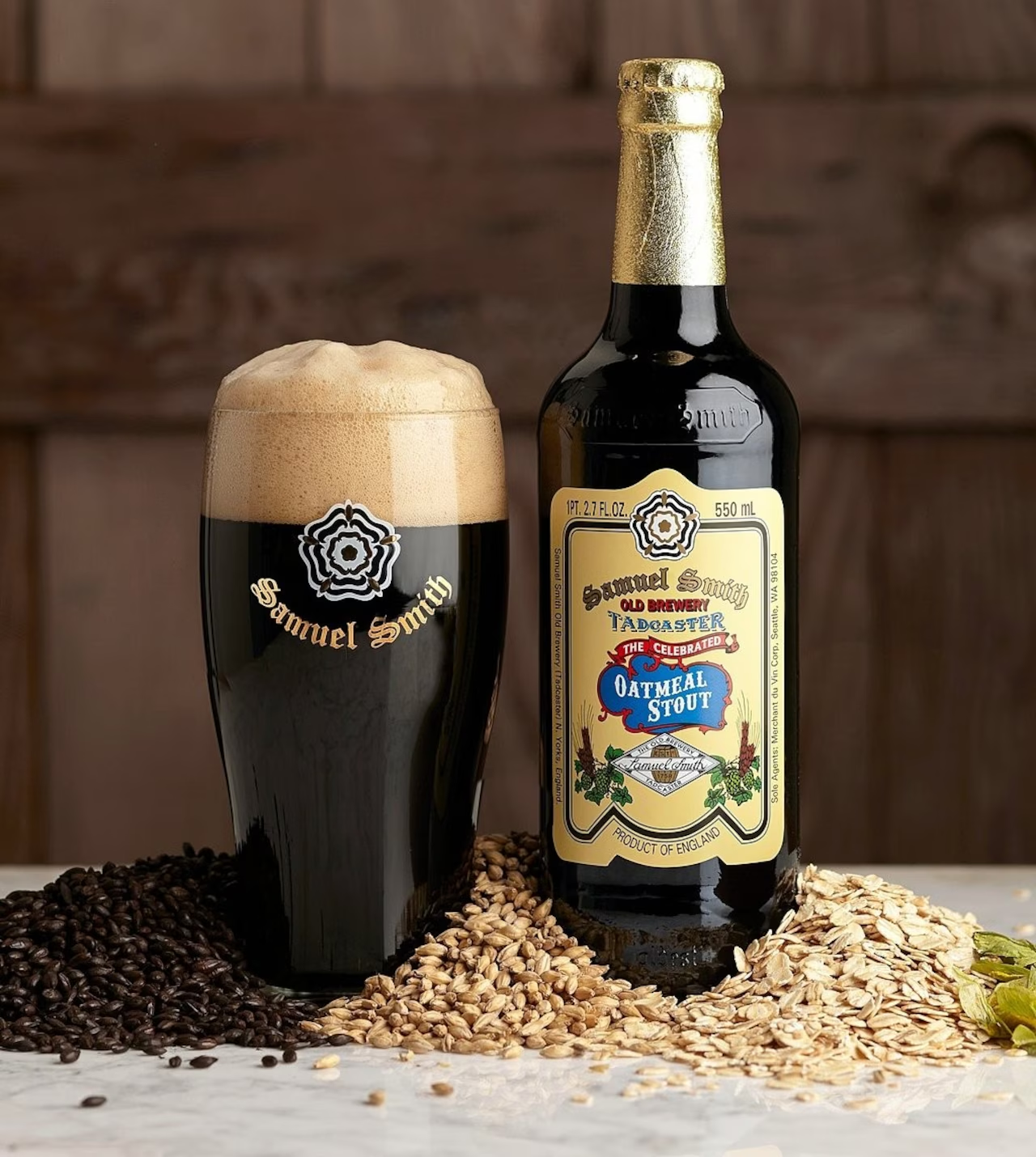
Today, mention oatmeal stout and many drinkers think first of Samuel Smith. Beyond its standing as one of the top examples of the style, it is the yardstick modern brewers measure their own versions against and learn from. For all the praise it has drawn around the world, the brewery has been in no hurry to change it, and the beer keeps to what defined it from the start.
Nobody drinks Samuel Smith’s in a hurry: in a fast-moving age, each glass is a small dose of nostalgia and a reason to sit still for a while.
VConclusion
Of the world’s thousands of beers, few carry a living heritage the way Samuel Smith’s Oatmeal Stout does, with Yorkshire tradition and honest, durable craft set down in its color and flavor.
Anyone who doubts that beer can be romantic should try Samuel Smith’s once: the right glass can take you back to sit with 18th-century brewers and hear their stories, until you feel part of them yourself.
Originally published in Vietnamese on Tạp Chí Beer.
This beer is in the library of the BeerLens app. Scan the label to identify it, then keep your own tasting notes.