Dead Guy Ale: How a Day of the Dead Beer Became Rogue’s Signature
First brewed for a Day of the Dead celebration in Portland, Rogue’s Dead Guy Ale is an unusual, affecting beer whose story moves through memory, art, and wandering spirits.
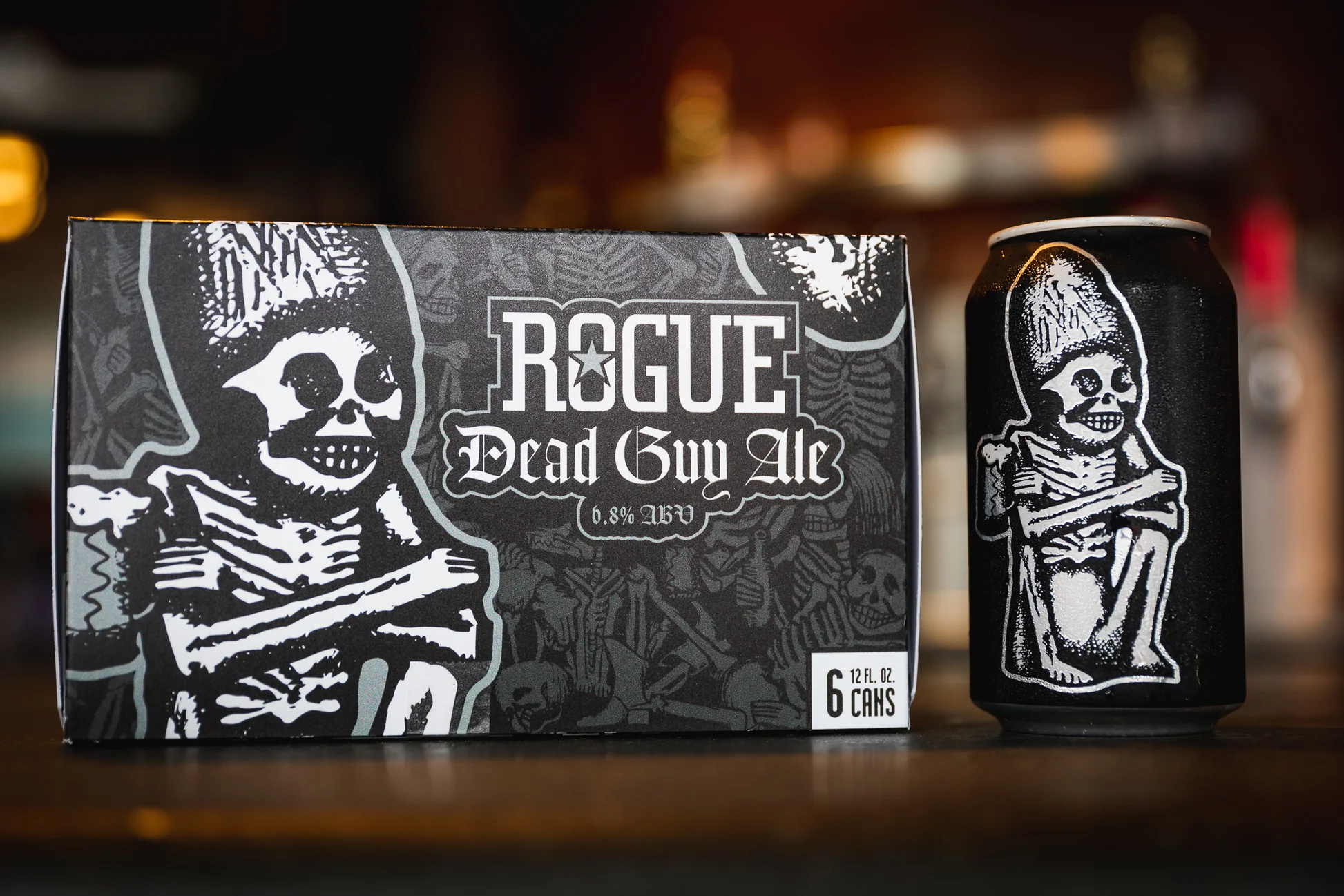
Some nights Portland sits under fog, as hushed as music from the other side. On a quiet street corner, where dim light falls across an old wooden table, someone pours a glass of beer the color of honey. Warm and full in the glass, it calls up something very old, a memory that was never ours yet still makes the heart stir. The beer is Dead Guy Ale.
It does not try to impress with an odd look, and it never shouts for attention. Dead Guy Ale arrives like a whisper from the spirits of the Day of the Dead, carrying a longing for something lost, and it comes from Rogue Ales, a band of rebels who tell stories with barley and hops.
It began as a beer for a festival held once a year, then found its way to countless tables, far beyond the ritual and the season it was made for, and became a classic: quiet, but proud.
IThe History of Dead Guy Ale and Rogue Ales
In 1988, in Newport, Oregon, a group of beer lovers with a rebellious streak and a hunger for freedom founded Rogue Ales. Their aim was to build a culture around beer. From that small coastal brewery came a run of craft beers made to push past every limit, and Dead Guy Ale became the most distinctive of them.
The story begins in the early 1990s, when a Mexican restaurant in Portland asked Rogue Ales for a special beer to serve during Día de los Muertos, the Day of the Dead, when families remember those who have died. The first version was called “Maierbocker,” a play on the name of its creator and the Maibock style. That name was not bold enough for a beer with such an unusual spirit.

Rogue renamed it “Dead Guy Ale” and gave it a logo: a skeleton in a metal helmet holding a mug of beer. The image is funny and countercultural at once, a gentle jab at death and ceremony. The label drew on Día de los Muertos, with mysterious tones and Mexican folk art, and it was recognizable from the day it appeared.
No one expected a beer made for a single holiday to become the company’s flagship, accounting for as much as 40% of Rogue’s revenue for many years. Dead Guy Ale moved beyond local bars into national distribution and eventually overseas, carrying Oregon’s rebel streak well past the borders of the United States.
Today Rogue Ales is one of the established names in craft beer, with a modern brewery, its own hop farm, and a loyal following. Through all the changes, Dead Guy Ale has kept its original character: a little eerie, a little rebellious, and brewed with deep care for the craft.
IIFlavor and Style: A Maibock Meets American Ale
Although it is billed as a Maibock, a strong lager style from Germany, Dead Guy Ale is in fact an ale, a characteristic bit of Rogue rule-bending. It sets German tradition beside American invention: rich malt up front, a light touch of American hops behind it.
Key characteristics:
- Color: Deep honey, slightly hazy.

- Aroma: Toasted bread, sweet caramel, and a faint herbal note.
- Flavor: Rich, sweet malt and light toffee, with a moderately dry finish and balanced bitterness.
Dead Guy Ale is brewed with 2-Row, Munich, and Crystal malts, the brewery’s proprietary Pacman yeast, and Revolution and Independent hops. Together they hold aroma, flavor, and a smooth mouthfeel in balance.
At 6.8% ABV, Dead Guy Ale has moderate strength, enough to warm you on a cold night, yet it stays surprisingly easy to drink.
IIIServing and Food Pairing
Dead Guy Ale rewards a little care in serving:
- Serving temperature: 7–10 °C (45–50 °F), which keeps the flavor full without muting the subtler yeast and caramel notes.
- Glassware: A goblet or chalice, which opens up the aroma and lends the pour a sense of ceremony and craft.
- Food pairings:
– Grilled pork in a bold marinade, which lifts the malt and adds a smoky sweetness.

– Pan-seared salmon or grilled seafood, which brings out the beer’s dry finish and light bitterness.
– Rich cheeses such as Brie or Gouda, which offset the beer’s full sweetness and feel smooth on the tongue.
Dead Guy Ale is also at home at an outdoor barbecue or an autumn dinner beside a crackling fire.
IVAwards and Reputation
Dead Guy Ale never needed to shout to be noticed. It built its reputation quietly, step by step, winning over beer lovers and some of the toughest judging panels in craft beverages, and it still makes people stop, pay attention, and nod.
Since 2011, Dead Guy Ale has collected awards at major competitions year after year:
- World Beer Championships: A gold medal in 2011, followed by a string of other medals from 2012 to 2023, a record of consistent and steadily improving quality.
- World Beer Awards: International honors that recognize both flavor and creativity within a style.
- Oregon Beer Awards: At home in Oregon, Dead Guy Ale has won a number of platinum and gold awards over the years, confirming Rogue’s firm place in the local beer community.
The craft beer market keeps shifting, with trends rolling in and out like waves, yet Dead Guy Ale has kept its own identity. It never chased fashion and has quietly grown into a landmark.
VFinal Thoughts
Some encounters need only a glance or a small sip to stay with you, and Dead Guy Ale, which began as a whisper at a Día de los Muertos celebration, is one of them.
It belongs to a world where a skeleton in a helmet frightens no one; instead it makes people laugh, think, and then want to raise another glass.

Brewed from barley, Pacman yeast, and a dash of rebellion, it is the beer people remember fondly from evenings under amber light, with quiet music playing or in a crowd of strangers.
It suits the moments when you want something honest rather than elaborate, strange yet familiar, full-flavored yet soft, and it is meant less for getting drunk than for hearing a story told very quietly, without words.
Listen long enough, and you may end up telling that story yourself, in your own voice.
Originally published in Vietnamese on Tạp Chí Beer.
This beer is in the library of the BeerLens app. Scan the label to identify it, then keep your own tasting notes.