Pabst Blue Ribbon: Over 180 Years in American Beer Culture
A personal story and a long history: Pabst Blue Ribbon, an American standby for more than 180 years, with a plain, familiar taste.
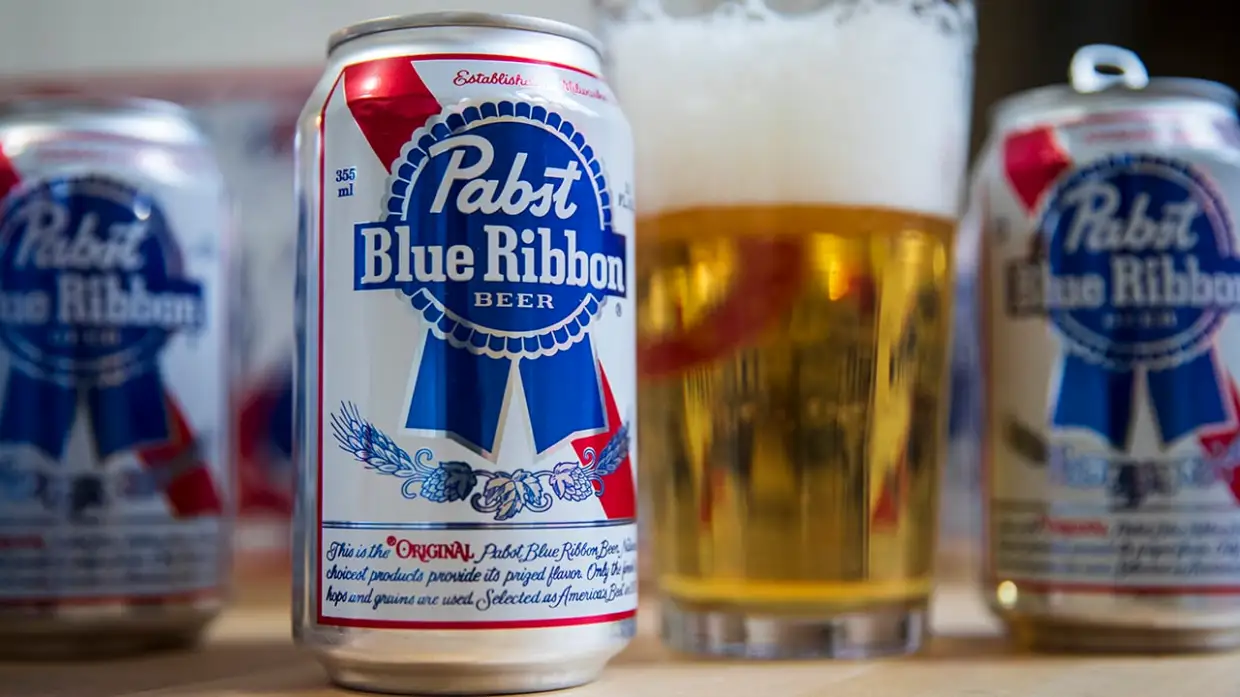
There were days when I thought nothing in my life was worth holding on to. Serious illness had taken my strength and my faith and left a cold emptiness behind. Then one afternoon, when my breathing had eased and my hands had stopped shaking, I sat on the front porch as the last of the daylight came down softly. On the table was a cold can of Pabst Blue Ribbon, beads of condensation sliding slowly down its side. I cracked it open. The hiss was a small, plain sound, yet it stirred me like an old song I thought I had forgotten. The golden beer went down, gentle with malt, fresh with hops, and I realized that even the most ordinary things hold a kind of beauty I had been missing.
IOrigins and Growth
Beginnings in Milwaukee
In 1844 Jacob Best and his sons founded Best and Company in Milwaukee, a city on Lake Michigan with harsh winters and blazing summers. It was a small brewery serving the local community. Its first batches came as the United States was expanding its borders and taking in waves of European immigrants, who brought traditional brewing methods with them.

Frederick Pabst, a German steamship captain, married into the Best family in 1862, when he wed Phillip Best’s daughter. He gave up the sea to devote himself to the beer business. His decisiveness and foresight carried the brewery through hard economic times and grew it from a local operation into a name known across the Midwest.
The Blue Ribbon
Beginning in 1882, with competitors on every side, Pabst Brewing Company hit on a distinctive way to signal quality: it tied a blue ribbon around the neck of its Best Select bottles. When customers took a bottle home or brought one to a party, the ribbon vouched quietly for its refinement and reputation. At the 1893 World’s Fair in Chicago, Best Select won a gold medal, but it was the blue ribbon that stuck in the public’s mind. In 1899 the beer was officially renamed Pabst Blue Ribbon, tying the company’s history to a symbol that felt upscale yet approachable.
Surviving War and Prohibition
The 20th century brought two world wars, an economic depression, and the hard years of Prohibition (1920–1933). Barred from brewing beer, Pabst Brewing Company kept going by making other products, among them Pabst-ett cheese. Once the law was repealed, Pabst came back strong, reclaimed its position, and expanded distribution across the United States.
From Heyday to Revival
By the middle of the 20th century, Pabst Blue Ribbon was a regular presence in bars, at family parties, and on the dinner tables of workers coming home from a shift. Sales slipped at times as other giant brewers rose, but PBR kept its character. In the 21st century a younger generation rediscovered it the way they rediscovered an old denim jacket or a vinyl record: simple, genuine, and unvarnished.
IIThe Style: American Adjunct Lager
Pabst Blue Ribbon is a textbook example of the American Adjunct Lager, a distinctly American style that emerged in the late 19th century, when brewers set out to make a light, easy-drinking lager to suit a wide range of tastes. The style pairs 2-row or 6-row malt with adjunct grains such as rice or corn, which soften the flavor, dry out the beer, and make it more refreshing.
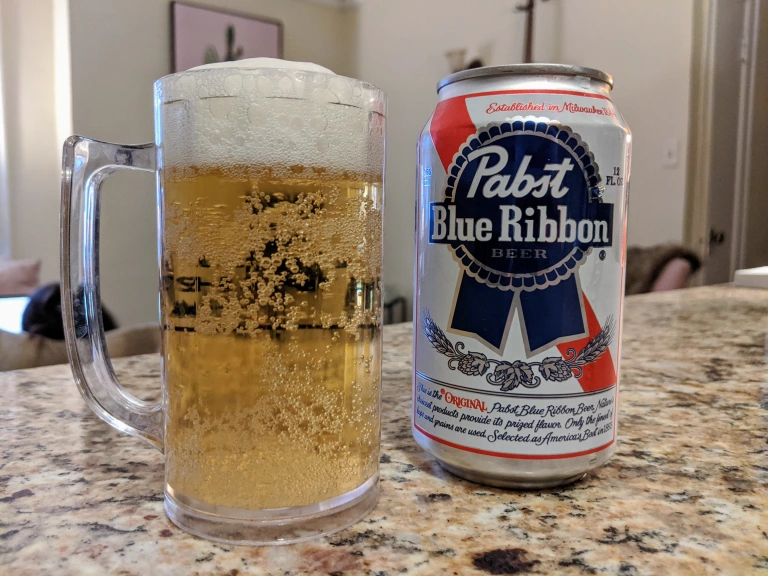
What sets PBR apart is its balance: less bitter than many European lagers, and not too sweet either. It pours pale yellow and brilliantly clear, catching the light like thin honey. The aroma is soft, marked by pale malt with a touch of herbal notes and American and European hops. In the mouth it is smooth, and the finish is dry and quick, though a faint sweetness lingers.
The American Adjunct Lager was designed from the start to be “everyone’s beer,” easy to drink and as suited to an outdoor party as to a conversation at the bar. Pabst Blue Ribbon has held to that idea for more than a century, which makes it one of the clearest examples of the style and proof that simplicity is sometimes the brewer’s highest achievement.
PBR at a glance:
- Alcohol (ABV): 4.7%, moderate enough to enjoy over a long evening.
- Color: Pale yellow, clear, and bright.
- Aroma: Mild malt with American and European hops.
- Finish: Refreshing, crisp, and not overly bitter.
IIIFlavor and the Drinking Experience
Poured into a pilsner glass, PBR glows gold when the light comes through it. A fine white head rises and fades slowly, leaving a gentle, sweet aroma of pale malt and a clean note of hops. The first sip slips past the lips and down the throat without noise or harshness. A delicate malt sweetness spreads across the palate, and a subtle bitterness wakes it up. The longer you drink, the more you notice how smooth it is and how crisp and dry the finish, leaving the mouth clean and refreshed.
Its appeal has little to do with complexity. What PBR does is slow you down long enough to take in the moment. In the middle of a loud party or alone in a quiet kitchen, it gives you a little room to breathe and to notice something simple and honest.
Set beside a Guinness, which is deep and warm, PBR is plain, bright, and sincere: easy to remember, easy to like, and familiar enough that you keep coming back to it.
IVHow to Serve PBR
Drinking Pabst Blue Ribbon well is a small ritual, and every detail adds something to the flavor.
Serving Temperature
Served at 3–5 °C (37–41 °F), PBR is at its freshest, cleanest, and driest. The cold quenches thirst and also brings the malt and hops into better balance.
Glassware
- Pilsner glass: Shows off the beer’s gold color and clarity while keeping a fine white head.
- Pokal glass: Holds the aroma longer and makes the beer feel a little more elegant.
The Pour
Tilt the glass to about 45 degrees as you pour so the beer runs gently down the side and does not foam too much. With about 1/3 of the beer left in the can or bottle, bring the glass upright to build a fine head of about 2–3 cm, which helps release the aroma.
Food Pairing
- BBQ and grilled meat: The lightness of PBR cuts the fat and makes rich, savory meat easier to eat.
- Fresh seafood: Shrimp, crab, and scallops, steamed or grilled, all work, because the beer does not overwhelm the seafood’s natural sweetness.

- Cheese: Especially good with cheddar or Gouda.
- Spicy food: The cooling, thirst-quenching taste of PBR balances the heat.
Time and Place
PBR fits many settings, from a crowded party under warm yellow lights to a quiet evening on the porch with a cool breeze drifting through. What matters is to slow down, take it one sip at a time, and pay attention.
Drunk that way, even a plain can of PBR is something you remember.
VOther Versions of PBR
Part of the appeal of Pabst Blue Ribbon is the range of versions built around the classic flavor, each suited to a different way of drinking.
- PBR Extra: At 6.5% ABV, the stronger version, with fuller malt flavor and a longer finish, for drinkers who want PBR with more weight.
- PBR Easy: Lighter at 3.8% ABV, a good choice for long conversations or for occasions when you want to drink more and still keep a clear head.
- PBR Non-Alc: A non-alcoholic version (<0.5% ABV) for people who love the taste of PBR but cannot or prefer not to drink alcohol. It keeps the gold color, aroma, and smoothness of the original.
- PBR Hard Coffee: A sweet, malt-based coffee drink, made for drinkers who like to explore and enjoy a surprise.
- PBR High Seltzer: A non-alcoholic sparkling water infused with cannabis-derived THC, launched in 2020 and sold only where cannabis is legal, aimed at consumers looking for something different.
Each is a variation on the traditional recipe, and each stays recognizably PBR: simple, approachable, and true to itself.
VIConclusion

This afternoon I am sitting on the porch again, with another can of Pabst Blue Ribbon in front of me. The sunlight has turned gold, and the breeze carries the smell of wild grass and the first chill of dusk. I take a sip, and the familiar taste leads straight back to that first afternoon after I found my way back to life. It is malt, hops, and water, and now it also carries memories and feelings I thought I had lost. PBR quenches my thirst, and it reminds me that life still holds a great deal to love, to keep, and to cherish—even if it is only a quiet afternoon with a cold can in my hand.
Originally published in Vietnamese on Tạp Chí Beer.
More American Adjunct Lager
About this style
American Adjunct Lager
Cass Fresh: A Taste of Korean Culture

American Adjunct Lager
Royal Challenge Indian Premium Lager: Light, Subtle Refreshment

American Adjunct Lager
Kingfisher Ultra: A Light Indian Lager with a Long Lineage

American Adjunct Lager
Great Northern: The Soft, Sweet Taste of Australia’s Far North
This beer is in the library of the BeerLens app. Scan the label to identify it, then keep your own tasting notes.