Mühlen Kölsch: Cologne in a Glass
Mühlen Kölsch is a traditional pale Kölsch from Cologne, with gentle malt sweetness, fresh floral and grassy notes, and 4.8% ABV, made for summer days.

Late-afternoon sun falls on the Rhine and turns the old rooftops of Cologne a warm amber. In a small, wood-paneled bar in the old town, stange glasses clink against one another. It is the sound of tradition and local pride, and the right setting for a delicate beer called Mühlen Kölsch.
The smell of fresh-baked bread drifts from a nearby bakery and mixes with the scent of grass and wildflowers on the breeze, a reminder of the golden barley fields of Nordrhein-Westfalen. Somewhere, tradesmen are laughing at the end of the working day. They come to this clear, sun-gold beer to quench their thirst, and for a taste of the place they call home, handed down through generations.
In today’s crowded beer world, Mühlen Kölsch is a quiet voice. It does not need to show off or shout to make its case. Its appeal lies in a clean, pure character and a balance that takes skilled brewers and a century of know-how to achieve, and each can carries a piece of Cologne’s culture in its flavor.
IBRAUWELT Köln
In the heart of old Cologne, where Gothic churches rise above the streets, BRAUWELT Köln opened in 2016, pairing modern brewing technology with a Kölsch tradition a century old. It is linked to Brauerei zur Malzmühle, where Mühlen Kölsch is brewed, and speaks for a region devoted to clear, bright beer.
BRAUWELT Köln serves the local market and exports as well, carrying Kölsch far beyond Cologne. Mühlen Kölsch is the brewery’s prized beer, brewed with evident care and finesse.

IIMühlen Kölsch: Named for the Malt Mill
Brewed by Brauerei zur Malzmühle, a brewery on the Heumarkt dating to 1858, Mühlen Kölsch is a tribute to Cologne and its long history. The name “Mühlen” (mills) is taken from Zur Malzmühle, “the malt mill.” Yet the beer is no period piece. It is a modern, easygoing take, aimed at younger drinkers, curious travelers, and anyone who cares about well-made local beer.
Open a can of Mühlen Kölsch and you get a portrait of a lively Cologne, a city whose traditions are poured for the world rather than locked away in museums.
Style: Between Ale and Lager
Mühlen Kölsch sits between two worlds: the warmth of an ale (top-fermenting, at warmer temperatures) and the crisp cleanness of a lager (cold-conditioned after fermentation). That is the defining trait of Kölsch, a style exclusive to Cologne and protected by an EU geographical indication, as if to say that a beer this pure can be made nowhere else.
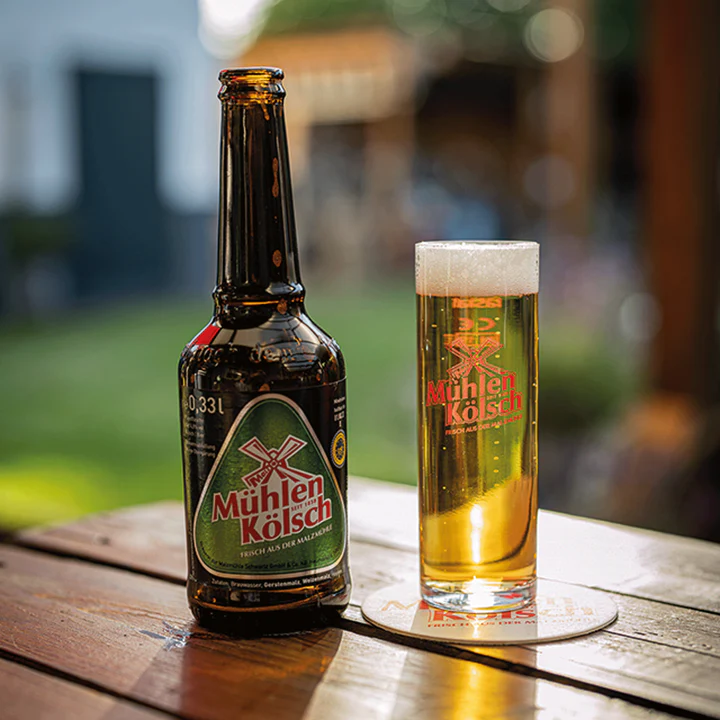
Tasting Notes
- Color: Pale gold, like early sun through old window glass, and brilliantly clear beneath a fine white head (SRM 3.5–5).
- Flavor: Gentle malt sweetness (white bread, freshly milled flour) meets fresh floral and grassy notes from Hallertau or Tettnang hops. The bitterness only brushes past (18–25 IBU), leaving a dry, clean, light finish.
- Mouthfeel: Light as a touch of the hand (medium-light body), with high, refreshing carbonation that makes each sip a pick-me-up that is hard to turn down.
How Kölsch Differs
- Compared with Pilsner (a lager): Less sharply bitter, with a lighter, silky body that suits long drinks without wearing out the palate.
- Compared with American Cream Ale: Kölsch has a clear European purity, with natural floral and grassy aromas where the American style leans sweet.
IIIServing Mühlen Kölsch

Temperature and Glassware
Let Mühlen Kölsch “wake up” at 6–8 °C (43–46 °F), a gentle enough chill for the fresh floral and grassy notes and the soft malt sweetness to come through on the tongue. Served too cold, below 4 °C (39 °F), it goes mute, and a fine beer goes to waste.
The tall, slender stange glass is the doorway to proper Kölsch. Its narrow shape keeps the lively carbonation fizzing and channels the aroma straight up to the nose.
A tip: Cologne’s beer regulars often use a wooden Kranz tray holding several small stange glasses, so a fresh glass replaces each empty one and every sip stays ice-cold and fresh.
Food Pairings
- Halve Hahn: A rye bread sandwich with rich, buttery Gouda, a pointed contrast to the beer’s clean taste.
- Himmel un Ääd: Smooth mashed potatoes folded together with sweet-tart apples, a homely folk dish that lifts the beer.
- Wiener Schnitzel: A crisp fried crust that melts in the mouth, set off by the beer’s bubbles.
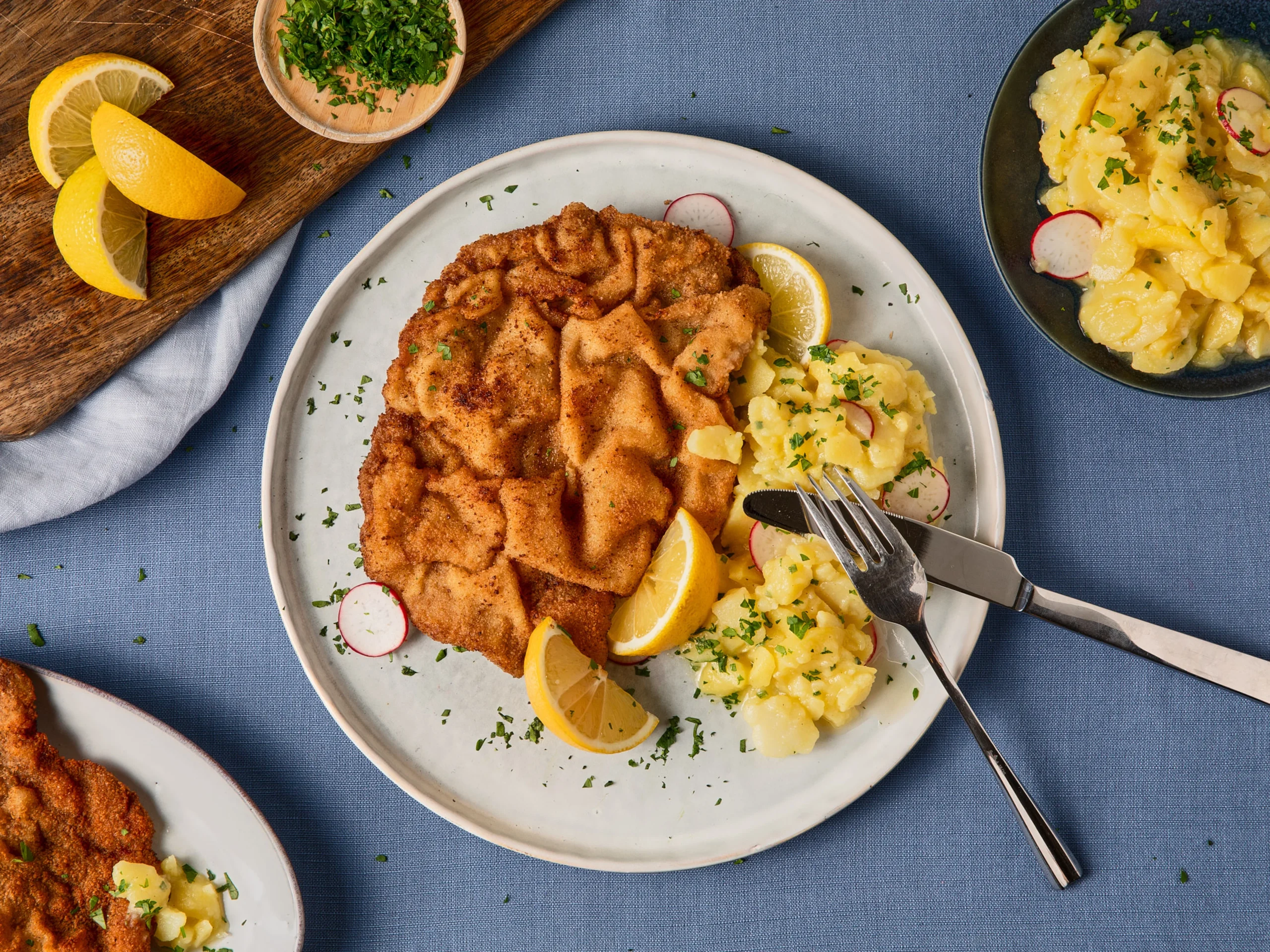
One caution: avoid very spicy or greasy dishes, which will steal the show from a beer as delicate as Mühlen Kölsch.
When and Where to Drink It
- Hot summer days: Mühlen Kölsch brings cool relief to a picnic on the banks of the Rhine.
- Kölschkneipen (Cologne beer pubs): Here the culture of the “endless stange” leaves you intoxicated less by the alcohol than by the unhurried pace of life.
- Cologne Carnival: Beer and revelry run together, and the gold of Kölsch becomes the color of a good time.
IVConclusion
By the last stange, it is clear why people call Kölsch the “liquid soul” of this storybook city. Mühlen Kölsch is not a beer to rush: soft straw gold, fresh with flowers and grass, grounded by a warm note of sweet malt, clean yet gentle, traditional yet relaxed.
This is a beer for moments worth remembering: summer sun on the banks of the Rhine, laughter in a small wood-paneled pub, or simply a minute of pure quiet to yourself. It speaks through feeling rather than words, and its point is that happiness can be as simple as a sip of clear, ice-cold beer.
Follow that golden beer and you may hear Cologne whisper that here, the love of beer runs as deep as the love of the city itself.
Originally published in Vietnamese on Tạp Chí Beer.
This beer is in the library of the BeerLens app. Scan the label to identify it, then keep your own tasting notes.