Monastyrskiy Kvas: The Heady Rye-Bread Aroma of Eastern Europe
Monastyrskiy Kvas is a traditional Ukrainian kvass fermented from rye bread: sweet and tart in balance, 1.5% ABV, and a reliable thirst-quencher.

In the last afternoons of summer, when the first autumn wind starts to stir the golden barley fields, people reach for a drink that tastes of another time: Monastyrskiy Kvas. It does not flood the glass with floral aroma, and it has none of the bracing bitterness of modern craft beer. What it offers is gentler: toasted bread, an old-world yeast, and a taste of childhood.
The amber kvass calls up the old monasteries where the recipe was kept for generations, the laughter of Ukrainian village markets, and a mother’s welcome after a long summer day. It quenches thirst, and each small sip also carries something of Eastern European culture, its traditions, and its love of home.
Monastyrskiy Kvas has entered the modern market with its old character intact, a quiet reminder that real happiness often lies in simple things.
IMonastyrskiy Kvas and Its Monastery Roots
Brand History
Behind the old walls of Eastern European Orthodox monasteries, the craft of making kvass was kept alive for centuries. In 2006, a Ukrainian drinks producer set out to revive that heritage and turned Monastyrskiy Kvas from a homespun drink into an upscale bottled brand.
The milestones below come from the brand itself and have not been independently verified:
- 2006: The first bottles reached Ukrainian consumers, a tribute to a flavor from the past.
- 2010: The brand expanded into Russia and Belarus, where kvass is something of a “national treasure.”
- 2014: Political upheaval led the brand to pull out of the Russian market. From then on, Monastyrskiy Kvas concentrated on winning over drinkers at home and became a fixture of Ukrainian culture.
Background to the Launch
The turning point came in 2006, when handmade kvass left the family clay crock and became an industrial product without losing its essential character. The producer’s aim was clear: a “premium” version, free of preservatives, for drinkers who love tradition but are open to change.

The recipe sticks to the familiar basics: fragrant rye bread, a scattering of sweet raisins, and a classic kvass yeast. At just 1.5% ABV, it tastes lighter than homemade kvass, which makes it welcome “company” on a sweltering summer afternoon.
What Sets It Apart
- Distribution: Mainly in Ukraine, where it reaches everything from supermarkets to small corner shops. It turns up now and then in Eastern European stores in the EU, carrying a bit of the culture abroad.
- Short fermentation (24–48 hours): The kvass is not pasteurized, so every bottle keeps the soft tartness and clean sweetness of freshly made kvass.
Monastyrskiy Kvas is bound up with Ukrainian heritage, identity, and national pride.
IIKvass, an Eastern European Style
Not Quite a Beer
Monastyrskiy Kvas belongs to a family of fermented drinks typical of Eastern Europe, but it is not a beer. It is brewed from slices of crisp-toasted rye bread. If it has to be classified, it could go under Low-Alcohol Beer (at only 1.5% ABV) or Historical Beer, an old drink that has sustained many generations.
Appearance
- Color: A warm amber brown, like late sun through a kitchen window.
- Clarity: Slightly hazy, a sign of the natural yeast still in it.
- Texture: Light but not thin, with moderate carbonation and a slightly thick, soft body.
Aroma and Flavor
Bring the bottle to your nose and you will find:
- A pronounced aroma of toasted bread, with a hint of sweet malt syrup.
- A drift of raisin, and a soft lactic tang like homemade yogurt.
Then, on the tongue:
- A gentle malt sweetness fades quickly and gives way to a clean, cool tartness.
- A dry finish, with a trace of caramel from the toasted bread.
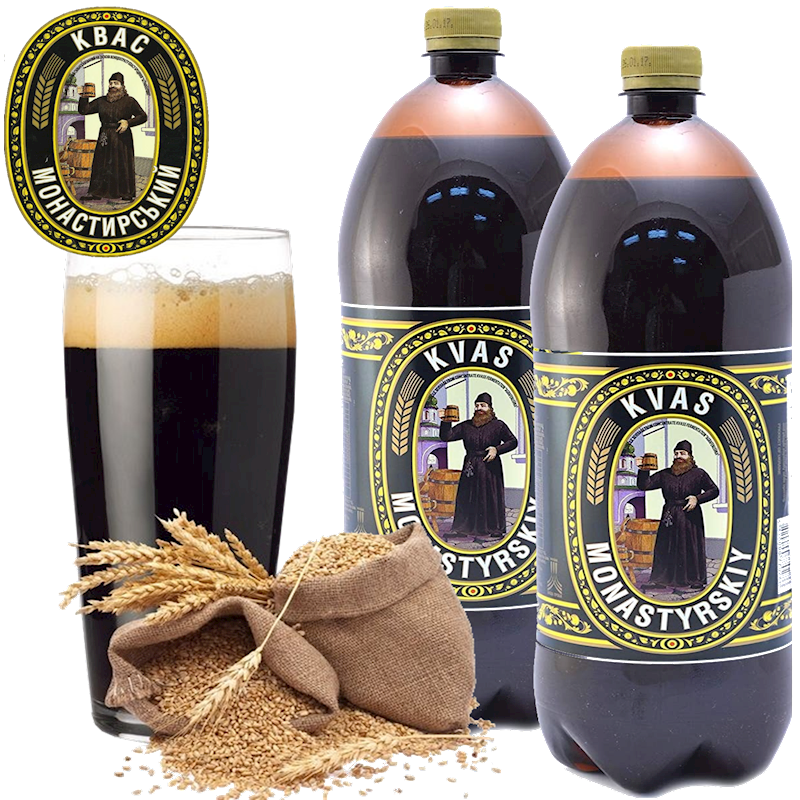
Monastyrskiy Kvas, a distinctive Ukrainian kvass

How It Differs
It is less sharply sweet than Russian mass-market kvass. Monastyrskiy Kvas holds a careful balance between sweet and sour that brings it close to the homemade kvass of grandmothers and mothers. The taste is simple and carefully judged: plain yet full-flavored, gentle yet lively.
IIIHow to Serve Monastyrskiy Kvas
Temperature
Serve Monastyrskiy Kvas at 6–10 °C (43–50 °F), just cold enough for the layers of toasted bread, malt syrup, and raisin to open up. Keep it out of the freezer: below 4 °C (39 °F) the cold numbs the palate, and you lose the play between soft sweetness and clean tartness that sits at the heart of traditional kvass.
Glassware
- A Ukrainian-style metal cup or a wooden cup: The rustic option, one that recalls monastery bells and summer noons in the shade of birch trees.
- A pint glass with a fill line: Lets you take in the amber-brown color as it catches the sun.
- Tumbler or Nonic: Keeps the fine bubbles lively on the tongue, so even a small sip feels festive.
Food Pairing
Kvass rarely goes it alone. It keeps company with the classic dishes of Slavic cooking:

- A bowl of bright red borscht: The clean tartness of the kvass meets the rich sour cream.
- A slice of fatty salo: Its salty, nutty richness melts into the kvass for a warm, homey pairing.
- Paper-thin rye blini: A light base that lets the kvass take the lead.
- Fragrant shashlik: The soft tartness cuts through the richness of the grilled meat.
- Crunchy pickles: Two fermented foods side by side, sour, salty, and clean.
Occasions
- A sweltering summer noon: A cold bottle of kvass wipes out your thirst.
- The Ivan Kupala festival: Jump over the bonfire with everyone else, then raise a glass of kvass to happiness, as the thousand-year-old tradition goes.
- The Easter feast: Beside sweet Paska bread, kvass becomes a toast to spring’s return.
- After a family dinner: Sip it like a dessert that leaves the stomach light and the heart warm.

With Monastyrskiy Kvas, each sip brings back warm memories: the smell of bread and the golden light of Eastern Europe.
IVA Fermented Taste of Ukraine
In the late-afternoon sun, a bottle of amber kvass holds centuries of rye bread and monastery yeast, along with something of the wide barley fields, the family hearth, and the Slavic summer festivals.
Its velvety brown and the gentle tartness that lingers on the tongue speak of a Ukraine both resilient and warm, and poured alongside salty salo or a bowl of crimson borscht, it turns a table of people into kindred spirits.
Among faceless industrial drinks, Monastyrskiy Kvas still sounds like a voice from the past: it asks you to slow down and take a sip, and it leaves you clear-headed rather than drunk.
Originally published in Vietnamese on Tạp Chí Beer.
More Kvass
About this style

This beer is in the library of the BeerLens app. Scan the label to identify it, then keep your own tasting notes.