Duchesse De Bourgogne: A Sweet-and-Sour Belgian Red
Duchesse De Bourgogne is a celebrated Belgian Flanders Red Ale whose sweet-and-sour character draws on oak barrels and a note of balsamic vinegar.

That autumn, I thought I was strong enough to let go, to stop dwelling on the days my ex and I spent sitting together on the college quad. Then a glass of Duchesse De Bourgogne was set down in front of me, and something in me stirred in a way I hadn’t expected.
Its reddish-amber light caught my eye the way the late sun once slanted through the curtain of my rented room, and the foam was as light as the smile he used to send me from a distance. I raised the glass to my nose and fell into its layered aroma of cherry, raisin, oak, and a touch of balsamic vinegar, and small memories rushed back in an instant: lazy afternoons when we skipped lunch to share the first beer of our lives, rainy nights under an awning, soaked and cold, opening a bottle chilled just right.
I had come through many lonely months and tasted more flavors than I could count, yet the first sip of Duchesse De Bourgogne caught in my throat. A Flanders Red Ale of 6.2% ABV, it opens without fuss, gentle as a familiar glance: just enough sweetness, a clean tartness like distant laughter, then a long, dry finish, like the last hug on graduation day.
Some memories have no name, just as some beers can’t be compared to anything else. Meet one at the right moment, somewhere still enough, and everything spills over. I don’t know what Brouwerij Verhaeghe had in mind when it made this beer, but to me Duchesse De Bourgogne is the person I once loved: tender, with hidden depths, leaving a beautiful empty space that never quite closes.
IThe Story of Brouwerij Verhaeghe
Brouwerij Verhaeghe sits in the peaceful countryside of Vichte, in Belgium’s West Flanders. It has witnessed a great deal of history, and generations of craftspeople have given their lives to it. The Verhaeghe family founded it in 1885 with basic equipment and a modest scale, like countless small breweries of the day, but with a large ambition: to keep the Belgian brewing spirit alive in every batch.
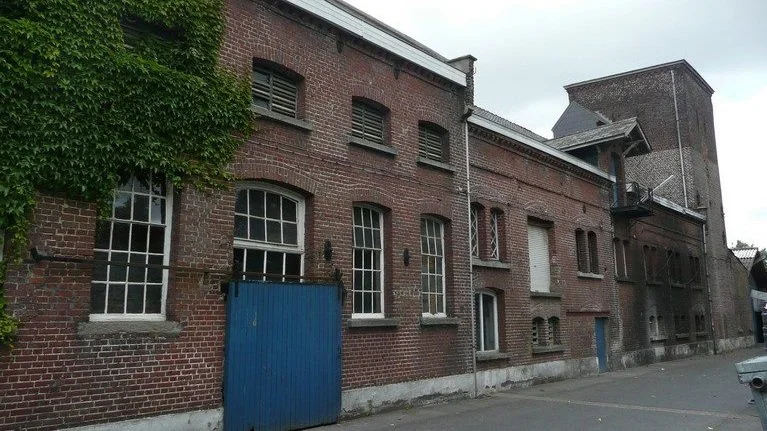
History did not leave the family in peace. When World War I broke out, Brouwerij Verhaeghe refused to work for the German occupiers, a brave choice that cost it all of its machinery, dismantled and confiscated. With no production line and no equipment, the family had nothing left but its self-respect and its devotion to beer.
Rather than give up, they quietly started again from nothing. After the war, amid the ruins, the brewery was rebuilt step by step and came back stronger than before. In the years that followed, Brouwerij Verhaeghe made a bold shift from traditional beers to the sour ales of Flanders, built on long aging in oak barrels and the careful blending of old and young beer.
The brewery never chased heavy modernization or industrial scale. It has kept its artisanal ways: every barrel is checked closely, and the beer is tended like a living thing. Each Verhaeghe beer carries time, history, and the care of several generations along with its flavor.
Out of that history came Duchesse De Bourgogne. Less showy than its contemporaries, it went its own way: tart, alluring, a little aloof, and classic. It sums up Verhaeghe’s belief that a beer should be felt and remembered, and can tell a wordless story of Flemish loyalty, identity, and pride.
IIThe Duchess Behind the Name
The name Duchesse De Bourgogne was not chosen at random. It is meant to move you, as if every drop were a memory from the heart of a woman who loved, lost, and never forgot.

Mary of Burgundy, the young Duchess of Burgundy, inherited one of the most powerful domains of the Middle Ages and was swept up in the currents of history. Her death at 25, after a riding accident, was mourned across Europe. Sadder still, her love for her husband, Maximilian, was cut short. Theirs was a political match, yet they shared real affection, and the bond, though brief, was strong enough that the letters they wrote each other are still preserved.
Duchesse De Bourgogne is Verhaeghe’s way of remembering her. Rather than a stiff biography, the brewery offers a haunting tartness and a light sweetness beneath the oak, each sip a fragment of memory or a pause. The beer is double fermented and rests in oak barrels for 18 months, like Maximilian’s hopeless wait after he lost her, and is then blended with a young batch only 8 months old: past and present folded together, as if to say that real love never disappears but settles, ferments, and lingers like the aftertaste of a beer that never fades.
To me it is a love song without words, the tears of a duchess who never got to live out her life, and each time I sip Duchesse De Bourgogne I feel as if I am living it again beside her.
IIIFlanders Red Ale: A Fading Art
Among the world’s many beer styles, Flanders Red Ale is a low-key but profound chapter of Belgian brewing. It was born in West Flanders, where cold North Sea winds mingle with the cool scent of the fields, and it carries the region’s history and culture along with its flavor, a way of keeping time in a bottle.
Unlike bright golden beers or modern IPAs full of floral, grassy hops, Flanders Red Ale calls to mind an old cellar where oak barrels sleep in the dark, and each batch is left to ferment naturally with Lactobacillus bacteria and wild yeast. That process gives the style its sourness: soft rather than sharp or startling, spreading slowly through the sweetness, bitterness, and astringency, like red wine that is still a beer at heart.

Making a Flanders Red Ale takes patience. After primary fermentation, the beer moves into oak barrels to age for 12 to 24 months. The oak links the beer to time, developing the esters, acids, and phenols that define the style. In an industrialized world, few producers still have the patience or the space to keep barrels that long, which is why the style is seen as a fading art.
What sets Flanders Red Ale apart is blending, the marrying of old and young batches. Long-aged beer brings a strong, sharp sourness; young beer keeps things fresh and light. The blend runs from balsamic vinegar, ripe cherry, and fermented red berries to oak, caramel, and sometimes a faint metallic note that recalls the bloodlike edge of a classic red wine.
The style was once the pride of Flanders, poured in family-run taverns and at local festivals. Then beers that were quick to make and easy to drink took over, and Flanders Red Ale was pushed aside. Only a handful of breweries kept it going, Brouwerij Verhaeghe among them, and its Duchesse De Bourgogne helped carry a nearly lost style into the present.
Today each glass of Flanders Red Ale is a small act of holding on to an older kind of beauty in a world that moves too fast, and drinking one means tasting a culture along with the sweet and the sour.
IVTasting Notes: A Beer That Drinks Like Wine
The first sip may make you frown, not because it is hard to drink but because it tastes like an elegant red wine that isn’t wine. That is the sleight of hand of Duchesse De Bourgogne, a beer that steps outside the usual frame to stand between two worlds, beer and wine.
A blend of 8-month-old and 18-month-old beer matured in oak, Duchesse De Bourgogne unfolds in layers. First come ripe cherry and raisin, gently sweet and round. Then a light, clean tartness spreads softly rather than biting, reminiscent of a young pinot noir with plenty of personality. A hint of caramel and the warmth of oak draw out a long finish, lightly dry and resonant. Pay close attention and you will find a touch of balsamic vinegar, a bold accent that still fits.
Its real achievement is balance: never as sharply sour as a lambic, never sweet enough to pass for a dessert beer. It holds the middle ground with poise, drawing attention without showing off, and at 6.2% ABV it feels rounded, warming without overwhelming the senses.
Beer drinkers who don’t usually like sour flavors are often surprised to be won over, and wine lovers find a kindred spirit, with depth, age, and maturity in every sip. Duchesse De Bourgogne is not a thirst quencher. It is a beer to sip, to slow down with, to remember by, and to keep discovering.
VHow to Drink It
Some drinks can be hurried. Duchesse De Bourgogne asks for stillness, a small ritual that gives you time to catch up with its flavors, and a glass of it becomes a moment framed by memory, feeling, and the soft light of late afternoon.
Pour it into a tulip or a flared chalice, not for looks but because both hold the light head and let the aroma open up. Pour slowly so the velvety foam rises just enough, and watch the reddish-amber color sway under warm light. Just looking at it settles the mind.
Serve it at 8–12 °C (46–54 °F), cool but not numbing, so the aromas have room to come forward. Take your time: bring the glass to your nose, then take a small first sip. Ripe cherry opens up, a sweet-tart note curls across the tip of the tongue, and the dry finish carries a whiff of oak that recalls an autumn afternoon of rustling leaves.
A few pairings to try with Duchesse De Bourgogne:
- Cherry tart or fruitcake: the natural sweetness meets the beer’s clean tartness, and the two settle into balance.

- Roast duck or grilled beef: the beer’s gentle acidity and dry finish temper the crisp skin and rich meat.
- Aged Gouda: the beer balances the cheese’s fat and saltiness, and each bite tastes fuller for it.
- Chilled fruit salad: it adds freshness, which suits a light evening or an early-spring picnic.
And if you are carrying something you haven’t said, a confession of love, an apology, or simply the ache of missing someone, a sip of this beer can be a letter that needs no messenger and still arrives where it should.
VIA Last Look Back
I used to think only time could heal. Then I realized that some things don’t need healing, only keeping, the way I have kept every glance, every laugh, every light touch of hands when we sat together at our usual place near the library. That day, also an afternoon, I chose Duchesse De Bourgogne not for its name but for the eyes it reminded me of.

In the end, that glass said for me what I no longer had the courage to say. With each sip I saw exam seasons, the first rains of winter, and an innocent love that never needed words to prove itself. Duchesse De Bourgogne didn’t make me forget. It let me look back without pain and remember with a smile.
If you have loved, lost, tried to forget, and then suddenly remembered, I believe this beer will understand you. Let Duchesse De Bourgogne whisper with you the things you never dared to say. Perhaps, at the end of the last sip, you will say softly to yourself: “I’m still in love, but now I’m at peace enough to keep it as a good memory.”
Because sometimes a glass of beer can heal, not with its yeast but with memories that have fermented into tenderness.
Mentioned in this article
Originally published in Vietnamese on Tạp Chí Beer.
This beer is in the library of the BeerLens app. Scan the label to identify it, then keep your own tasting notes.