Blanche De Bruxelles: A Belgian Witbier That Leaves Its Mark
Blanche De Bruxelles is a light, refreshing 4.5% ABV witbier from Brasserie Lefèbvre, built on soft wheat, dried orange peel, and coriander.

Rain tapped against the window, the drops sliding down the glass like memories never quite put away. I sat with both hands around a glass of Blanche De Bruxelles, a gentle Belgian Witbier at 4.5% ABV. It was ice-cold, yet it woke something deep in me, a warmth that had once belonged to someone else. He had passed through my life like a quiet traveler, leaving behind an empty space and a few broken pieces of my heart.
Perhaps beer can’t heal a broken heart, but it can give you a chance to listen to yourself. That rainy afternoon, Blanche De Bruxelles was a quiet consolation: with it I was allowed to be weak, and I found just enough courage to believe the sky would turn blue again after the rain.
IHistory: From Family Brewery to International Name
The story of Blanche De Bruxelles is bound up with that of Brasserie Lefèbvre SA, a family brewery founded in 1876 by Jules Lefebvre in Quenast, Rebecq, in the Wallonia region of Belgium. It began small, brewing on a craft scale, and grew into a fixture of Belgian beer culture.
Over more than a century, the brewery lived through Europe’s upheavals: two world wars, economic crises, and changing consumer tastes. Lefèbvre held on thanks to a love of brewing handed down from one generation to the next. Each generation kept the traditional recipes while bringing in something modern, and carried the beers out of the Walloon countryside to every continent.

Blanche De Bruxelles bridges past and present. Brewed from carefully chosen ingredients, from unmalted wheat to orange peel and coriander, it keeps faith with the classic witbier while suiting today’s palates.
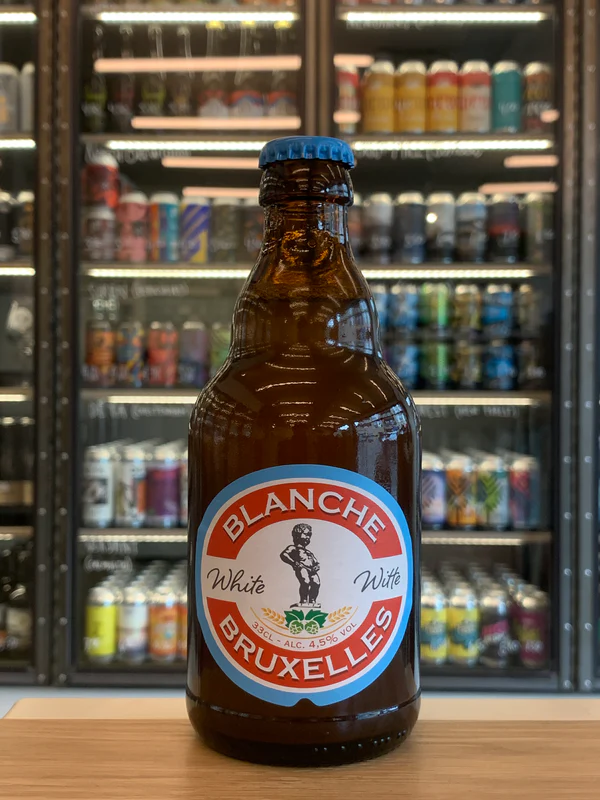
Brasserie Lefèbvre also makes other notable beers: Barbãr, a fragrant, sweet honey beer; Hopus, an IPA with plenty of personality; and Floreffe, an abbey beer steeped in tradition. Blanche De Bruxelles is still the brewery’s star, known for the Manneken Pis on its label, the cheeky, familiar statue that stands for the capital, Brussels.
Sold in many countries, Blanche De Bruxelles is a commercial success and a sign that a family beer brand can become a cultural ambassador, bringing the taste and spirit of Belgium closer to the rest of the world.
IIThe Witbier Style
Witbier, also called white beer, is one of the oldest and most distinctive styles on Belgium’s beer map, and Blanche De Bruxelles is a vivid example of the tradition. Witbier appeared around Leuven and Hoegaarden as early as the 14th century, when locals began making beer from unmalted wheat and natural spices. Where many beers rely on hops alone, witbier stands out for the way orange peel and coriander mingle with the flavor of wheat.
Hallmarks of the style:
- Color: Pale yellow to straw, with a soft, misty haze from the wheat and the lack of filtration.
- Aroma: A fresh mix of just-baked bread, light floral notes, dried orange peel, and coriander.
- Flavor: Light and gently sweet, with a natural touch of tartness and a dry, cool finish that wakes up the palate.
- Mouthfeel: Light body and brisk carbonation, smooth on the tongue, suited to relaxed moments.
Witbier has long been popular because it is approachable and easy to drink yet has real complexity underneath. At 4.5% ABV, Blanche De Bruxelles captures the style faithfully, at once familiar and new. It has none of a stout’s weight or an IPA’s sharp bitterness, only the softness and freshness of a summer breeze.
Witbier is also a sociable beer. In the past, Belgians drank it after days of work in the fields, a ritual for easing fatigue and drawing family and friends together. Blanche De Bruxelles carries that spirit on today, a link between stories, get-togethers, and memories made around the table.
IIITasting Notes
A sip of Blanche De Bruxelles opens on a bright note of dried orange peel, moves through a warm middle of wheat and fresh bread, and closes dry, cool, and clean. The impression reaches past the palate into memory, as if each ingredient in the glass carried a small piece of a story.
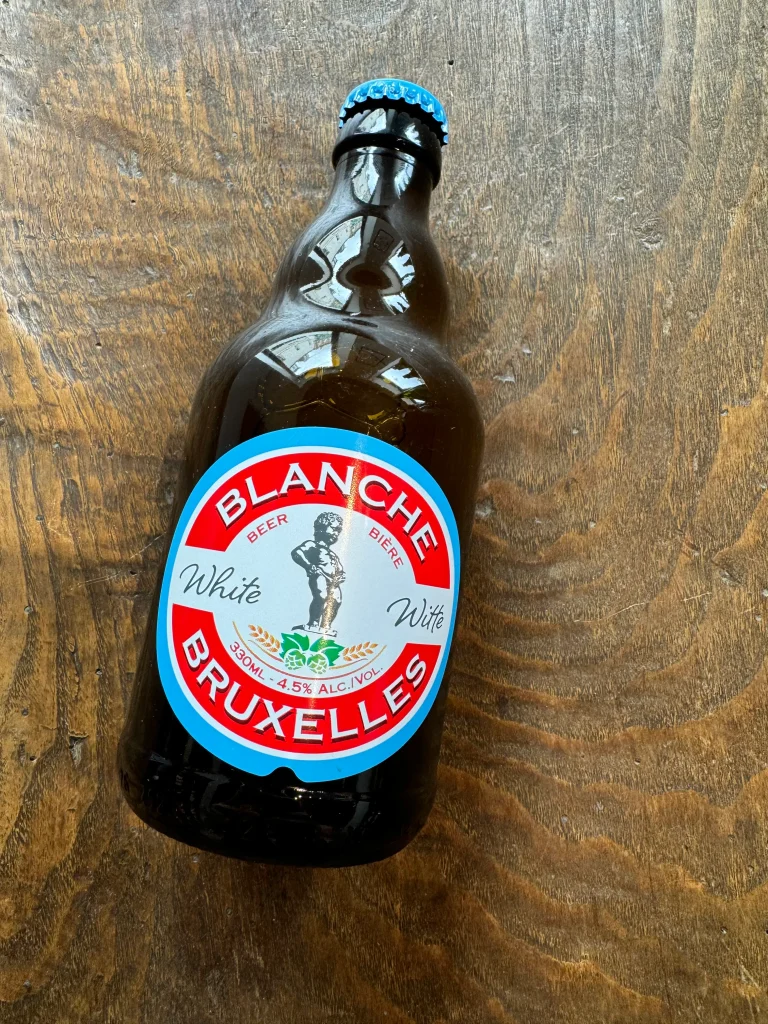
- Aroma: Dried Seville orange peel and delicate orange oil come first, with a little light floral character. Beneath them sit bread dough, fresh wheat, and a touch of the yeast character typical of Belgian strains, a base for the spice notes.
- Palate: The high proportion of wheat makes the first impression soft, smooth as linen. The midpalate brings fresh citrus and just enough malt sweetness for balance, then coriander builds gently with a white-pepper prickle and a little herbal depth.
- Mouthfeel: Light to medium body, with a fine, dense head thanks to the wheat proteins. Carbonation is high but fine, lively on the tongue, lifting each layer of flavor while keeping the beer light overall.
- Finish: Clean, dry, and slightly sharp at the edges of the tongue, leaving orange peel and a faint herbal fragrance that calls for another sip.
Ingredients and Method
That subtlety comes down to ingredients and technique. A light malt base (usually pale or pilsner malt) is combined with a large proportion of wheat, either unmalted or malted, which brings the haze and the bready note. Seville orange peel (bitter orange peel) and coriander seed are the traditional spices, added in just the right amounts to accent the beer without overwhelming it. Belgian yeast plays the key part, producing light fruity esters and, depending on the strain, sometimes a hint of phenolic character, which gives witbier its particular charm.
Variations and Modern Takes
Some brewers now try variations: more orange peel, or other kinds of orange to shift the aroma; a few light berries for a new layer of fruit; even a careful dry-hopping for more floral depth. A traditional Blanche De Bruxelles, though, keeps the original spirit: fresh, clean, and approachable.
IVHow to Enjoy Blanche De Bruxelles
Drinking Blanche De Bruxelles well is a small ritual of its own. To get everything out of it, pay attention to the details: temperature, glass, pour, and setting.
- Serving temperature: 4–7 °C (39–45 °F). In this range the wheat, orange peel, and coriander open up fully, and the beer keeps the light, refreshing quality of a witbier.
Glassware
Choosing the right glass makes a real difference. Three are usually recommended for Blanche De Bruxelles:
- Tulip glass: Often considered the ideal choice. The slightly flared mouth concentrates the aroma, while the rounded bowl holds the fine white head longer. It shows off the beer’s elegance and the complexity of its flavor.
- Weizen glass (the classic tall wheat-beer glass): Its tall body and flared mouth let the head rise high, which makes for an appealing sight, and it recalls the long tradition of wheat beers.
- Goblet or chalice: A short body and wide mouth give it a sense of occasion. It is not a common choice for witbier, but when used it feels both warm and ceremonial, especially at large gatherings.
Each glass leads you to a different side of Blanche De Bruxelles, from light and fresh to quieter and more intense.
Pouring
Pour gently and with intent: tilt the glass to about 45 degrees and pour slowly to keep a thick white head of the right size. The bottom of the bottle usually holds a layer of yeast sediment. Many people leave it behind for a clearer beer, while others pour it in for a little extra yeast aroma, the haze typical of the style, and more complexity of flavor.
Food Pairing
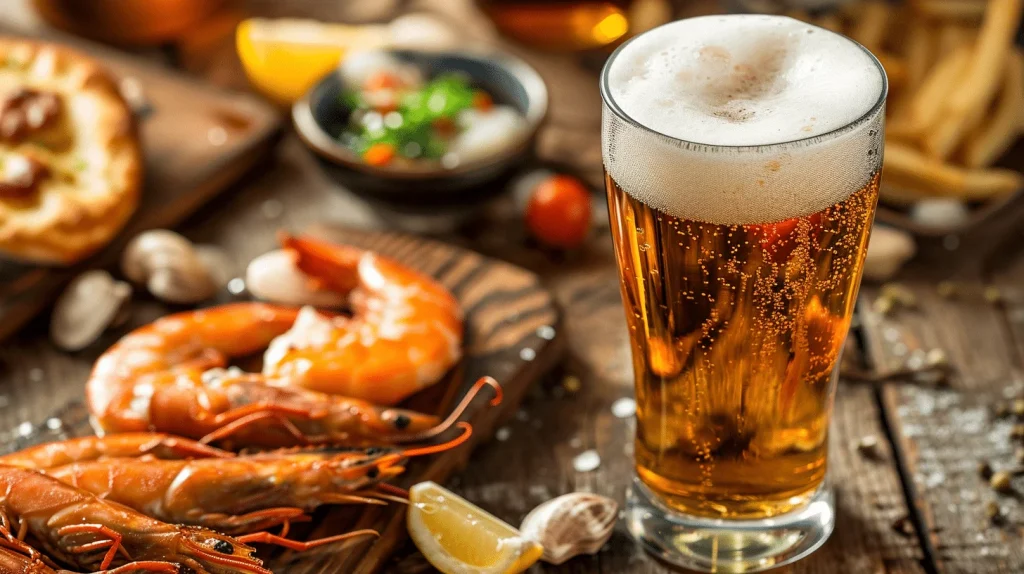
- Seafood: Shrimp, clams, and white fish, lightly grilled; the beer’s bright, tart orange note brings out their natural sweetness.
- Salads: Especially those with orange, lime, or fresh herbs, which echo the coriander in the beer.
- White meat: Grilled chicken or gently pan-seared fish, balanced by the beer’s lively carbonation.
- Soft cheeses: Feta, chèvre, or fresh mozzarella, whose creamy richness makes a backdrop for the beer’s freshness.
Setting
Blanche De Bruxelles suits quiet moments in the late-afternoon sun or easy conversation with friends. It is a beer for company, for good times and for sharing.
VBlanche De Bruxelles in Vietnam
For a time, Blanche De Bruxelles had a home of its own in the heart of bustling Saigon: a Belgian beer restaurant where yellow lamplight fell on bare wooden tables and the room smelled of toasted bread and rang with laughter. Vietnamese drinkers had their first taste of Belgium’s celebrated white beer there, and a glass worked like a ticket out of the rush of daily life and into a gentler, European memory.
Each sip here cut through Saigon’s sticky heat: the fresh orange, faint coriander, and soft wheat let people forget the weather for a while and feel calm and unburdened instead. With the crowds hurrying past outside, a glass offered a quiet pause and a moment of rest.
One guest who sat by the restaurant’s window once said that his first sip of Blanche De Bruxelles made him feel as if he were standing in a spring garden somewhere far off in Europe, with clear sunlight falling across his shoulders. Another called the beer a quiet, warm friend, gentle enough to dry the sweat from your brow and subtle enough to soothe the sorrow in your heart.
For many, those moments live on in all five senses, as vivid as a film, and Blanche De Bruxelles holds a place in Vietnamese beer lovers’ memories that is at once faraway and familiar.
VIConclusion: When the Rain Lets Up
If this began on a rainy afternoon by the window, my heart trembling as I reached for a glass of Blanche De Bruxelles, it ends the way rain ends, with the smell of wet earth and a clear sky. In the bustle of Saigon or anywhere else, Blanche De Bruxelles is still a mirror for whatever you are carrying, gentle and honest.
As the white head fades like a wound slowly closing, the orange and wheat remind you that pain eases and memory can turn into something soft. The beer offers no forgetting, only a balance between loss and hope, between rain and sun.
So some afternoon, when you raise a glass of Blanche De Bruxelles, let it carry on the story that began in the rain, and write an ending of your own: light, graceful, and deeply human.
Originally published in Vietnamese on Tạp Chí Beer.
More Witbier
About this style


This beer is in the library of the BeerLens app. Scan the label to identify it, then keep your own tasting notes.