Amstel Light: A Fresh Breeze off the Amstel
Amstel Light is a pale gold lager from the Netherlands, light and fresh at 3.5% ABV, and made for quenching thirst.
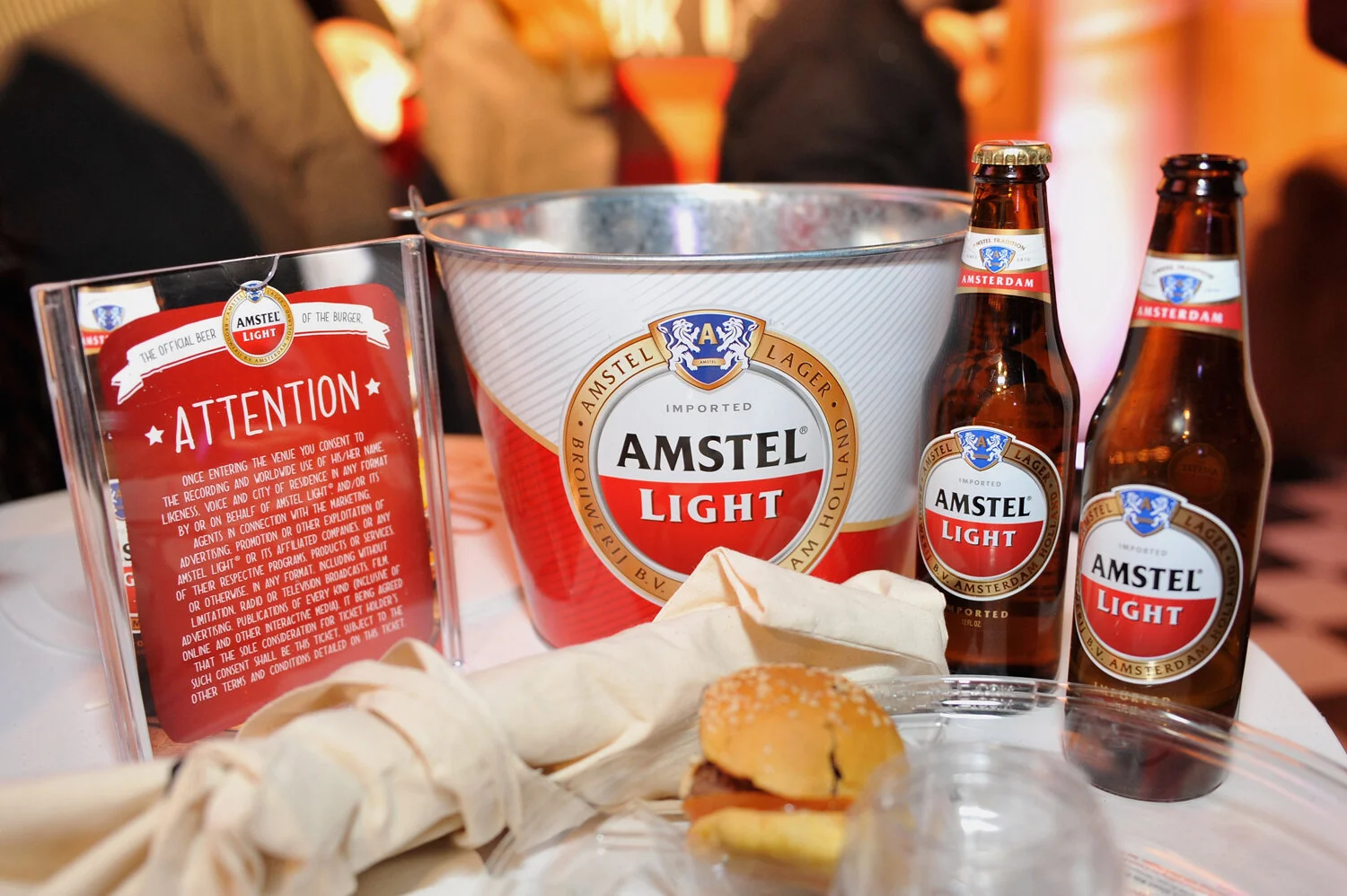
The Amstel is a slow, quiet river that rises in the old heart of Amsterdam, and since 1870 it has also been the name of a beer. As the brand made its way into the wider world, it produced Amstel Light, a lighter European lager meant to cool down ordinary days.
Its appeal is balance: a clean, simple flavor that suits the pace of modern life.
IA Brewery on the Amstel
Amsterdam, 1870
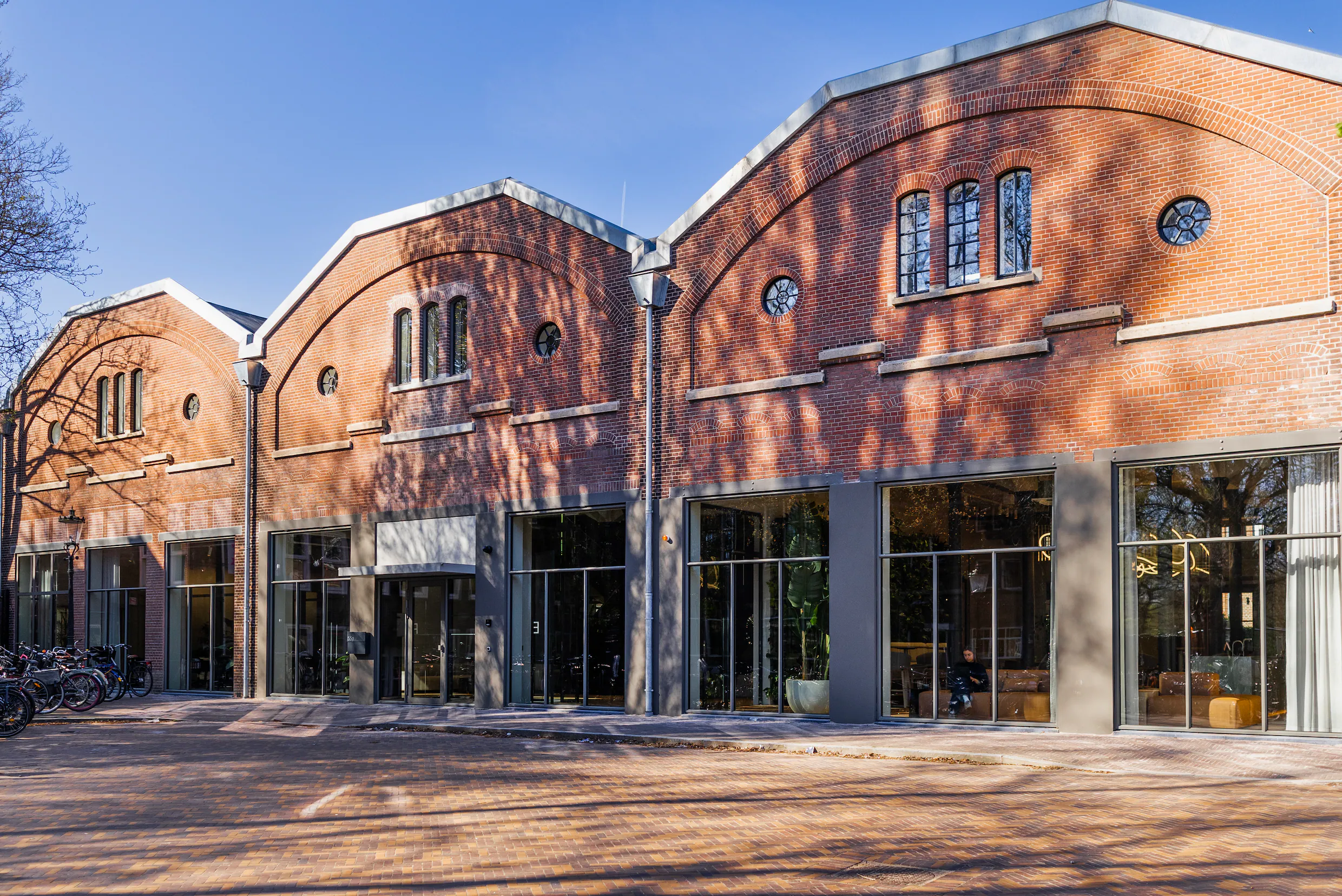
The Amstel River winds through the oldest part of Amsterdam. In 1870, the brothers Johannes and Bernardus van de Pals tied their venture to it, opening a brewery on its banks and calling it Amstel. Would the beer turn out as soft and calm as the river that gave it its name?
The answer came in 1871, when the first Amstel beer was poured for the city. In 1968, looking to reach further, Amstel merged with Heineken. By 1980, most of the brewing at the original plant on the Amstel had gradually shifted to Zoeterwoude. One chapter was closing, and another was about to open.
Amstel Light and the American Light Beer Boom
In the 1980s, the American market went through a quiet but far-reaching change: light beer took off. Drinkers were buying into a more balanced, measured way of living as much as a flavor. Amstel, with more than a century of brewing behind it, picked up on the shift. In 1980 it launched Amstel Light, a European lager sent to win over American drinkers.
It was light without being bland and kept the character of a traditional beer, and that understated appeal made it one of the first imported light beers to leave a real mark in the United States.
One detail is easy to miss: Amstel Light was created mainly for export, shaped for a market on the far side of an ocean. In Europe, Amstel still means its familiar, full-flavored lager. Across the Atlantic, Amstel Light is the lighter, more refined face of the brand.
IIAmstel Light: A Gentle Lager
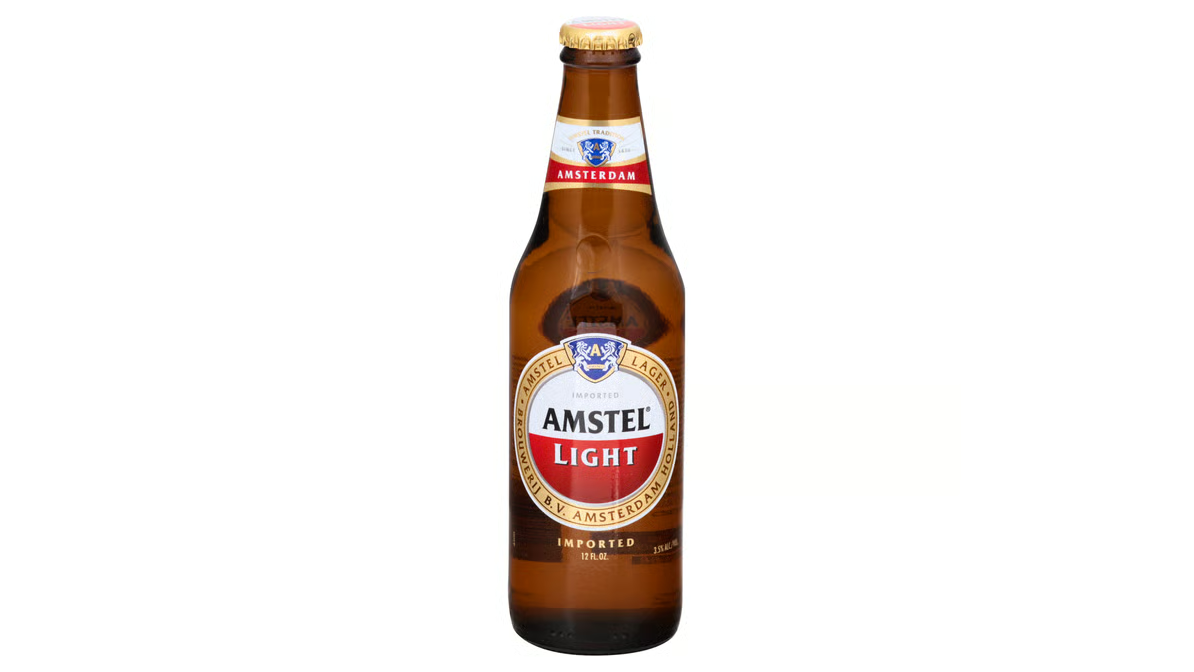
If strong beers are loud rock songs, Amstel Light is a quiet ballad. Its style is Light Lager, a slight but self-assured branch of the large lager family, whose beers are fermented at low temperatures for a clear, pure flavor.
Appearance and Aroma
In a slender, curved glass the beer is pale straw, clear enough to see straight through. The color tells you what is coming: something light and thirst-quenching.
The aroma is modest. There is no heady perfume, only a faint suggestion of lightly sweet, bready malt.
Flavor and Mouthfeel

What reaches the tongue first is not bitterness but a light sweetness that comes and goes quickly. Hop bitterness is barely a touch, enough to keep the beer steady without taking over. Then it ends abruptly, with a dry, clean finish at the back of the throat. The body is very light and thin, with no richness or creaminess, so each sip slips down easily and leaves the mouth refreshed.
Medium to high carbonation adds to the sense of freshness, with lively bubbles prickling the tongue.
At just 3.5% ABV, Amstel Light is not trying to get anyone tipsy. It is meant to be sipped slowly over a long conversation and enjoyed for how easy it is to drink and how well it quenches thirst, a beer for moments that call for something light.
IIIServing Amstel Light
Serving it well comes down to a few details: temperature, glassware, food, and the occasion.
Temperature and Glassware
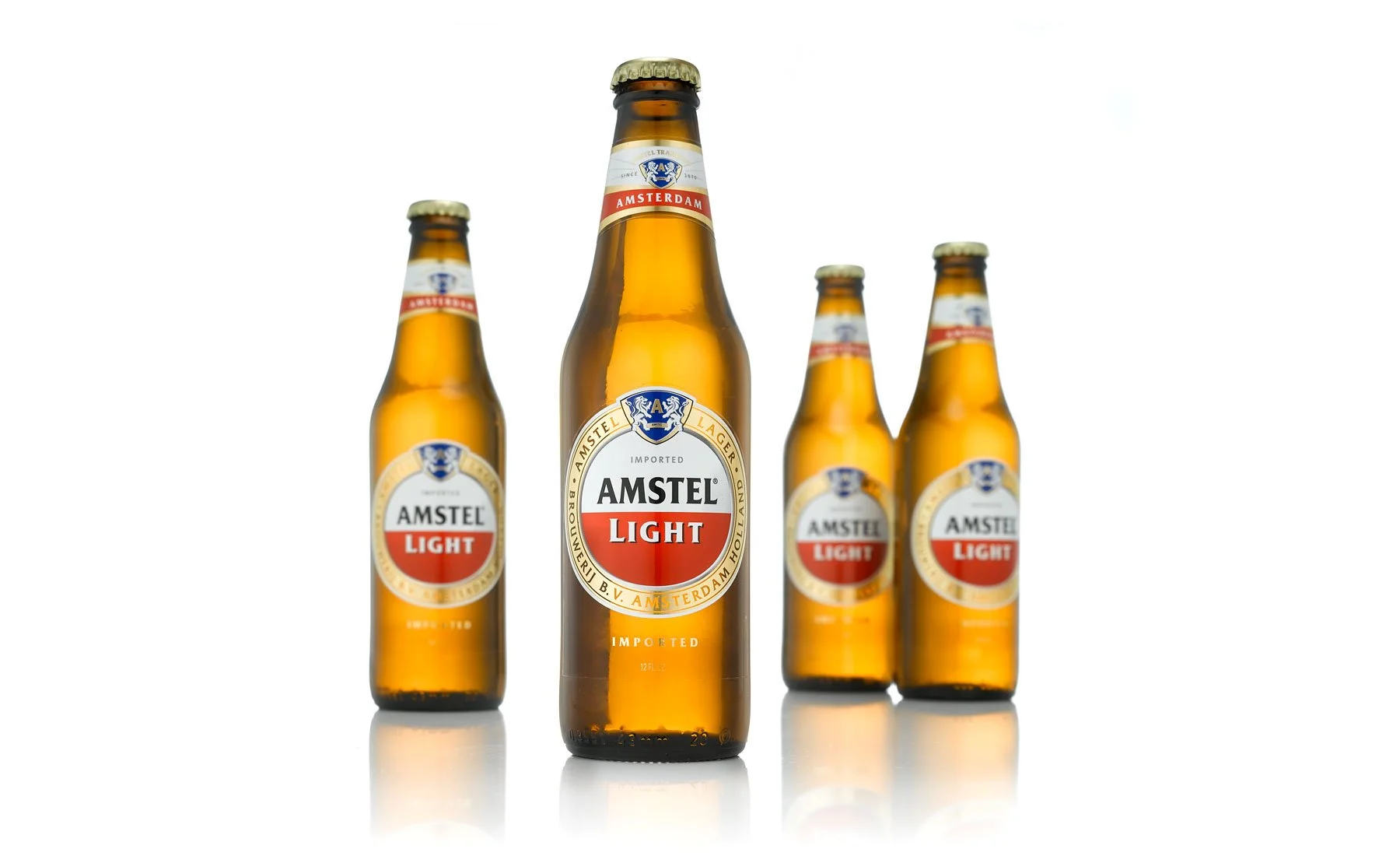
Serve Amstel Light very cold, at 4–7 °C (39–45 °F). At that temperature the freshness comes forward, the bubbles feel livelier, and the light sweetness stays bright. That is how to get the most refreshment out of it, and how it cuts through a hot, muggy day.
The glass deserves some thought as well. A tall, narrow pilsner glass suits it: it holds the creamy white head and carries even the faintest aromas up to the nose. For a more classic look, a stemmed pokal shows off the pale straw color and its clarity under warm light.
Food Pairings
A beer this light is easily drowned out by big, heavy food, so choose dishes with the same delicacy and purity.
A few that work:
- The gentle brine of seafood: steamed shrimp, fresh sashimi, or chilled oysters. Beer and food both taste fresher together.
- The natural sweetness of fragrant roast chicken, or a crisp green salad. Amstel Light rinses away any heaviness and leaves the palate clear.
- Everyday food, too: a light sandwich or a few pieces of mild fresh goat cheese.

When to Drink It
Amstel Light is made for unhurried, easy moments:
- After a long day, when the body wants something cold and thirst-quenching.
- At lively get-togethers, among laughter and clinking glasses. The low alcohol lets the conversation run long without any rush.
- At a family dinner, where it plays a light supporting role and never overpowers the food.
It is not the beer for a smoky barbecue feast, though, or for a night when you want something complex and rich to think over. Amstel Light is simple, gentle, and refreshing, and it belongs in the settings that ask for those things.
IVConclusion
Amstel Light does not set out to overwhelm. It is an everyday beer: cold relief from the heat, easy company for a conversation that keeps going, and a quiet partner for a light meal.

It began on the Amstel and crossed an ocean to become a choice for drinkers who want balance: the clean character of a European lager in a lighter, slimmer form, made for taking life slowly.
Sometimes happiness is just a light beer, a bit of warm sun, and a friendly face, and that kind of simple pleasure is what Amstel Light is for.
Originally published in Vietnamese on Tạp Chí Beer.
More Light Lager
About this style


This beer is in the library of the BeerLens app. Scan the label to identify it, then keep your own tasting notes.