Plzeň Water: The Soft Water That Gave the World Pilsner
Plzeň’s rare, soft water gave rise to Pilsner, the most imitated beer style in the world. A look at the Bohemian terroir behind it.
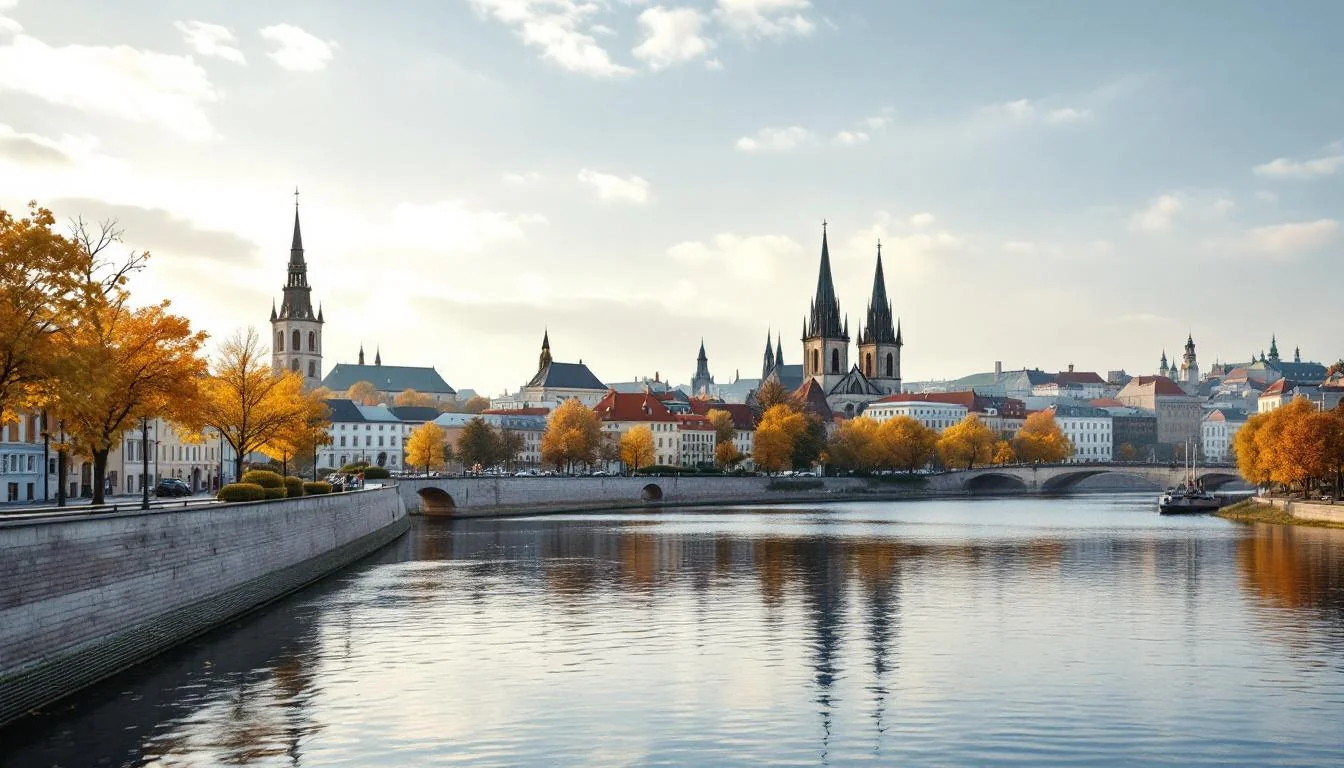
Some brewing waters are famous not for anything grand but for a purity so complete that the water is almost “empty.” Plzeň’s is one of them. It is the softest of the famous brewing waters, so soft that 19th-century scientists doubted it could make good beer at all.
History proved them wrong. That near-absence of minerals let malt and hops come through as they never had before. In 1842 this water produced a golden, crystal-clear beer, and brewing has not been the same since.
IGeography and History
Plzeň lies in western Bohemia, where four rivers meet: the Mže, the Radbuza, the Úhlava, and the Úslava. The city sits on a plateau of granite and gneiss, crystalline rocks hundreds of millions of years old. That bedrock acts as a vast natural filter, holding back most of the minerals as rainwater seeps through.
Plzeň’s groundwater is drawn from an aquifer 8–12 meters below the surface. In other famous brewing towns such as Burton-on-Trent and Munich, water runs through mineral-rich limestone or dolomite. Plzeň’s water keeps almost all of the rain’s original purity.
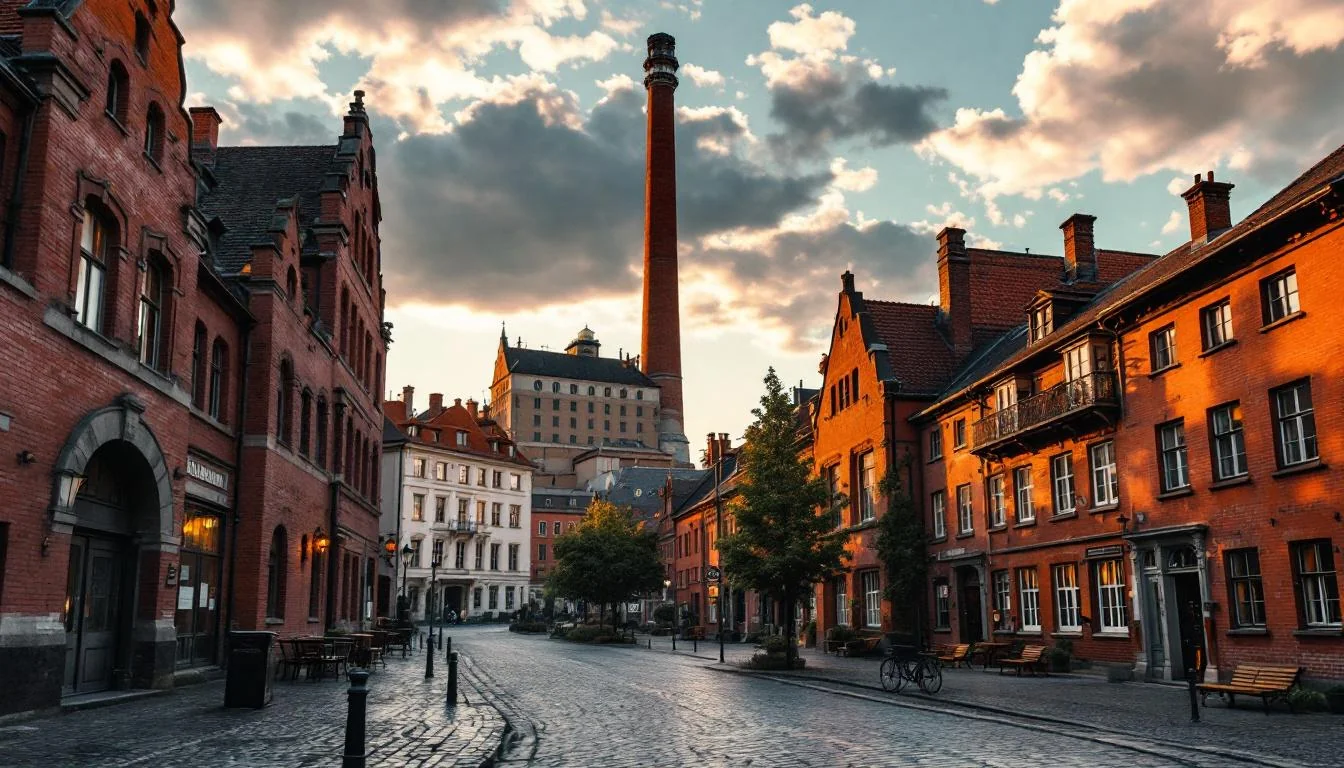
Before 1842, Plzeň was no beer capital. Its local beer was known, if anything, for being bad. Bohemian nobles complained so loudly about the quality that 36 barrels were dumped in public in front of the town hall in 1838. The episode pushed the city to found the Burghers’ Brewery (Měšťanský pivovar) and to bring in Josef Groll, a Bavarian brewer, to reform its beer.
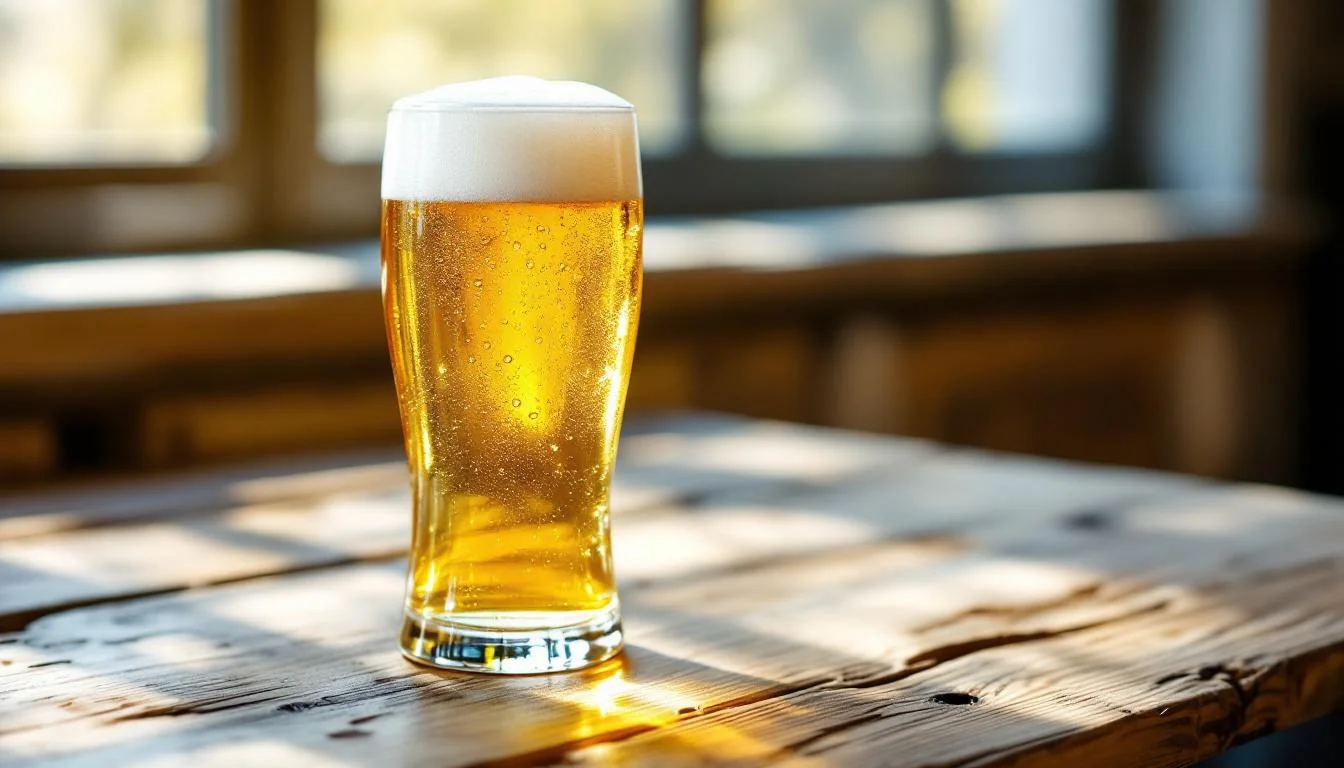
Groll brought three things with him: the Bavarian technique of cold fermentation, pale Moravian malt kilned to a light gold, and aromatic Saaz hops. It was Plzeň water that made the combination work. Soft water does not produce the coarse bitterness of hard-water regions. Instead, the bitterness of the Saaz came out delicate and rounded, the malt showed a clean, lightly sweet bready flavor, and the beer was clear enough to read a newspaper through the glass.
Pilsner Urquell, the “original Pilsner,” was born on October 5, 1842. The name later became the generic term for a whole style of beer: Pilsner, or Pils. Plzeň went from a town that brewed badly to the model that breweries from Germany to the United States, and from Japan to Vietnam, have tried to copy.
IIThe Mineral Profile
Plzeň water has a startlingly low mineral content. Calcium runs just 7–10 mg/L, a tenth of Burton’s and lower even than Munich’s. That is enough to support the enzymes in the mash but not enough to affect flavor. Magnesium is all but absent, at about 2–3 mg/L.
Sulfate is what produces the “Burton snatch,” the sharp bitterness of India Pale Ale. In Plzeň, sulfate measures a mere 5–10 mg/L, which is why the bitterness of a Bohemian Pilsner is soft and inviting rather than harsh. Chloride is just as low, around 5–8 mg/L, too little to give the fullness or apparent sweetness it lends beer in some other regions.
Bicarbonate, the enemy of pale beer, comes in at only 15–25 mg/L. Next to Munich (150+ mg/L) or Dublin (300+ mg/L), that is close to nothing. High bicarbonate forces brewers to use dark roasted malts to bring the pH into balance. Plzeň’s low bicarbonate lets them use pale pilsner malt and still reach the ideal pH in the mash.
Total dissolved solids (TDS) in Plzeň water usually sit below 50 mg/L. Tap water in many cities, by comparison, carries 200–500 mg/L. Plzeň water really is a blank canvas, and the malt and hops get to fill it.
IIIHow the Water Shapes Flavor
Plzeň’s soft water works on beer in ways that are easy to miss. First and most important, it lets Saaz hops show their most delicate side. Saaz is a noble hop, with light herbal, grassy, and floral notes. In hard water, mineral flavors drown those notes out. In Plzeň water they bloom.
The bitterness of a Bohemian Pilsner is entirely different from that of a German Pilsner or an American Lager. At the same IBU, beer brewed with Plzeň water feels softer and rounder, and its bitterness lasts longer. Scientists call this “perceived bitterness,” as distinct from “measured bitterness,” and soft water lowers the perceived kind considerably.
In Plzeň water, pilsner malt shows toasted bread and light honey, sometimes with a hint of biscuit. No mineral edge covers it, and no sulfate dries out the palate. The result is an easy-drinking beer that is never bland, with depth but no heaviness.
Water affects color as well. Low bicarbonate means a lower pH during brewing, and a lower pH restrains the Maillard reaction, which produces browning. That is why Bohemian Pilsner has its bright golden-straw color and never drifts toward the orange or brown of lagers brewed with harder water.
Soft water also helps clarity. Less calcium means less oxalate precipitation, one of the causes of haze. Traditional Pilsner Urquell is famous for how brilliantly clear it pours.
IVThe Styles Plzeň Water Created
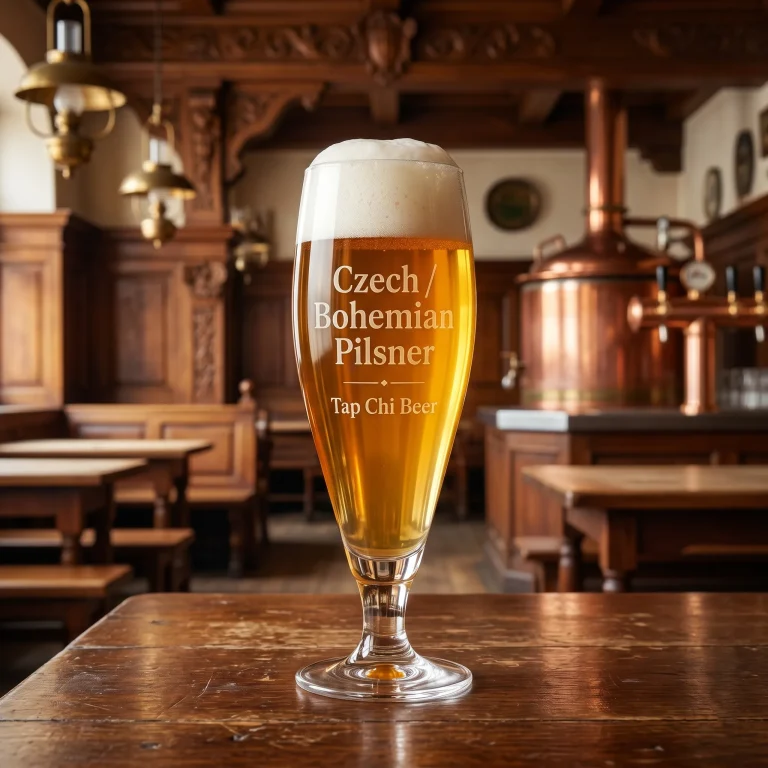
Bohemian Pilsner, classified by the BJCP as Czech Premium Pale Lager, is the style Plzeň water made directly. It laid the foundation for a whole family of variations: the slightly drier German Pilsner, the much lighter American Lager, and the International Pale Lager found all over the world. Indirectly, Plzeň water has shaped what the whole world expects a beer to taste like.
Czech Pale Lager (Světlé Výčepní Pivo), a lighter version of Pilsner, also comes from this water. At just 3–4% ABV, it is the session beer Bohemians drink every day. Soft water makes it possible to brew a light beer that still has flavor and never tastes watery or hollow.
Czech Amber Lager and Czech Dark Lager, Pilsner’s younger siblings, show that Plzeň water works for darker beers too. Add caramel or roasted malt and the soft water still lets those flavors through without distorting them. A Czech Dark Lager from Plzeň tastes of milky coffee and light chocolate, quite unlike a German Schwarzbier or an Irish Dry Stout.
Modern brewers have also tried brewing Pale Ale and IPA on a Plzeň water profile. The results are intensely hoppy beers with a surprisingly soft bitterness. Some call them “soft IPAs,” a trend slowly gaining ground in American and European craft beer.
The original Bohemian Pilsner is still the yardstick for every golden lager in the world. And that yardstick starts with the water.
VThe Breweries of Plzeň
Pilsner Urquell (Plzeňský Prazdroj) comes first. Founded in 1842, it is the brewery where Pilsner was born. It still uses Plzeň’s original groundwater and keeps fermentation cellars with oak barrels, one of the few breweries that still does. Every year millions of visitors tour its underground cellars, which run for kilometers.
Gambrinus, Pilsner Urquell’s sister brewery, is also in Plzeň and shares the same water. It aims at a more mainstream market, but its water is still a point of pride. The name comes from Gambrinus, the king of beer in European folklore.
Purkmistr, a smaller brewery with its own hotel and beer spa, represents the craft beer wave in Plzeň. It brews a wider range of styles while respecting the local soft-water heritage. Its lineup includes wheat beers and fruit beers, proof of how versatile Plzeň water can be.
Breweries far beyond Plzeň try to “clone” this water profile. From Sapporo in Japan to Budweiser in the United States, they treat their water to reach a similar softness. But as Czechs like to say, “You can copy the recipe, but you can’t copy the terroir.”
VILessons for Today’s Craft Brewers
The first lesson from Plzeň is that soft water is not “weak” water. Quite the opposite: it leaves room for every other ingredient. If you want to showcase a prized hop or a special malt, consider lowering the mineral content of your water.
The second: don’t add minerals just because you feel you should. Many homebrewers add gypsum or calcium chloride by default. Plzeň water shows how much a brewer can get by adding less. Taste your water before you decide.
The third: understand how water and bitterness interact. For soft, Bohemian-style bitterness, keep sulfate below 50 mg/L. For the sharp bite of a West Coast IPA, raise it to 150–300 mg/L. Water is a tool for shaping perception.
Finally, Plzeň water is a reminder that terroir in beer is real. One distinctive water source shaped a style that has lasted nearly two centuries and spread across the globe. Open a Pilsner in Hanoi or in Helsinki and you are drinking the legacy of four rivers and the granite bedrock of Bohemia. Every glass carries something of the ground the water came through.
Mentioned in this article

Originally published in Vietnamese on Tạp Chí Beer.