Dortmund Water: The Hard Water Behind Germany’s Industrial Beer Capital
Dortmund’s hard, mineral-rich water turned the Ruhr into Germany’s export beer capital and gave the world Dortmunder Export Lager.
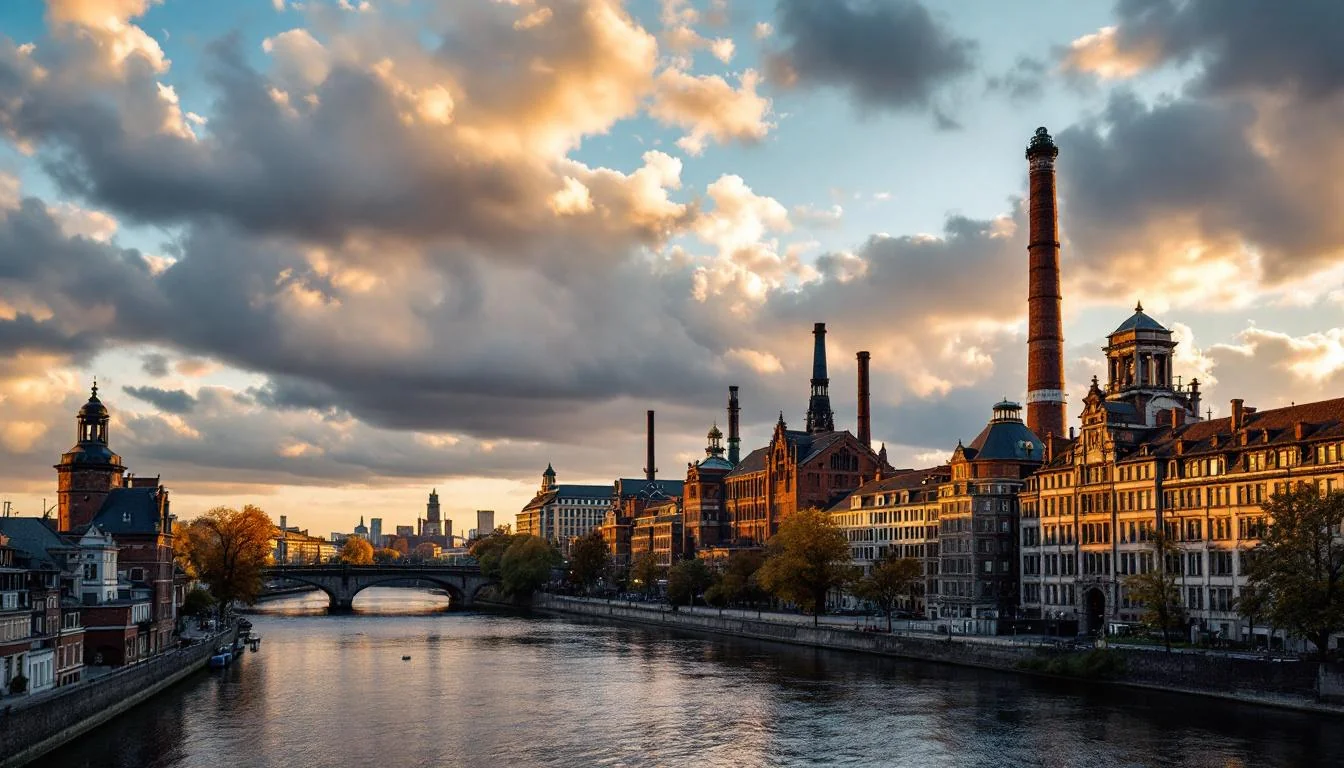
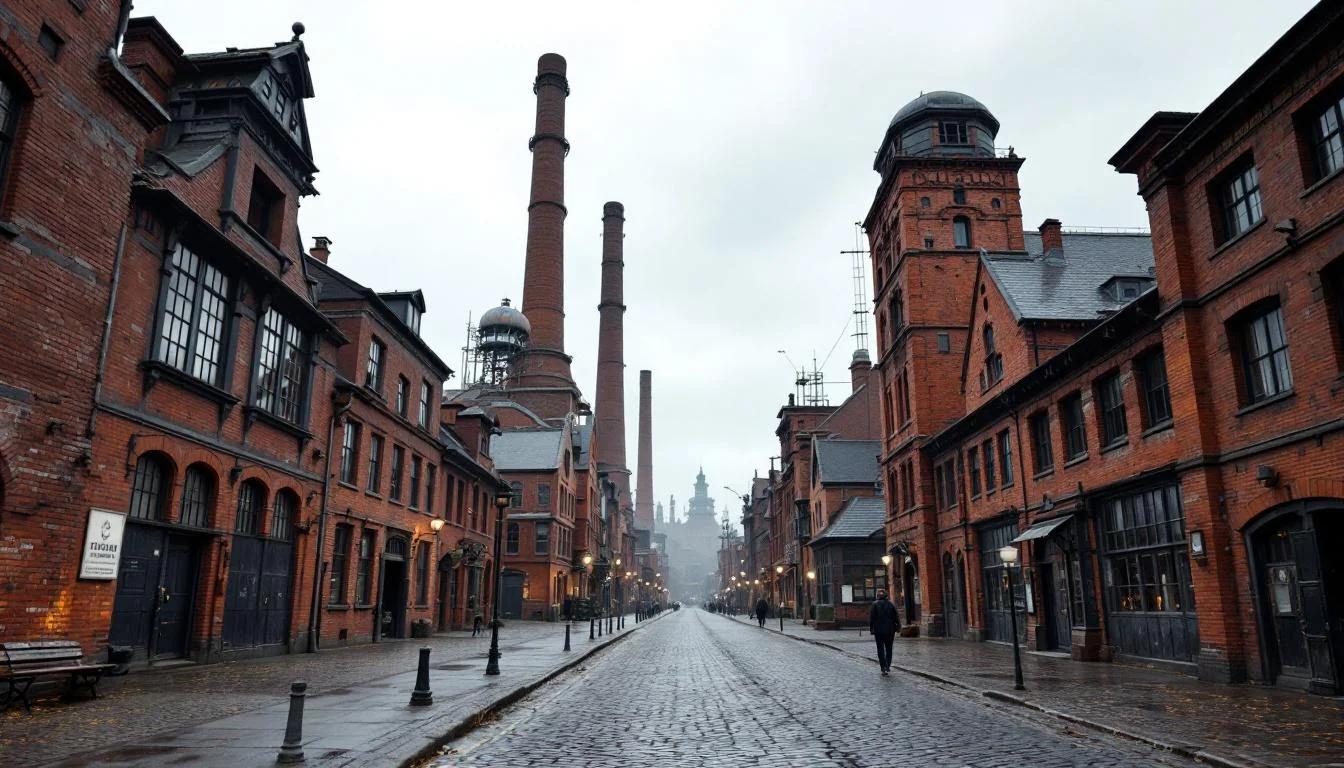
In the industrial heart of the Ruhr, where factory chimneys once filled the skyline, one resource counted for more than coal or steel: water. With its distinctive mineral profile, Dortmund’s water turned a working-class city into Europe’s export beer capital.
If Burton-on-Trent is the cradle of English Pale Ale, Dortmund is the home of Dortmunder Export Lager. The water here amounts to a chemical blueprint for a style that sold around the world for more than a century.
IGeography and History
Dortmund lies in the eastern Ruhr, in the state of North Rhine-Westphalia in western Germany. The city sits in the valleys of the Ruhr and the Emscher, where Cretaceous limestone and dolomite hold an unusual groundwater basin. The local geology mixes carbonate sedimentary rock with layers of sandstone, which over thousands of years have filtered the water into a remarkably balanced mineral profile.
Brewing in Dortmund goes back to the Middle Ages, when the city belonged to the Hanseatic League, the most powerful trading network in northern Europe. By the 14th century, Dortmund had more than 60 working breweries. The real turning point came in the mid-19th century, as Bavarian lager brewing spread across Europe.
In 1843 Heinrich Wenker, the founder of Dortmunder Kronen, began experimenting with lager brewing. He realized that the local water, hard but less extreme than Burton’s, could make a different kind of beer: as pale as a Bohemian Pilsner, but fuller and easier to drink. This was the forerunner of Dortmunder Export.
The Industrial Revolution made Dortmund one of Europe’s largest centers of steel and coal. Hundreds of thousands of workers arrived, and they needed beer, a lot of it. Plentiful water, an expanding rail network, and a huge workforce gave the city everything that brewing on an industrial scale requires.
By the early 20th century, Dortmund had overtaken Munich as Germany’s largest brewing city. Output peaked in 1927 at more than 1.8 million hectoliters. The word “Export” in the name was no accident. The beer was designed to travel long distances, and Dortmund’s mineral-rich water helped keep it stable along the way.
IIThe Mineral Profile
Dortmund water is hard, but unlike Burton’s or Munich’s, it strikes a rare balance among its ions. That is what sets it apart in the brewing world.
Calcium runs 230–260 ppm, higher than most other famous brewing waters. That much calcium drives enzyme activity in the mash, converting starch efficiently and yielding clear wort. It also helps precipitate proteins, which keeps the finished beer stable.
Magnesium is moderate, around 25–40 ppm, enough to keep the yeast healthy without an unpleasant bitter edge. Sulfate sits at 120–150 ppm, high enough to lift the hops but short of Burton’s levels, where bitterness turns harsh. This is the key to Dortmund’s character: a clear bitterness that stays soft.
Chloride, at 100–120 ppm, gives a full, rounded palate. With sulfate and chloride close to even, a rare thing in nature, the beer gets both crispness and good body. Bicarbonate ranges from 180 to 250 ppm, far above Pilsen but below Munich. That is enough to buffer the pH when brewing with pale malt without getting in the way of the mash.
IIIHow the Water Shapes Flavor
Each ion in Dortmund water has its part to play, and together they produce Dortmunder Export, a lager built on balance.
High calcium with moderate bicarbonate makes an ideal mash for Pilsner malt. Alpha-amylase and beta-amylase work efficiently, turning a high share of the starch into fermentable sugar. The result is a beer with solid strength, a medium to full body, and a light residual sweetness from dextrins.
Sulfate at this moderate level gives a clean, clear bitterness that doesn’t linger the way a Burton beer’s does. Dortmunder Export’s bitterness is often described as “firm but not harsh.” The hops are used mainly for bitterness rather than aroma, and the sulfate lets that bitterness spread evenly, then fade quickly.
Chloride at roughly the same level as sulfate builds a full body and a smooth mouthfeel. This is the biggest difference from Bohemian Pilsner. If Pilsner is spring water, Dortmunder Export is a broad, steady river. It sits heavier on the tongue but keeps the refreshment that a beer meant for drinking in quantity needs.
Taken together, Dortmund water yields a bright straw-colored beer, brilliantly clear, with a light bready malt aroma, balanced bitterness, and a clean finish. It was made to be drunk in volume. The coal miners and steelworkers of old could put away liters of it a day without tiring of it.
Another detail worth noting: the high mineral content made Dortmund beer more stable in transit. Calcium helps precipitate oxalate, which reduces the risk of haze. That is why Export could be “exported” over long distances and keep its quality, which was vital in the days before refrigeration.
IVThe Styles It Created
Dortmunder Export is this water’s great legacy to the beer world. It is a lager style that sits between Pilsner and Munich Helles: stronger and fuller, yet still pale.
On paper, Export runs 5.0–5.5% ABV, higher than an ordinary Pilsner. Bitterness is around 23–30 IBU, offset by malt sweetness. The color ranges from straw to gold, with crystal clarity. Carbonation is moderate, softer than a Pilsner’s but enough to refresh.
Dortmund water also suits other Pale Lager styles. Many local breweries made Märzen and Bock as well, using the high calcium to handle bigger malt bills. Export, though, always came first.
In the 20th century, Dortmunder Export spread worldwide. Breweries in the Netherlands, Belgium, and even Japan began brewing it. In the United States, many German-born brewers brought Export recipes with them when they emigrated, helping shape what later became American Lager.
Unfortunately, Export nearly disappeared in the second half of the 20th century. Waves of mergers and globalization put Dortmund’s breweries into the hands of large conglomerates, which switched to Pilsner to follow international trends. An authentic Dortmunder Export is not easy to find today.
The craft beer movement is now reviving the style. Craft breweries around the world have begun brewing Export and treat it as a technical challenge: a beer that tips toward neither malt nor hops.
VThe Breweries of Dortmund
Dortmunder Union (DUB) is probably the most famous name associated with this water. Founded in 1873 through the merger of several smaller breweries, DUB quickly became one of the largest brewers in Europe. The giant “U” on its brewery tower was a Dortmund landmark throughout the 20th century.
Dortmunder Actien Brauerei (DAB), founded in 1868, was DUB’s archrival. The two competed fiercely and pushed each other to keep improving. DAB was known for investing heavily in brewing science, and its laboratory contributed a number of important advances to the industry.
Kronen Brauerei, the oldest brewery still operating in Dortmund, was founded in 1430. It was here that Heinrich Wenker created the modern Export style in the 1840s. Kronen remained independent until 1996, when it was absorbed into the Radeberger group.
Thier, Stifts, Hansa, and dozens of other names were part of Dortmund’s golden age. Most have disappeared or survive only as ghost brands in the portfolios of large groups. Today a handful of small breweries work to keep the tradition alive, among them Bergmann Brauerei, revived in 2007 with the aim of restoring traditional Export.
VILessons for Today’s Craft Brewers
Dortmund water teaches the most important lesson in brewing: balance. Burton is known for its sulfate and Pilsen for its softness. Dortmund’s achievement is quieter, keeping everything in proportion.
For craft brewers who want to recreate the Dortmund profile, the target is a sulfate-to-chloride ratio close to 1:1, with high calcium of about 230–260 ppm. Start with RO water and add calcium sulfate (gypsum) and calcium chloride in similar proportions. A small amount of baking soda brings bicarbonate up to the level you want.
More important than the recipe is the philosophy behind it. Export is a beer for drinking in quantity, not for making a big impression. At a time when craft beer races toward more bitterness, more alcohol, and more extreme flavors, Dortmund deserves another look: it once brewed more beer than any other city in Germany by making beer that never went to extremes.
Dortmund water is a reminder that terroir in beer can mean harmony as well as difference. Sometimes the right water is not the most distinctive one but the one that keeps everything in its place, so that no element overpowers another. As Dortmund’s old brewers understood, a good beer is one that makes you want the next glass.
Mentioned in this article
-
Style family
Pale Lagers
Originally published in Vietnamese on Tạp Chí Beer.