Beer Flavor: How to Taste Sweetness, Bitterness, and Balance
Beer’s flavor comes from malt, hops, and fermentation. A short guide to noticing sweetness, bitterness, and balance in every glass.
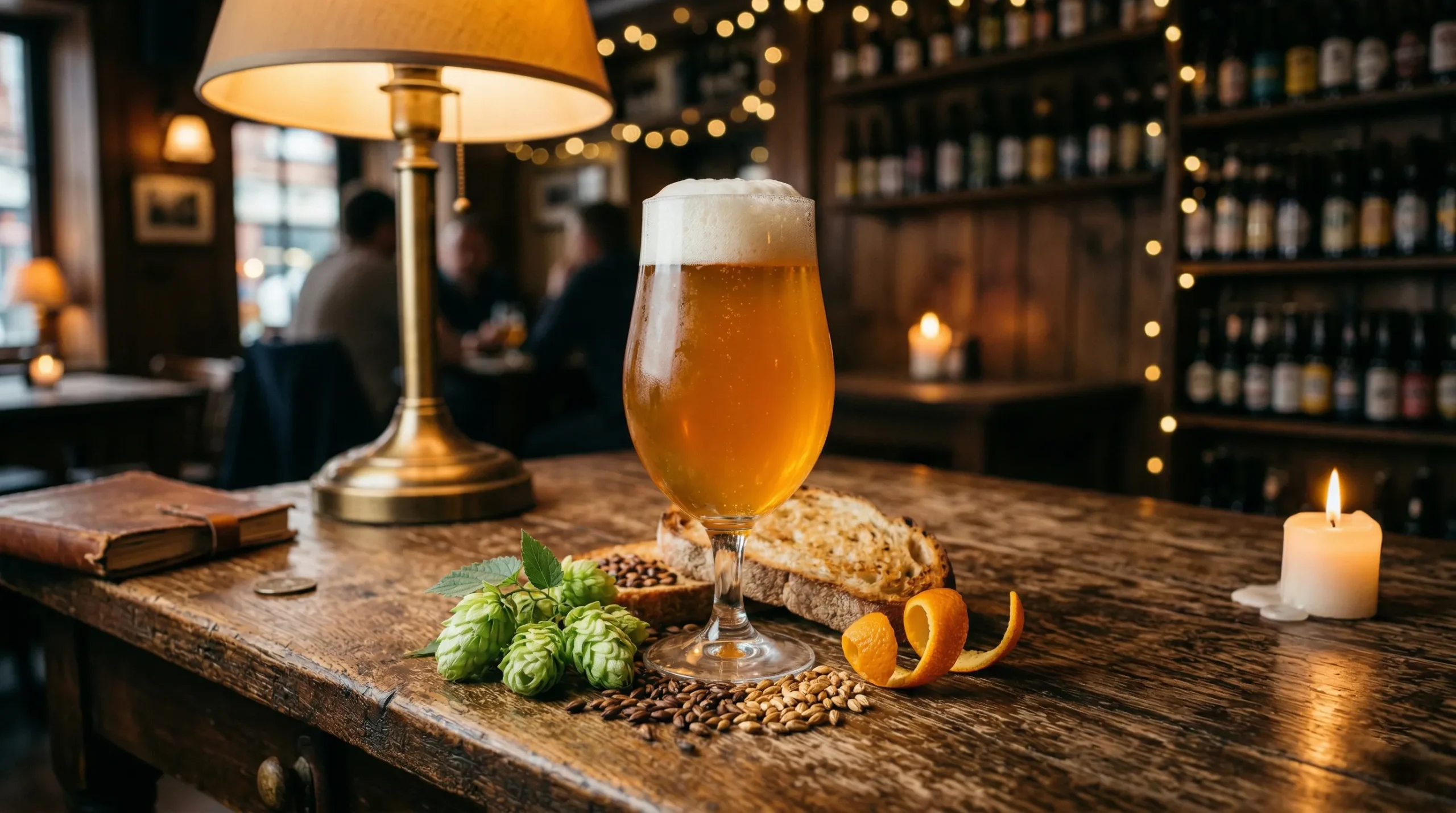
Plenty of people drink beer quickly: lift the glass, take a big gulp, swallow. If you want to understand beer a little better, try something very simple: take a small sip and hold it in your mouth for a few seconds.
Those few seconds are enough to show that beer is not a single taste. It is several sensations at once: the bitterness of hops, the gentle sweetness of malt, and the refreshing prickle of carbonation.
This article is part of Tạp Chí Beer’s “Savoring Beer” series, about tasting beer slowly and with attention.
To start with the overview, see the series’ main guide.
IWhen Beer Meets the Tongue
Flavor begins to open up the moment beer touches your tongue.
Several things register at once:
- bitterness from the hops
- a gentle sweetness from the malt
- the lively fizz of carbonation
- sometimes a light tartness or a fruity note
Some beers taste light and go down easily. Others are stronger and fuller in flavor.
What makes it interesting is that the flavor of a beer does not stand still.
Within the first few seconds, it can change quite noticeably.

IIWhy Hold the Beer in Your Mouth for a Few Seconds
Many people are in the habit of swallowing beer right away. There is nothing wrong with that, but it means missing a good deal.
Holding the beer in your mouth for a few seconds gives its flavor time to spread across your tongue.
In that short window, you can notice:
- whether the bitterness comes early or late
- whether the malt sweetness feels round and smooth
- whether the carbonation is soft or brisk
A few extra seconds of attention can change the way a beer tastes to you entirely.

IIIHow Beer Flavor Changes
Pay close attention and you will find that beer flavor usually arrives in small layers.
First there may be the refreshing prickle of carbonation. Then the malt comes in, sometimes recalling bread, honey, or light caramel.
The hop bitterness may come last, a beat behind, and bring the beer into balance.
In some beers, the yeast adds fruit flavors as well. Wheat beers, for example, often carry hints of banana or light citrus.
Those small shifts are what make each sip interesting.
IVFocus on What Your Tongue Tells You
One simple way to understand beer better is to focus on the sensations on your tongue.
Ask yourself a few basic questions:
- Is this beer very bitter, or only a little?
- Is the malt sweetness easy to pick out?
- Does the beer feel light or full?
There is no need for elaborate vocabulary. Describe what you sense in your own words.
Over time, you will start to notice that every beer has a personality of its own.

VA Small Moment That Stays with You
Sometimes a small sip of beer is all it takes to reveal a great deal.
The moment beer reaches your tongue is when aroma and flavor begin to merge. Slow down a little, hold the beer in your mouth for a few seconds, pay attention to what you sense, and every sip turns out to have a story of its own.
That is why so many beer lovers prefer to take small sips rather than drink in a hurry.
To go further, read on in the Savoring Beer series, from how to taste beer and choose a glass to how to pair beer with food. It all starts with one simple habit: drink more slowly, and you will taste more.
Originally published in Vietnamese on Tạp Chí Beer.